
Ressources
Explorez une large gamme de ressources sur le GCED afin d’approfondir votre compréhension et de renforcer vos activités de recherche, de plaidoyer, d’enseignement et d’apprentissage.
3,376 résultats trouvés
 And the Right to the City? Approaches to Racism, Patriarchal Domination and Feminist Strategies of Resistance in Cali, Colombia Année de publication: 2015 Auteur: Vicenta Moreno Hurtado | Debaye Mornan This article seeks to give visibility to some spatial strategies of resistance developed by black women in the predominantly black district of Aguablanca District (DA), in eastern Cali, Colombia, against the systematic violence they are daily subjected to. We contextualize their practices within the systematic violence of displacement, paramilitaries terror and spatial segregation in the city. It also seeks to discuss how black women resist stigma, political marginalization and death in a city divided along racial and gender lines. The questions that guide this article are: What is the role of racism and patriarchal domination in the production of “geographies of violence” in Cali? What are the strategies of resistance developed by black women in these topographies of violence? Ultimately, the article seeks to fulfill a gap in academic discourses that silence on black women’s social suffering and that regard them as disorganized, a-political and passive victims. ¿Y el Derecho a la Ciudad? Aproximaciones al Racismo, la Dominación Patriarcal y las Estrategias Feministas de Resistencia en Cali, Colombia Année de publication: 2015 Auteur: Vicenta Moreno Hurtado | Debaye Mornan Este artículo busca dar visibilidad a algunas estrategias espaciales de resistencia desarrolladas por mujeres negras del Distrito de Aguablanca (DA), en el Oriente de Cali, Colombia, frente a la violencia sistemática a la que se ven diariamente sometidas. Contextualizamos estas violencias sistemáticas como producto del destierro, el paramilitarismo y la segregación espacial en la ciudad. Se busca también discutir cómo las mujeres negras resisten a la estigmatización, la marginación política y la muerte en una ciudad racialmente dividida. Las preguntas que orientan este articulo son: ¿Cuál es el papel del racismo y la dominación patriarcal en la producción de las “geografías de la violencia” en Cali? ¿Cuáles son las estrategias de resistencia desarrolladas por las mujeres negras en estas topografías de la violencia? En últimas, el artículo busca contraponerse a las narrativas académicas y discursos políticos que criminalizan la vida de la gente negra en los sectores populares y que generalmente presentan a las mujeres negras solamente como víctimas, o como desorganizadas y apolíticas.
  Plano de ação: Programa Mundial para Educação em Direitos Humanos Année de publication: 2012 Auteur institutionnel: UN Office of the High Commissioner for Human Rights The Plan of Action for the first phase (2005-2007) of the World Programme was adopted by all United Nations Member States in July 2005. It proposes a concrete strategy and practical guidance for implementing human rights education in primary and secondary schools. On 10 December 2004, the General Assembly of the United Nations proclaimed the World Programme for Human Rights Education (2005-ongoing) to advance the implementation of human rights education programmes in all sectors. Building on the foundations laid during the United Nations Decade for Human Rights Education (1995-2004), this new initiative reflects the international community’s increasing recognition that human rights education produces far-reaching results. By promoting respect for human dignity and equality and participation in democratic decision-making, human rights education contributes to the long-term prevention of abuses and violent conflicts. To help make human rights a reality in every community, the World Programme seeks to promote a common understanding of the basic principles and methodologies of human rights education, to provide a concrete framework for action and to strengthen partnerships and cooperation from the international level down to the grass roots. 行动计划世界人权教育方案 : 第一阶段 Année de publication: 2006 Auteur institutionnel: UN Office of the High Commissioner for Human Rights The Plan of Action for the first phase (2005-2007) of the World Programme was adopted by all United Nations Member States in July 2005. It proposes a concrete strategy and practical guidance for implementing human rights education in primary and secondary schools. On 10 December 2004, the General Assembly of the United Nations proclaimed the World Programme for Human Rights Education (2005-ongoing) to advance the implementation of human rights education programmes in all sectors. Building on the foundations laid during the United Nations Decade for Human Rights Education (1995-2004), this new initiative reflects the international community’s increasing recognition that human rights education produces far-reaching results. By promoting respect for human dignity and equality and participation in democratic decision-making, human rights education contributes to the long-term prevention of abuses and violent conflicts. To help make human rights a reality in every community, the World Programme seeks to promote a common understanding of the basic principles and methodologies of human rights education, to provide a concrete framework for action and to strengthen partnerships and cooperation from the international level down to the grass roots.
  Почему дискриминируются незрячие педагоги? Année de publication: 2021 Auteur: Абдулла Абдухалилов | Дильмурад Юсупов Вовлечение незрячих учителей в систему образования необходимо для развития инклюзии в этой сфере Узбекистана. Созданы ли равные условия и возможности для педагогической деятельности? Абдулла Абдухалилов и Дильмурад Юсупов изучили проблему на основе личного опыта и успешных примеров инклюзии в педагогике.
  Engaging Girls, Boys and Youth as Active Citizens: Plan International’s Position Paper Année de publication: 2020 Auteur institutionnel: Plan International Plan International believes that every child and young person has the right to express their views freely and safely; influence decisions and take action on issues that matter to them. However, around the world children and young people – particularly girls and young women – face significant challenges in realising this right. They tend to be wrongly dismissed as insufficiently mature to participate in political and civic processes. They also tend to be stigmatised as potential perpetrators of disruption, not as valued citizens and contributors to society who can lead and drive positive change. Plan International is calling for a paradigm shift in the way the international community talks about, engages and partners with children and young people. Children and young people are not just the future. They are the present. Young people constitute almost half of the world’s population, yet they are dramatically underrepresented – even excluded – in political decision-making. It is critical that their views and needs are taken into account politically, socially, legally and economically. Promoting the voices and views of children and young people – especially girls and women – in all their diversity and supporting them to actively engage in decision-making on issues that affect their lives must be an urgent priority for the world’s power holders. Realising children and young people’s civil and political rights is a prerequisite for building sustainable and peaceful societies, and a gender just world envisioned in international human rights frameworks and the 2030 Agenda’s Sustainable Development Goals (SGDs).Across the 75+ countries Plan International works in, young people have consistently identified the denial of their political and civil rights as a priority issue. In March 2017, Plan International conducted consultations with young women and men aged 14 to 30 from 14 countries. In every country, young people reported a sense of “citizen responsibility” and an interest in public life, yet identified the lack of platforms to meaningfully engage with decision-makers and inability to ensure their opinions are taken seriously as key barriers. Girls and young women in particular have called for the removal of gendered norms that increase those barriers, silence their voices and disproportionately hold them back from leadership and active citizenship. Impliquer les filles, garçons et jeunes en tant que citoyens actifs : Prise de position de Plan International Année de publication: 2020 Auteur institutionnel: Plan International Ce rapport expose la position de Plan International sur le droit à la participation à la vie publique, ainsi qu’une analyse : du cadre juridique et politique ; de l’impact des normes sociales et genrées sur la participation ; et des problèmes spécifiques relatifs à l’émancipation politique et à la citoyenneté active. Ce rapport appuie 100 Millions de Raisons, la Stratégie Mondiale 2017-2022 de Plan International, dont la priorité principale est le soutien des filles, des garçons et des jeunes en tant qu’acteurs actifs du changement. Il défend notre travail en relation avec l’Agenda 2030 et les Objectifs de Développement Durable – plus spécifiquement les objectifs 5, 10 et 16. Un certain nombre de recommandations importantes sont incluses afin de guider le plaidoyer. Involucrar a niñas, niños y jóvenes como ciudadanos activos: Documento de Posición de Plan International Année de publication: 2020 Auteur institutionnel: Plan International En este documento se expone la posición de Plan International sobre el derecho a participar en la vida pública, así como el análisis del marco jurídico y político; las repercusiones de las normas sociales y de género en la participación; y aspectos específicos relacionados con el empoderamiento político y la ciudadanía activa. Este instrumento apunta a 100 Millones de Razones, la Estrategia Global de Plan International 2017-2022, que define como prioridad apoyar a las niñas, los niños y las/los jóvenes como motores del cambio. También apoya nuestra labor en relación con la Agenda 2030 y los Objetivos de Desarrollo Sostenible, en particular los Objetivos 5, 10 y 16. Para orientar las actividades de incidencia se incluyen varias recomendaciones de alto nivel.
  How Human Rights Shape Social Citizenship: On Citizenship and the Understanding of Economic and Social Rights (Washington University Global Studies Law Review. Vol.13, No.2) Année de publication: 2014 Auteur: Ulrike Davy Auteur institutionnel: Washington University This Article reconceptualizes citizenship, a notion usually tied to the nation state, as “layered.” Human rights may serve as the international “layer” of citizenship, addressing nationals and non-nationals alike. It took some time, however, for “social” citizenship to emerge as a human rights issue and, hence, for human rights to become an international layer for social citizenship rights granted on the national level. Around 1993, states started to accept a human rights-based obligation toward the poor, requiring social policies to focus on targeted, individual welfare. Nowadays, poverty mitigation is the human rights core of “social” citizenship. Nowadays, poverty mitigation is the human rights core of “social” citizenship.
 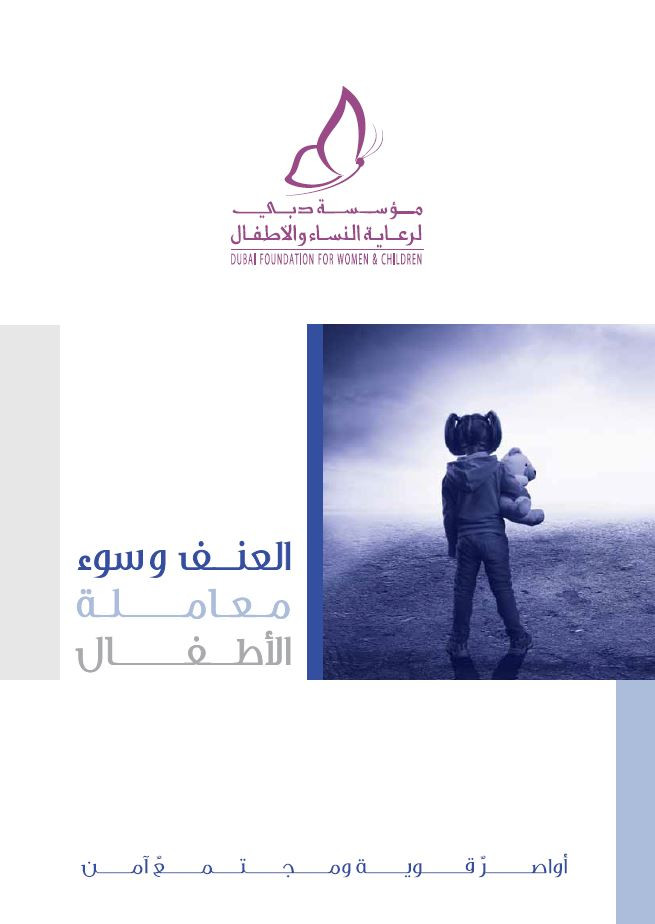 Violence and Child Abuse Année de publication: 2015 Auteur institutionnel: Dubai Foundation for Women and Children (DFWAC) | Center for Statistical, Economic and Social Research and Training for Islamic Countries The study aimed to investigate the phenomenon of violence against children in the United Arab Emirates. It focuses on the extent of violence against children and abuse in its various forms at home and at school. The study came out with a set of recommendations to deal with the phenomenon.