
Ressources
Explorez une large gamme de ressources sur le GCED afin d’approfondir votre compréhension et de renforcer vos activités de recherche, de plaidoyer, d’enseignement et d’apprentissage.
3,433 résultats trouvés
 Competences for Democratic Culture: Living together as equals in culturally diverse democratic societies Année de publication: 2016 Auteur institutionnel: Council of Europe This document is a product of a Council of Europe project which is taking place in four phases during 2014-17. The first phase has been devoted to the development of a conceptual model of the competences which citizens require to participate effectively in a culture of democracy. This document describes the model and the methods that were used to develop it. The document is aimed at readers who wish to understand the underlying assumptions and technical details of the model. Phase two of the project will be devoted to the development of descriptors (i.e. statements or descriptions of what a person is able to do if they have mastered the various competences that are specified by the model), phase three to ascertaining whether it is possible to assign the descriptors to levels of proficiency, and phase four to the production of supporting documentation. This documentation will be addressed to educational practitioners and policy makers, and will provide a less technical description of the current competence model. It will also explain how the model and the descriptors can be used to assist curriculum design, pedagogical design and the development of new forms of assessment (for use in either selfassessment or assessment by others). All of the materials that are produced by the project will eventually be incorporated into a Council of Europe reference framework of competences for democratic culture. Further information about the project is available from the project website: www.coe.int/competences
  Pautas para una Educación Global: Manual para que las y los educadores entiendan e implementen una educación global Année de publication: 2019 Auteur institutionnel: North-South Centre of the Council of Europe | Council of Europe Esta guía práctica para la educación para la ciudadanía mundial responde a una necesidad expresada por los profesionales de la red de la Semana de Educación para la Ciudadanía Mundial del Centro Norte-Sur (CNS) del Consejo de Europa, quienes expresaron su deseo de tener un instrumento común, configurado a la luz de la experiencia adquirida por la red y otros socios, que pueden ayudar a los educadores a diseñar y llevar a cabo iniciativas en GCED. Esta guía práctica para la educación para la ciudadanía mundial responde a una necesidad expresada por los profesionales de la red de la Semana de Educación para la Ciudadanía Mundial del Centro Norte-Sur (CNS) del Consejo de Europa, quienes expresaron su deseo de tener un instrumento común, configurado a la luz de la experiencia adquirida por la red y otros socios, que pueden ayudar a los educadores a diseñar y llevar a cabo iniciativas en GCED.
  Easy Steps to Help Your Child Become a Digital Citizen Année de publication: 2020 Auteur: Janice Richardson | Veronica Samara Auteur institutionnel: Council of Europe A guide to help you use your experience as a citizen to guide your children on their path towards digital citizenship.Young people today inhabit a world that has been transformed by digital technologies, effortlessly enabling connectedness through social media and access to vast quantities of information. Making sense of this hyper rich information and engaging effectively and responsibly poses a whole set of new challenges for educators as they seek to prepare young people as citizens, exercising their rights and participating effectively in the affairs of the community.Parents, and “non-tech” grandparents too, can help children become digital citizens. In this guide, we explain some of the easy steps to follow, to help children master what it takes to act responsibly and respectfully online. Étapes simples pour aider votre enfant à devenir un citoyen numérique Année de publication: 2020 Auteur: Janice Richardson | Veronica Samara Auteur institutionnel: Conseil de l'Europe Un guide pour vous aider à utiliser votre expérience en tant que citoyen pour guider vos enfants sur la voie de la citoyenneté numérique.Les jeunes habitent aujourd'hui un monde qui a été transformé par des technologies numériques, permettant la connexion sans effort via les médias sociaux et l'accès à de vastes quantités d'informations. Etre capable de décortiquer cette information hyper riche et s’engager de manière efficace et responsable pose toute une série de nouveaux défis pour les éducateurs dans la mesure où ils cherchent à préparer les jeunes en tant que citoyens, à exercer leurs droits et à participer efficacement aux affaires de la communauté.Les parents et les grands-parents (même les profanes en technologie), peuvent aider les enfants à devenir des citoyens numériques. Dans ce guide, nous présentons quelques étapes faciles à suivre afin d’aider les enfants à maîtriser l’essentiel pour agir de façon responsable et respectueuse en ligne.
 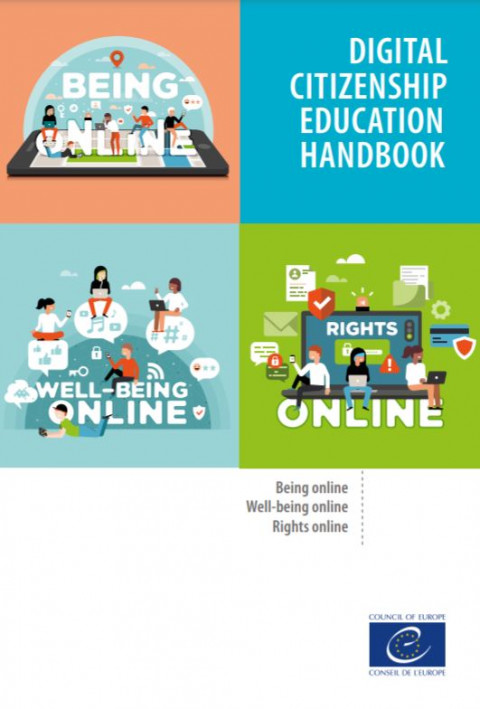 Digital Citizenship Education Handbook Année de publication: 2019 Auteur: Janice Richardson | Elizabeth Milovidov Auteur institutionnel: Council of Europe Digital citizenship and engagement involves a wide range of activities, from creating, consuming, sharing, playing and socialising, to investigating, communicating, learning and working. Competent digital citizens are able to respond to new and everyday challenges related to learning, work, employability, leisure, inclusion and participation in society, respecting human rights and intercultural differences.This Digital citizenship education handbook is designed to help educators and other interested adults understand and deal with them. It builds on the Council of Europe’s Reference Framework of Competences for Democratic Culture and the achievements of our longstanding Education for Democratic Citizenship programme, and complements the Internet literacy handbook as part of a coherent approach to educating citizens for the society of the future.
  Peace Education: Handbook for Educators Année de publication: 2015 Auteur institutionnel: International Falcon Movement-Socialist Educational International (IFM-SEI) | Council of Europe This document presents peace education tools so that children and adolescents can play a vital role, changing individual attitudes and examining the social, economic and political context to understand where conflicts come from and how to transform them. Education à la Paix: Manuel de l’éducatrice et de l’éducateur Année de publication: 2015 Auteur institutionnel: International Falcon Movement-Socialist Educational International (IFM-SEI) | Conseil de l'Europe Cet ouvrage en deux parties est basé sur les résultats de notre travail, ainsi que des outils developpés et testés par certaines de nos organisations membres: • De la matière à réflexion, des conseils et des informations pour les éducateurs·trices à la paix. Des activités éducatives que vous pouvez réaliser avec les enfants, les jeunes ou les autres chefs de groupe et les pairs éducateurs·trices. La deuxième partie comprend trois chapitres. Chacun de ces derniers se concentre sur un aspect différent de l’éducation de la paix. Comprendre le conflit introduit différentes questions sur le conflit et la guerre, la sensibilisation sur ses causes et ses conséquences. Transformer le conflit met l’accent sur la dynamique du conflit et les différentes façons dont nous pouvons traiter avec elle - de manière agressive ou constructive. Faire la paix vous invite à réfléchir et à développer des idées pour la paix et donne des outils pour la consolidation de la paix, comme la communication et le dialogue compétences. Educación por la Paz: Guía para educadores y educadoras Année de publication: 2015 Auteur institutionnel: International Falcon Movement-Socialist Educational International (IFM-SEI) | Council of Europe Este documento presenta herrameintas de ediuación para la paz de manera que niñas, niños y adolescentes puedan jugar un papel vital, cambiando las actitudes individuales y examinando el contexto social, económico y político para comprender de dónde provienen los conflictos y cómo transformarlos.
  General Policy Recommendation No. 15 of the European Commission against Racism and Intolerance: On Combating Hate Speech Année de publication: 2016 Auteur institutionnel: Council of Europe | European Committee against Racism and Intolerance (ECRI) The file is the recommendations of the European Committee against Racism and Intolerance on combating hate speech for countries. The file contains statistics and criteria established by the Commission. There are 10 recommendations made by the committee. توصية السياسة العامة رقم 15 للجنة الأوروبية لمناهضة العنصرية والتعصب: بشأن مكافحة خطاب الكراهية Année de publication: 2016 Auteur institutionnel: Council of Europe | European Committee against Racism and Intolerance (ECRI) الملف هو عبارة عن توصيات اللجنة الأوروبية لمناهضة العنصرية والتعصب بشأن مكافحة خطاب الكراهية للدول. يحتوي الملف على إحصائيات ومعايير وضعتها اللجنة. هناك 10 توصيات وضعتها اللجنة.