
Ressources
Explorez une large gamme de ressources sur le GCED afin d’approfondir votre compréhension et de renforcer vos activités de recherche, de plaidoyer, d’enseignement et d’apprentissage.
875 résultats trouvés
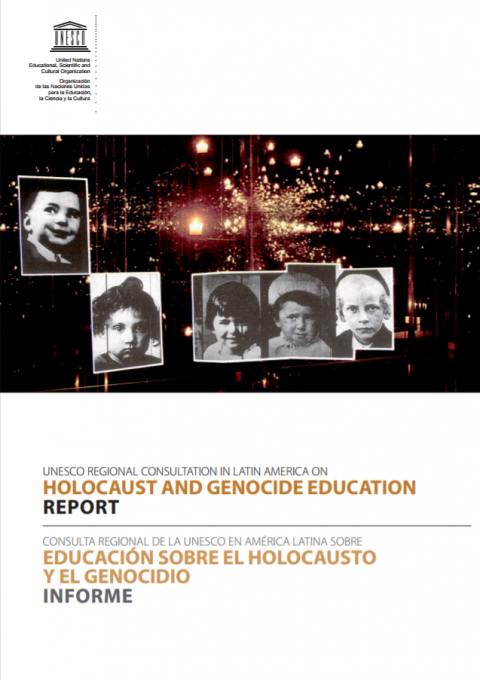 Consulta regional de la UNESCO en América Latina sobre educación sobre el Holocausto y el genocidio: informe Année de publication: 2014 Auteur institutionnel: UNESCO Santiago This consultation with Latin American Member States sought to raise awareness amongst policymakers and education specialists of the region about the history of the Holocaust, as it can contribute to the prevention of genocide, following United Nations General Assembly resolution 60/7 on Holocaust remembrance. The meeting also aimed at fostering concrete cooperation between UNESCO and Member States on education about the history of genocide and mass atrocities, notably the Holocaust, with a view of introducing the subject in the curriculum and of developing relevant educational programmes in the region. The overall objectives of the project were as follows:▶ Strengthen educational leaders’ awareness and support for Holocaust remembrance and education about the history of genocide and mass atrocities, in line with regional efforts to foster education for peace and human rights.▶ Increase the implementation of education programmes about the history of the Holocaust and other genocides, and support interested Ministries of Education to introduce these subjects in the curriculum.▶ Foster regional exchanges about this topic and facilitate access to good practices regarding Holocaust and genocide related issues and peace education.
  Kit Papaz for Bullying and Cyberbullying Prevention and Intervention Année de publication: 2014 Auteur: Lina Saldarriaga | José Fernando Mejía | Enrique Chaux | Andrea Bustamante | Melisa Castellanos | Manuela Jiménez | María Isabel Mejía Auteur institutionnel: Red Papaz | ICBF This Kit is a tool for parents, teachers and caregivers to know what bullying and cyberbullying are, how they can prevent and manage them, and promote healthy school and family coexistence. Kit PaPaz para la prevención y manejo de la intimidación escolar y el ciberacoso Année de publication: 2014 Auteur: Lina Saldarriaga | José Fernando Mejía | Enrique Chaux | Andrea Bustamante | Melisa Castellanos | Manuela Jiménez | María Isabel Mejía Auteur institutionnel: Red Papaz | ICBF Este Kit es una herramienta para que padres, madres docentes y cuidadores conozcan qué son la intimidación escolar y el ciberacoso, cómo pueden prevenirlos y manejarlos y promover la sana convivencia escolar y familiar.
  Virtual Conference: How Can We Prevent Bullying and Cyberbullying? Année de publication: 2019 Auteur: Enrique Chaux Auteur institutionnel: Red Papaz This conference presents strategies that can contribute to preventing and managing bullying and cyberbullying situations, especially emphasizing the role that mothers, fathers, caregivers and teachers can have. Conferencia virtual: ¿Cómo acompañar a nuestros hijos para usar de forma segura las TIC? Année de publication: 2019 Auteur: Enrique Chaux Auteur institutionnel: Red Papaz En esta conferencia se presentan estrategias que pueden contribuir a prevenir y manejar las situaciones de bullying y Cyberbullying, enfatizando especialmente el rol que pueden tener madres, padres, cuidadores y docentes.
  Education for Transformation Année de publication: 2012 Auteur: Marcelo Cabrol | Miguel Székely Auteur institutionnel: Inter-American Development Bank This book presents a diagnosis of the state of educational quality and its priorities (academic achievement, citizenship education, adolescent desertion, and teacher training) in Latin America and the Caribbean at the beginning of the 21st century. It also shows the public policies that can modify this reality. Educación para la transformación Année de publication: 2012 Auteur: Marcelo Cabrol | Miguel Székely Auteur institutionnel: Inter-American Development Bank Este libro presenta un diagnóstico sobre el estado de la calidad educativa y sus prioridades (logro académico, formación en ciudadanía, deserción adolescente y formación docente) en América Latina y el Caribe a inicios del siglo XXI. También muestra las políticas públicas que pueden modificar dicha realidad.
  Education for Immigrant Children, and Youth in the Americas: Current Situation and Challenges Année de publication: 2011 Auteur: María Cecilia Sleiman Auteur institutionnel: Organization of American States (OAS) This report is a synthesis of the results of the "Mapping of Education Policies and Programs for migrant children and youth (2009)" and of the case studies carried out during 2010 within the framework of the project "Education of children and young migrants ”, carried out by the Office of Education and Culture of the OAS. Educación para niñas, niños y jóvenes inmigrantes en las Américas: Situación actual y desafíos Année de publication: 2011 Auteur: María Cecilia Sleiman Auteur institutionnel: Organization of American States (OAS) Este informe es una síntesis de los resultados del “Mapeo de Políticas y Programas de educación de niños, niñas y jóvenes migrantes (2009)” y de los estudios de caso realizados durante el año 2010 en el marco del proyecto “Educación de niños, niñas y jóvenes migrantes”, llevado adelante por la Oficina de Educación y Cultura de la OEA.
  Young People's Views of Government, Peaceful Coexistence, and Diversity in Five Latin American Countries Année de publication: 2018 Auteur: Wolfram Schulz | John Ainley | Cristián Cox | Tim Friedman Auteur institutionnel: International Association for the Evaluation of Educational Achievement (IEA) This report presents the findings of the five Latin American countries that participated in the second cycle of the International Study of Civic and Citizenship Education (ICCS 2016) of the IEA. ICCS 2016 investigated the ways in which various countries are preparing their youth for assume their roles as citizens during the second decade of the XXI century. The study also assume their roles as citizens during the second decade of the XXI century. The study also responded to new challenges in civic and citizenship education, and its findings allow robust comparisons of high school students' attitudes and perceptions to a wide range of aspects related to civic education and citizenship.