
Ressources
Explorez une large gamme de ressources sur le GCED afin d’approfondir votre compréhension et de renforcer vos activités de recherche, de plaidoyer, d’enseignement et d’apprentissage.
2,781 résultats trouvés
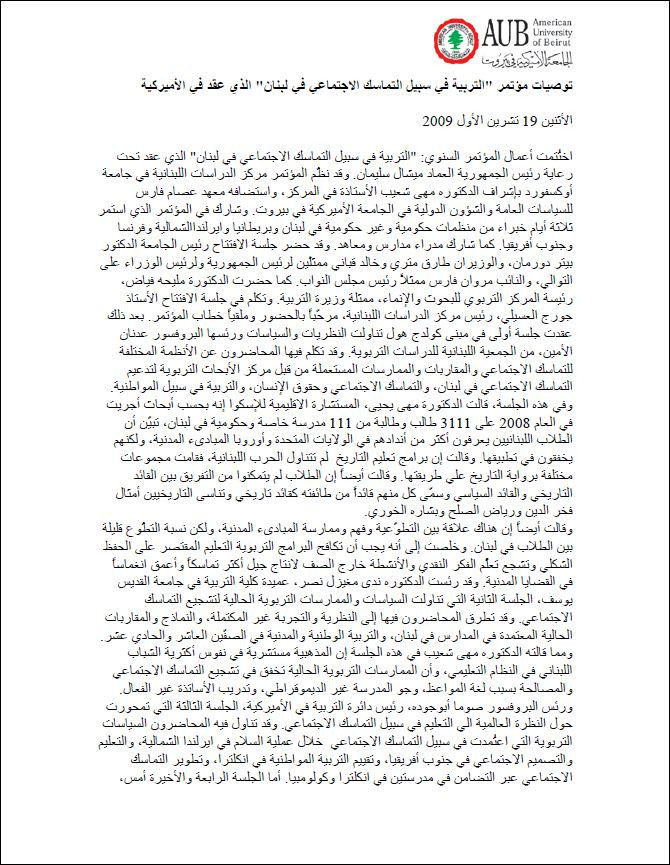 Recommendations of the Conference on "Education for Social Cohesion in Lebanon" Année de publication: 2009 Auteur institutionnel: American University of Beirut The file is a summary of the recommendations that came out of the "Education and Social Cohesion in Lebanon" conference, which was held at the American University in Beirut. The recommendations deal with the challenges of social cohesion in Lebanon with its different sects and ethnic components. This conference lasted for three days and was attended by a group of participants from Lebanon and abroad.
 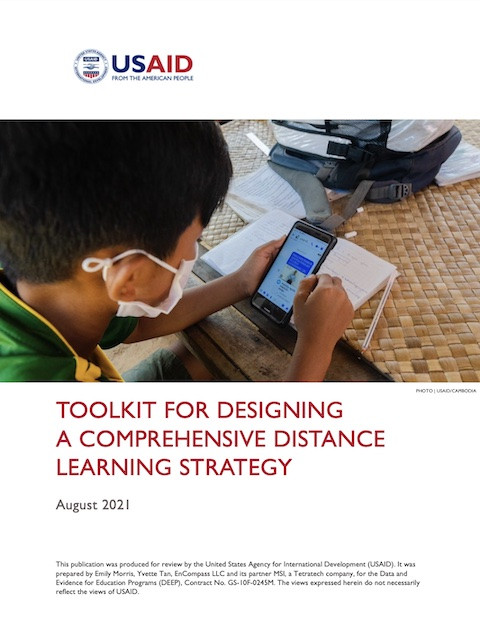 Toolkit for Designing a Comprehensive Distance Learning Strategy Année de publication: 2021 Auteur: Emily Morris | Yvette Tan Auteur institutionnel: United States Agency for International Development (USAID) The purpose of this toolkit is to provide practical guidance (tools, examples, and resources) for designing a comprehensive distance learning strategy that covers an entire education sector or system.
 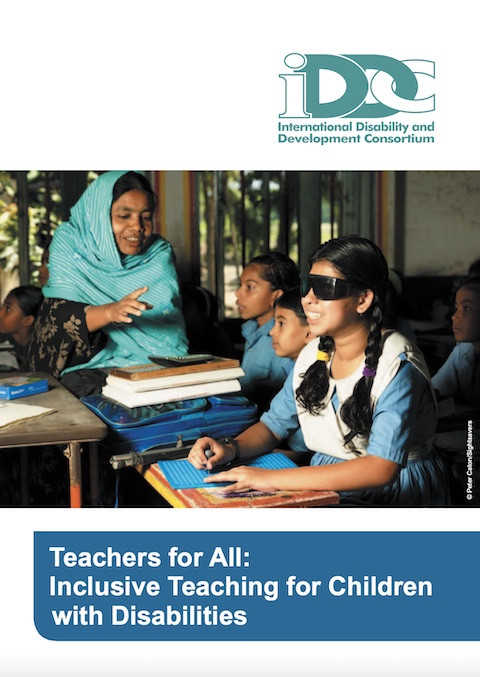 Teachers for All: Inclusive Teaching for Children With Disabilities Année de publication: 2013 Auteur: Ingrid Lewis | Sunit Bagree Auteur institutionnel: International Disability and Development Consortium (IDDC) Globally we need more well-trained and motivated teachers.Good teachers can help ensure that every child learns to their full potential from an early age and enters adult life well-equipped to be active citizens and support the development of their community and country. Many countries do not have enough teachers, let alone enough teachers who have received sufficiently high quality pre- and in-service training and access to continuing professional development. This paper first provides detail about the context and scale of the challenge. It then outlines five broad issues that need addressing if we are to prepare, recruit and support enough teachers, with appropriate skills, to educate every child – including those with disabilities.
 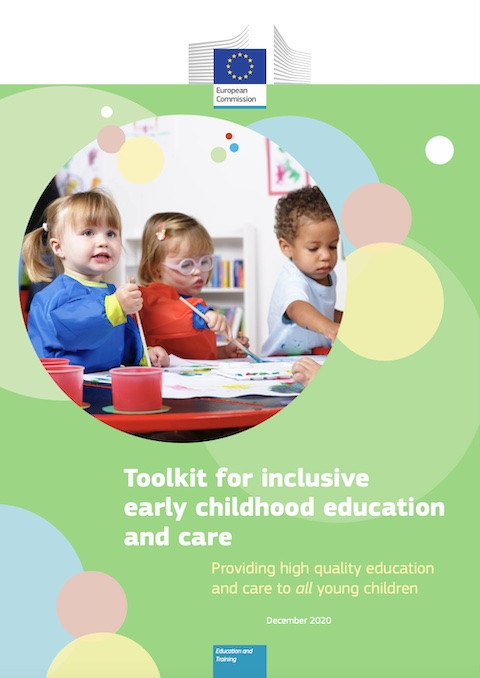 Toolkit for Inclusive Early Childhood Education and Care (ECEC): Providing High Quality Education and Care to All Young Children Année de publication: 2021 Auteur institutionnel: European Commission | European Union (EU) Early childhood education and care (ECEC) is the first step on the lifelong learning ladder. It provides young children with professional support to grow, learn and flourish. While it benefits all children, it is even more crucial to children who may face additional needs or difficulties due to individual or family circumstances, e.g. children living in poverty or precarious conditions, children with disabilities or special learning needs, or children from a migrant background or from a minority ethnic community. All children must therefore be able to benefit from high quality ECEC, independently from their individual or family circumstances. It helps them develop to the best of their abilities and supports their well-being. The European Union 2019 Council Recommendation for High-Quality Early Childhood Education and Care Systems offers a Quality framework for ECEC to support Member States to work towards achieving higher quality and more inclusive ECEC systems. The 2020 Communication from the European Commission on achieving the European Education Area by 2025 announced the release of a European toolkit for inclusion in ECEC, drawing on exchange of best practice and the input of experts and stakeholders. The Toolkit for inclusion in ECEC recalls political commitments made e.g. in the European Pillar of Social Rights, policy recommendations which have been adopted by EU Member States as well as research findings. They all converge towards the need and will to develop more inclusive ECEC systems and settings. To ensure equity for all children in accessing and benefitting from ECEC, the toolkit includes a set of practical solutions and measures to inspire ECEC policy makers at the national, regional or local level, as well as ECEC practitioners. It includes examples of good practice in ECEC settings and identifies useful ideas and resources to inspire leaders and staff across Europe to progress towards practice that is more inclusive. The toolkit aims to inspire decision-makers to use the examples of good practice to create appropriate conditions that can benefit all children and families.
  민주시민교육의 이해와 실천 Année de publication: 2017 Auteur: 주선미 | 이광식 | 신은영 | 강병덕 Auteur institutionnel: 중앙선거관리위원회 선거연수원 본 자료는 민주시민교육의 개념 및 방법에 대한 체계적인 지침과 안내를 목적으로 발간되었으며, 민주시민교육 강의에 필요한 기본 이론학습서이다. 민주시민교육의 의의 및 내용과 방법, 외국의 민주시민교육 사례, 민주시민교육의 현황과 과제 등을 주요 내용으로 담았다.본 저작물은 선거연수원에서 2017년 작성하여 공공누리 제 2유형으로 개방한 ‘민주시민교육의 이해와 실천’ 을 이용하였으며 해당 저작물은 선거연수원 (www.civicedu.go.kr)에서 무료로 다운받으실 수 있습니다.
 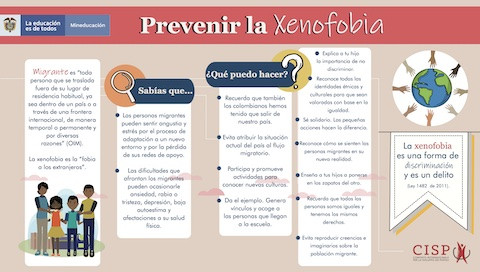 Preventing Xenophobia Auteur institutionnel: Ministry of National Education of Colombia With the massive reception of migrants in many Latin American countries, it is important to understand what xenophobia means and what can be done about it. This infographic proposes several ways to prevent it. Prevenir la xenofobia Auteur institutionnel: Ministry of National Education of Colombia Con la recepción masiva de en migrantes en muchos países de Latinoamérica, es importante comprender que significa la xenofobia y qué se puede hacer frente a ella. Esta infografía propone diversas maneras para prevenirla.
 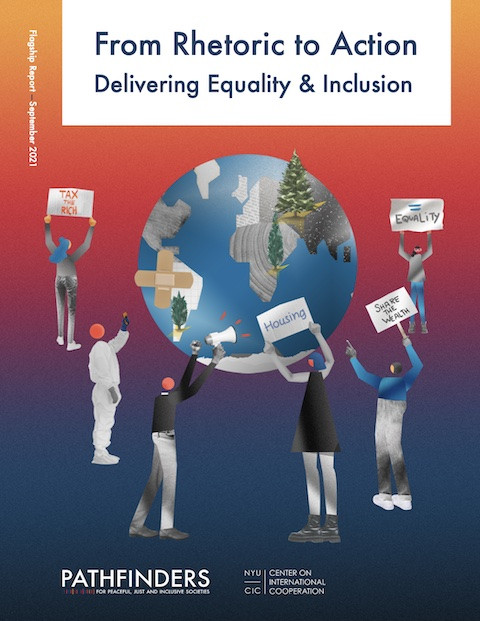 From Rhetoric to Action: Delivering Equality & Inclusion Année de publication: 2021 Auteur: Faiza Shaheen | Alexander Bossakov | Avner Cohen | Amanda Lenhardt | Nendirmwa Noel | Paula Sevilla Núñez | Paul von Chamier Auteur institutionnel: Pathfinders for Peaceful, Just and Inclusive Societies, NYU. Center on International Cooperation This flagship report of the Pathfinders Grand Challenge on Inequality and Exclusion is about the solutions that will deliver equality and inclusion.The report constructs a bridge between the rhetoric of “build back better” and action: a bridge between promise and progress. It underlines the need for renewed social contracts between citizens, civil society, the private sector, and governments, as well as between high and low- and middle-income countries. These social contracts must be built to serve future generations, to guard against climate breakdown and pandemics while delivering respect, opportunity, and justice for all.This report should serve as a practical handbook for policymakers and influencers; as a source of possibility for the public; and, as a call to all political leaders to act.
  ARC8 Outlook Report 2030: Inclusive and Diverse Higher Education in Asia and Europe Année de publication: 2021 Auteur institutionnel: Asia-Europe Foundation (ASEF) The ARC8 Outlook Report 2030 on ʻInclusive and Diverse Higher Education in Asia and Europe’ was initiated with the objective of better understanding the current state, policies and practices of inclusion in higher education and identifying actions that could accelerate greater inclusion in a post-pandemic era.The ARC8 Outlook Report outlines emerging issues that could grow into major challenges and/ or opportunities in the coming 10 years related to inclusion in higher education. Inputs for the report came from an in-depth consultation process and from previous research done by Asian and European stakeholders. The Report consists of 4 chapters which analyse the future of inclusion from different perspectives: Inclusive Learning and Teaching in a Digital World Inclusive and Flexible Lifelong Learning Pathways Inclusive International Mobility of People and Knowledge Equitable Access and Success in Higher Education
 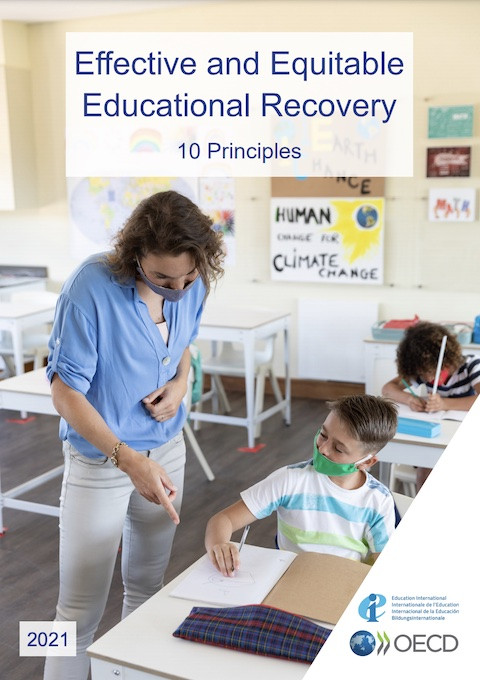 Effective and Equitable Educational Recovery: 10 Principles Année de publication: 2021 Auteur institutionnel: Education International (EI) | Organisation for Economic Co-operation and Development (OECD) The COVID-19 pandemic has led to the frequent closure of school buildings in most countries in the world and has interrupted the school attendance of at least 1.2 billion students in 2020 and 2021. Although many education systems have been able to adapt in varying degrees, the pandemic has shown that countries’ current learning infrastructures are highly vulnerable to external shocks.While schools have shown great resilience in trying to compensate for the crisis, they need to be better prepared for similar challenges. Education systems must ensure the continuity of learning which must be the centrepiece of all considerations.Acknowledging the disruption that the health crisis has brought about and its likely impact on educational quality and equity, the OECD Secretariat and Education International have, based on their respective work during the pandemic, jointly established 10 principles that can facilitate the collaboration of education authorities, the teaching profession and their organisations to navigate the crisis effectively and reshape education systems after the pandemic to reach greater levels of educational quality and equity.Education systems around the world have been facing similar challenges but generated diverse approaches and experiences. The intention is also for these principles to contribute to a framework for international cooperation and peer learning.