
Ressources
Explorez une large gamme de ressources sur le GCED afin d’approfondir votre compréhension et de renforcer vos activités de recherche, de plaidoyer, d’enseignement et d’apprentissage.
1,471 résultats trouvés
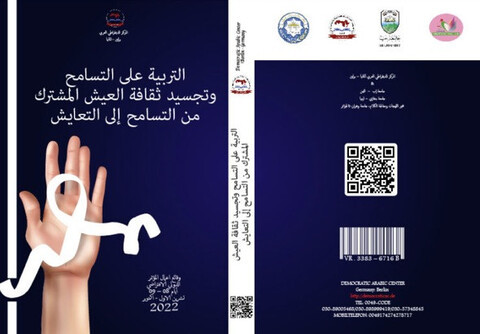 التربية على التسامح وتجسيد ثقافة العيش المشترك من التسامح إلى التعايش Année de publication: 2022 Auteur institutionnel: Democratic Arab Center حظى مفهوم التسامح باهتمام كبير في ضوء المتغيرات المجتمعية المعاصرة من أجل ضمان استقرار المجتمع، وتعايش أفراده في وئام وسلام بالإضافة إلى أهميته على مستوى العلاقات بين الدول وبعضها. التسامح قيمة إنسانية ذات طابع عالمي، ولقد ظهر مفهوم التسامح من حاجة المجتمعات الغارقة في الحروب والاقتتال الأهلي، وهو أعطى تقدما باهرا للمجتمعات والمؤسسات في الغرب، وحرّر الإنسـان من قيود الخوف، لقد أرسى مفهوم التسامح قوانين أكثر إنسانية، وفرض على الـدول أنماطا جديدة مـن التفكير وإعمال العقل لاستنباط مخارج تجنب البشرية العنف والتعصب، وقـد التزمت الأمـم المتحدة بتدعيم التسامح من خلال تعزيز التفاهم المتبادل بين الثقافات والشعوب . وقد تنبهت منظمة اليونسكو للتربية والثقافة والعلـوم التابعة للأمم المتحدة، إلى موضوع ثقافة التسامح فأصدرت في السادس عشر من تشرين الثاني لعام 1995، إعلاناً يتضمـن الـمبـادئ الأساسية للتسامح كثقافة تربوية ونفسية و اجتماعية. وقـد أصبح هذا اليوم ومنذ المؤتمر العام لليونسكو في دورته الثامنة والعشرين، يوماً عالمياً للتسامح Tolerance Education and the Embodiment of Coexistence Culture: From Tolerance to Coexistence Année de publication: 2022 Auteur institutionnel: Democratic Arab Center The concept of tolerance has received great attention in light of contemporary societal changes in order to ensure the stability of society and the coexistence of its members in harmony and peace, in addition to its importance at the level of relations between countries.Tolerance is a human value of a universal nature. The concept of tolerance emerged from the need of societies mired in war and civil strife. It gave remarkable progress to societies and institutions in the West, and liberated people from the shackles of fear. The concept of tolerance established more humane laws and imposed on countries new patterns of thinking. And using reason to devise ways to avoid violence and intolerance for humanity. The United Nations has committed to strengthening tolerance by promoting mutual understanding between cultures and peoples.The United Nations Educational, Scientific and Cultural Organization, UNESCO, became aware of the issue of the culture of tolerance and issued, on November 16, 1995, a declaration containing the basic principles of tolerance as an educational, psychological and social culture. Since the twenty-eighth session of the UNESCO General Conference, this day has become an international day for tolerance.
  دور رياض الأطفال في تنمية المسئولية الاجتماعية لدى طفل الروضة (المجلة العلمية لكلية رياض الأطفال ببورسعيد; Vol. 2020, Issue 16) Année de publication: 2020 Auteur: Zainab Mousa Al Samahi | Eman Gamal Fickry | Manar Mohammed Al Zanati Auteur institutionnel: Port Said University. Faculty of Kindergarten هدف البحث الحالي إلى تقصي دور رياض الأطفال في تنمية المسئولية الاجتماعية لدى طفل الروضة تكونت عينة البحث من (98) معلمة رياض أطفال تم اختيارهن بطريقة عشوائية من إدارة دمياط التعليمية بمحافظة دمياط و اعتمدت الباحثة على المنهج الوصفي و لتطبيق أهداف البحث تم استخدام استبانة من إعداد الباحثة و تطبيقها على عينة البحث وقد توصلت نتائج البحث إلى مجموعة من العوامل التي تحول دون قيام رياض الأطفال بدورها في تنمية المسئولية الاجتماعية لدى طفل الروضة منها: الإثابة القليلة من المعلمة للطفل عندما يتعاون مع زملائه قلة الإمكانات المادية التي توفرها إدارة الروضة لتطوير الأنشطة التي تعزز تحمل الطفل المسئولية- قصور إدارة الروضة في توظيف إمكاناتها المادية المتاحة لخدمة المجتمع المحلي. The Role of Kindergarten in the Development of Social Responsibility of the Kindergarten Child (Scientific Journal of the Faculty of Kindergarten in Port Said; Vol. 2020, Issue.16) Année de publication: 2020 Auteur: Zainab Mousa Al Samahi | Eman Gamal Fickry | Manar Mohammed Al Zanati Auteur institutionnel: Port Said University. Faculty of Kindergarten The research aimed to investigate the role of kindergartens in developing social responsibility for the kindergarten child. The research sample consisted of (98) kindergarten teachers, chosen randomly from the Damietta Educational Administration in Damietta Governorate, and the researcher relied on the descriptive approach. To apply the research goals, a questionnaire was used from the researcher's preparation and application to the research sample, The results of the research found a set of factors that prevent kindergartens from playing their role in developing social responsibility of the kindergarten child, including: The small reward of the teacher for the child when he cooperates with his colleagues, a lack of training the teacher for the child to wear his clothes himself, the lack of material resources provided by the kindergarten to develop activities that enhance the child’s responsibility - the kindergarten’s failure to use its financial possbilities to serve the local community.
 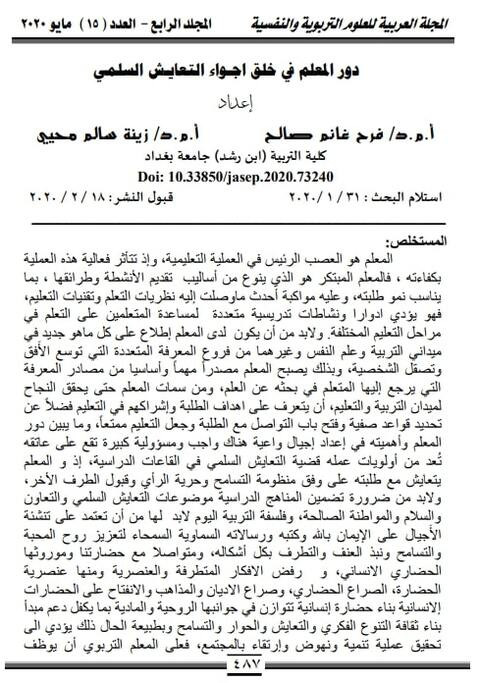 دور المعلم في خلق اجـواء التعايـش السلمي (المجلة العربية للعلوم التربوية والنفسية; Vol. 4, No. 15) Année de publication: 2020 Auteur: Farah Ghanem Saleh | Zeina Salem Mohy Auteur institutionnel: Ibn Rushd College of Education المعلم هو العصب الرئيس في العملية التعليمية، وإذ تتأثر فعالية هذه العملية بکفاءته ، فالمعلم المبتکر هو الذي ينوع من أساليب تقديم الأنشطة وطرائقها ، بما يناسب نمو طلبته، وعليه مواکبة أحدث ماوصلت إليه نظريات التعلم وتقنيات التعليم، فهو يؤدي ادوارا ونشاطات تدريسية متعددة لمساعدة المتعلمين على التعلم في مراحل التعليم المختلفة. ولابد من أن يکون لدى المعلم إطلاع على کل ماهو جديد في ميداني التربية وعلم النفس وغيرهما من فروع المعرفة المتعددة التي توسع الأَفق وتصقل الشخصية، وبذلک يصبح المعلم مصدراً مهماً وأساسيا من مصادر المعرفة التي يرجع إليها المتعلم في بحثه عن العلم، ومن سمات المعلم حتى يحقق النجاح لميدان التربية والتعليم، أن يتعرف على اهداف الطلبة وإشراکهم في التعليم فضلاً عن تحديد قواعد صفية وفتح باب التواصل مع الطلبة وجعل التعليم ممتعاً، وما يبين دور المعلم وأهميته في إعداد إجيال واعية هناک واجب ومسؤولية کبيرة تقع على عاتقه تُعد من أولويات عمله قضية التعايش السلمي في القاعات الدراسية، إذ و المعلم يتعايش مع طلبته على وفق منظومة التسامح وحرية الرأي وقبول الطرف الأخر، ولابد من ضرورة تضمين المناهج الدراسية موضوعات التعايش السلمي والتعاون والسلام والمواطنة الصالحة The Role of the Teacher in Creating an Atmosphere of Peaceful Coexistence (Arab Journal of Educational and Psychological Sciences; Vol.4, No.15) Année de publication: 2020 Auteur: Farah Ghanem Saleh | Zeina Salem Mohy Auteur institutionnel: Ibn Rushd College of Education The teacher is the main nerve in the educational process, and the effectiveness of this process is affected by his competence. The innovative teacher is the one who diversifies the approaches and methods of presenting activities to suit the growth of his students. He must keep up with the latest developments in learning theories and teaching techniques. He performs multiple teaching roles and activities to help learners achieve Learning at different stages of education. The teacher must have knowledge of everything new in the fields of education, psychology, and other multiple branches of knowledge that broaden the horizon and refine the personality. Thus, the teacher becomes an important and essential source of knowledge that the learner returns to in his search for knowledge. One of the characteristics of a teacher, in order to achieve success in the field of education, is to know the goals of students and involve them in education, in addition to setting classroom rules, opening the door to communication with students, and making education enjoyable. What shows the role of the teacher and his importance in preparing conscious generations is that there is a great duty and responsibility that falls on his shoulders, which is considered one of the priorities of his work are the issue of peaceful coexistence in the classrooms, as the teacher coexists with his students according to the system of tolerance, freedom of opinion, and acceptance of the other party, and it is necessary to include in the school curricula the topics of peaceful coexistence, cooperation, peace, and good citizenship.
  United Nations Strategy and Plan of Action on Hate Speech: Detailed Guidance on Implementation for United Nations Field Presences Année de publication: 2020 Auteur institutionnel: United Nations (UN) The Strategy and Plan of Action acknowledges that hate speech has the potential to incite violence and undermine social unity. It recognizes that hate speech has been a precursor to atrocity crimes, including genocide, over the past 75 years. This approach to coordinating efforts across the UN system to identify, prevent and confront hate speech is grounded in international human rights standards, including the right to freedom of opinion and expression, principles of equality and non-discrimination, as well as other fundamental rights. The Strategy aims to give the United Nations the room and the resources to address hate speech, which poses a threat to UN principles, values and programmes. It guides the UN system on how to address hate speech and includes ways to support United Nations Resident Coordinators’ action in addressing and countering hate speech on the ground.
 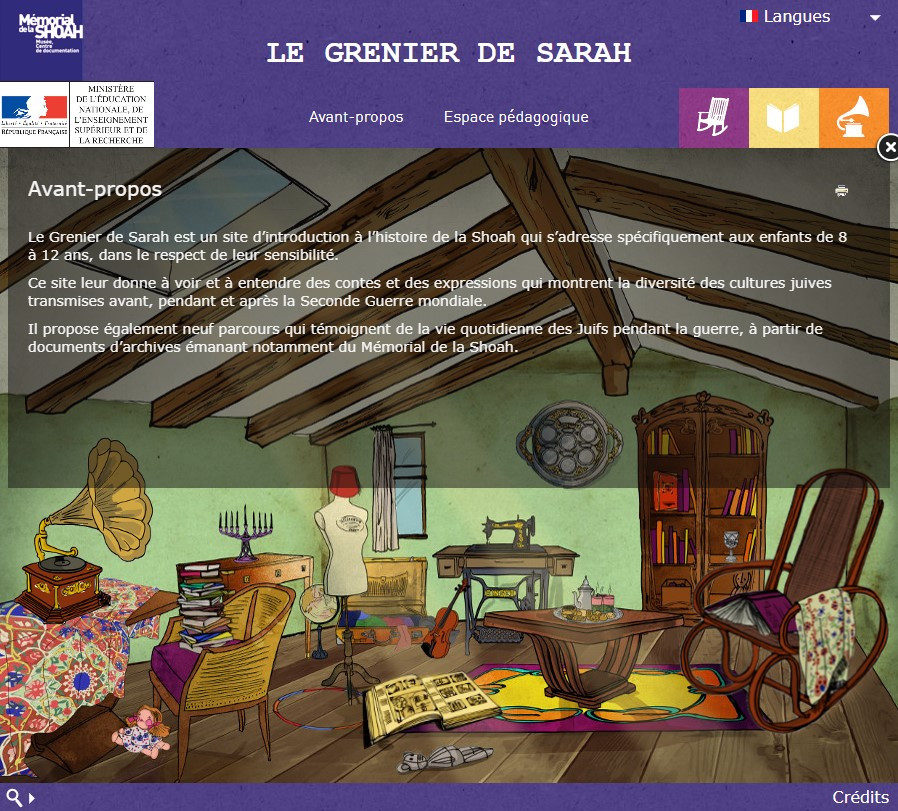 Le grenier de Sarah Auteur: Jacques Fredj | Barbara Mellul | Adeline Salmon | Barbara Mellul | Adeline Salmon | Tralalère | Alliance concept | Judith Panijel | Alban Perrin | Iannis Roder Lior Lalieu-Smadja | Karen Taieb | Ariel Sion Auteur institutionnel: Memorial de la Shoah Le Grenier de Sarah est un site d’introduction à l’histoire de la Shoah, créé spécifiquement pour les enfants de 8 à 12 ans, dans le respect de la sensibilité des jeunes visiteurs. Les choix éditoriaux et iconographiques du site traduisent scrupuleusement cette volonté de ne pas les choquer. Le site a été conçu à partir du questionnement des enfants sur cette période.- Qui étaient ces personnes que les nazis ont voulu assassiner ?- Dans quels pays vivaient-elles ? Quelles langues parlaient-elles ?- Quels ont été les parcours propres à chacune d’entre-elles ?Le Grenier de Sarah permet aux enfants de naviguer sur le site de façon autonome. Toutefois, il est conseillé aux adultes de les accompagner lors de leur première visite afin d’instaurer un dialogue et de répondre à d’éventuelles questions.Pour y répondre, trois rubriques, « Il était une fois », « Des mots à l’oreille » et « En noir et blanc », donnent des clefs de compréhension.- Dans « Il était une fois », des contes donnent un aperçu de la diversité des cultures juives. - Dans « Des mots à l’oreille », des expressions en hébreu, yiddish, judéo-espagnol et judéo-arabe ouvrent une fenêtre sur la pluralité du judaïsme. - Dans « En noir en blanc », neuf parcours témoignent de la vie quotidienne des Juifs pendant la guerre. En cliquant sur l’album photo, l’enfant choisit d’entendre un des récits de vie proposés.Tout au long de chaque parcours, des définitions et des documents, sont à la disposition du jeune visiteur. Pour les enseignants, un espace pédagogique spécifique a été créé afin d’y trouver des ressources complémentaires et des pistes de travail. Sarah’s attic is a website introducing to the Shoah History. It was specifically created for children from age 8 to 12 and respects their sensibility as young visitors. The contents and iconography are carefully intended to suit their emotional and cognitive abilities.The website was designed and elaborated from questions asked by children in History classes teaching this time period - Who were these persons the Nazis wanted to murder?- In which countries did they live? Which languages did they speak?- What were their personal experiences? Sarah’s attic enables children to navigate through the website on their own. Nevertheless, we recommend that adults accompany them on their first visit in order to create a dialog and answer possible questions.As part of a school or extra-curricular framework, this program can be used in small groups with the guidance of an adult.In order to answer these questions, three sections “Once upon a time”, “Words to my ear” and “In black and white” give keys to understanding the event.- In “Once upon a time”, tales give a glimpse of the diversity of Jewish cultures. - In “Words to my ear”, expressions in Hebrew, Yiddish, Judeo-Spanish and Judeo-Arabic open a window on the pluralism of Judaism. - In “In Black and white”, nine personal itineraries bear witness of the daily life of Jews during the war. Along each personal story, definitions and documents are available to the young visitor.For teachers and educators, a specific educational section contains additional resources, guidelines and teaching materials.
 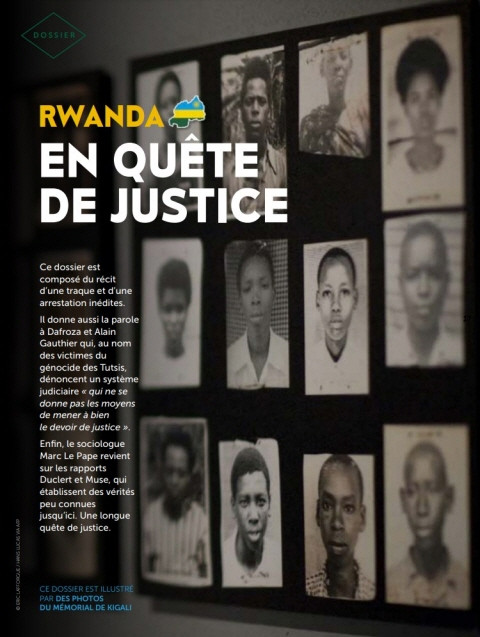 Rwanda: In Search of Justice(Humains; no.30) Année de publication: 2024 Auteur institutionnel: Action by Christians for the Abolition of Torture (ACAT France) On the thirtieth anniversary of the genocide of the Tutsis in Rwanda, ACAT-France looks back at this tragic event for human rights. Discover the dossier in the magazine Humains #32 devoted to this subject. Rwanda: En quête de justice (Humains; n° 30) Année de publication: 2024 Auteur institutionnel: Action by Christians for the Abolition of Torture (ACAT France) À l’occasion du trentième anniversaire du génocide des Tutsis au Rwanda, l’ACAT-France revient sur cet événement tragique pour les droits de l’Homme. Découvrez le dossier de la revue Humains #32 consacré à ce sujet.