
Ressources
Explorez une large gamme de ressources sur le GCED afin d’approfondir votre compréhension et de renforcer vos activités de recherche, de plaidoyer, d’enseignement et d’apprentissage.
1,180 résultats trouvés
 유네스코 미래담론 연구 Année de publication: 2023 Auteur: 전상인 | 김두환 | 박범순 | 한준 | 박남기 | 백영연 Auteur institutionnel: 유네스코한국위원회 이 보고서는 미래문해력 증진을 위한 기초연구이다. 한국의 미래가 주요 관심이나, 이는 인류 전체의 미래에 대한 통찰과도 무관하지 않을 것이다. 이 보고서에서는 미래를 ‘한 세대’에 해당하는 향후 30년 정도로 상정했다. 먼저 유관 전문가들이 교육과 문화, 과학 및 커뮤니케이션 영역에서 각각 어떤 변화를 예상하는지를 검토했다. 이를 바탕으로 보통의 한국인이 해당 영역의 미래를 어떻게 인식하고 있는지를 살펴보기 위해 전국적 설문조사가 필요하다고 판단하여, 이를 위한 설문조사 문항 초안을 제안했다. 만약 후속 연구로서 이와 같은 설문조사가 이루어진다면 미래문해에 대한 전문가와 일반인들의 공통점 및 차이점을 드러낼 수 있을 것이며, 경우에 따라 외국의 미래문해 현황과의 비교도 가능할 것이다. 궁극적으로는 한국사회의 미래문해력 증진을 위한 정책적 노력에도 일조하게 될 것이다.
  3 minutes pour comprendre l’Europe Année de publication: 2021 Auteur institutionnel: Toute l’Europe Vous n’êtes pas spécialiste des questions européennes ? Mais vous souhaitez en avoir une première approche sans vous confronter au jargon et discours trop technique ? Alors cette rubrique est pour vous ! Parce qu’il y a mille et une façons de parler de l’Union européenne, Toute l’Europe a choisi de vous présenter l’Europe “en toute simplicité” à travers des articles courts et faciles à lire. Une série d’épisodes de trois minutes, dans lesquels vous trouverez l’essentiel pour mieux comprendre l’Europe. You are not a specialist of European issues ? But you want to have a first approach without confronting yourself with too much technical language ? Then this section is for you ! Because there is a thousand and one ways to talk about the European Union, Toute l’Europe has chosen to present Europe "in all simplicity" through short and easy-to-read articles. A serie of three-minutes episodes in which you will find the essentials to better understand Europe.
  Popular Education and Critical Pedagogies in Latin America and the Caribbean: Emancipatory Currents for Public Education in the 21st Century Année de publication: 2018 Auteur: Estela Quintar | Inés Cappellacci | Anahí Guelman | Claudia Loyola | María Mercedes Palumbo | Shirly Said | Laura Tarrio | Silvya De Alarcón | Beatriz Areyuana | Fabián Cabaluz | Felipe Zurita | Jonathan Piedrahita | Yicel Giraldo | Cindy Guzmán | Yolanda Pino | Andrés Castaño | Mónica Salazar Castilla | Héctor Fabio Ospina | Piedad Ortega Valencia | María Teresa Cruz Bustamante | Juan Carlos Hernández | Cándida Chávez | Ariana Celeste Aquino | Suyapa Pérez | Danilo R. Streck | Alfonso Torres Carrillo | Alfredo Manuel Ghiso | Oscar Jara Holliday Auteur institutionnel: Consejo Latinoamericano de Ciencias Sociales (CLACSO) In the pages and chapters of the book you walk through the corners of Bolivia with indigenous voices and struggles, through a Chile and an Argentina that go through stories, struggles and disputes over public affairs in the midst of hostile contexts, through a Central America (El Salvador, Costa Rica and Mexico) that rescues a tremendous legacy of organizational and revolutionary processes, and for Colombia, which in its fight for peace, collects the voices of organized youth. At the same time, this construction takes up great thinkers and collective actors who have enriched the paths of Popular Education and Critical Pedagogies.Thus, crossed by our Latin American history, by the distressing challenges and tensions that democracies go through today in each of our territories and contexts, by the conservative restorations that condition and surround us, Critical Pedagogies and Popular Education cannot but, according to what we have been seeing, that working in defense of the right to education that seems to be liquefying in several of our countries, they cannot help but put on the attire of a teacher to resist, from the state public school, the right to learn from children and young people and the right to be a teacher, to teach, of thousands of teachers who seem to want to be replaced by “educational leaders” and canned technological programs, with very good dividends for their importers.
 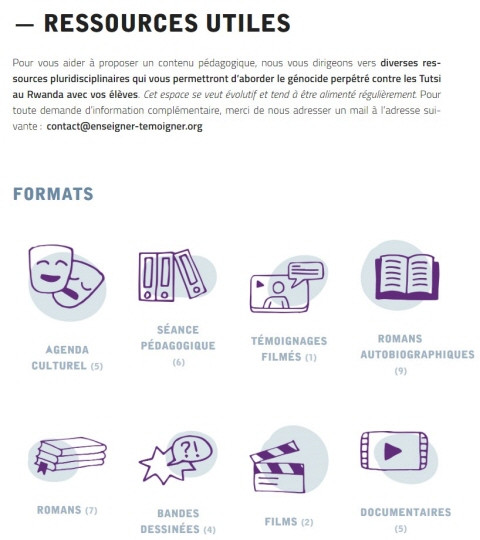 Enseigner Témoigner Année de publication: 2024 Auteur institutionnel: Ligue de l'enseignement, Fédération de Paris & Ibuka France En 1994, environ 1 million de Tutsi ont été tués au Rwanda. Le génocide perpétré contre les Tutsi au Rwanda constitue l’une des principales tueries du XXème siècle. Elle a été rendue possible par l’action d’extrémistes qui ont, pendant des années, attisé la haine anti-tutsi au sein de la population rwandaise à coup de préjugés, de fausses informations, d’accusations en miroir, de stratégie de manipulation et de conditionnement des esprits à la peur, à la haine et à la violence meurtrière.Avec l’inscription récente de son enseignement dans les programmes scolaires, de plus en plus d’enseignants travaillent avec leurs élèves sur cet événement majeur de l’histoire du XXème siècle. Parallèlement, des rescapés ressentent le besoin de témoigner pour partager leur histoire avec la jeune génération et prévenir ainsi les mécanismes qui ont rendu ce drame possible. Dans ce contexte, l’association Ibuka France et la Ligue de l’enseignement engagent une action commune pour proposer un accompagnement dans l’organisation et la gestion pédagogique d’une rencontre avec un témoin-rescapé en classe. Cet accompagnement vise à créer un cadre à la fois utile et sécurisant pour l’ensemble des acteurs engagés et impactés par le témoignage en classe. In 1994, around 1 million Tutsis were killed in Rwanda. The genocide perpetrated against the Tutsis in Rwanda is one of the major killings of the twentieth century. It was made possible by the actions of extremists who, for years, stirred up anti-Tutsi hatred among the Rwandan population by means of prejudice, false informations, mirror-image accusations, a strategy of manipulation and the conditioning of minds to fear, hatred and murderous violence.With the recent inclusion of the subject in school curricula, more and more teachers are working with their pupils on this major event in the history of the 20th century. At the same time, survivors are feeling the need to share their stories with the younger generation and prevent the mechanisms that made this tragedy possible. Against this backdrop, Ibuka France and the Ligue de l'enseignement have joined forces to offer support in organising and managing a meeting with a survivor-witness in the classroom. The aim of this support is to create a framework that is both useful and reassuring for all those involved and affected by the testimonial in the classroom.
  The Transforming Education Summit: A Toolkit for Education Unions Année de publication: 2022 Auteur institutionnel: Education International (EI) For the first time ever, the Heads of State of the world are meeting to discuss progress in education. Convened by the UN Secretary General, the Transforming Education Summit (TES) is taking place on 19 September 2022 in New York. It is a very important opportunity for us as education unions to make our voices heard.The Summit is a crisis response: it aims to reverse the downward trends that we currently see in education, with deepened and exacerbated inequity, and cuts to education budgets. Not only is the world off track to achieve Sustainable Development Goal 4 (SDG 4), the COVID-19 pandemic has wiped out 20 years of education gains. This is why the UN Secretary-General is calling for urgent action.The Summit is the biggest international education event since the adoption of SDG4 and a significant political opportunity for all EI member organisations. There are multiple ways that education unions can engage in the lead up to the Summit.This toolkit includes EI’s key policy messages for the Summit and aims to support EI member organisations in their advocacy efforts to ensure the Summit has concrete, tangible outcomes that advance teachers’ status and rights and the fulfilment of the right to education for all.
 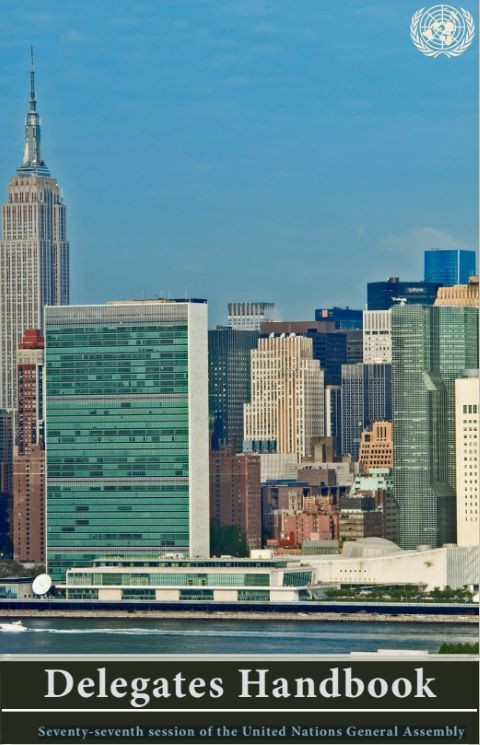 Delegates Handbook 2022: Seventy-seventh Session of the United Nations General Assembly Année de publication: 2022 Auteur institutionnel: UN. Department for General Assembly and Conference Management (UN. DGACM) The Protocol and Liaison Service contributes to the Delegates’ Handbook, a booklet that contains information of a general nature about United Nations Headquarters and is applicable throughout the current session. Suggestions for changes to the booklet should be addressed to the General Assembly Affairs Branch (room S-30FW; email: gaab<at>un.org). This booklet is also available on the internet at the United Nations Delegates website as well as the General Assembly website, under Resources.
 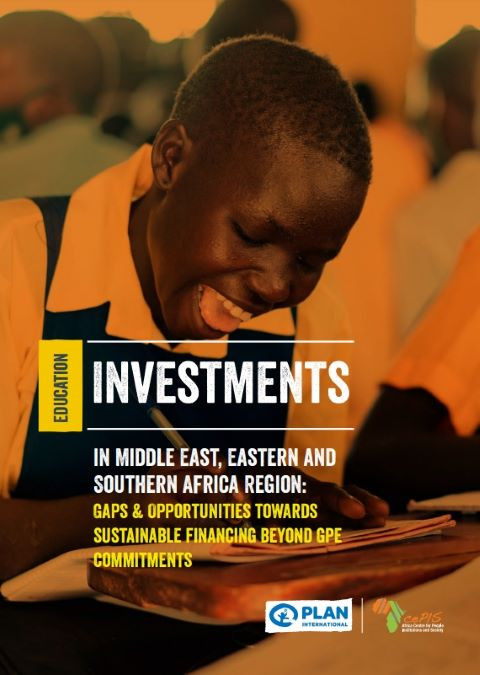 Education Investments in Middle East, Eastern and Southern Africa: Gaps & Opportunities Towards Sustainable Financing Beyond GPE Commitments Année de publication: 2022 Auteur institutionnel: Plan International To achieve the goals of the global and continental agendas of repositioning access, equity, quality education and skills development as key drivers of inclusive growth and sustainable development, African governments must provide a level of predictable and sustainable investment in education. With these strategic investments, African countries can change the status quo, accelerate the pace of catching up with the developed countries and be able to compete in an increasingly technology and knowledge-based world where skills have become the “global currency of the 21st century”. Plan International in Middle East, Eastern and Southern Africa commissioned a study to assess the extent to which the Education Sector budget is adequate, gender-responsive and inclusive and to analyse education budget trends between 2019 and 2021. The focus was to generate concrete evidence regarding trends in education sector budget allocations and expenditure. Furthermore, due to the recent pandemic, the study aimed to compare current and previous allocations to detect trends/patterns in allocations and any reallocations due to COVID-19. Specifically, the study sought to: Analyse allocations (and expenditure) to the education sector with a particular focus on initiatives aimed at supporting the provision of gender-responsive and disability-inclusive education in line with the country policies; Assess the efficiency of resource allocation and use against planned expenditure; and Recommend effective strategies for CSOs and citizens to advocate for education budget increase to or above 20% of the national budget and 6% of GDP. The study focused on 10 countries in the region – Kenya, Uganda, Zambia, Malawi, Zimbabwe, South Sudan, Tanzania, Egypt, Somalia and Rwanda. With a multi-pronged research process of budget tracking and analysis, policy analysis, political economy analysis and varied data collection methods – the research findings and recommendations are ready for wider dissemination and use.
 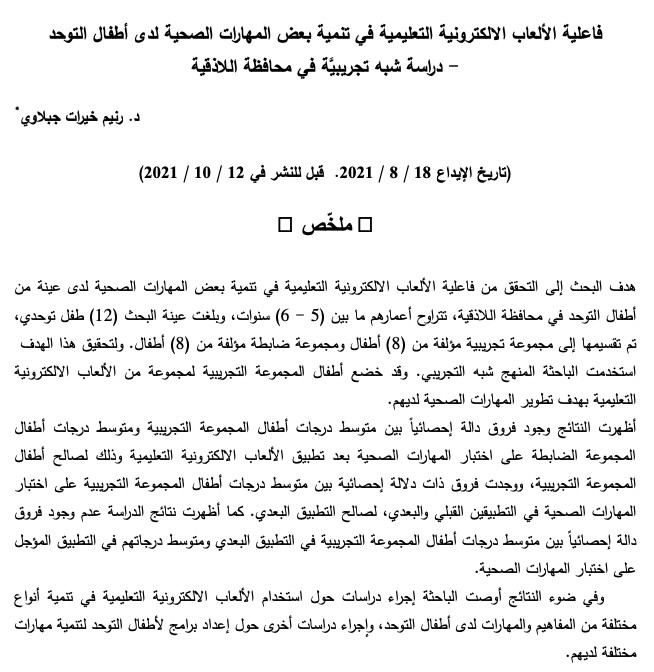 The Effectiveness of Educational Electronic Games in Developing Some Health Skills of Autistic Children Semi-Experimental Study in Lattakia Governorate (Tishreen University Journal for Research and Scientific Studies, Arts and Humanities; vol. 43, no. 5) Année de publication: 2021 Auteur: Raneem Jablawi Auteur institutionnel: Tishreen University "The aim of the research is to verify the effectiveness of educational electronic games in developing some health skills among a sample of autistic children in Lattakia Governorate, their ages ranged between (5-6) years, and the research sample amounted to (12) autistic children, which were divided into an experimental group consisting of (8) children and a control group consisting of (8) children. To achieve this goal, the researcher used the quasi-experimental method. The children of the experimental group were subjected to a set of educational electronic games in order to develop their health skills.The results showed that there were statistically significant differences between the average scores of the children of the experimental group and the average scores of the children of the control group on the health skills test after the application of educational electronic games, in favor of the children of the experimental group, and there were statistically significant differences between the average scores of the children of the experimental group on the health skills test in the two tribal applications. and dimensional, in favor of dimensional application. The results of the study also showed that there were no statistically significant differences between the average scores of the experimental group children in the post application and their average scores in the delayed application on the health skills test.In light of the results, the researcher recommended conducting studies on the use of educational electronic games in developing different types of concepts and skills for autistic children, and conducting other studies on preparing programs for autistic children to develop different skills for them."
 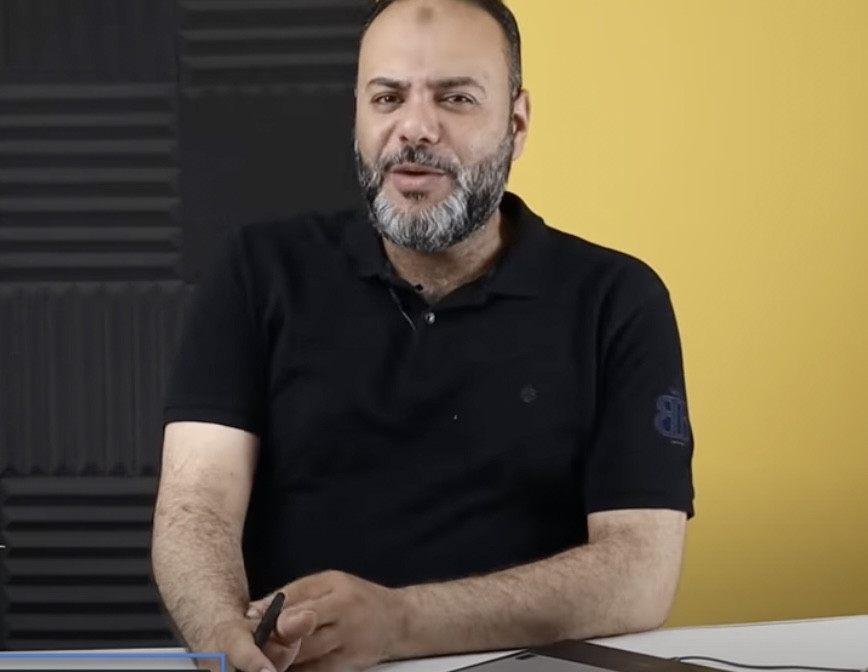 منهج تربية وطنية للصف الثالث الثانوي Année de publication: 2022 Auteur: Moahmmed Ali Auteur institutionnel: ELkheta Seniors يستعرض الفيديو حلقة كاملة عن منهج التربية الوطنية للصف الثالث الثانوي بمصر. يحاول المعلم أن يتحدث عن جميع المواضيع التي يحتويها المنهج، ويعمل مراجعة متكاملة للمنهج. يعتبر الفيديو مهم للطلبة الذين يدرسون باستقلالية لفهم مادة التربية الوطنية. National Education Curriculum for the Third Grade of Secondary Année de publication: 2022 Auteur: Moahmmed Ali Auteur institutionnel: ELkheta Seniors The video reviews a full episode of the national education curriculum for the third secondary grade in Egypt. The teacher tries to talk about all the topics included in the curriculum, and makes an integrated review of the curriculum. The video is important for students who study independently to understand civics.