
Ressources
Explorez une large gamme de ressources sur le GCED afin d’approfondir votre compréhension et de renforcer vos activités de recherche, de plaidoyer, d’enseignement et d’apprentissage.
2,660 résultats trouvés
 Protection of Victims of Sexual Violence in Côte d'Ivoire: Progress Made, but Many Gaps Remain (FIDH; no. 818f) Année de publication: 2023 Auteur: Alice Mogwe | Eléonore Morel Auteur institutionnel: International Federation for Human Rights (FIDH) The International Federation for Human Rights (FIDH) has published a follow-up report on sexual violence protection measures in Côte d'Ivoire, in association with several other local associations. The aim of this note is to study these new measures in the light of the recommendations in the FIDH report, in order to gain an overall view of the situation, draw up an initial assessment of the progress made, and highlight the points to be strengthened in order to improve the status of women in the country. Protection des victimes de violences sexuelles en Côte d’Ivoire : des avancées mais encore de nombreuses lacunes (FIDH; n° 818f) Année de publication: 2023 Auteur: Alice Mogwe | Eléonore Morel Auteur institutionnel: International Federation for Human Rights (FIDH) La Fédération internationale pour les droits humains (FIDH) publie une note de suivi des dispositifs de protection des violences sexuelles en Côte d’Ivoire avec plusieurs autres associations locales associées. Cette note vise à étudier ces nouveaux dispositifs à l’aune des recommandations du rapport de la FIDH afin d’avoir une vision globale de la situation, de dresser un premier bilan des avancées réalisées et de souligner les points à renforcer pour améliorer la condition des femmes dans le pays.
  From Civic Education to Citizenship Education: Citizenship Values in the Geography Curriculum; The Problem of Understanding and Downloading (International Journal of Educational and Psychological Studies; vol. 6, no. 17) Année de publication: 2022 Auteur: Al-Hassan Farkakoum Auteur institutionnel: Democratic Arab Center This paper aims to contribute to revealing the extent to which the values of citizenship and human rights are present in the social studies lesson in Moroccan public schools, specifically in the middle school education curriculum. The inclusion of human rights values at this level raises several problems that lead to two complementary trends: The first is related to the didactics of human rights and citizenship education, and the second trend is related to the extent of the learner’s ability to acquire and represent the values of citizenship and transform them into automatic daily behaviors and practices in the school environment and then after that in daily public life and private transactions. من التربية الوطنية إلى التربية على المواطنة قيم المواطنة في منهاج الاجتماعيات: إشكالية الفهم والتنزيل (مجلة الدراسات التربوية والنفسية ;no.17, vol.6) Année de publication: 2022 Auteur: Al-Hassan Farkakoum Auteur institutionnel: Democratic Arab Center تهدف هذه الورقة الإسهام في كشف مدى حضور قيم المواطنة وحقوق اإلنسان في درس الاجتماعيات بالمدرسة العمومية المغربية، وتحديدا في منهاج التعليم الثانوي الإعدادي. إن إدراج قيم حقوق اإلنسان في هذا المستوى يطرح عدة إشكالات تصب في منحيين يكمل بعضهما البعض، الأول مرتبط بديداكتيك مادة حقوق اإلنسان والتربية على المواطنة، والمنحى الثاني له عالقة بمدى قدرة المتعلم على اكتساب قيم المواطنة وتمثلها وتحويلها إلى سلوكات وممارسات تلقائية يومية في الوسط المدرسي ثم بعد ذلك في الحياة العامة اليومية والمعاملات الخاصة.
  Evidence on Inclusive Education in Kazakhstan based on a Formative and a Big Data Evaluation Année de publication: 2024 Auteur: Arseniy Gurin | Udayan Rathore | Zhanar Zhaxylykova Auteur institutionnel: UNICEF Kazakhstan The objective of the JB formative evaluation was to examine the functioning of the state education programmes between 2011 and 2021 with a special focus on inclusivity. This covered children from pre-school to secondary school levels. The Big data evaluation or Social Media Listening (SML) study focused on the same age group of children and aimed to further the understanding of different stakeholder perspectives, as expressed via social media and online news media outlets. The demography of Kazakhstan reflects that it is a relatively young country. Given that the youth are more inclined to using social media, this is an important source of discussions in the country, including those on inclusive education. Результаты формативной оценки образования с фокусом на инклюзивность и оценки с использованием больших данных Année de publication: 2024 Auteur: Arseniy Gurin | Udayan Rathore | Zhanar Zhaxylykova Auteur institutionnel: UNICEF Kazakhstan Целью формативной оценки JB было изучение функционирования государственных образовательных программ в период с 2011 по 2021 год с особым фокусом на инклюзивность. Она охватывала детей дошкольного возраста и возраста средней школы. Оценка с применением больших данных или «Мониторинг социальных сетей» (МСС) были сосредоточены на одной и той же возрастной группе детей и были направлены на дальнейшее понимание различных точек зрения заинтересованных сторон, выраженных посредством социальных сетей и интернет-СМИ. Демографическая ситуация отражает то, что Казахстан относительно молодая нация. Принимая во внимание, что молодежь более склонна к использованию социальных сетей, они представляют собой важный источник обсуждений в стране, в том числе по вопросам инклюзивного образования.
  Мониторинг показателей Целей устойчивого развития в Кыргызской Республике Année de publication: 2021 Auteur institutionnel: ПРООН в Кыргызстане Сборник содержит статистические данные мониторинга достижения 16 Целей устойчивого развития, характеризующие основные социально-экономические показатели жизни населения за 2010, 2014-2020 годы. Сборник подготовлен на основе данных, получаемых органами статистики от предприятий, организаций, населения, а также административных источников.
  Disability Discrimination in the Digital Realm: How the ICRPD Applies to Artificial Intelligence Decision-Making Processes and Helps in Determining the State of International Human Rights Law (Human Rights Law Reivew; Volume. 23, Issue. 3) Année de publication: 2023 Auteur: Tetyana Krupiy | Martin Scheinin Scholars have identified challenges to protecting individuals from discrimination in contexts where organisations deploy artificial intelligence decision-making processes. While scholarship on ‘digital discrimination’ is growing, scholars have paid less attention to the impact of the use of artificial intelligence decision-making processes on persons with disabilities. This article posits that while the use of artificial intelligence technology can be beneficial for some purposes, its deployment can also construct a disability. The article demonstrates that the Convention on the Rights of Persons with Disabilities can be interpreted in a manner that confers a wide variety of human rights on persons with disabilities in the context when entities deploy artificial intelligence decision-making processes. The article proposes a test for digital discrimination based on disability and shows how it can be incorporated into the treaty through legal interpretation. Thereafter, it moves to developing an analogous general test for digital discrimination under international human rights law, applicable beyond a catalogue of protected characteristics.
 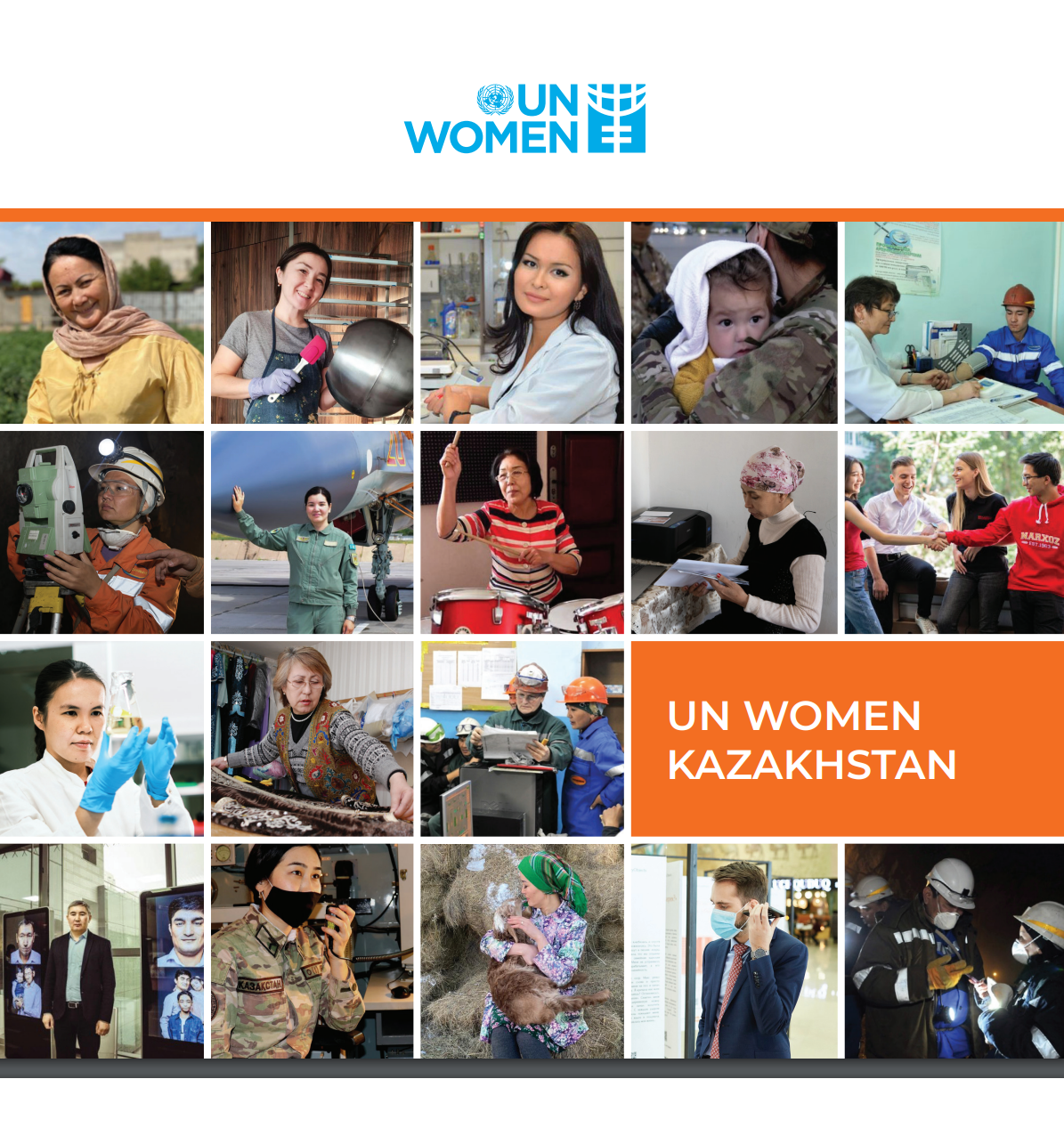 UN WOMEN Kazakhstan Année de publication: 2022 Auteur institutionnel: United Nations Entity for Gender Equality and the Empowerment of Women (UN Women) This one-pager provides a brief outline of UN Women Kazakstan's mandate, goals, activities, key audiences, partners, and other important information. Структура ООН-женщины в Казахстане Année de publication: 2022 Auteur institutionnel: United Nations Entity for Gender Equality and the Empowerment of Women (UN Women) В брошюре представлена краткая информация о Структуре «ООН-женщины» в Казахстане, мандате, целях и деятельности организации, а также ключевых партнерах и т.д.