
Ressources
Explorez une large gamme de ressources sur le GCED afin d’approfondir votre compréhension et de renforcer vos activités de recherche, de plaidoyer, d’enseignement et d’apprentissage.
1,322 résultats trouvés
 Transnational Institutions of Higher Education Institutions in Central Asia Année de publication: 2021 Auteur: Eriks Varpachovskis Transnational institutions of higher education (TNIHE) are institutions that provide higher education services and award degrees from either foreign institutions or through foreign pedagogical systems. As of 2021, there are at least 67 TNIHEs in the five Central Asian republics. Beneath the surface, however, many problems lurk, as TNIHEs struggle to maintain their capacity and provide quality education, while local governments pursue contradictory policies, that complicate the situation. Транснациональные высшие учебные заведения в Центральной Азии Année de publication: 2021 Auteur: Eriks Varpachovskis Транснациональные высшие учебные заведения (ТНВУЗ) – учреждения, которые предоставляют услуги высшего образования и присуждают степени о высшем образовании либо в зарубежных учебных заведениях, либо с помощью зарубежных педагогических систем. По состоянию на 2021 год в пяти республиках Центральной Азии насчитывается по меньшей мере 67 ТНВУЗ. Однако под поверхностью этого факта скрываются многочисленные проблемы, поскольку ТНВУЗ борются за то, чтобы поддерживать свои возможности и предоставлять качественное образование, в то время как местные органы власти проводят противоречивые стратегии, которые усложняют ситуацию.
  The EU Education Initiative in Central Asia Année de publication: 2010 Auteur: Peter Jones This report will examine: 1) the selective and limited experiences and expertise offered by the EU to its partners in Central Asia; 2) the content, processes, and relevance of the contents, processes, and the Education Initiative; 3) the balance achieved between regional and bilateral approaches; and 4) The validity of the EU's approach, taking into account the different needs Central Asian countries. Образовательная Инициатива ЕС в Центральной Азии Année de publication: 2010 Auteur: Peter Jones Данный доклад рассмотрит: 1) выборочный и ограниченный опыт и знания, предложенные Евросоюзом его партнерам в Центральной Азии; 2) содержание, процессы и значимость Образовательной Инициативы; 3) равновесие, достигнутое между региональными и двусторонними подходами и 4) обоснованность подхода ЕС с учетом различных потребностей стран Центральной Азии.
  What Does It Mean to Have Good Self-Esteem? Année de publication: 2020 Auteur institutionnel: BBVA Aprendemos Juntos The psychologist Silvia Congost exposes in this video the steps to develop a healthy self-esteem, based on the teachings of Nathaniel Branden, author of 'The six pillars of self-esteem': live consciously, accept oneself, take responsibility for our actions , develop assertiveness, live with a purpose and be a person of integrity. ¿Qué significa tener buena autoestima? Année de publication: 2020 Auteur institutionnel: BBVA Aprendemos Juntos La psicóloga Silvia Congost expone en este vídeo los pasos para desarrollar una sana autoestima, a partir de las enseñanzas de Nathaniel Branden, autor de 'Los seis pilares de la autoestima': vivir de forma consciente, aceptarse a uno mismo, responsabilizarnos de nuestros actos, desarrollar la asertividad, vivir con un propósito y ser personas íntegras.
 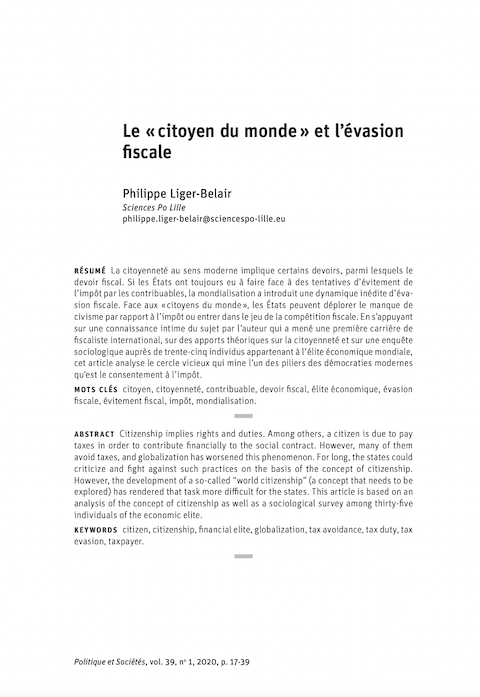 The Global Citizen and Tax Evasion (Politique et Sociétés; vol. 39, no. 1) Année de publication: 2020 Auteur: Philippe Liger-Belair Auteur institutionnel: Société québécoise de science politique Citizenship implies rights and duties. Among others, a citizen is due to pay taxes in order to contribute financially to the social contract. However, many of them avoid taxes, and globalization has worsened this phenomenon. For long, the states could criticize and fight against such practices on the basis of the concept of citizenship. However, the development of a so-called “world citizenship” (a concept that needs to be explored) has rendered that task more difficult for the states. This article is based on an analysis of the concept of citizenship as well as a sociological survey among thirty-five individuals of the economic elite. Le « citoyen du monde » et l’évasion fiscale (Politique et Sociétés; vol. 39, no. 1) Année de publication: 2020 Auteur: Philippe Liger-Belair Auteur institutionnel: Société québécoise de science politique La citoyenneté au sens moderne implique certains devoirs, parmi lesquels le devoir fiscal. Si les États ont toujours eu à faire face à des tentatives d’évitement de l’impôt par les contribuables, la mondialisation a introduit une dynamique inédite d’évasion fiscale. Face aux « citoyens du monde », les États peuvent déplorer le manque de civisme par rapport à l’impôt ou entrer dans le jeu de la compétition fiscale. En s’appuyant sur une connaissance intime du sujet par l’auteur qui a mené une première carrière de fiscaliste international, sur des apports théoriques sur la citoyenneté et sur une enquête sociologique auprès de trente-cinq individus appartenant à l’élite économique mondiale, cet article analyse le cercle vicieux qui mine l’un des piliers des démocraties modernes qu’est le consentement à l’impôt.
 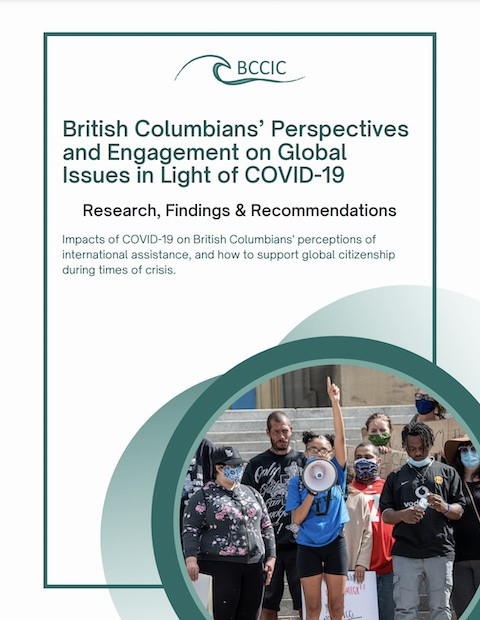 British Columbians’ Perspectives and Engagement on Global Issues in Light of COVID-19 Année de publication: 2022 Auteur: Kaylie D. Higgs Auteur institutionnel: British Columbia Council for International Cooperation (BCCIC) | Kenoli Foundation | Global Affairs Canada (GAC) The COVID-19 pandemic has presented immense challenges and injustices, while also highlighting acts of resilience and possibilities to transition to a more social and environmentally just society. This context of challenge and possibility has led to new and renewed questions around how to navigate these times to promote a just, sustainable and resilient future. For the British Columbia Council for International Cooperation (BCCIC), these questions prompted primary research to explore current public perspectives and to support thriving public engagement and global citizenship initiatives, especially considering the perspectives of British Columbians who are typically less engaged in international cooperation. Compiled and reflected in this report, the key findings of this research are summarized, along with ten recommendations to support public engagement that emerged from this research.
 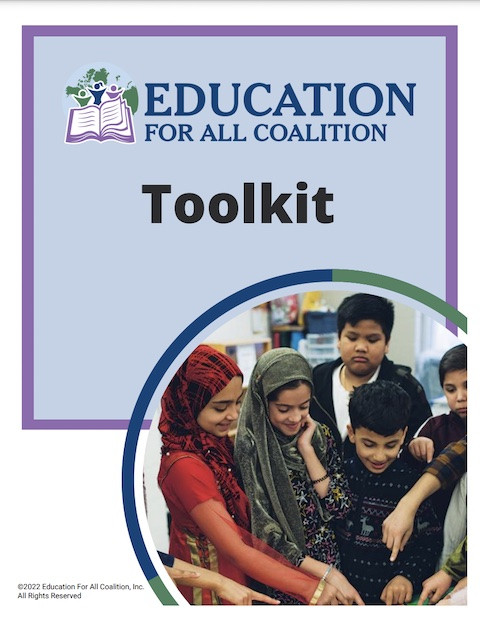 Education for All Coalition: Toolkit Année de publication: 2022 Auteur institutionnel: Education for All Coalition (EFAC) Education for All Coalition (EFAC), Inc. is a global organization that is dedicated to creating education opportunities and finding solutions that empower displaced and disadvantaged children in emergency situations, refugee camps and settlements around the world. We focus on advocacy, capacity building, climate education, and social-emotional learning to enhance the overall well-being of children. We promote the physical, social, and cognitive development of all children. Fostering healthy life habits and environmental sustainability are integral parts of our programs to improve conditions for all children so they can become thriving global citizens with global competencies and unlimited potentialThe goal of the “Where Friendship Blooms” resource guide is to foster a fun-filled program for early learners up to age 8 that will result in evidence-based positive outcomes. The package includes: Lesson plans Coping strategies Activities and play Breathing exercises Classroom Growth Chart Tool Classroom Climate Scale Tool Student Goal Setting Chart Measurement & Evaluation