
Ressources
Explorez une large gamme de ressources sur le GCED afin d’approfondir votre compréhension et de renforcer vos activités de recherche, de plaidoyer, d’enseignement et d’apprentissage.
661 résultats trouvés
 Discours de M. Koïchiro Matsuura, Directeur Général de l'UNESCO, à l'occasion de la session Valedictory de la 4e Conférence Internationale sur l'Éducation Environnementale; Ahmedabad, en Inde, le 28 Novembre 2007 Année de publication: 2007 Auteur institutionnel: UNESCO. Director-General, 1999-2009 (Matsuura, K.) Cette adresse a été donnée par M. Koïchiro Matsuura, Directeur général de l'UNESCO, à l'occasion de la Valedictory session de la 4e Conférence Internationale sur l'Éducation Environnementale.
 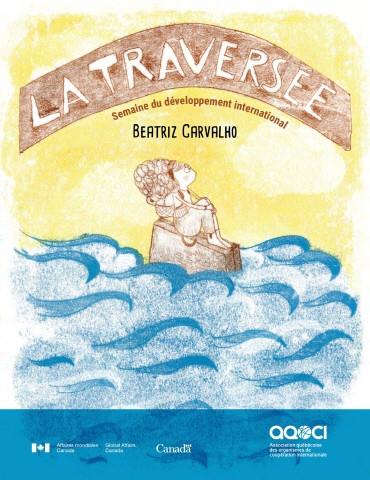 The Journey: International Development Week Année de publication: 2021 Auteur: Beatriz Carvalho Auteur institutionnel: Quebec Association of International Cooperation Organizations (AQOCI) Each year, International Development Week (IDW) highlights an international issue of concern to society. In Quebec, the Association québécoise des organismes de coopération internationale (AQOCI) organizes this public awareness week. CRÉDIL plays an active role in this campaign, and has participated in the production of comic strips as educational tools, such as "La Traversée" in 2021, that attempts to rehumanize our view of border issues and challenges, and offer questions and reflections that touch on the universal. What are we? What is our identity made of? Who gives us the right to have rights? La Traversée: Semaine du développement international Année de publication: 2021 Auteur: Beatriz Carvalho Auteur institutionnel: Association québécoise des organismes de coopération internationale (AQOCI) La Semaine du développement international (SDI) permet chaque année de souligner un enjeu international qui interpelle les sociétés. Au Québec, c’est l’Association québécoise des organismes de coopération internationale (AQOCI) qui organise cette semaine de sensibilisation auprès du public. Le CRÉDIL participe activement à cette campagne et a participé à la production de bandes dessinées comme outil pédagogique comme “La Traversée” en 2021 qui tente de réhumaniser nos regards sur les questions et enjeux de frontières; et offrir des questionnements et des réflexions qui touchent l’universel. Qui sommes-nous? De quoi est faite notre identité? Qui donne le droit d’avoir des droits?
 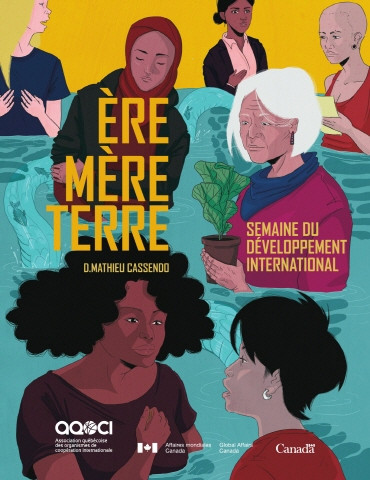 Age, Earth, Sea: International Development Week Année de publication: 2020 Auteur: Dimani Mathieu Cassendo Auteur institutionnel: Quebec Association of International Cooperation Organizations (AQOCI) Each year, International Development Week (IDW) highlights an international issue of concern to society. In Quebec, the Association québécoise des organismes de coopération internationale (AQOCI) organizes this public awareness week. CRÉDIL plays an active role in this campaign, and has participated in the production of comic strips as educational tools, such as "Ère, Terre, Mer" in 2021, which deals with the impact of the climate change on peoples. Ère, Terre, Mer: Semaine du développement international Année de publication: 2020 Auteur: Dimani Mathieu Cassendo Auteur institutionnel: Association québécoise des organismes de coopération internationale (AQOCI) La Semaine du développement international (SDI) permet chaque année de souligner un enjeu international qui interpelle les sociétés. Au Québec, c’est l’Association québécoise des organismes de coopération internationale (AQOCI) qui organise cette semaine de sensibilisation auprès du public. Le CRÉDIL participe activement à cette campagne et a participé à la production de bandes dessinées comme outil pédagogique comme “Ère, Terre, Mer” en 2021 qui traite de l'impact de la crise de l'environnement sur les différentes populations.
 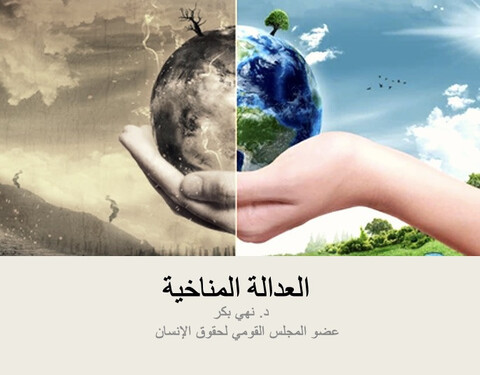 Climate Justice and Human Rights Année de publication: 2022 Auteur: Noha Bakr Climate justice is linking the impacts of global warming with principles of justice, specifically environmental justice and social justice, by exploring issues resulting from global warming such as equality, human rights, collective rights, and historical responsibilities. العدالة المناخية و حقوق الأنسان Année de publication: 2022 Auteur: Noha Bakr العدالة المناخية هي ربط تأثيرات الاحتباس الحراري مع مبادئ العدالة، تحديدًا العدالة البيئية والعدالة الاجتماعية، وعن طريق استكشاف بعض القضايا الناجمة عن الاحتباس الحراري مثل المساواة وحقوق الإنسان والحقوق الجماعية والمسؤوليات التاريخية.
 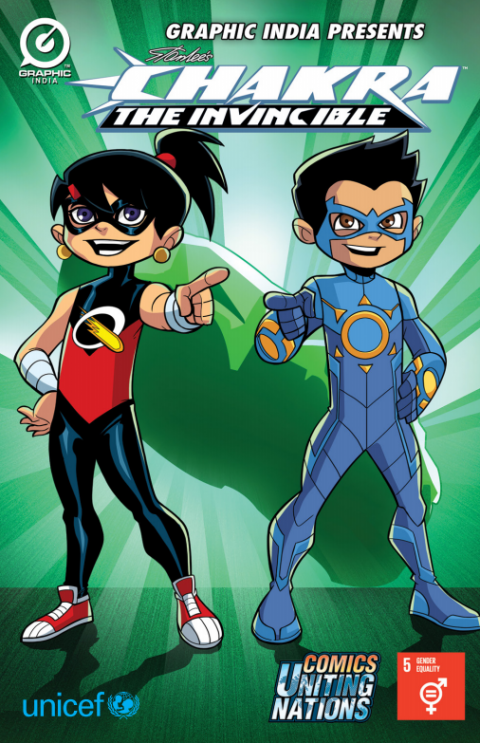 Chakra the Invincible; Gender Equality Année de publication: 2015 Auteur: Stan Lee | Sharad Devarajan | Gotham Chopra | Ashwin Pande | Jeevan J. Kang | Sesha Sainan Devarajan | Aditya Bidikar | Nilesh S. Mahadik Auteur institutionnel: Graphic India Pte. ltd | POW Entertainment The legendary Stan Lee and Sharad Devarajan bring their character Chakra the Invincible to teach children about the global goals! Chakra takes to the streets of Mumbai to teach children a lesson on gender equality and girls' empowerment. Address by Irina Bokova, Director-General of UNESCO on the occasion of the opening of the PGA High-Level SDG Action Event on Education SDG4 Année de publication: 2017 Auteur institutionnel: UNESCO. Director-General, 2009-2017 (Bokova, I.G.) This address was given by Irina Bokova, Director-General of UNESCO on the occasion of the opening of the PGA High-Level SDG Action Event on Education SDG4.
  Securitising Education to Prevent Terrorism or Losing Direction? Année de publication: 2016 Auteur: Bill Durodie Auteur institutionnel: Society for Educational Studies | Taylor & Francis This article examines the growing relationship between security and education, particularly in the light of the UK government’s Prevent Duty that seeks to tackle radicalization in a variety of milieus, including universities. However, rather than seeing this process as being merely one-way, through a so-called securitization of education, what is explored here is the dialectic between these two spheres. It is suggested that a heightened sensitivity to the supposed consequences of inflammatory rhetoric on the well-being of supposedly suggestible or vulnerable students has been in existence within education for quite some time.