
Ressources
Explorez une large gamme de ressources sur le GCED afin d’approfondir votre compréhension et de renforcer vos activités de recherche, de plaidoyer, d’enseignement et d’apprentissage.
3,446 résultats trouvés
 포스트휴먼 시대의 기후위기 대응 교육: 사례와 실천 방안 Année de publication: 2021 Auteur: 엄수정 | 우라미 | 황순예 Auteur institutionnel: 경기도교육연구원 본 연구는 포스트휴먼시대의 기후위기 대응 교육의 모습을 구체화하는데 목적이 있다. 본 연구에서는 포스트휴먼 생태주의를 이론적 기틀로 삼아 기후위기 대응을 위한 학교 교육 사례를 분석하고, 이를 토대로 실천 방안을 탐색하였다.본 저작물은 경기도교육연구원에서 2021년 작성하여 공공누리 제 4유형으로 개방한 ‘포스트휴먼 시대의 기후위기 대응 교육: 사례와 실천 방안 (엄수정, 우라미, 황순예)’ 를 이용하였으며 해당 저작물은 경기도교육연구원 (www.gie.re.kr)에서 무료로 다운받으실 수 있습니다.
  Skills Development and Climate Change Action Plans: Enhancing TVET's Contribution Année de publication: 2021 Auteur institutionnel: UNESCO International Centre for Technical and Vocational Education and Training (UNEVOC) Climate change is an ongoing process that, at the current pace of such activities, cannot be avoided. Tools have been proposed to deal with climate change focus on adaptation and mitigation. Strengthening national and international awareness of and commitment to reducing the impact of climate change has become the only viable option to ensure the sustainability of life on Earth.The Paris Agreement entered into force in 2016 with the aim of bringing all nations together in a common goal of combating climate change and adapting to its impacts. According to the Agreement, every party should submit a climate plan laying out its adaptation and mitigation targets. Technical and vocational education and training (TVET) has the potential to play significant roles in these plans. The smooth transition to green societies and economies relies on amongst others the knowledge, skills and competencies to promote sustainable development. Effective education and training for sustainable development pivots on governance and vision, and the ability to empower people in an inclusive manner to act in favour of sustainable development. It also relies on the ability to train, upskill, reskill and empower those that can take advantage of the job growth and job creation potential in a changing economy.This discussion paper compiles and reviews relevant information regarding the country submissions (Nationally Determined Contributions and National Communications) which lay out adaptation plans and the policies created in fifty-seven selected countries. The aim is to summarize key information that can help assess the ongoing and potential contribution of TVET to the realization of these plans. The analysis made through this discussion paper has helped to generate a set of approaches for climate change adaption, through the education and training lens. These approaches can be used to advance the discussion in strengthening the technical and vocational skills development component in country climate adaptation plans.
  Global Citizenship and Liberation History in Secondary Curricula in Southern Africa: Summary Report on the Findings of a Desk Review Année de publication: 2021 Auteur institutionnel: UNESCO Harare This report presents key findings of a desk study on the extent of integration of Global Citizenship Education (GCED) and Southern Africa Liberation History (SALH) educationin the secondary schools curricula in Angola, Democratic Republic of Congo, Eswatini, Lesotho, Malawi, Mauritius, Mozambique, Namibia, South Africa, Seychelles, United Republic of Tanzania, Zambia and Zimbabwe. Citoyenneté mondiale et histoire de la libération dans les programmes des établissements secondaires en Afrique australe: Rapport de synthèse sur les résultats d'une étude documentaire Année de publication: 2021 Auteur institutionnel: UNESCO Harare This report presents key findings of a desk study on the extent of integration of Global Citizenship Education (GCED) and Southern Africa Liberation History (SALH) educationin the secondary schools curricula in Angola, Democratic Republic of Congo, Eswatini, Lesotho, Malawi, Mauritius, Mozambique, Namibia, South Africa, Seychelles, United Republic of Tanzania, Zambia and Zimbabwe.
  The Impact of COVID-19 on Inclusive Education at the European Level: Literature Review Année de publication: 2021 Auteur institutionnel: European Agency for Special Needs and Inclusive Education | European Commission The coronavirus (COVID-19) pandemic has affected learners around the world. School closures forced emergency responses from education systems, resulting in various forms of remote schooling. The crisis highlighted pre-existing inequalities in education and provided a reason for systemic change in education worldwide.This literature review aims to map evidence and identify acknowledged ways in which COVID‑19 has impacted on education in general and inclusive education in particular at European and national levels. The intention is to provide a comprehensive overview of key messages for Agency member countries. It will also inform possible future Agency work on this topic.
 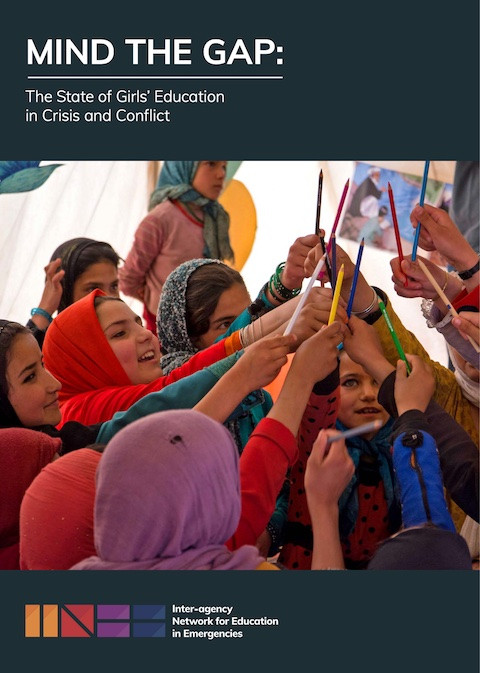 Mind the Gap: The State of Girls’ Education in Crisis and Conflict Année de publication: 2021 Auteur institutionnel: Inter-agency Network for Education in Emergencies (INEE) This report summarizes progress, gaps, challenges and opportunities in improving education and training for girls and women affected by conflict and crisis. The report aims to support the Charlevoix Declaration on Quality Education’s commitment to enhance the evidence base and monitor progress toward gender-equitable education in crises. The report draws from data on 44 crisis-affected countries, from recent research, and from a set of case studies of interventions in a range of crisis-affected contexts.
  Understanding the Impact of Artificial Intelligence on Skills Development Année de publication: 2021 Auteur: Kelly Shiohira Auteur institutionnel: UNESCO International Centre for Technical and Vocational Education and Training (UNEVOC) The era of artificial intelligence is young in years but advanced in impact. Intermediate skill jobs as we know them are fast disappearing as their tasks are systematically automated, and individuals are increasingly likely to encounter AI technology in their everyday lives. In fact, fifty percent of organizations worldwide report using some form of AI in their operations.It is clear that AI has broad implications for the whole of humanity, and therefore on the education and training institutions that equip lifelong learners with the skills to navigate both work and society. A wide range of institutions and other stakeholders have risen to the challenge through research and innovative programmes, paving the way for a better understanding of AI’s potential – and its pitfalls.This paper synthesizes research on current trends, programmes, policies and uses of AI related to technical and vocational education and training across six continents, covering developing and developed contexts, as a resource for stakeholders invested in the future of intermediate-level workers and TVET. Lecturers, students, administrators, policymakers, programme implementers and lifelong learners are invited to examine current practices, opportunities and challenges raised by AI, and recommendations to build a future-ready education and training system.
  연극을 통한 민주 시민 교육 방법 (2019 문화예술교육 유관학회 연계 ‘작은 연구’ - 서울어젠다 예술교육 목표 3. 예술교육의 사회적 가치 확산성을 중심으로) Année de publication: 2019 Auteur: 이화식 Auteur institutionnel: 한국예술경영학회 | 한국문화교육학회 본 자료는 2019 문화예술교육 유관학회 연계 '작은 연구’에서 발췌한 '연극을 통한 민주 시민 교육 방법' 연구자료이다. 본 연구는 연극 활동을 통하여 민주시민의 가치를 함양하는 민주 시민교육의 모형을 제시하며, 시민교육이라는 주제의 특성을 반영하여 학습자가 실제 생활과 유사한 환경에서 민주적인 가치를 체험하고 구성하며 생활에서 적용할 수 있는 교육 방법을 모색하는 것을 목적으로 한다. 본 저작물은 한국예술경영학회, 한국문화교육학회에서 2019년 작성하여 공공누리 제4유형으로 개방한 ‘연극을 통한 민주 시민 교육 방법(이화식)'을 이용하였으며 해당 저작물은 한국문화예술교육진흥원 arte 라이브러리 홈페이지(lib.arte.or.kr)에서 무료로 다운받으실 수 있습니다.
  Inequalities in Learning in Vietnam: Teachers’ Beliefs About and Classroom Practices for Ethnic Minorities (RISE Working Paper Series; 21/061) Année de publication: 2021 Auteur: Joan DeJaeghere | Vu Dao | Bich-Hang Duong | Phuong Luong Auteur institutionnel: Research on Improving Systems of Education (RISE) Global and national education agendas are concerned with improving quality and equality of learning outcomes. This paper provides an analysis of the case of Vietnam, which is regarded as having high learning outcomes and less inequality in learning. But national data and international test outcomes may mask the hidden inequalities that exist between minoritized groups and majority (Kinh) students. Drawing on data from qualitative videos and interviews of secondary teachers across 10 provinces, we examine the role of teachers’ beliefs, curricular design and actions in the classroom (Gale et al., 2017). We show that teachers hold different beliefs and engage in curricular design – or the use of hegemonic curriculum and instructional practices that produce different learning outcomes for minoritized students compared to Kinh students. It suggests that policies need to focus on the social-cultural aspects of teaching in addition to the material and technical aspects.
 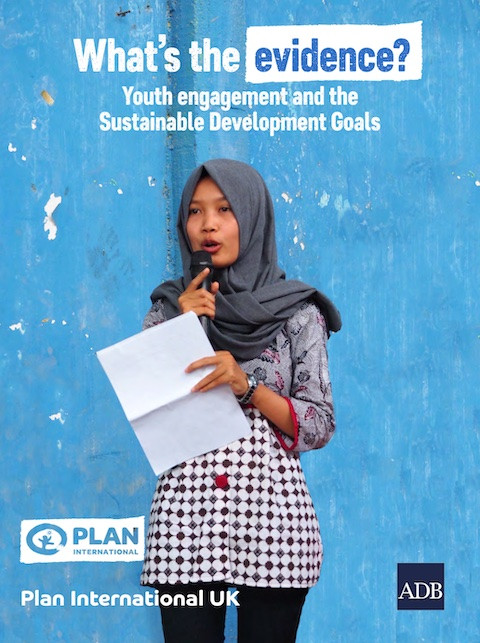 What’s the Evidence?: Youth Engagement and the Sustainable Development Goals Année de publication: 2018 Auteur institutionnel: Asian Development Bank (ADB) | Plan International UK This study represents an encouraging body of evidence, both primary and secondary, which will inform future practice and policymaking with regard to young women and men’s contributions towards the Sustainable Development Goals (SDGs). The learnings from this study provide important insight that will support the design and implementation of youth programming. It examines five programs across three youth-focused or youth-led organisations: Plan International UK, the Asian Development Bank (ADB), and AIESEC.