
Ressources
Explorez une large gamme de ressources sur le GCED afin d’approfondir votre compréhension et de renforcer vos activités de recherche, de plaidoyer, d’enseignement et d’apprentissage.
3,435 résultats trouvés
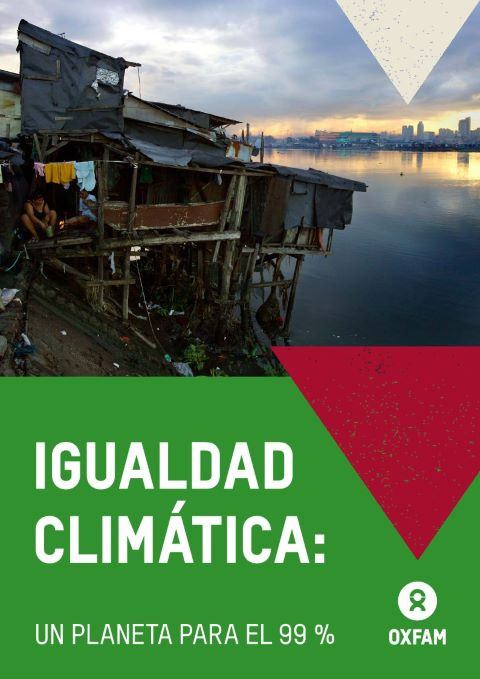 Climate Equality: A PLANET FOR THE 99%; Executive Summary Année de publication: 2023 Auteur: Ashfaq Khalfan | Astrid Nilsson Lewis | Carlos Aguilar | Max Lawson | Safa Jayoussi | Jacqueline Persson | Nafkote Dabi | Sunil Acharya Auteur institutionnel: Oxfam International The world faces twin crises of climate breakdown and runaway inequality.The richest people, corporations and countries are destroying the world with their huge carbon emissions. Meanwhile, people living in poverty, those experiencing marginalization, and countries in the Global South are those impacted the hardest. Women and girls, Indigenous Peoples, people living in poverty and other groups experiencing discrimination are particularly at a disadvantage. The consequences of climate breakdown are felt in all parts of the world and by most people, yet only the richest people and countries have the wealth, power and influence to protect themselves. With that power comes huge responsibility.If no action is taken, the richest will continue to burn through the carbon we have left to use while keeping the global temperature below the safe limit of 1.5°C, destroying any chance of ending poverty and ensuring equality. The world needs an equal transformation. Only a radical reduction in inequality, transformative climate action and fundamentally shifting our economic goals as a society can save our planet while ensuring wellbeing for all. Igualdad cl imática : UN PLANETA PARA EL 99 %; Resumen ejecutivo Année de publication: 2023 Auteur: Ashfaq Khalfan | Astrid Nilsson Lewis | Carlos Aguilar | Max Lawson | Safa Jayoussi | Jacqueline Persson | Nafkote Dabi | Sunil Acharya Auteur institutionnel: Oxfam International NOS ENFRENTAMOS a una CRECIENTE crisis climática y de desigualdad. Las personas, las grandes empresas y los países más ricos están destruyendo el planeta con sus elevadas emisiones de carbono. Mientras tanto, las personas que se encuentran en situación de pobreza, relegadas a la exclusión, y los países del Sur Global son quienes sufren los peores efectos. Las mujeres, las niñas, los pueblos indígenas, las personas que viven en situación de pobreza, y los grupos discriminados son los más vulnerables. Las consecuencias de la crisis climática se hacen visibles en todo el planeta y afectan a la mayoría de la población. Sin embargo, solo aquellas personas y países con acceso a la riqueza, el poder y la influencia están a salvo. Un gran poder conlleva una gran responsabilidad. Necesitamos medidas. De lo contrario, los más ricos seguirán consumiendo de manera masiva el carbono que nos está permitido utilizar dentro del límite de emisiones considerado seguro (para limitar el calentamiento a 1,5 °C), lo que elimina sistemáticamente cualquier posibilidad de acabar con la pobreza y garantizar la igualdad. El mundo pide a gritos una transformación equitativa: exigimos una reducción drástica de la desigualdad, una acción climática transformadora y un cambio fundamental en nuestros objetivos económicos conjuntos para salvar el planeta y garantizar el bienestar para todas las personas. Climate Equality: 기후 평등: 99%를 위한 지구; 요약본 Année de publication: 2023 Auteur: Ashfaq Khalfan | Astrid Nilsson Lewis | Carlos Aguilar | Max Lawson | Safa Jayoussi | Jacqueline Persson | Nafkote Dabi | Sunil Acharya Auteur institutionnel: Oxfam International 세계는 기후 붕괴와 불평등이라는 두 개의 위기를 직면하고 있다최상위 부유층과 기업, 부유국은 막대한 양의 탄소를 배출하며 세계를 파괴하는 주범이 되고 있다. 그러나 가장 크게 타격을 받는 이들은 빈곤층, 소외계층, 그리고 남반구 국가이다. 특히 여성과 소녀, 선주민, 빈곤과 차별을 겪는 이들이 겪는 피해 규모는 훨씬 더 크다. 전 세계 대부분이 기후 붕괴의 결과를 체감하고 있으나, 최상위 부유층과 부유국만이 스스로를 보호하기 위한 부와 권력, 그리고 영향력을 보유하고 있다. 그러한 힘에는 막대한 책임감이 따라야 한다. 아무런 조치도 취하지 않는다면 1.5°C 이하라는 안전한 지구 온난화 한도를 유지하면서 배출가능한 남은 탄소량을 부유층이 전부 소진하고, 빈곤 퇴치와 평등 확보를 위한 길은 끊어질 것이다. 지금 세계는 평등한 변혁을 필요로 한다. 불평등 대폭 축소, 기후 관련 대대적 조치, 그리고 공동의 사회로서 경제적 목표를 근본적으로 탈바꿈 할 수 있는 행동만이 모두를 위한 복지를 보장하면서도 지구를 구할 수 있는 유일한 방법이다.
  A Gender-Responsive Communication Guide; Rethinking Communication Année de publication: 2021 Auteur: Gökçe Bayrakçeken Tüzel | İdil Safiye Soyseçkin Ceylan | Deniz Şilliler Tapan | Kıvanç Özvardar Auteur institutionnel: United Nations Development Programme (UNDP) Language is a mechanism, a tool, that influences thoughts, shapes gender roles and therefore carries a great potential for establishing gender equality in societies. It shows how we perceive life and also determines it. Language plays an important role in the formation of our thoughts and behaviors, hence the construction of our reality about gender. As UNDP Turkey, we ground on gender equality and women’s empowerment principles in all of our programs and interventions, within the institution and in all forms of communication with our partners. The reason we prepared this guide is to determine the ways to have a gender responsive approach when communicating both in the office and with the institutions, organizations, and individuals we work with.The language we use begins to take shape from the moment we are born. It is kneaded within the norms, thoughts, and actions of the society we live in and becomes a set of rules that we unconsciously internalize. Therefore, we often use a sexist language even without realizing and thus reproduce it at every turn.Based on the idea that transformation begins with awareness, this guide offers a stimulating path to the limits of our language, demonstrates how it reproduces gender inequality, and offers ways for changing this.We believe that gender responsive communication is a sign of commitment to gender equality for any country, community or institution. Therefore, we invite you to become the transformation itself by following this sign.We would like to thank you in advance for your interest and dedication to using a gender responsive language and hope that this guide will help us on the way to become a gender-equal society.
 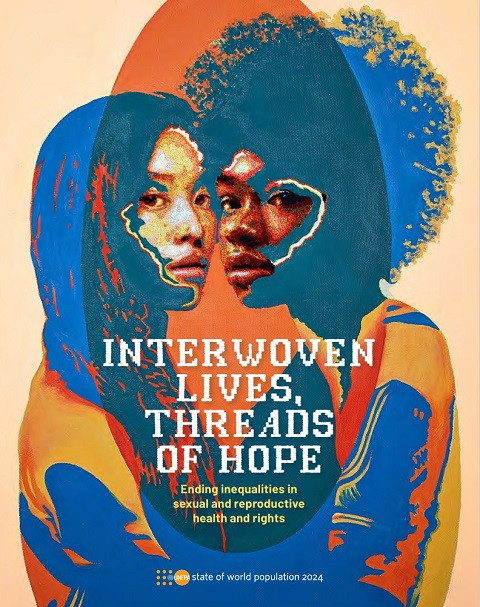 Interwoven Lives, Threads of Hope: Ending Inequalities in Sexual and Reproductive Health and Right; State of World Population 2024 Année de publication: 2024 Auteur: Daniel Baker | Ann Garbett | Gretchen Luchsinger | Tlaleng Mofokeng | Letlhogonolo Mokgoroane | Gilda Sedgh | Claire Thomas Auteur institutionnel: United Nations Population Fund (UNFPA) Everywhere, people seeking essential sexual and reproductive health care are forced to navigate overlapping hurdles because of their gender, economic status, ethnicity, sexual orientation, disability and more. In the few places where data are collected, women of African descent are found to be more vulnerable to obstetric mistreatment and negative maternal health outcomes. Indigenous women are often denied culturally appropriate maternal health care, and their own childbirth practices may be criminalized, resulting in significantly higher risk of death in pregnancy and childbirth. Gender-unequal norms remain embedded in health-care infrastructure, including persistent underinvestment in the world’s largely female midwifery workforce. Women and girls with disabilities face up to 10 times more gender-based violence while also facing higher barriers to sexual and reproductive information and care. LGBTQIA+ people face serious health disparities in addition to – and as a result of – discrimination and stigma. The path forward to fulfill the Cairo International Conference on Population and Development promise of universal sexual and reproductive health and rights is clear: To achieve it we must root out inequalities from our health systems and policies and focus as a priority on those women and young people who are most marginalized and excluded. We need comprehensive, universal and inclusive health care grounded in human rights and evidence of what works. This work is vitally important, it is just, and it is possible. This report contains many examples of programmes and efforts that have expanded access to, and uptake of, quality care, usually with interventions tailored by and for those most in need. To accelerate success, we will require more and better data, disaggregated to understand exactly who is being left behind, and collected with their input and safety assured.
  La situation des droits humains dans le monde: Avril 2024 Année de publication: 2024 Auteur institutionnel: Amnesty International Le Rapport d’Amnesty International décrit la situation des droits humains dans le monde en 2023 dans 155 pays différents. Les équipes de journalistes et d’enquêteurs de l'ONG peignent un portrait plutôt sombre, avec notamment un recul du droit des femmes, les conséquences dramatiques du réchauffement climatique sur les populations les plus vulnérables, le recul du droit de manifester, ou encore la prolifération de la haine en ligne dans le monde. La multiplication des conflits armés et le choc du 7 octobre ont également eu des conséquences dramatiques. Cependant, quelques bonnes nouvelles sont aussi à noter, avec des avancées pour les droits des personnes LGBTI par exemple. Amnesty International Report describes the human rights situation worldwide in 2023 in 155 different countries. TheNGO's teams of journalists and investigators paint a rather gloomy picture, with, in particular, a decline in women's rights, the dramatic consequences of global warming on the most vulnerable populations, a decline in the right to protest, and the proliferation of online hate around the world. The multiplication of armed conflicts and the shock of October 7 have also had dramatic consequences. However, there is some good news too, with advances in LGBTI rights for example. La situación de los derechos humanos en el mundo: abril de 2024 Année de publication: 2024 Auteur institutionnel: Amnesty International Le Rapport d’Amnesty International décrit la situation des droits humains dans le monde en 2023 dans 155 pays différents. Les équipes de journalistes et d’enquêteurs de l'ONG peignent un portrait plutôt sombre, avec notamment un recul du droit des femmes, les conséquences dramatiques du réchauffement climatique sur les populations les plus vulnérables, le recul du droit de manifester, ou encore la prolifération de la haine en ligne dans le monde. La multiplication des conflits armés et le choc du 7 octobre ont également eu des conséquences dramatiques. Cependant, quelques bonnes nouvelles sont aussi à noter, avec des avancées pour les droits des personnes LGBTI par exemple. Amnesty International Report describes the human rights situation worldwide in 2023 in 155 different countries. TheNGO's teams of journalists and investigators paint a rather gloomy picture, with, in particular, a decline in women's rights, the dramatic consequences of global warming on the most vulnerable populations, a decline in the right to protest, and the proliferation of online hate around the world. The multiplication of armed conflicts and the shock of October 7 have also had dramatic consequences. However, there is some good news too, with advances in LGBTI rights for example.
 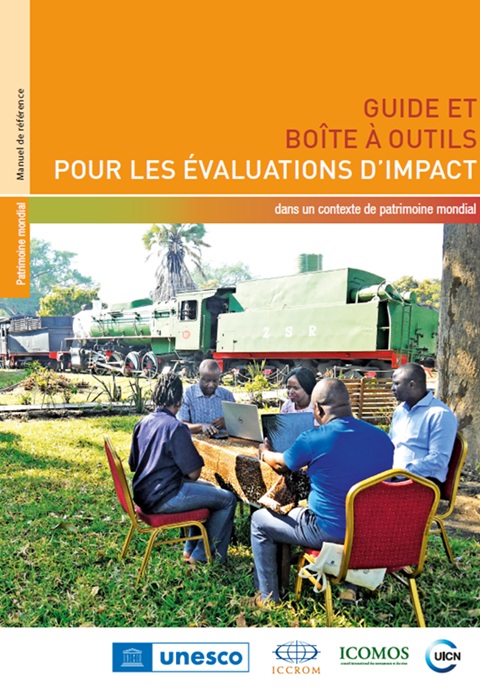 Guide et boîte à outils pour les évaluations d’impact dans un contexte de patrimoine mondial Année de publication: 2023 Auteur: Sarah Court | Eugene Jo | Richard Mackay | Mizuki Murai | Riki Therivel Auteur institutionnel: UNESCO | International Centre for the Study of the Preservation and Restoration of Cultural Property (ICCROM) | International Council on Monuments and Sites (ICOMOS) | International Union for Conservation of Nature (IUCN) Notre patrimoine mondial menacé : les évaluations d’impact offrent des solutionsLors du 50e anniversaire de la Convention du patrimoine mondial, en 2022, on dénombrait plus de 1 100 sites du patrimoine mondial de l’UNESCO. Ces sites sont si précieux pour l’humanité que leur conservation nous incombe à tous. Pourtant, nombre de ces lieux exceptionnels sont confrontés à la pression croissante qu’exercent les divers types de développement et des projets dans et autour des sites. L’évaluation des impacts de ces projets – avant toute décision de mise en œuvre – est essentielle pour éviter tout dommage causé au patrimoine mondial et identifier des choix durables.Le Guide et boîte à outils pour les évaluations d’impact dans un contexte de patrimoine mondial est la référence incontournable qui explique la démarche à suivre pour atteindre cet objectif. Grâce à des conseils et outils (dont des listes de contrôle et glossaire), il fournit un cadre permettant de réaliser des évaluations d’impact pour les sites du patrimoine culturel et naturel.Élaboré par l’UNESCO et les Organisations consultatives du Comité du patrimoine mondial – l’ICCROM, l’ICOMOS et l’UICN –, ce manuel constitue une base de collaboration intersectorielle et multidisciplinaire en vue de trouver des réponses permettant de protéger les sites du patrimoine mondial et de soutenir un développement qualitatif et approprié. Les États parties, les gestionnaires du patrimoine, les décideurs, les planificateurs et les aménageurs de la Convention du patrimoine mondial sont invités à l’utiliser pour contribuer à la réalisation de notre engagement collectif : la transmission de notre patrimoine inestimable aux générations futures.
  Education Sector Analysis: Methodological Guidelines (Vol. 3) Année de publication: 2021 Auteur institutionnel: UNESCO International Institute for Educational Planning (IIEP) | United Nations Children's Fund (UNICEF) | Global Partnership for Education (GPE) | Foreign, Commonwealth & Development Office (UK) This present volume is the third in a series of education sector analysis (ESA) guidelines following two volumes published in 2014. The series provides methodologies and applied examples for diagnosing education systems and informing national education policies and plans. This volume proposes guidelines to strengthen national capacities in analyzing education systems in four areas: inclusive education system for children with disabilities, risk analysis for resilient education systems, functioning and effectiveness of the educational administration, and stakeholder mapping and problem-driven analysis (governance and political economy).
  Life Skills Through Drama: Equipping Adolescent Girls With Key Knowledge and Skills to Help Them to Mitigate, Prevent and Respond to Gender Based Violence Année de publication: 2021 Auteur institutionnel: International Rescue Committee (IRC) The Life Skills through Drama curriculum aims at promoting the protection of Syrian and Lebanese adolescent girls from Gender Based Violence and enhancing their psychosocial wellbeing. This curriculum addresses the basic life skills that adolescent girls living in difficult conditions in any similar cultural context could need. The curriculum relies on active learning through experience, practice, reflection and discussion. And it has been designed based on drama techniques. Varied creative drama techniques were used to serve the objectives including techniques from Theater of the Oppressed. You may find some familiar games and activities that have been modified or developed to suit the intended objectives, and you may also find innovated games and activities by the author such as “Fruit Festival”.