
Ressources
Explorez une large gamme de ressources sur le GCED afin d’approfondir votre compréhension et de renforcer vos activités de recherche, de plaidoyer, d’enseignement et d’apprentissage.
1,322 résultats trouvés
 Методическое пособие для учителей по неформальному образованию Année de publication: 2015 Auteur: Albana Markya Auteur institutionnel: International Labour Organization (ILO) Методическое пособие было адаптировано в помощь учителям общеобразовательных школ, которые будут вовлечены для работы в классах (группах) неформального образования. С помощью данного пособия они смогут более доступно изложить учебную программу базового образования, использовать методику обучения для лучшего ее усвоения для детей, находящихся в трудной жизненной ситуации, и восполнить те пробелы в знаниях, которые возникли по причине их непосещения школы. В данном пособии внимание сфокусировано на работающих детях, которые отстали от своих сверстников в учебе в силу того, что были вынуждены зарабатывать на жизнеобеспечение себя и своей семьи.
 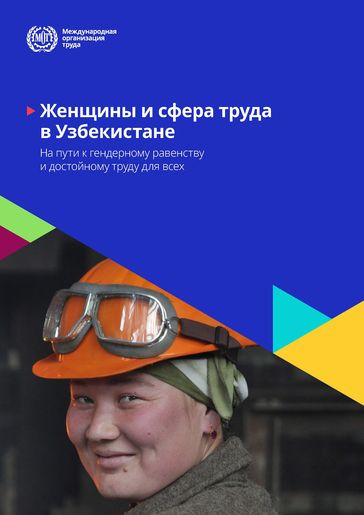 Women and the World of Work in Uzbekistan. Towards Gender Equality and Decent Work for All Année de publication: 2021 Auteur: Mansour Omeira Auteur institutionnel: International Labour Organization (ILO) The report is a response to the need for a comprehensive analysis of the situation of women in the labor sphere of Uzbekistan. The purpose of the report is to provide information for the development of policies, legislation, and initiatives aimed at the development and promotion of decent work for all women and men. Женщины и сфера труда в Узбекистане: На пути к гендерному равенству и достойному труду для всех Année de publication: 2021 Auteur: Mansour Omeira Auteur institutionnel: International Labour Organization (ILO) Доклад является ответом на необходимость всестороннего анализа положения женщин в сфере труда Узбекистана. Цель доклада – предоставление информации для разработки политики, законодательства и инициатив, направленных на развитие и продвижение достойного труда для всех женщин и мужчин.
  Juvenile Justice: Analysis of Legislation and Judicial Practice of the Republic of Uzbekistan Année de publication: 2015 Auteur institutionnel: UNICEF Uzbekistan This publication was prepared within the framework of cooperation between UNICEF, the Supreme Court of the Republic of Uzbekistan, and the Research Center on Democratization and Liberalization of Judicial Legislation and Ensuring the Independence of the Judicial System under the Supreme Court of the Republic of Uzbekistan. This report contains an analysis of the current legislation and judicial practice on the administration of juvenile justice for compliance with international standards and best practices. Правосудие в отношении несовершеннолетних: Анализ законодательства и судебной практики Республики Узбекистан Année de publication: 2015 Auteur institutionnel: UNICEF Uzbekistan Данная публикация подготовлена в рамках сотрудничества между ЮНИСЕФ, Верховным судом Республики Узбекистан и Исследовательским центром по демократизации и либерализации судебного законодательства и обеспечению независимости судебной системы при Верховном суде Республики Узбекистан. Данный отчет содержит анализ действующего законодательства и судебной практики по отправлению правосудия в отношении несовершеннолетних на предмет соответствия международным стандартам и передовой практике.
 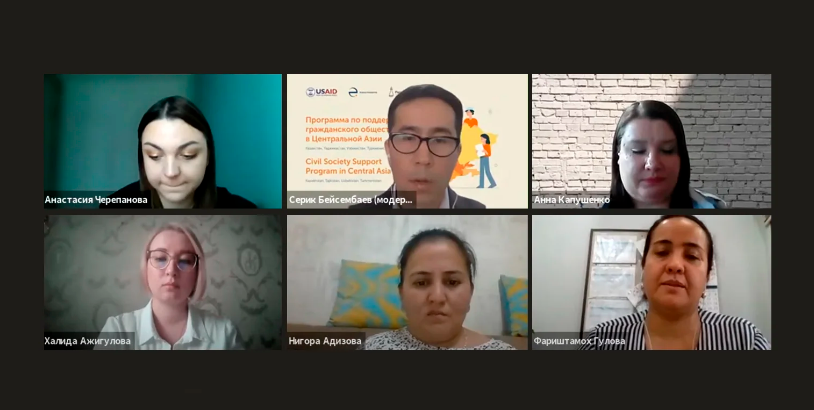 Combating Violence Against Women in Central Asia: New Laws, Old Practices Année de publication: 2021 Auteur institutionnel: Paperlab Research Center (Kazakhstan) The problem of violence against women is still acute in Central Asian countries. According to the UN, 18% of women from the countries of this region reported that they had personally experienced domestic violence and discrimination. At the PaperLab online discussion platform, experts and researchers, together with representatives of civil society and government agencies, discussed the topic of combating gender-based violence in the context of legislative and programmatic measures that are being implemented in Central Asian countries.
  The Digitization of School Through the Prism of Citizenship Année de publication: 2021 Auteur: Lionel Alvarez | Mathieu Payn Auteur institutionnel: Éthique en éducation et en formation Digital devices have colonized many facets of our daily lives, and compulsory schools are now appropriating this evolution. The announced learning goals are often associated with the notion of digital citizenship. At the same time, educational institutions are defining the digital learning environments that teachers and students must adopt. Positioning themselves in the digital humanities, the authors question the posted definitions of digital citizenship, confront them with the sui generis nature of the digital and its industry, and finally question the connection between these and the public school. Issues of citizen empowerment, autonomy, and governance serve the analysis and allow us to conclude that it is necessary to debate the pedagogical-digital contradictions. La numérisation de l’école au prisme de la citoyenneté Année de publication: 2021 Auteur: Lionel Alvarez | Mathieu Payn Auteur institutionnel: Éthique en éducation et en formation La citoyenneté au sens moderne implique certains devoirs, parmi lesquels le devoir fiscal. Si les États ont toujours eu à faire face à des tentatives d’évitement de l’impôt par les contribuables, la mondialisation a introduit une dynamique inédite d’évasion fiscale. Face aux « citoyens du monde », les États peuvent déplorer le manque de civisme par rapport à l’impôt ou entrer dans le jeu de la compétition fiscale. En s’appuyant sur une connaissance intime du sujet par l’auteur qui a mené une première carrière de fiscaliste international, sur des apports théoriques sur la citoyenneté et sur une enquête sociologique auprès de trente-cinq individus appartenant à l’élite économique mondiale, cet article analyse le cercle vicieux qui mine l’un Les dispositifs numériques ont colonisé de nombreuses facettes de notre quotidien et l’école obligatoire s’approprie maintenant cette évolution. Les finalités annoncées sont souvent associées à la notion de citoyenneté numérique. Parallèlement, les institutions scolaires définissent les environnements numériques d’apprentissage que les enseignants et élèves doivent adopter. Se positionnant dans les humanités numériques, les auteurs interrogent les définitions affichées de la citoyenneté numérique, les confrontent à la nature sui generis du numérique et de son industrie, pour enfin questionner le rapprochement entre ceux-ci et l’école publique. Des enjeux d’émancipation citoyenne, d’autonomie et de gouvernance servent l’analyse et permettent de conclure à la nécessité de débattre les contradictions pédago-numériques.
  The Genesis of the Category of “LGBT Refugee” Within the United Nations High Commissioner for Refugees Année de publication: 2021 Auteur: Ahmed Hamila Auteur institutionnel: Alterstice The international protection system is governed by the Geneva Convention of 1951, supplemented by the New York Protocol of 1967. These international conventions list five grounds for granting refugee status: persecution based on race, religion, nationality, membership of a certain social group, and political opinions. These international instruments do not explicitly recognize persecution based on sexual orientation and gender identity as grounds for granting refugee status. However, over the past three decades, the Office of the United Nations High Commissioner for Refugees (UNHCR) has come to recognize such persecution as grounds for granting international protection. In this article, I focus on the genesis of the "LGBT refugee" category within the UNHCR in the early 2000s. The essay argue that the emergence of this new category of refugees is part of two parallel dynamics, which both led to the development of the UNHCR Guidelines, which explicitly recognize persecution based on sexual orientation as a ground for granting refugee status. On the one hand, it is in the context of greater attention paid to refugee women, and in particular to gender-related persecutions, that persecutions related to sexual orientation are for the first time discussed. On the other hand, the category of “LGBT refugee” also appears in the context of the interpretation of the notion of “belonging to a certain social group”. La genèse de la catégorie de « réfugié LGBT » au sein du Haut-Commissariat des Nations Unies pour les réfugiés Année de publication: 2021 Auteur: Ahmed Hamila Auteur institutionnel: Alterstice Le système de protection international est régi par la Convention de Genève de 1951, complétée par le Protocole de New York de 1967. Ces conventions internationales énumèrent cinq motifs d’octroi du statut de réfugié : les persécutions du fait de la race, de la religion, de la nationalité, de l’appartenance à un certain groupe social et des opinions politiques. Ces instruments internationaux ne reconnaissent pas explicitement les persécutions du fait de l’orientation sexuelle et de l’identité de genre en tant que motifs d’octroi du statut de réfugié. Cependant, au cours des trois dernières décennies, le Haut-Commissariat des Nations Unies pour les réfugiés (HCR) a été amené à reconnaître ces persécutions en tant que motifs d’octroi de la protection internationale. Dans cet article, je m’intéresse à la genèse de la catégorie de « réfugié LGBT » au sein du HCR au début des années 2000. Je soutiens que l’émergence de cette nouvelle catégorie de réfugiés s’inscrit dans deux dynamiques parallèles, qui ont toutes les deux débouché sur l’élaboration des Principes directeurs du HCR, qui reconnaissent explicitement les persécutions du fait de l’orientation sexuelle en tant que motif d’octroi du statut de réfugié. D’une part, c’est dans le contexte d’une plus grande attention portée aux femmes réfugiées, et notamment aux persécutions liées au genre, qu’il est pour la première fois question des persécutions liées à l’orientation sexuelle. D’autre part, la catégorie de « réfugié LGBT » apparaît aussi dans le contexte de l’interprétation de la notion d’« appartenance à un certain groupe social ».