
Ressources
Explorez une large gamme de ressources sur le GCED afin d’approfondir votre compréhension et de renforcer vos activités de recherche, de plaidoyer, d’enseignement et d’apprentissage.
1,443 résultats trouvés
 Rethinking post-Soviet Society: Multiculturalism in Central Asia Année de publication: 2014 Auteur: Nurlan Muminov, Zhasulan Orynbaev The article is devoted to the analysis of the post-Soviet society of Central Asia on the example of Uzbekistan and Kazakhstan with reference to the phenomenon of multiculturalism. In addition, the authors will try to answer the following basic questions: what social problems do multinational and multicultural post-Soviet societies face? and how to solve interethnic and intercultural problems of societies of post-Soviet countries in the process of creating each of them their own unitary national state. Переосмысление постсоветское общество: мультикультурализм в странах Центральной Азии Année de publication: 2014 Auteur: Nurlan Muminov, Zhasulan Orynbaev Статья посвящена анализу постсоветского общества Центральной Азии на примере Узбекистана и Казахстана со ссылкой на феномен мультикультурности. Кроме того, вавторы постараются ответить на следующие основные вопросы: какими общественными проблемами сталкиваются многонациональные и мультикультурные постсоветские общества; и как решаются межэтнические и межкультурные проблемы обществ постсоветских стран в процессе создания каждым из них собственного унитарного национального государства.
  Культурная идентичность таджиков и мультикультурализм Année de publication: 2014 Auteur: Khamrokhon Zarifi Статья посвящена вопросам истории, культурной идентичности и наследию таджикского народа. Обсуждаются вопросы сохранения и преемственности культурного разнообразия, а также феномен мультикультурализма.
  Tolerance of Kazakhstani society in the context of ensuring the harmony of values Année de publication: 2013 Auteur: Alma Sagyngali This article discusses the process of multinational Kazakh society searching for its cultural and civilizational identity in the framework of Kazakhstan's building of a social state and integration into the world community. Particular attention is paid to tolerance as a key cultural value. Толерантность казахстанского общества в контексте обеспечения ценностного согласия Année de publication: 2013 Auteur: Alma Sagyngali В данной статье рассматривается процесс поиска многонациональным казахстанским обществом своей культурно-цивилизационной идентичности в рамках построения Казахстаном социального государства и интеграции в мировое сообщество. Особое внимание уделяется толерантности, как ключевой культурной ценности.
 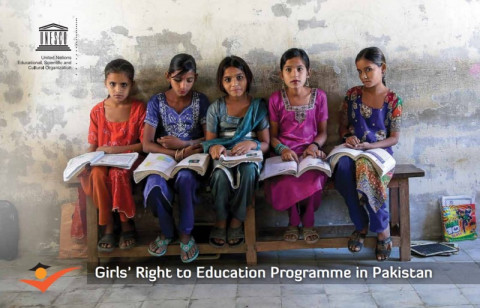 Girls' Right to Education Programme in Pakistan Année de publication: 2018 Auteur institutionnel: UNESCO Islamabad The programme is in progress in 14 very marginalized districts of the country selected in consultation with concerned education counterparts. Basic indicators for education, such as literacy rate, enrolment and retention of girls, and level of learning outcomes in primary grades are quite low in each selected district. Each province and area based project has three integrated components: (a) improving girls’ access through social mobilization and advocacy, (b) improving retention through improvement in school physical and learning environments – activation of parents-teachers committees (PTCs), school management committees (SMCs) and teachers training in multi-grade teaching and activity-based learning and, (c) capacity building of education officials at district, provincial and national level to create an enabling environment for girls’ education. All projects are implemented through local civil society organizations (CSOs) as implementing partners in consultation with national, provincial and area education departments. The programme is making significant progress in transforming the parental and community perception towards girls' education. Over seven thousand out of school girls have been enrolled in the target areas and retention is ensured through the provision of school facilities and improvement in overall learning environment.
 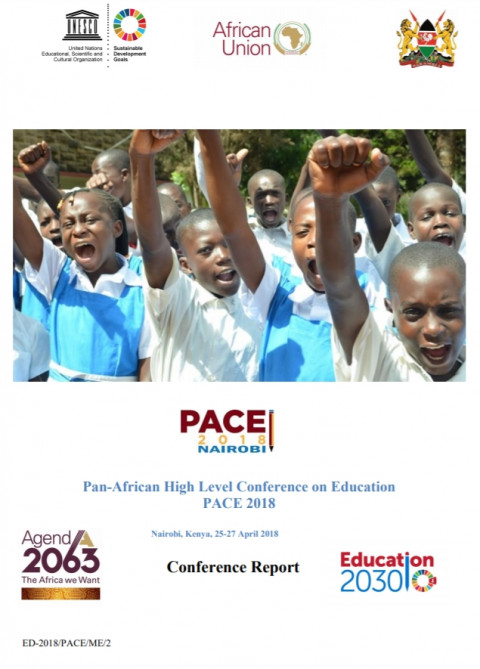 Pan-African High Level Conference on Education, PACE 2018: conference report Année de publication: 2018 Auteur institutionnel: African Union | Government of the Republic of Kenya The Pan-African High-level Conference on Education (PACE 2018) was held in Nairobi, Kenya from 25th to 27th April 2018. PACE 2018 was convened by UNESCO, the Government of Kenya and the African Union, with the collaboration of the Association for the Development of Education in Africa (ADEA) and contributions from the Sustainable Development Goal 4 (SDG4) co-conveners. The initiative to organise the PACE 2018 came in the wake of a number of regional consultations organised in Sub Saharan Africa and the Arab states regions to focus attention on the way forward, following the adoption in 2015 of the United Nations’ Sustainable Development Goal 4 on Education (SDG 4) and of the African Union’s Continental Education Strategy for Africa 2016-2025 (CESA 16-25). Conférence panafricaine de haut niveau sur l'éducation, PACE 2018: rapport de la conférence Année de publication: 2018 Auteur institutionnel: African Union | Government of the Republic of Kenya La Conférence panafricaine de haut niveau sur l’éducation (PACE 2018) s’est déroulée à Nairobi, au Kenya, du 25 au 27 avril 2018. Elle a été convoquée par l’UNESCO, le Gouvernement du Kenya et l’Union africaine, avec la collaboration de l’Association pour le Développement de l’Éducation en Afrique (ADEA) et des contributions des coorganisateurs de l’Objectif de développement durable 4 (ODD 4). L’initiative d’organiser la conférence PACE 2018 s’inscrit à la suite de plusieurs consultations régionales organisées dans les régions d’Afrique subsaharienne et des États arabes pour appeler l’attention sur la voie à suivre après l’adoption en 2015 de l’Objectif de développement durable 4 (ODD 4) sur l’éducation et de la Stratégie continentale de l’éducation pour l’Afrique de l’Union africaine (CESA 2016-2025) (CESA 16-25).
  Sustainable Development Goal 4: The Dubai Roadmap for Education 2030 in the Arab Region (2017-2018) Année de publication: 2017 Auteur institutionnel: UNESCO Beirut SDG 4 agenda inspires us to pursue a humanistic vision of education and development based on human rights and dignity, social justice, protection, cultural diversity, and shared responsibility and accountability. Also, it is underpinned by the principle that education is a public good, a fundamental human right and a basis for guaranteeing the realization of other rights. Furthermore, it is essential for peace, human fulfillment and sustainable development. Having adopted the Arab Regional Roadmap for SDG 4 and Education 2030 (Cairo Roadmap) at ARMED I, we, Arab Member States and partners, have since commenced implementation of the Agenda as appropriate and relevant to national contexts.
 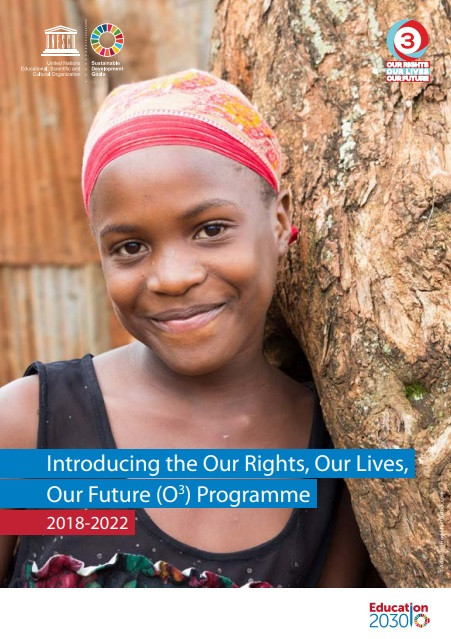 Introducing the Our Rights, Our Lives, Our Future (O3) Programme 2018-2022 Année de publication: 2019 Auteur institutionnel: UNESCO Harare Comprehensive sexuality education is a curriculum-based process of teaching and learning about the cognitive, emotional, physical, and social aspects of sexuality. It aims to equip children and young people with the knowledge, skills, attitudes, and values that will empower them to protect their health, well-being, and dignity, as well as to develop respectful social relationships and consider the well-being of others affected by their choices. Importantly, it also helps them to understand and act upon their rights throughout their lives.