
Ressources
Explorez une large gamme de ressources sur le GCED afin d’approfondir votre compréhension et de renforcer vos activités de recherche, de plaidoyer, d’enseignement et d’apprentissage.
2,660 résultats trouvés
 Atención para las mujeres que han sufrido violencia: Programa de capacitación de la OMS dirigido a los prestadores de servicios de salud Année de publication: 2019 Auteur institutionnel: World Health Organization (WHO) Este programa de capacitación se basa en el trabajo de muchas personas de todo el mundo que se dedican a prevenir y responder frente a todas las formas de violencia contra las mujeres y las niñas.
  قصة الحطاب وإبنة الحائك Année de publication: 2021 Auteur institutionnel: Alma3rifabook الفيديو عبارة عن قصة هادفة تتمثل في بعض القيم العربية والأخلاق النبيلة. يروى في قديم الزمان، وسالف العصر والاوان أنه كان هناك حطاب شاب يدعى ناصر متزوج حديثاً ويعيش مع زوجته على مشارف قرية ريفية هادئة. وكان ويخرج للعمل كل صباح لتقطيع الحطب وجمعه من الغابة المجاورة ولا يعود للبيت إلا بعد انتصاف النهار. وفي عصر أحد الايام خرج مع زوجته للسوق وهناك قابلا فتاةً شابة اسمها سلوى تبيع السجاد الذي تم حياكته يدويا. The Story of the Woodcutter and the Weaver's Daughter Année de publication: 2021 Auteur institutionnel: Alma3rifabook The video is a purposeful story represented in some Arab values and noble morals. It is said, in the old days, that there was a young woodcutter named Nasir who was newly married and lived with his wife on the outskirts of a quiet rural village. He would go out to work every morning to cut wood and gather it from the nearby forest, and would not return home until after midday. One afternoon, he went out with his wife to the market, and there they met a young girl named Salwa who was selling hand-woven rugs.
 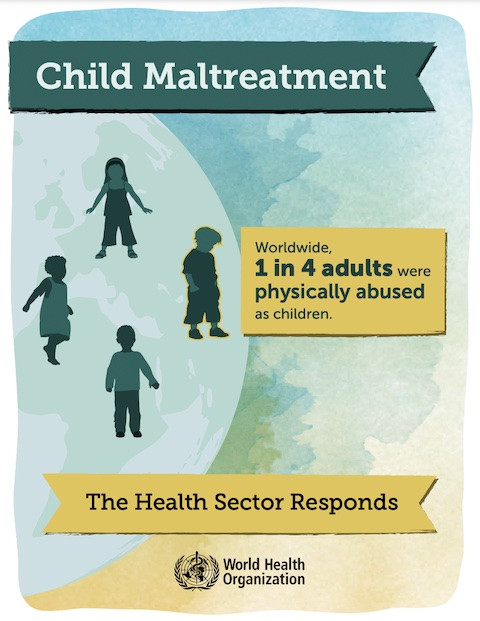 Child Abuse: The Health Sector Responds Année de publication: 2017 Auteur institutionnel: World Health Organization (WHO) This document presents a review on child abuse, which is presented in five ways, physical, sexual, psychological and neglect, each causing adverse effects on the health of children. Child abuse is widespread worldwide. It has immediate and long-term effects that can last a lifetime. It presents the factors involved in child abuse, as well as the strategies that can help prevent it. Maltrato infantil: El sector de la salud responde Année de publication: 2017 Auteur institutionnel: World Health Organization (WHO) Este documento presenta un revisión sobre el matrato infantil, el cual se presenta de cinco maneras, físico, sexual, psicológico y negligencia, cada uno provocando efectos adversos para salud de los niños. El maltratro infantil se encuentra muy extendido a nivel mundial. Tiene efectos inmediatos y de largo plazo que pueden durar toda la vida. Presenta los factores que se involucran en el maltrato infanti,así como las estrategias que pueden ayudar a prevenirlo.
  Case Studies From Schools Involved in Inclusive Education in Macedonia Training-of-Trainers Programme (2012–2014) Année de publication: 2014 Auteur institutionnel: United Nations Children's Fund (UNICEF) This short booklet offers some of the case studies that the teachers/ trainers developed in their schools, following the training-of-trainers. Some of the examples focus on telling a whole-school story, while others focus on individual children who have been supported to attend and participate in learning. All of the case studies offer ideas and inspiration to other practitioners – within and beyond the former Yugoslav Republic of Macedonia – who are working hard to make education more inclusive for all children.
 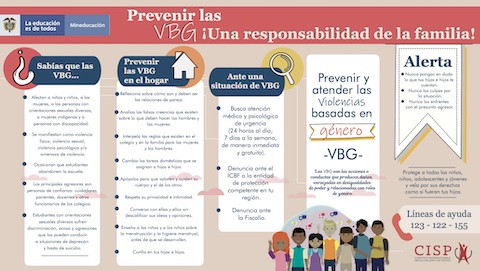 Preventing GBV: A Family Responsibility! Auteur institutionnel: Ministry of National Education of Colombia This infographic explains about what happens with gender-based violence, define it and explain what to do when it occurs. This infographic is intended to make the family aware of their role within this phenomenon and what the role they play in it.
 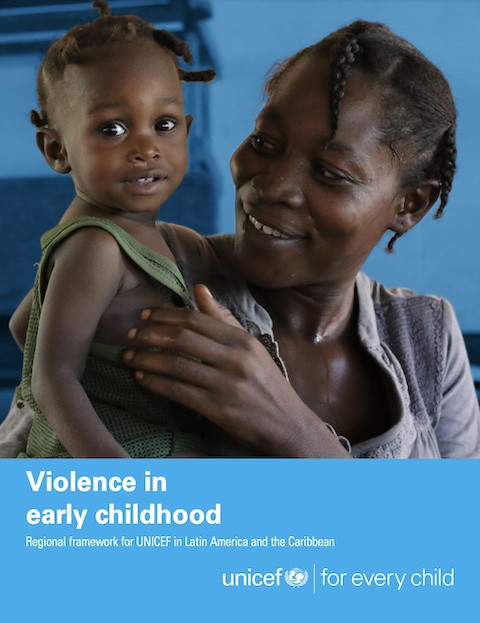 Violence in Early Childhood Année de publication: 2017 Auteur: Cecilie Modovar | Maria Elena Ubeda Auteur institutionnel: United Nations Children's Fund (UNICEF) It presents a comprehensive, multi-sectorial framework that aims to provide guidance to UNICEF country offices on how to improve programme interventions and synergies between programme areas in order to enhance young children’s development potential by reducing their exposure to violence. While early childhood is understood as the period from conception until age 8, the framework emphasizes the critical period from age 0-3. La violencia en la primera infancia Année de publication: 2017 Auteur: Cecilie Modovar | Maria Elena Ubeda Auteur institutionnel: United Nations Children's Fund (UNICEF) Se presenta un marco multisectorial integral, cuyo objetivo es orientar a las oficinas nacionales de UNICEF para mejorar las intervenciones programáticas y las sinergias entre las esferas de programa, a fin de potenciar el desarrollo de los niños pequeños reduciendo su exposición a la violencia. Aunque la primera infancia abarca el período que va desde la concepción hasta los 8 años de edad, este marco se centra en el período comprendido entre los 0 y los 3 años de edad debido a su importancia crítica.
  Human Rights: Handbook for Parliamentarians N° 26 Année de publication: 2016 Auteur institutionnel: Inter-Parliamentary Union (IPU) The Human Rights Handbook for Parliamentarians is based on the conviction that parliaments and their members can play a key role in delivering concretely on human rights. It is a joint initiative of the IPU and the Office of the United Nations High Commissioner for Human Rights. With brief presentations of the international human rights legal framework and international mechanisms which oversee its implementation at the national level, the Handbook looks at how parliaments can contribute to greater human rights protection.