
Ressources
Explorez une large gamme de ressources sur le GCED afin d’approfondir votre compréhension et de renforcer vos activités de recherche, de plaidoyer, d’enseignement et d’apprentissage.
1,407 résultats trouvés
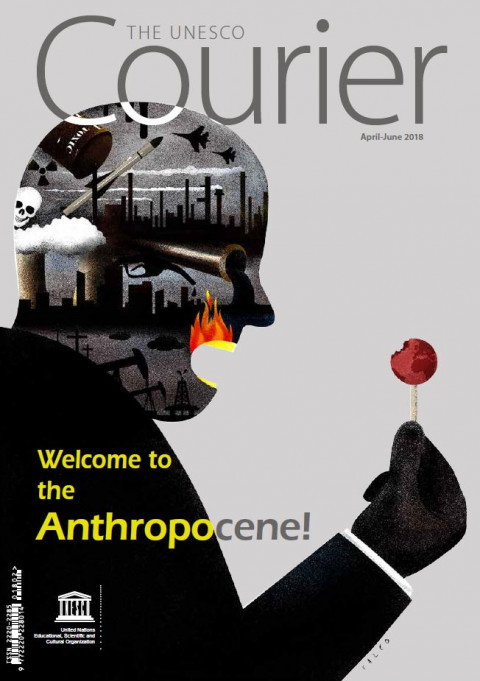 Bienvenue dans l'Anthropocène! (Le Courrier de l'UNESCO no. 2; Avril-Juin 2018) Année de publication: 2018 Auteur institutionnel: Organisation des Nations Unies pour l'éducation, la science et la culture (UNESCO) Selon les uns, l’Anthropocène n’est qu’un autre nom pour l’époque que nous appelons Holocène, les humains ayant commencé à exercer une pression sur l’environnement depuis 10 000ans, c’est-à-dire depuis leur sédentarisation et l’invention de l’agriculture. Selon d’autres, l’Anthropocène commencerait autour de 1800, avec la révolution industrielle. D’autres encore voient l’Anthropocène éclore dupremier champignon atomique de 1945. Malgré ces divergences, très rares sont ceux qui ne reconnaissent pas qu’au cours du dernier demi-siècle l’état de la planète s’est dégradé plus rapidement et plus dramatiquement que jamais : amasgigantesques de plastique sur les plages et dans les mers, développement sans précédent de nouveaux matériaux qui couvrent la surface terrestre et ne se recyclent que très peu, sols gorgés d’engrais, augmentation du taux d’acidité des mers, tauxde pollution sans précédent, érosion des forêts tropicales, dérèglement desécosystèmes, extinction massive des espèces et diminution drastique de la biodiversité, réchauffement climatique...À qui la faute ? Auxhumains – répond lamajorité des scientifiques. Reste à savoir si nous devrions tous porter la même charge deresponsabilité. Certains blâmant avant tout le système capitaliste né en Occident, parlent de Capitalocène ou d’Occidentalocène. Courons-nous à la catastrophe? Des voix s’élèvent pour prophétiser la fin du monde! Des notions comme Chtulhucène ou Thanatocène sont avancées pour signifier que le monstre rôde, quela mort nous guette... Des experts, bien plus modérés, n’en sont pas moins inquiets face à l’indécision des décideurs. «Tout se passe comme si l’humanité, léthargique, attendait la fin du film et le moment où les héros viendront tout arranger et où nous serons tous heureux pour toujours», lira-t-on dans ces pages.Le débat fait rage, les solutions tardent à venir. Le Courrier fait le point.
 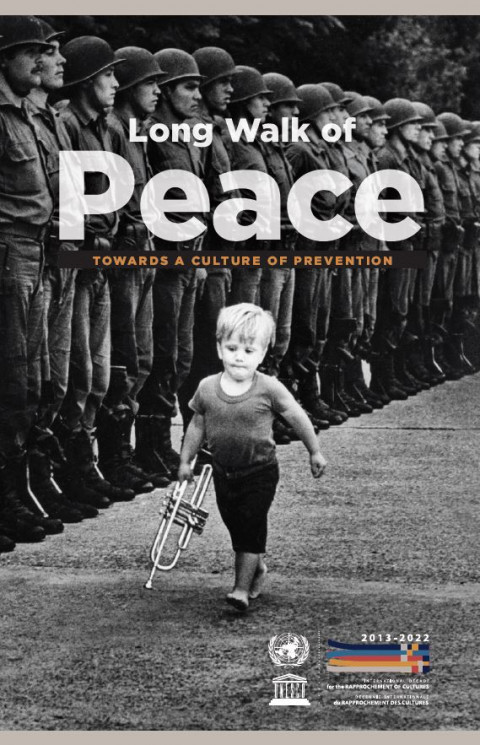 Long Walk of Peace: Towards a Culture of Prevention Année de publication: 2018 Auteur institutionnel: UNESCO How can the United Nations best address the imperatives of peace? Long Walk of Peace presents a fresh review of the conceptual and practical approaches to peace since the creation of the UN. Through an in-depth theoretical analysis, combined with a presentation of innovative practices across 32 UN bodies, it explores the long, steady haul towards peace and provides inspiration for the way forward.This book represents the collaborative efforts of scholars, experts and UN staff from a wide range of backgrounds. Long Walk of Peace, through its conceptual history and robust analysis, shows that peace is a dynamic process and a continuous journey of discovery. Thereby, the book provides a unique understanding of the emerging priorities of ‘sustaining peace’ and promoting ‘a culture of prevention’.As such it is an expression of UNESCO’s mandate to serve as a laboratory of ideas and thereby help advance the imperatives underscored by Agenda 2030.
 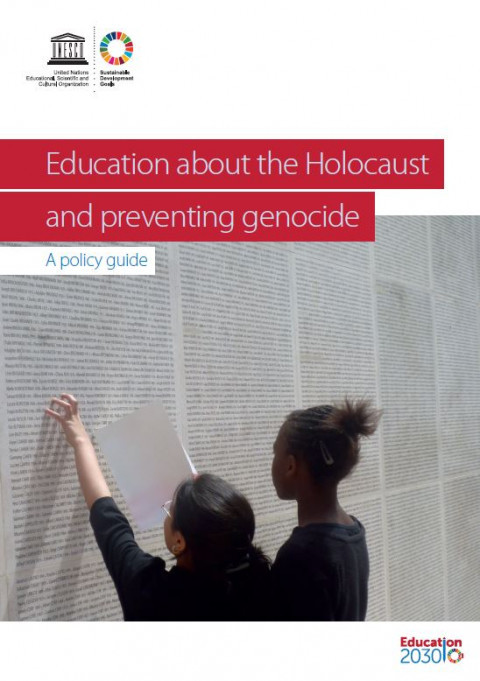 Education about the Holocaust and Preventing Genocide: A Policy Guide Année de publication: 2017 Auteur institutionnel: UNESCO This Guide provides policy-makers with solutions to introduce education about the Holocaust, and possibly broader education about genocide and mass atrocities, into education systems and curricula. It is the first of its kind, focusing on matters that are relevant to policy, rather than on teaching practices alone.The publication addresses a wide range of essential questions, including: Why teach about the Holocaust? What learning outcomes can be expected from such educational endeavours? How do they relate to global education priorities? How to introduce the subject in the curriculum, train teachers, promote the most relevant pedagogies, and work with the non-formal sector of education?Based on UNESCO’s Global Citizenship Education work, the Guide draws on years of research and experience in the fields of Holocaust and genocide education. Numerous academics, educators and other experts offered insights and suggestions throughout the process. Multiple Holocaust and genocide related organizations – including the United States Holocaust Memorial Museum – contributed to the content. This creation benefited from the time and expertise of many. This Guide raises challenging questions for education stakeholders. It also provides concrete solutions regarding how educators can deal with deeply troubling histories, to build a better future for all. Enseignement de l'Holocauste et prévention du genocide: guide à l'intention des décideurs politiques Année de publication: 2017 Auteur institutionnel: Organisation des Nations Unies pour l'éducation, la science et la culture (UNESCO) Le present document a pour objectif de guider les responsables politiques qui souhaitent organiser ou renforcer l’etude de l’Holocauste et, plus generalement, du genocide et des crimes de masse, dans le systeme educatif de leur pays. Il y est explique pourquoi et comment l’enseignement et l’apprentissage relatifs a l’Holocauste peuvent contribuer a la realisation des priorites strategiques mondiales par l’education, notamment en cultivant la citoyennete mondiale, en promouvant les droits de l’homme et en instaurant une culture de paix et de prevention du genocide.Le document est principalement axe sur l’enseignement de l’Holocauste, et s’appuie sur des decennies de recherches, d’allocations de ressources et de pratiques pedagogiques qui en demontrent l’efficacite. Il prodigue des conseils sur la maniere de fixer des objectifs d’apprentissage clairs, realistes et adaptes au contexte, afin de promouvoir un enseignement de qualite dans ce domaine. Educación sobre el Holocausto y la prevención del genocidio: Una guía para la formulación de políticas Année de publication: 2017 Auteur institutionnel: Organización de las Naciones Unidas para la Educación, la Ciencia y la Cultura (UNESCO) La presente guía proporciona a los responsables de la formulación de políticas diversas soluciones para la introducción de la educación sobre el Holocausto, y posiblemente una educación más amplia sobre el genocidio y las atrocidades masivas, en los sistemas educativos y los planes de estudios. Es la primera obra de este tipo, al hacer hincapié en asuntos que atañen a las políticas, más que en la mera enseñanza de las prácticas. En la publicación se aborda una amplia gama de cuestiones, entre las que figuran: ¿Por qué conviene impartir enseñanza sobre el Holocausto? ¿Qué resultados de aprendizaje cabe esperar de estas iniciativas educativas? ¿Cuál es su relación con las prioridades educativas a escala global? ¿Cómo introducir el tema en los planes de estudios, formar a los profesores, promover las pedagogías más pertinentes, y trabajar con el sector no formal de la educación?
  Universities: Increasingly Global Players Année de publication: 2015 Auteur: Patrick Aebischer Auteur institutionnel: UNESCO The role of science, technology and innovation has been explicitly recognized as a vital driver of sustainability. This paper addresses Des Universités de plus en plus tournés vers l'international Année de publication: 2015 Auteur: Patrick Aebischer Auteur institutionnel: Organisation des Nations Unies pour l'éducation, la science et la culture (UNESCO) The role of science, technology and innovation has been explicitly recognized as a vital driver of sustainability. This paper addresses
 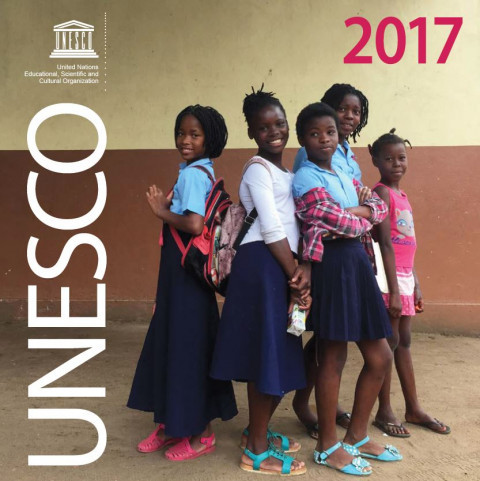 UNESCO 2017: Annual Report 2017 Année de publication: 2018 Auteur institutionnel: UNESCO This Annual Report takes stock of these actions and many others, undertaken during the mandate of the former Director-General, Irina Bokova, to whom I wish to pay tribute. The Report also reflects the professionalism and expertise of the Organization’s staff working across the world, and translating the 2030 Agenda for Sustainable Development’s Goals into action. The Report features UNESCO’s commitment to provide a world of justice, peace and sustainable development.Guided by the ideals of peace and progress, UNESCO represents a powerful force for transformation in the face of today’s challenges. It is also well-placed to share our wide-ranging experience and formulate the innovative ideas that the world currently needs, bearing in mind specific conditions on the ground and the need to respect local history and culture. Rapport UNESCO 2017 Année de publication: 2018 Auteur institutionnel: Organisation des Nations Unies pour l'éducation, la science et la culture (UNESCO) Ce rapport annuel dresse le bilan de ces actions et de nombreuses autres, engagées par la précédente Directrice générale, Irina Bokova, à qui je souhaite rendre hommage. Il reflète également le professionnalisme et l’expertise du personnel de l’UNESCO dans le monde entier, traduisant en actions les objectifs du Programme de développement durable à l’horizon 2030. Il met en mots et en images leur engagement pour construire un monde de justice, de développement durable et de paix.Guidée par les idéaux de paix et de progrès, l’UNESCO représente une puissante force de transformation face aux défis du monde contemporain. Elle est aussi le lieu par excellence pour partager la pluralité des expériences et faire naître les idées novatrices dont le monde a besoin – en tenant compte des spécificités du terrain, dans le respect des histoires et des cultures particulières.
 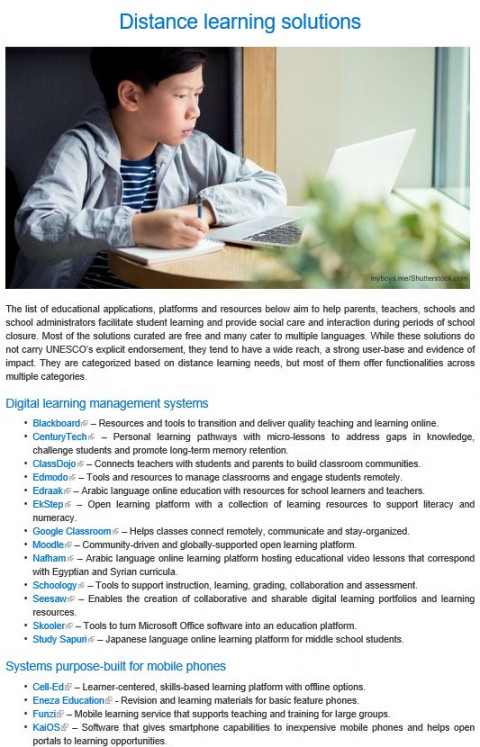 Distance Learning Solutions Année de publication: 2020 Auteur institutionnel: UNESCO The list of educational applications, platforms and resources below aim to help parents, teachers, schools and school administrators facilitate student learning and provide social care and interaction during periods of school closure. Most of the solutions curated are free and many cater to multiple languages. While these solutions do not carry UNESCO’s explicit endorsement, they tend to have a wide reach, a strong user-base and evidence of impact. They are categorized based on distance learning needs, but most of them offer functionalities across multiple categories.