
Ressources
Explorez une large gamme de ressources sur le GCED afin d’approfondir votre compréhension et de renforcer vos activités de recherche, de plaidoyer, d’enseignement et d’apprentissage.
2,199 résultats trouvés
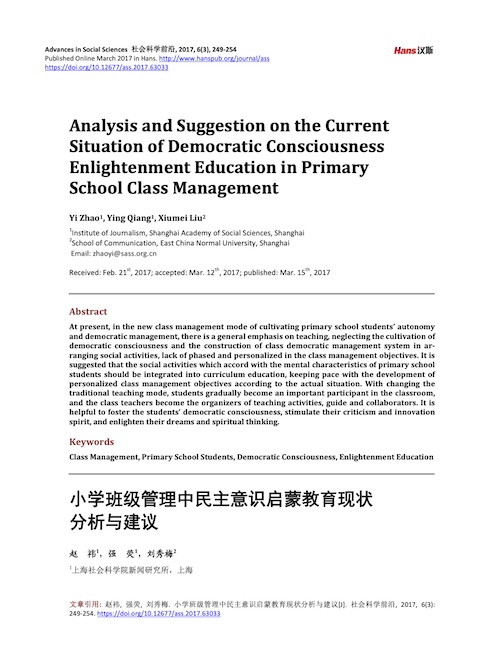 Analysis and Suggestion on the Current Situation of Democratic Consciousness Enlightenment Education in Primary School Class Management (Advances in Social Sciences; vol. 6, no. 3) Année de publication: 2017 Auteur: Zhao Wei | Qiang Ying | Liu Xiumei At present, in the new class management mode of cultivating primary school students’ autonomy and democratic management, there is a general emphasis on teaching, neglecting the cultivation of democratic consciousness and the construction of class democratic management system in ar- ranging social activities, lack of phased and personalized in the class management objectives. It is suggested that the social activities which accord with the mental characteristics of primary school students should be integrated into curriculum education, keeping pace with the development of personalized class management objectives according to the actual situation. With changing the traditional teaching mode, students gradually become an important participant in the classroom, and the class teachers become the organizers of teaching activities, guide and collaborators. It is helpful to foster the students’ democratic consciousness, stimulate their criticism and innovation spirit, and enlighten their dreams and spiritual thinking. 小学班级管理中民主意识启蒙教育现状分析与建议 (社会科学前沿; vol. 6; no. 3) Année de publication: 2017 Auteur: Zhao Wei | Qiang Ying | Liu Xiumei 目前在培养小学生自主性与民主性管理的新型班级管理模式中,普遍存在偏重教学部分,在安排社会 活动时忽视民主意识的培养,不重视班级民主化管理体制建设,班级管理目标常缺乏阶段性和个性化。 建议将符合小学生心智特点的社会活动融入课程教育;与时俱进的制定符合班级实际的阶段性和个性 化管理目标;改变传统的师生授课模式,学生逐渐变成课堂的重要参与者,班主任成为教学活动的组 织者、引导者与合作者。有利于培养小学生的民主意识,激发其批判和创新精神,启迪其梦想和灵性 思维。
 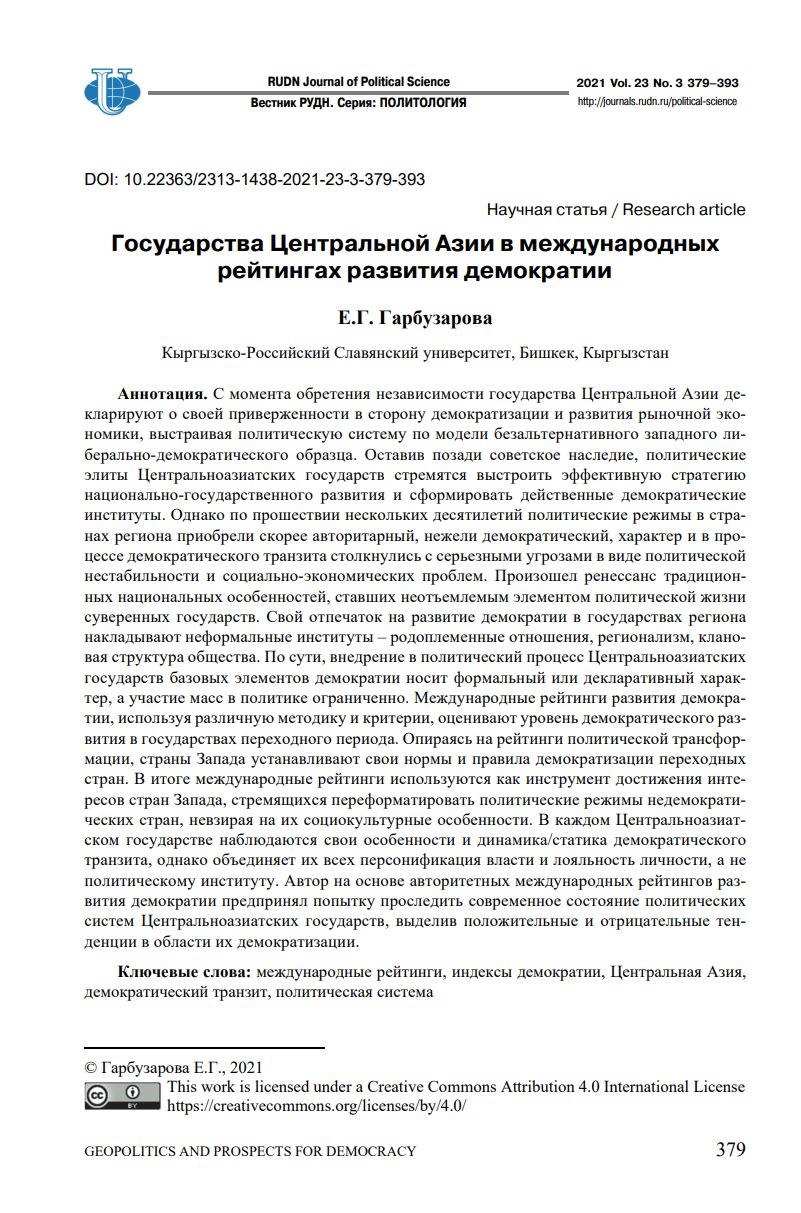 Central Asian States in the International Rankings of Democracy Development Année de publication: 2021 Auteur: E.G. Garbuzarova Each Central Asian state has its own features and dynamics/statics of democratic transit, but they are all united by the personification of power and loyalty to the autocrat rather than to the political institutions. The author attempts to trace the current state of the political systems of Central Asian states, highlighting the positive and negative trends in their democratization. Государства Центральной Азии в международных рейтингах развития демократии Année de publication: 2021 Auteur: E.G. Garbuzarova В каждом Центральноазиатском государстве наблюдаются свои особенности и динамика/статика демократического транзита, однако объединяет их всех персонификация власти и лояльность личности, а не политическому институту. Автор на основе авторитетных международных рейтингов развития демократии предпринял попытку проследить современное состояние политических систем Центральноазиатских государств, выделив положительные и отрицательные тенденции в области их демократизации.
 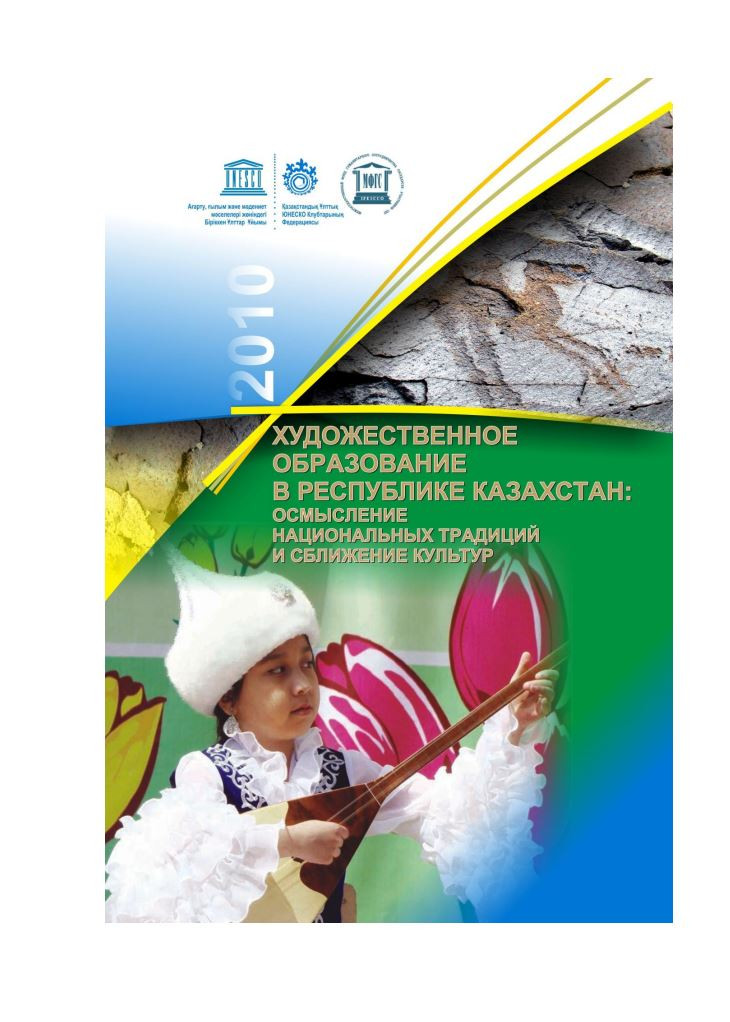 Art Education in the Republic of Kazakhstan: Perception of the National Traditions and Rapprochement of the Cultures; Research Paper Année de publication: 2010 Auteur: Rustam Muzafarov Kazakhstan has the unique feature of ethno-cultural diversity that appeared historically due to multi-ethnic and multi-confessional population's development. Such an environment urges the state to facilitate the revival and development of ethnic cultures and cross-cultural interaction for the benefit of national unity. The adoption of the concept of ethno-cultural education means that the creation of national education system would enhance the idea of cultural and linguistic pluralism, combining the advanced education techniques and information facilities with traditional cultural values. In fact, the educated personality feels real belonging to the historical and cultural traditions of the country. Художественное образование в Республике Казахстан: осмысление национальных традиций и сближение культур. Аналитический доклад. Année de publication: 2010 Auteur: Rustam Muzafarov Уникальность этнокультурного многообразия Казахстана обусловлена исторически сложившимся полиэтническим и многоконфессиональным составом населения. В таких условиях важно создание возможностей для возрождения и развития этнических культур, взаимодействия между ними в интересах общенационального единства. Принятие идеи этнокультурного образования означает создание национальной системы обучения и воспитания, базирующейся на идее культурного и лингвистического плюрализма, сочетающей мировой уровень технической и информационной оснащенности образования с традиционными культурными ценностями. Именно образование формирует причастность личности к исторической и культурной традиции.
 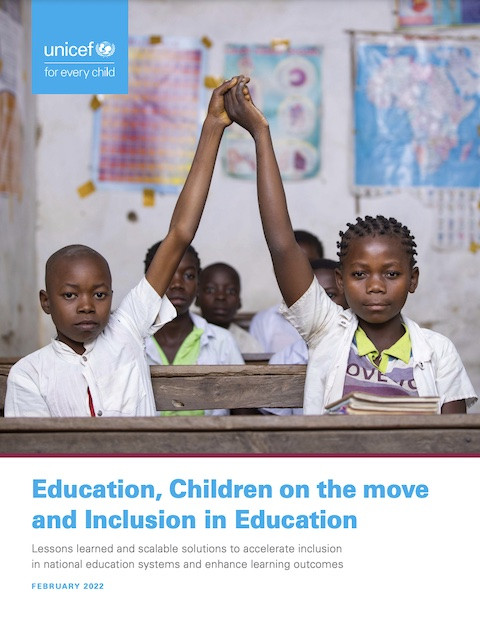 Education, Children on the Move and Inclusion in Education: Lessons Learned and Scalable Solutions to Accelerate Inclusion in National Education Systems and Enhance Learning Outcomes Année de publication: 2022 Auteur: Neven Knezevic | Katherine Curtiss | Eric Gero Auteur institutionnel: United Nations Children's Fund (UNICEF) This report summarizes how UNICEF and its partners have contributed to the creation of education solutions that support the skills development and educational attainment of children on the move in countries and regions across the world. Country case studies highlighting best practices from 19 countries and the East African and Sahel regions showcase UNICEF’s work with country governments on issues such as the inclusion of refugees in national education systems and improving relations between refugee children, their families, and their host communities.
  2021 대한민국 SDG4 이행현황 보고서 Année de publication: 2022 Auteur institutionnel: 유네스코한국위원회 본 자료는 2021년 한 해동안 대한민국의 SDG 4 이행 노력을 기록하고, SDG 4 모니터링과 이행촉진을 강화하는데 목적이 있다.
  Flexible Strategies for Ensuring Quality Learning Outcomes in Education in Emergencies: NEQMAP 2021 Thematic Review Année de publication: 2021 Auteur: Pina Tarricone | Ian Teo | Kemran Mestan | Kris Sundarsagar | Ashtamurthy Killimangalam | Nordin Abd Razak Auteur institutionnel: UNESCO Bangkok The COVID-19 pandemic has interrupted schooling for students globally and challenged how policy-makers might respond and recover from this protracted emergency. In collaboration with NEQMAP, the GEM Centre has conducted a rapid review of policy and practice documents for 14 countries, and an online survey with policy-makers in 7 of them to identify the types of flexible learning strategies that were implemented over the course of this pandemic. An education in emergencies Policy Monitoring Framework was used both to guide the analysis of documents and survey data, and to provide the basis for reporting findings.
  2019년 국가수준 초·중학생 디지털 리터러시 수준 측정 연구 Année de publication: 2019 Auteur: 이현숙 | 김수환 | 이운지 | 김한성 Auteur institutionnel: 한국교육학술정보원 본 연구에서는 우리나라 학생들의 디지털 리터러시를 측정하기 위한 검사 도구를 개발하여 초등학교와 중학교 학생들의 디지털 리터러시 수준을 측정하 였다. 2019 디지털 리터러시 검사는 2018년에 개발된 디지털 리터러시 검사의 평가틀을 기본으로 하되, 2018년 본검사 분석 결과와 ICT 및 CT 요소에 관한 최신 이론적 동향을 반영하여 검사 문항 개선 작업을 수행하였으며, 2018년 시 행에서 사용한 웹기반 검사 시스템의 문제점을 개선하여 시스템의 안정성을 강화하였다. 또한 2018년도 검사와의 가교 문항을 바탕으로 검사 동등화 분석 을 실시하여 학생들의 디지털 리터러시 수준을 계열적으로 비교, 분석함으로써 우리나라 정보 교육의 현주소와 향후 발전 방향에 관한 시사점을 도출하였다. 본 저작물은 한국교육학술정보원 (KERIS)에서 2019년 작성하여 공공누리 제 4유형으로 개방한 ‘2019년 국가수준 초·중학생 디지털 리터러시 수준 측정 연구 (이현숙, 김수환, 이운지, 김한성)’를 이용하였으며 해당 저작물은 한국교육학술정보원 (www.keris.or.kr)에서 무료로 다운받으실 수 있습니다.