
Ressources
Explorez une large gamme de ressources sur le GCED afin d’approfondir votre compréhension et de renforcer vos activités de recherche, de plaidoyer, d’enseignement et d’apprentissage.
732 résultats trouvés
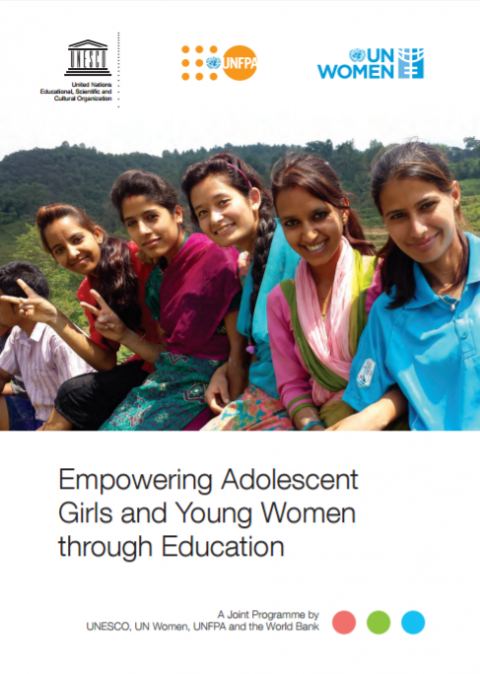 Empowering Adolescent Girls and Young Women through Education Année de publication: 2015 Auteur institutionnel: UNESCO L'Autonomisation des adolescentes et des jeunes femmes par l'éducation Année de publication: 2015 Auteur institutionnel: Organisation des Nations Unies pour l'éducation, la science et la culture (UNESCO)
  [Video] Global Citizenship Education to Prevent Violent Extremism Année de publication: 2016 Auteur institutionnel: UNESCO The UNESCO video on “Global Citizenship Education to prevent violent extremism” explains how education can prevent violent extremism through equipping young people with the skills to dialogue and think critically, and engage meaningfully with others and their communities in order to build peaceful societies.
 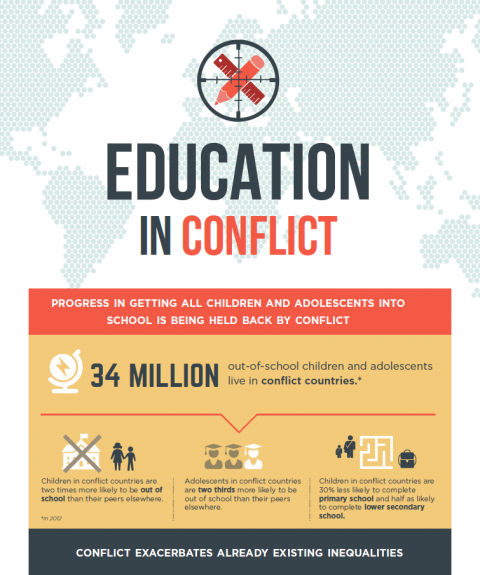 EDUCATION IN CONFLICT Auteur institutionnel: EFA Global Monitoring Report Team | UNESCO PROGRESS IN GETTING ALL CHILDREN AND ADOLESCENTS INTO SCHOOL IS BEING HELD BACK BY CONFLICT - 34 million out-of-school children and adolescents live in conflict countries. - Children in conflict countries are two times more likely to be out of school than their peers elsewhere.- Adolescents in conflict countries are two thirds more likely to be out of school than their peers elsewhere.- Children in conflict countries are 30% less likely to complete primary school and half as likely to complete lower secondary school.- Girls are almost two and a half times more likely to be out of school if they live in a conflict country than those elsewhere.- Adolescent girls are almost 90% more likely to be out of secondary school than young women elsewhere.- The poorest children in conflict countries are twice as likely to be out of school as the poorest elsewhere.
  Global Citizenship Education for the Rule of Law: Doing the Right Thing Année de publication: 2018 Auteur institutionnel: UNESCO | UN. Office on Drugs and Crime (UNODC) UNESCO and UNODC have established a partnership to promote the rule of law and a culture of lawfulness through education. Combining their resources and expertise, they are seeking to build the capacities of educators, teachers and policy-makers to plan and undertake educational activities that empower learners to take constructive and ethically responsible decisions in their daily lives that support justice, human rights and strong institutions to defend them.
  A Guide for Gender Equality in Teacher Education Policy and Practices Année de publication: 2015 Auteur: María C. Arango Restrepo | Esther Corona-Vargas Auteur institutionnel: UNESCO Transforming the culture of teacher education institutions and making them gender-sensitive entities is a daunting task. However, it is not an impossible task. Understanding gender and applying gender mainstreaming are critical foundations for fostering social cohesion that goes beyond teacher education institutions and the school. Teachers are increasingly expected to play crucial roles in preparing young people to face the future with confidence, purpose, responsibility and gender sensitivity. Teacher education institutions must be ready to provide the enabling environment and training and continuing education for the development of knowledge, values, skills and gender-responsive practices that the teachers need in the 21st century.This Guide, through its ten Modules, takes the reader through step by step on how gender can be mainstreamed in all areas of teacher education and training: from policy and planning, administration and management, gender-responsive budgeting, social services, the environment, curriculum, pedagogy, research, and to advocacy. Through this Guide, teacher educators are also reminded what teachers must know and be able to do in order to promote gender equality through education. The Modules can be used individually or comprehensively depending on the situation and context of countries.This Guide is dedicated to all teacher educators, whose intellectual rigour and tireless efforts to foster enabling environments for inclusive and gender sensitive education, are indispensable for success in continuing education. Guide pour l'égalité des genres dans les politiques et les pratiques de formation des enseignants Année de publication: 2015 Auteur: María C. Arango Restrepo | Esther Corona-Vargas Auteur institutionnel: Organisation des Nations Unies pour l'éducation, la science et la culture (UNESCO) Transformer la culture des institutions de formation des enseignants pour en faire des entités sensibles aux genres est une tâche ardue. Cependant, elle n’est pas impossible. Comprendre les problématiques liées aux genres et savoir comment appliquer l’égalité des sexes se révèlent être des aspects essentiels afin de favoriser une cohésion sociale allant au-delà des institutions de formation des enseignants et de l’école. Les enseignants sont de plus en plus appelés à jouer un rôle crucial dans la préparation des jeunes à faire face à l’avenir avec confiance, décision, responsabilité et sensibilité aux notions de genre. Ainsi, les institutions de formation des enseignants doivent être prêtes à fournir un environnement favorable et une formation continue pour le renforcement des capacités, des valeurs, des compétences et des pratiques sensibles au genre dont les enseignants ont besoin au 21e siècle.À travers ses dix modules, ce guide explique comment intégrer la notion de genre dans tous les domaines de l’éducation et de la formation des enseignants : politiques et planification, gestion et administration, budgétisation sensible au genre, services sociaux, environnement, programmes, pédagogie, recherche et plaidoyer. Ce guide vise à rappeler également aux formateurs d’enseignants ce que ces derniers devraient savoir et être en mesure de faire afin de promouvoir l’égalité des genres à travers l’éducation. Les modules peuvent être utilisés individuellement ou dans leur totalité en fonction de la situation et du contexte des pays.Ce guide est dédié à tous les formateurs d’enseignants, dont la rigueur intellectuelle et les efforts inlassables en vue de favoriser un environnement propice à l’éducation inclusive sensible aux genres, sont indispensables à la réussite de la formation continue. Guía para la igualdad de género en las políticas y prácticas de la formación docente Année de publication: 2015 Auteur: María C. Arango Restrepo | Esther Corona-Vargas Auteur institutionnel: Organización de las Naciones Unidas para la Educación, la Ciencia y la Cultura (UNESCO) La Guía para la Igualdad de Género en las Políticas y Prácticas de la Formación Docente, ha sido concebida como una herramienta práctica para impulsar una cultura organizacional con perspectiva de género en los centros de formación docente. Su objetivo es fortalecer las capacidades de los formadores de docentes, directores y estudiantes de pedagogía para reconocer y modificar en sus prácticas cotidianas los elementos que alientan la desigualdad de género.Asimismo, la guía busca contribuir a una mayor comprensión conceptual de la perspectiva de género y sirve de ayuda para identificar necesidades y opciones de cambio en las políticas institucionales, planes, estrategias y prácticas, según las características particulares de cada contexto.Esta guía está estructurada en torno a algunos de los aspectos críticos de la formación docente y el desarrollo temático destaca, en cada caso, las cuestiones de género. Tiene una organización modular y los módulos pueden ser consultados individualmente para una formación específica según la necesidad o el interés particular en un determinado momento. Sin embargo, dada la interconexión entre los temas de género debe considerarse, también, una interrelación entre los diferentes módulos.
  Her Atlas: Girls’ and Women's Right to Education Atlas Année de publication: 2019 Auteur institutionnel: UNESCO Her Atlas, the online atlas of girls’ and women’s right to education, is developed as part of Her education, our future, UNESCO’s initiative to accelerate action for girls’ and women’s education by leveraging political and financial commitments. Her Atlas aims to enhance public knowledge and monitor the status of national constitutions, legislation and regulations related to girls’ and women’s education rights in order to encourage countries to improve their legal and policy frameworks.
 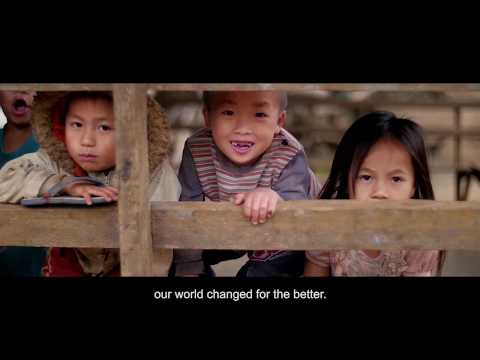 Education Transforms Lives Année de publication: 2019 Auteur institutionnel: UNESCO Education transforms lives every day and in every corner of society. This video explores the power of education and UNESCO’s role in leading and coordinating the Education 2030 Agenda, which is part of a global movement to eradicate poverty through 17 Sustainable Development Goals by 2030. Education is the right of every woman, man and child.Together, we’re shaping the global citizens of tomorrow, empowered on the path of education to build a more sustainable future. UNESCO – Building peace in the minds of men and women. www.unesco.org/education