
Ressources
Explorez une large gamme de ressources sur le GCED afin d’approfondir votre compréhension et de renforcer vos activités de recherche, de plaidoyer, d’enseignement et d’apprentissage.
950 résultats trouvés
 The Effect of a Training Program on Developing the Global Citizenship Principles of the History Teachers in Jordan Année de publication: 2013 Auteur: Zaid Suleiman M. Al-Edwan | Fadyieh Mohmoud A. Bani Mustafa Auteur institutionnel: Deanship of Scientific Research, University of Jordan This study aimed at building a training program for the history teachers in the light of the global citizenship principles and testing its effect on their knowledge level of those principles in Jordan. Study sample consisted of (26) male and female teachers randomly selected from the history teachers for the high Basic stage in the Education Directorate in Ma'daba Governorate. To achieve the study goals, a training program was build in the light of the global citizenship principles, which are: the global peace, democracy, human rights, human and the environment, scientific thinking, technology, and multi-cultures.and a cognitive test of the global citizenship's principles was prepared. After performing the relevant statistical analysis the results revealed that the pre-knowledge level of the history teachers for the basic stage of the global citizenship principles was lower than the educational accepted level (80%), and the presence of differences with statistical significance (α=0.01) between the post-knowledge level of the history teachers at the higher basic stage about the global citizenship principles and the educational accepted level (80%), in favor of the training program in each domain of the global citizenship's principles and for the domains collectively. The study recommended the inclusion of the global citizenship principles and concepts in the teachers training programs to increase their awareness in the global issues.
  Global Citizenship Education Course Année de publication: 2019 This course was developed by a number of academicians at the College of Education at Sultan Qaboos University. The idea of offering the course came as a collaboration between Sultan Qaboos University and UNESCO Beirut as well as the Asia-Pacific Center of Education for International Understanding. The aim of the course is to introduce global citizenship concept, its focuses, basics, aims, and characteristics to students. The attributes of the global citizens and their roles in the sustainable development are also defined framed in the course. Moreover, the course is an attempt to reinforce the values of global citizenship, peace education and the acceptance of others. In more deep focus, the course outline the relationship between global citizenship and some other concepts such as justice, human rights, international understanding and peace. The course also shed light on the Islamic view of the social responsibility and the role of Islam in that. With regards to international organizations, the course focuses on the role played by international organizations in promoting global citizenship. Finally, the role of Oman as a model of tolerance, accepting others and peacefully living together will be discussed.
  وثيقة مكة Année de publication: 2019 Auteur: Muslim World League وثيقة مكة هي وثيقة صادرة عن كبار علماء الامة الإسلامية وقد صدرت في مكة والتي تعتبر عاصمة الأمة الإسلامية وقد تم توقيعها في مكان قريب من البيت الحرام بمكة. وتنص الوثيقة على إرساء قيم التعايش وتحقيق السلام بين مكونات المجتمع الانساني، مما ينتج عنه عالم مستدام خالي من المشاكل. وتؤكد الوثيقة أن المسلمون هم جزء من العالم الأكبر بتفاعله الحضاري ويسعون للتواصل مع مكوناته المختلفة من أجل تحقيق صالح البشرية وتعزيز قيمها النبيلة، وبناء جسور المحبة والوئام الإنساني والتصدي لممارسات الظلم والصدام الحضاري ومسببات الكراهية. وتحتوي هذه الوثيقة على 29 مبدأ من مبادئ السلام ونبذ الكراهية والتفاهم الدولي. Mecca Document Année de publication: 2019 Auteur: Muslim World League The Mecca document is a document issued by the leading Islamic scholars of the Muslim Ummah. It was issued in Mecca, which is considered the capital of the Islamic Ummah. It was signed in the vicinity of the Sacred House in Mecca. The document establishes the values of coexistence and peace between the components of human society, resulting in a sustainable and problem-free world. The document affirms that Muslims are part of the larger world in its cultural interaction and Muslims seek to connect with its various components in order. According to the Document, this connection with others will lead to achieving the benefit of humanity and promote its noble values, build bridges of love and human harmony. It will also help in addressing the practices of injustice, clash of civilizations and causes of hatred. This document contains 29 principles of peace, the rejection of hatred and international understanding.
  درجة ممارسة حقوق الانسان في العملية التعليمية من وجهة نظر التعليم ما بعد الاساسي Année de publication: 2014 Auteur: Mahmoud AlSubhi هدفت هذه الدراسة للكشف عن درجة ممارسة حقوق الانسان في العملية التعليمية من وجهة نظر الطلبة في مدارس التعليم ما بعد الاساسي. ولتحقيق أهداف الدراسة استخدم الباحث المنهج الوصفي، اذ قام بإعداد إستبانة مكونة من 37 عبارة موزعة على محورين وهما حرية التعبير عن الرأي، والعدل والمساواة. وقد أظهرت النتايج أن درجة الممارسة كانت متوسطة، وأن درجة الممارسة كانت أكبر في محور العدل والمساواة عن محور حرية التعبير عن الرأي. وأوصت الدراسة بضرورة تعزيز ممارسة حقوق الانسان في العملية التعليمية.
 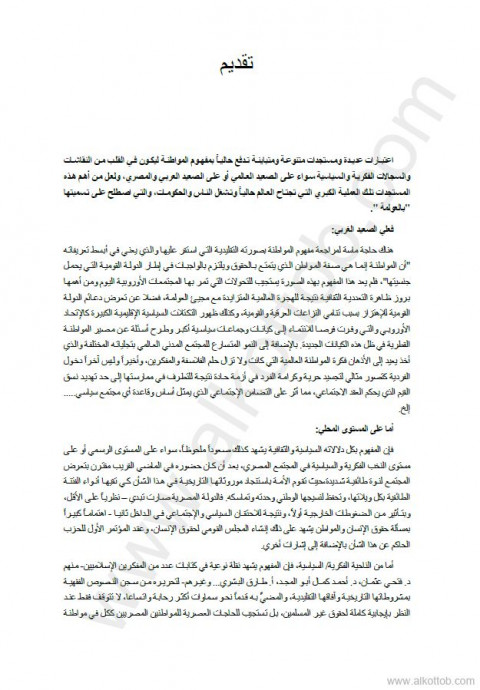 المواطنة والعولمة تساؤل الزمن الصعب Année de publication: 2016 Auteur: قايد دياب عد كتاب “المواطنة والعولمة.. تساؤل الزمن الصعب” لمؤلفه “قايد دياب قايد مجاهد”تقاطعًا بين عدد من مجالات العلوم الإنسانية البينية، ومنها: مجال حقوق الإنسان، والاقتصاد السياسي الذي يهتم بأهم الظواهر الاقتصادية العالمية وأثرها على الظواهر السياسية، ومن أهمها موضوع سيادة الدول القومية؛ حيث يتناول بالدراسة والتحليل مفهوم المواطنة الغربية والكيفية التي تبلور بها وتطوره، وما تعرض له من ثورات اجتماعية وإعلانات مختلفة لحقوق الإنسان.. كما يستهدف استقصاء ظاهرة العولمة من حيث نشأتها وتفسيرها وتجلياتها، ومدى قدرة الدول القومية على الوفاء بمسئولياتها الاجتماعية تجاه مواطنيها إزاء ظاهرة العولمة.. بالتطبيق على أثر العولمة على المواطنة المصرية، وذلك في خمسة أبواب Citizenship and Globalization, Questionable difficult time Année de publication: 2016 Auteur: قايد دياب The book “Citizenship and Globalization… the Question of the Hard Time” by “Kayed Diab Kayed Mujahid” is considered as an intersection between a number of interdisciplinary fields of human sciences, including: It examines and analyzes the concept of Western citizenship, how it develops and develops it, as well as the social revolutions and various human rights declarations it exposes. A social towards its citizens towards the phenomenon of globalization .. Applied to the impact of globalization on Egyptian citizenship, in five sections.
 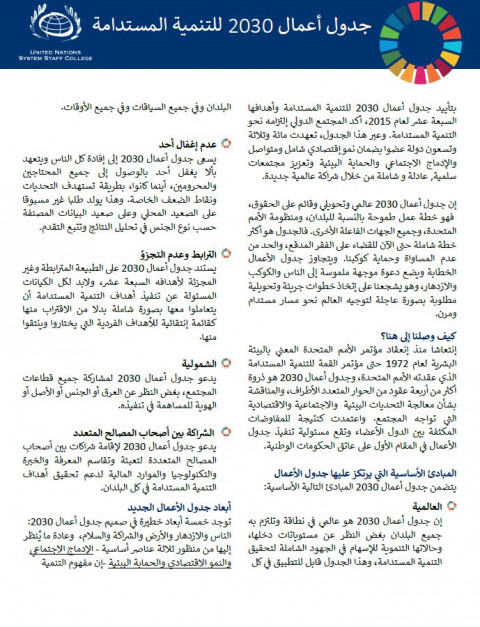 جدول أعمال 2030 للتنمية المستدامة Année de publication: 2018 Auteur institutionnel: United Nations System Staff College (UNSSC) من خلال تأييد خطة التنمية المستدامة لعام 2030 وأهدافها السبعة لعام 2015 ، أكد المجتمع الدولي على التنمية المستدامة. في هذا الجدول ، تعهدت مائة وتسع وثلاثون دولة من الدول الأعضاء بضمان نمو اقتصادي شامل ومستدام ، والاندماج الاجتماعي ، وحماية البيئة وتعزيز المجتمعات السلمية والعادلة والشاملة للجميع من خلال شراكة عالمية جديدة. إن جدول أعمال 2030 قائم على الحقوق وطموح. إنه خطة عمل طموحة للبلدان ، ومنظومة الأمم المتحدة ، وجميع الجهات الفاعلة الأخرى. تتجاوز الأجندة الخطابة وتوجه دعوة ملموسة للناس والكوكب والازدهار ، وتشجعنا على اتخاذ خطوات جريئة وتحويلية مطلوبة بشكل عاجل لتوجيه العالم نحو طريق مستدام ومرن. 2030 Agenda for Sustainable Development Année de publication: 2018 Auteur institutionnel: United Nations System Staff College (UNSSC) By endorsing the 2030 Agenda for Sustainable Development and its seven goals for 2015, the international community emphasized sustainable development. In this table, one hundred and ninety three Member States pledged to ensure inclusive and sustained economic growth, social inclusion, environmental protection and the promotion of peaceful, just and inclusive societies through a new global partnership. The Agenda 2030 is rights-based and ambitious.It is an ambitious plan of action for countries, the United Nations system, and all other actors. The agenda goes beyond rhetoric and makes a concrete call to people, the planet and prosperity, and it encourages us to take bold and transformative steps urgently needed to guide the world towards a sustainable and resilient path.
 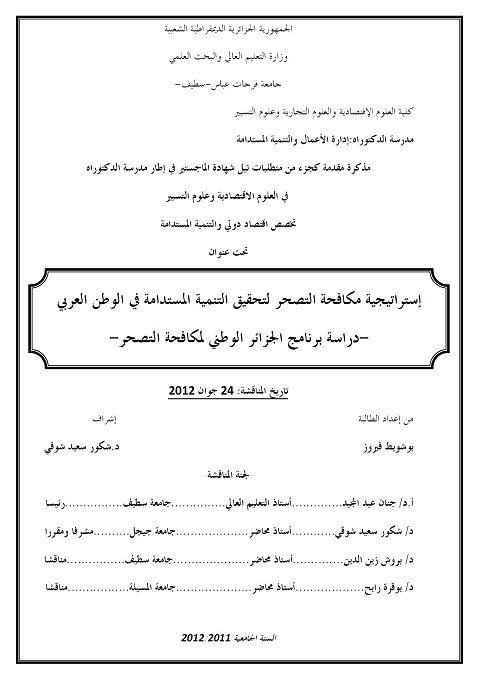 إستراتيجية مكافحة التصحر لتحقيق التنمية المستدامة في الوطن العربي : دراسة برنامج الجزائر الوطني لمكافحة التصحر Année de publication: 2019 Auteur: Boshwait Qairouz إن البحث عن استراتيجيات مستدامة لمكافحة التصحر تحترم البيئة الطبيعية وتحقق العدالة الاجتماعية إضافة إلى تحقيق الفعالية الاقتصادية في المناطق المتضررة من العالم أصبحت من القضايا الهامة التي تخص كل الدول خاصة الدول العربية، لما لمشكلة التصحر من عواقب وخيمة تعود بالضرر على اتمعات البشرية من الناحية الاقتصادية والاجتماعية وكذا البيئية، وبالتالي عدم تحقق التنمية المستدامة التي أصبحت من متطلبات العصر والرامية إلى تحسين الجانب الاجتماعي والاقتصادي تحت إطار حماية البيئة. ومنه نطرح التساؤل التالي: هل تتبع الدول العربية إستراتيجية واحدة لمكافحة التصحر والتي تأخذ في الاعتبار مبادئ التنمية المستدامة؟ وما هو واقع ذلك في الجزائر من خلال البرنامج الوطني لمكافحة التصحر؟