
Ressources
Explorez une large gamme de ressources sur le GCED afin d’approfondir votre compréhension et de renforcer vos activités de recherche, de plaidoyer, d’enseignement et d’apprentissage.
1,448 résultats trouvés
 Teaching about the Holocaust : Major educational predicaments, proposals for reform, and change - An international perspective Année de publication: 2013 Auteur: Zehavit Gross The aim of this article is to analyze the findings of a research project on how the Holocaust is taught around the world. The project analyzes central issues and educational events that occur while teaching the Holocaust "behind the classroom door," in public schools in different countries. Researchers from 10 nations participated in the project: Germany, Austria, Switzerland, Poland, Estonia, Scotland, Australia, the United States, Canada and Israel. One of the major findings of this research was that although the official establishment is very interested in teaching the subject of the Holocaust, teachers can find it hard to teach because of resistance by their students, who occasionally react in class with cynical, racist, anti-Semitic and antidemocratic remarks. In all the countries, researchers indicate three principal ways of handling the question of the Holocaust: education, teacher training, and research. (By the author) The challenges of Holocaust introduction and remembrance - particular and universal aspects in formal and informal interdisciplinary curricula in Israel and abroad Année de publication: 2011 Auteur: Nitza Davidovich | Dan Soen | Anat Hezkelovich In the present framework, an attempt was made to compare Holocaust instruction in Israel and in France. The comparison between the formal and informal curricula in both countries shows that both systems share this study's basic assumption concerning the inherent potential of teaching the Holocaust to the younger generation. Nevertheless, each country has a clear goal toward which it directs its students. The State of Israel, the Jewish state, perceives the Holocaust mainly through nationalist and Zionist eyes, directing the younger generation to learn particular lessons. The French model, in contrast, represents a shortened version ... devoted to the universal lessons of the Holocaust. But in the end, both systems would benefit by adopting some of the elements of the other. (By the author)
 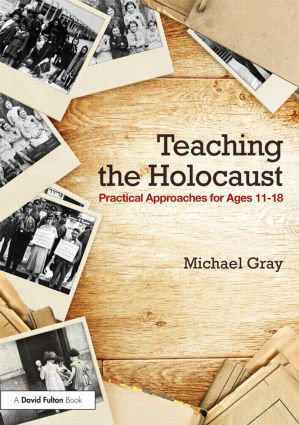 Teaching the Holocaust : Practical approaches for ages 11-18 Année de publication: 2015 Auteur: Michael Gray Teaching the Holocaust is an important but often challenging task for those involved in modern Holocaust education. What content should be included and what should be left out? How can film and literature be integrated into the curriculum? What is the best way to respond to students who resist the idea of learning about it? This book, drawing upon the latest research in the field, offers practical help and advice on delivering inclusive and engaging lessons along with guidance on how to navigate through the many controversies and considerations when planning, preparing and delivering Holocaust education. Whether teaching the subject in History, Religious Education, English or even in a school assembly, there is a wealth of wisdom that will make the task easier for you and make the learning experience more beneficial for the student. (By the publisher)
  L'éducation à la citoyenneté Année de publication: 2008 Auteur: Audric Vitiello Auteur institutionnel: Raisons politiques Notion récente, l'éducation à la citoyenneté se présente comme une inflexion de la formation civique, visant un renouvellement de sa forme pour mieux assurer sa fonction institutionnelle d'intégration des individus au collectif. Mais, l'éducation ôtant une praxis où moyens et fins sont interdépendants, une modification des modalités de l'éducation induit logiquement celle de la finalité. De fait, l'éducation à la citoyenneté s'indexe à une conception originale du politique pensé non plus comme lieu, mais comme moment spécifique dédié à la régulation de tout collectif. Le mécanisme d'abstraction civique perdure, mais il s'effectue à partir des situations concrètes dans lesquelles l'individu est inscrit, et par une réflexion à fondement dialogique. Se dessine alors une forme de démocratie générale et dialogique, où le politique est déconcentré et démultiplié mais où la décision prise en commun après délibération reste le mode de structuration privilégié du collectif. Mais la démocratie procédurale et dialogique a des limites, dans la mesure où elle suppose d'être fondée dans un corpus substantiel de valeurs qui lui confère sa légitimité.
  Lessons learned from Danish and other international efforts on Countering Violent Extremism (CVE) in development contexts Année de publication: 2015 Auteur institutionnel: Danish International Development Assistance (DANIDA) Cette étude examine les leçons apprises des efforts danois et des autres acteurs du développement dans la lutte contre l'extrémisme violent (CVE). Ces leçons sont utiles pour l’élaboration de politiques fondées sur des preuves et afin de favoriser une vision partagée de la programmation liée à la CVE dans des contextes de développement. Evaluation Study: Lessons learned from Danish and other international efforts on Countering Violent Extremism (CVE) in development contexts Année de publication: 2015 Auteur institutionnel: Danish International Development Assistance (DANIDA) This evaluation study collates lessons being learned from Danish efforts and those of other development actors on Countering Violent Extremism (CVE) that can inform evidence based policy making and increase shared understanding on CVErelated programming in development contexts. The Holocaust, 1933-1945 : Educational Resources kit Auteur institutionnel: Simon Wiesenthal Center This educational kit released by the Simon Wiesenthal Center Library and Archives proposes numerous teaching materials educational staff can appropriate. It offers a timeline of the Holocaust, a glossary of terms, places and personalities, a History lesson under a "questions/answers" session, information about each Nazi camp (number of deaths, present status...) readings, resources and a list of associations working on this topic.
  The Holocaust by Bullets - A study guide for educators Année de publication: 2015 Auteur: Urszula Szczepinska This guide released by Yahad in Unum is the result of several years of research on mass shootings of Jews and Roma in the ex-Soviet Union. Using this guide, teachers can educate about the genocide in the eastern parts of Europe by killing squads, a part of istory that was long obscured. La Shoah par balles - Un guide d'étude pour les éducateurs Année de publication: 2015 Auteur: Urszula Szczepinska Ce guide publié par Yahad in Unum est le résultat de plusieurs années de recherche sur les fusillades de masse des Juifs et des Roms dans l'ex-Union soviétique. Utilisation de ce guide, les enseignants peuvent renseigner sur le génocide dans les régions orientales de l'Europe en tuant des escadrons, une partie de istoire qui a été longtemps occultée. L'Holocauste, 1933-1945: kit Ressources pédagogiques Auteur institutionnel: Simon Wiesenthal Center Ce kit éducatif publié par le Centre Simon Wiesenthal Bibliothèque et Archives propose de nombreux matériaux d'enseignement du personnel éducatif peut approprier. Il propose une chronologie de l'Holocauste, un glossaire des termes, des lieux et des personnalités, une leçon d'histoire sous une session "Questions / réponses", des informations sur chaque camp nazi (nombre de décès, le statut actuel ...) des lectures, des ressources et un liste des associations travaillant sur le sujet.