
Ressources
Explorez une large gamme de ressources sur le GCED afin d’approfondir votre compréhension et de renforcer vos activités de recherche, de plaidoyer, d’enseignement et d’apprentissage.
1,180 résultats trouvés
 School Polylingual Education in Kazakhstan (Turkic-Russian, Turkic-English, Turkis-Russian-English) Année de publication: 2015 Auteur: Dzhusupov M. This article deals with a problem of bilingual and polylingual education at school, lyceum and college of Turkic Republic of CIS on the illustration of Kazakhstan; it is drawn an analogy (parallel) between modern polylingual education of — Soviet period; active ingress of English language in a system of school polylingual education has been analyzed; the domination of Russian language in polylingual educational process has been proved, it is determined an educational status of Russian language not as adoptive, but as obligatory general subject at school and in the institute of higher education and educational status of English language as foreign, i.e. as an alternative (optional) subject. Школьное полиязычное образование в Казахстане (тюркско-русское, тюркско-английское, тюркско-русско-английское) Année de publication: 2015 Auteur: Dzhusupov M. В статье исследуется проблема би- и полилингвального образования в школе, лицее и колледже тюркоязычных республик СНГ на примере Казахстана; проводится параллель между современным полиязычным образованием в системе среднего и среднего специального образования с языковым образованием советского периода; анализируется активное вхождение английского языка в систему школьного образования; доказывается доминирование русского языка в полилингвальном образовательном процессе; определяется образовательный статус русского языка как неродного, но как обязательной общеобразовательной дисциплины в школе и в вузе, а также образовательный статус английского языка как иностранного.
  L'utilisation des médias sociaux dans l'éducation de l'Holocauste Auteur institutionnel: International Holocaust Remembrance Alliance (IHRA) Les médias sociaux est une forme en pleine expansion de la communication et de la communauté dans notre monde et dans l'éducation plus spécifiquement. éducateurs Holocauste sont chargés de déterminer la meilleure façon d'utiliser cet outil dans leur programmation sans programme ou l'intégrité objet compromettant. Ces lignes directrices décrivent les considérations et les pratiques dans le déploiement de médias sociaux dans l'environnement éducatif de l'Holocauste. Using social media in Holocaust Education Auteur institutionnel: International Holocaust Remembrance Alliance (IHRA) Social media is a rapidly expanding form of communication and community in our world and in education more specifically. Holocaust educators are tasked with determining how best to use this tool in their programming without compromising programme or subject integrity. These guidelines outline considerations and practices in deploying social media in the Holocaust educational environment.
  OECD 학습 나침반 2030: 변혁적 역량과 민주시민교육의 접점 Année de publication: 2019 Auteur: 김아미 Auteur institutionnel: 경기도교육연구원 본 연구는 OECD 학습 나침반 2030(Learning Compass 2030)에서 논하는 변혁적 역량(transformative competencies)이 무엇을 의미하는지 살펴보고, 이에 대한 교육적 해석과 실천을 위해 민주시민교육과의 접점을 찾아 ‘변혁적 역량’을 지원할 수 있는 교육 방향 및 방안을 도출하고자 하였다. 또한 이를 통해 본 연구는 어린이·청소년인 학습자의 사회 변혁적 행동 능력 및 권리가 강조되는 국내외 맥락에서 교육적 대응을 위해 고려해야할 이슈들을 제안하는 것을 목적으로 한다.
 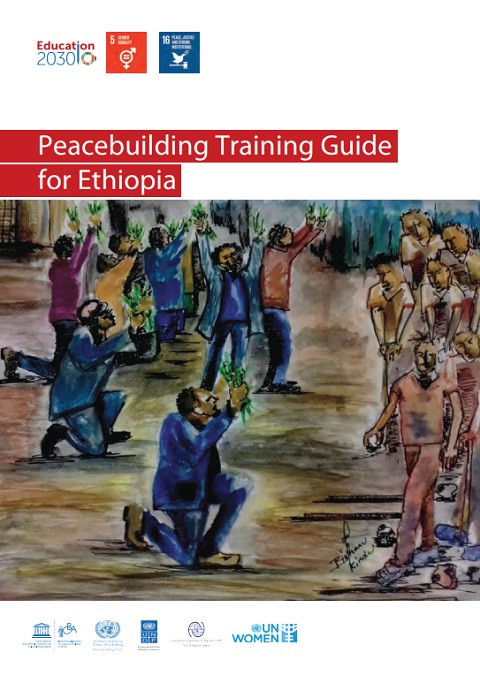 Peacebuilding Training Guide for Ethiopia Année de publication: 2020 Auteur institutionnel: UNESCO International Institute for Capacity-Building in Africa (IICBA) This publication is a training guide for a variety of stakeholders, both inside and outside the education system, in Ethiopia on peace and resilience building. It is an adapted and updated guide for the Ethiopian context. The training guide aims to inform and empower the reader in why and how to educate others for peacebuilding. It provides a foundation of con¬ict analysis and peacebuilding and describes a learner-centered approach to peace education and community engagement. The goal of the training guide is for the reader to become a facilitator with the disposition, knowledge, skills and commitment to support others in developing their full potential as peace-builders.
  미디어 문해력(Media Literacy) 향상을 위한 교실수업 개선 방안 연구 Année de publication: 2015 Auteur: 박유선 | 전경란 | 박한철 Auteur institutionnel: 대한민국 교육부 우리가 살고 있는 지식기반사회에서는 다양한 미디어와 정보 기술을 통해 쏟아지는 방대한 양과 형태의 정보에 체계적으로 접근하여, 이를 비판적으로 분석하고 평가하여 활용할 수 있는 ‘미디어 리터러시(Media Literacy)’가 현대적 의사소통 및 지식정보처리 역량으로서 중요하게 부각 되고 있습니다.과거의 학교 교육에서는 ‘리터러시’가 주로 문자로 표현된 글이나 책의 내용을 읽고 쓸 수 있는 능력에 한정되어 모국어 과목에서 다루어졌습니다. 그러나 현대사회에는 ‘리터러시’가 글과 책의 범위를 넘어서 다양한 형태로 된 미디어의 의미를 이해하고 생산하는 것으로 확대되었습니다. 이에 따라 주요 국제기구, 교육단체 및 세계 여러 나라의 국가 교육과정에서는 미디어 리터러시와 관련된 학습을 중요하게 다루고 있습니다.본 보고서는 “미디어 문해력 향상을 위한 교실수업 개선 방안 연구”의 최종보고서로서 미디어 리터러시 교육의 이론적 배경과 연구 동향, 국내와 해외 교육과정의 미디어 리터러시 반영 상황, 우리나라 어린이와 청소년들의 미디어 이용 실태 등을 검토하고, 초·중·고 교사들의 인식 조사 결과 및 국내와 해외 전문가들의 견해를 바탕으로 하여, 미디어 리터러시 교육의 개념과 목표, 내용 체계를 도출하였습니다.
  Ministerial Forum: Global Dialogue on ICT and Education Innovation – Towards Sustainable Development Goal for Education (SDG 4); Proceedings Année de publication: 2019 Auteur institutionnel: UNESCO Institute for Information Technologies in Education (IITE) The present publication contains articles based on the outcomes of the Ministerial Forum “Global Dialogue on ICT and Education Innovation – Towards Sustainable Development Goal for Education (SDG 4)”, organized by UNESCO IITE in cooperation with the Ministry of Education and Science of the Russian Federation in Moscow (Russia) on 18-19 March, within the Moscow International Education Fair 2018 (MIEF 2018).The publication covers the flagship topics such as ICT potential for future teachers and future schools, digital pedagogy and OER, collaboration between public and private sectors in the use of ICT in education, digital technologies for quality and equity in education.
 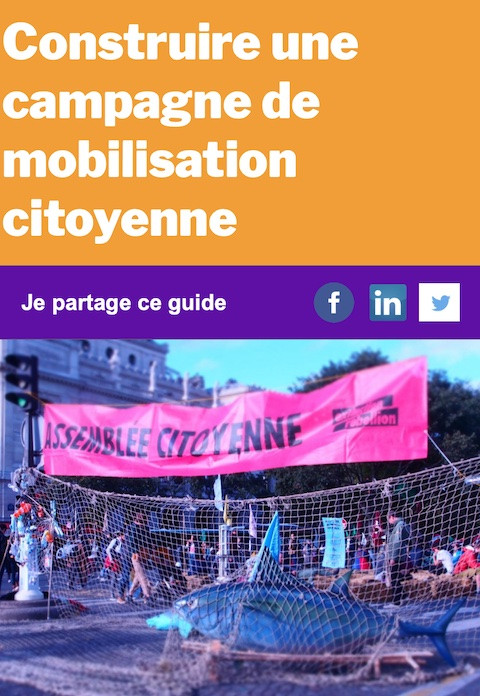 Construire une campagne de mobilisation citoyenne: Je partage ce guide Auteur institutionnel: L'accélérateur de la mobilisation (France) Ce kit est pour partager les bases de la création de campagnes de mobilisation citoyenne, générer de l’inspiration et donner l’envie à des groupes de citoyen.ne.s d’aller gagner des victoires concrètes.
  Rethinking Pedagogy: Exploring the Potential Of Digital Technology In Achieving Quality Education Année de publication: 2019 Auteur: Lorena Alemán de la Garza | Alessandra Anichini | Péter Antal | Aurélie Beaune | Éric Bruillard | Diane Burke | Pedro Henrique Cacique Braga | Ruma Chakravarti | Sriya Chakravarti | Deng Chen | Lidiya Chikalova | Helen Crompton | Ilana De Almeida Souza Concilio | William Cope | Lorenz Denks | Matthew Farber | Giovanni Fonseca | Pintér Gergely | Marcela Georgina Gómez Zermeño | Russell Hazard | Laura Hosman | Mary Kalantzis | Kojanitz László | Xavier Levoin | Kristen Linzy | Arnab Mandal | Yoko Mochizuki | Ariam Mogos | Tünde-Lengyel Molnár | Matthew Montebello | Sadaqat Mulla | Sandra Gudiño Paredes | Christelle Pauty-Combemore | Boyka Parfitt | Réka Racsko | Irais Monserrat Santillán Rosas | Khitam Shraim | Jisoo Song | Avgoustos Tsinakos Auteur institutionnel: Mahatma Gandhi Institute of Education for Peace and Sustainable Development (MGIEP) With the exponential growth of digitally mediated communication, digital media and gaming, the landscape of what we understand as learning environments is changing significantly. Today the use of digital technology in education is attracting considerable public and policy attention as
well as private investment. With a rise in discourses both heralding and cautioning against the use of digital technology in education, there is a need to pool the expertise and experience on the use of technology in education from around the world to advance public debate and evidence-informed policymaking. Based on the literature review, mapping of digital education resources in circulation, and examples of implementation of digital education initiatives from around the world, this report aims to provide insights that would help lead to the wise, innovative and ethical use of digital technology in education as a new dimension in achieving SDG 4 — inclusive and equitable quality education and lifelong learning opportunities for all. By so doing, it also attempts to contribute to a rethink of teaching and learning in the face of enormous opportunities and challenges brought about by digital technology in the times of change and turmoil.
Rethinking Pedagogy: Exploring the Potential Of Digital Technology In Achieving Quality Education Année de publication: 2019 Auteur: Lorena Alemán de la Garza | Alessandra Anichini | Péter Antal | Aurélie Beaune | Éric Bruillard | Diane Burke | Pedro Henrique Cacique Braga | Ruma Chakravarti | Sriya Chakravarti | Deng Chen | Lidiya Chikalova | Helen Crompton | Ilana De Almeida Souza Concilio | William Cope | Lorenz Denks | Matthew Farber | Giovanni Fonseca | Pintér Gergely | Marcela Georgina Gómez Zermeño | Russell Hazard | Laura Hosman | Mary Kalantzis | Kojanitz László | Xavier Levoin | Kristen Linzy | Arnab Mandal | Yoko Mochizuki | Ariam Mogos | Tünde-Lengyel Molnár | Matthew Montebello | Sadaqat Mulla | Sandra Gudiño Paredes | Christelle Pauty-Combemore | Boyka Parfitt | Réka Racsko | Irais Monserrat Santillán Rosas | Khitam Shraim | Jisoo Song | Avgoustos Tsinakos Auteur institutionnel: Mahatma Gandhi Institute of Education for Peace and Sustainable Development (MGIEP) With the exponential growth of digitally mediated communication, digital media and gaming, the landscape of what we understand as learning environments is changing significantly. Today the use of digital technology in education is attracting considerable public and policy attention as
well as private investment. With a rise in discourses both heralding and cautioning against the use of digital technology in education, there is a need to pool the expertise and experience on the use of technology in education from around the world to advance public debate and evidence-informed policymaking. Based on the literature review, mapping of digital education resources in circulation, and examples of implementation of digital education initiatives from around the world, this report aims to provide insights that would help lead to the wise, innovative and ethical use of digital technology in education as a new dimension in achieving SDG 4 — inclusive and equitable quality education and lifelong learning opportunities for all. By so doing, it also attempts to contribute to a rethink of teaching and learning in the face of enormous opportunities and challenges brought about by digital technology in the times of change and turmoil.