
Ressources
Explorez une large gamme de ressources sur le GCED afin d’approfondir votre compréhension et de renforcer vos activités de recherche, de plaidoyer, d’enseignement et d’apprentissage.
1,447 résultats trouvés
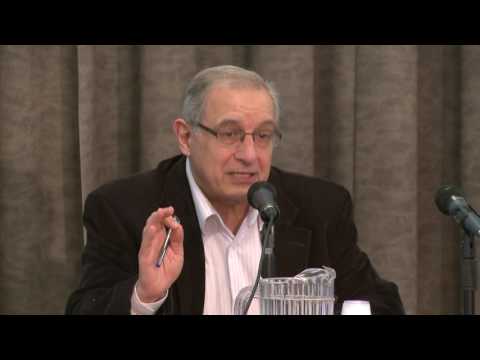 1er rendez-vous de l'éducation à la citoyenneté mondiale de l'AQOCI: Panel d'experts Année de publication: 2017 Auteur institutionnel: Association québécoise des organismes de coopération internationale (AQOCI) Panel d'experts: l'ÉCM en contextes social et scolaire.Rachad Antonius, professeur de sociologie à l’UQÀM, chercheur, consultant et personne-ressource dans les milieux de la solidarité internationale, propose des éléments de réflexion sur l’éducation, sur le rôle de différents intervenants – militants, OCI, chercheurs et intellectuels - en ÉCM, sur le sens et les dimensions du concept de citoyenneté dans le contexte et face aux enjeux actuels et sur les réponses que le travail en ÉCM est appelé à apporter face à la mondialisation.La présentation de Marie-Hélène Chastenay, responsable de l’éducation interculturelle à la Direction des services d’accueil et d’éducation interculturelle du ministère de l’Éducation et de l’Enseignement supérieur (MÉES), examine l’apport de l’ÉCM à l’éducation des jeunes du Québec; l’intégration actuelle de l’ÉCM aux curriculums et à la vie scolaires; les enjeux et les défis de l’ÉCM en milieux scolaires et académiques et le rôle des organismes de coopération internationale et de la société civile dans la promotion de l’ÉCM en contextes scolaires et académiques.
  Management of Transboundary Water Resources in the Danube and the Sava River Basins Année de publication: 2019 Auteur: Aksulu Kushanova Auteur institutionnel: Regional Environmental Centre for Central Asia (CAREC) This analytical work “Management of transboundary water resources in the Danube and Sava River Basins” conveys knowledge and information on the management of the transboundary water resources by acknowledging the importance of the WEF Nexus in the Danube and Sava River Basins. Firsthand information was received during face-to-face meetings with the ICPDR and the ISRBC and the summarized work at hand shares the European experience with a wider audience.The analytical work narrates the institutional and legislative frameworks within the sectoral characteristics on the management of two River Basins: the Danube River Basin, which is the largest and the most international one in Europe, and the Sava River Basin, which serves as the greatest tributary to the Danube River. The study reviews the operations of the ICPDR and the ISRBC and technical tools applied at the basin level, which include accident emergency warning systems, monitoring networks, flood forecasting and more. Управление трансграничными водными ресурсами в бассейнах рек Дунай и Сава Année de publication: 2019 Auteur: Aksulu Kushanova Auteur institutionnel: Regional Environmental Centre for Central Asia (CAREC) Настоящая аналитическая записка «Управление трансграничными водными ресурсами в бассейнах рек Дунай и Сава» передает знания и информацию по вопросам управления ТВР, которые еще раз подчеркивают важную роль взаимосвязи (нексуса) «вода-энергия-продовольствие» (ВЭП), в данном случае на примере трансграничных рек Дунай и Сава. Информация из первых рук была получена в ходе рабочих встреч с представителями МКОРД и МКБРС и впоследствии обобщены для ознакомления с европейским опытом более широкой аудитории.В настоящей аналитической работе описываются институциональные и нормативно-правовые принципы построения и характеристики систем управления двумя речными бассейнами, а именно, бассейном р. Дунай – крупнейшим в Европе с наибольшим количеством прибрежных государств, и бассейном р. Сава – самого крупного притока Дуная. В документе анализируется деятельность МКОРД и МКБРС и технический инструментарий, применяемый ими на бассейновом уровне, включая системы предупреждения о чрезвычайных ситуациях, мониторинговые сети, системы прогнозирования наводнений и др.
  Virtual Conference: How to Accompany Our Children to Use ICT Safely? Année de publication: 2019 Auteur: Viviana Quintero Auteur institutionnel: Red Papaz This conference discusses the main risk factors faced by girls, boys and adolescents in the use of ICTs and provides tools and strategies so that, from home, mothers, fathers and caregivers accompany and support the development of digital autonomy in their children. Conferencia virtual: ¿Cómo acompañar a nuestros hijos para usar de forma segura las TIC? Année de publication: 2019 Auteur: Viviana Quintero Auteur institutionnel: Red Papaz En esta conferencia se discuten los principales factores de riesgo que enfrentan niñas, niños y adolescentes en el uso de las TIC y se brindan herramientas y estrategias para que, desde casa, madres, padres y cuidadores acompañen y apoyen el desarrollo de autonomía digital en sus hijos.
  Adult Learning and Gender: EAEA Background Paper Année de publication: 2020 Auteur: Agatha Devlin Auteur institutionnel: European Association for the Education of Adults (EAEA) Gender sensitivity in adult learning and education (ALE) is about more than trying to improve targeted outreach programmes for men and women who seem to be slipping through the gaps. By providing gender sensitive education opportunities, people are not only more likely to engage but also more likely to get the most out of their experiences. This background paper explores the problems that gender sensitive adult education could attempt to solve, good practices and examples to help make current structures more gender sensitive, and the wider benefits of gender sensitivity in ALE.This background paper takes various subtopics or examples of gender sensitivity in adult education and analyses them as individual areas, making its content easier to navigate according to the reader’s interests or concerns.
  UNESCO-UNEVOC Study on the Trends Shaping the Future of TVET Teaching (Trends Mapping Studies) Année de publication: 2020 Auteur: Gita Subrahmanyam Auteur institutionnel: UNESCO International Centre for Technical and Vocational Education and Training (UNEVOC) This report presents the results of the trends mapping study on the future of technical and vocational education and training (TVET) teaching, conducted by UNESCO-UNEVOC. The study aimed to engage the international TVET community to: (i) improve the understanding of the implications of global disruptions; (ii) gather knowledge, insights, experiences; and (iii) highlight promising practices in preparing TVET teaching staff to deliver the skills needed in the 21st century and beyond. Coordinated by UNESCO-UNEVOC, trends mapping studies aim to further the international community's understandings on contemporary key issues concerning TVET. The studies review existing literature and policies, and engage TVET stakeholders from around the world through surveys and virtual conferences.
 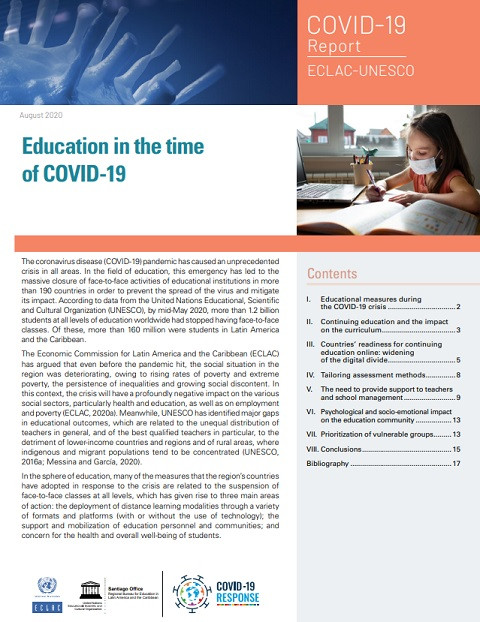 Education in the Time of COVID-19 (COVID-19 Report; ECLAC-UNESCO) Année de publication: 2020 Auteur institutionnel: Economic Commission for Latin America and the Caribbean (ECLAC) | UNESCO Santiago The coronavirus disease (COVID-19) pandemic has caused an unprecedented crisis in all areas. In the field of education, this emergency has led to the massive closure of face-to-face activities of educational institutions in more than 190 countries in order to prevent the spread of the virus and mitigate its impact. The Economic Commission for Latin America and the Caribbean (ECLAC) has argued that even before the pandemic hit, the social situation in the region was deteriorating, owing to rising rates of poverty and extreme poverty, the persistence of inequalities and growing social discontent. In this context, the crisis will have a profoundly negative impact on the various social sectors, particularly health and education, as well as on employment and poverty. Meanwhile, UNESCO has identified major gaps in educational outcomes, which are related to the unequal distribution of teachers in general, and of the best qualified teachers in particular, to the detriment of lower-income countries and regions and of rural areas, where indigenous and migrant populations tend to be concentrated.In the sphere of education, many of the measures that the region’s countries have adopted in response to the crisis are related to the suspension of face-to-face classes at all levels, which has given rise to three main areas of action: the deployment of distance learning modalities through a variety of formats and platforms (with or without the use of technology); the support and mobilization of education personnel and communities; and concern for the health and overall well-being of students.The aim of this document is to shed light on various consequences that these measures will have on educational communities in the short and medium term, and to offer key recommendations on how to manage those consequences in the best possible manner, drawing attention to opportunities for learning and innovation in the post-pandemic education system. La educación en tiempos de la pandemia de COVID-19 (Inform COVID-19; CEPAL-UNESCO) Année de publication: 2020 Auteur institutionnel: Economic Commission for Latin America and the Caribbean (ECLAC) | UNESCO Santiago La pandemia de enfermedad por coronavirus (COVID-19) ha provocado una crisis sin precedentes en todos los ámbitos. En la esfera de la educación, esta emergencia ha dado lugar al cierre masivo de las actividades presenciales de instituciones educativas en más de 190 países con el fin de evitar la propagación del virus y mitigar su impacto.La Comisión Económica para América Latina y el Caribe (CEPAL) ha planteado que, incluso antes de enfrentar la pandemia, la situación social en la región se estaba deteriorando, debido al aumento de los índices de pobreza y de pobreza extrema, la persistencia de las desigualdades y un creciente descontento social. En este contexto, la crisis tendrá importantes efectos negativos en los distintos sectores sociales, incluidos particularmente la salud y la educación, así como en el empleo y la evolución de la pobreza. Por su parte, la UNESCO ha identificado grandes brechas en los resultados educativos, que se relacionan con una desigual distribución de los docentes, en general, y de los docentes mejor calificados, en particular, en desmedro de países y regiones con menores ingresos y de zonas rurales, las que suelen concentrar además a población indígena y migrante.En el ámbito educativo, gran parte de las medidas que los países de la región han adoptado ante la crisis se relacionan con la suspensión de las clases presenciales en todos los niveles, lo que ha dado origen a tres campos de acción principales: el despliegue de modalidades de aprendizaje a distancia, mediante la utilización de una diversidad de formatos y plataformas (con o sin uso de tecnología); el apoyo y la movilización del personal y las comunidades educativas, y la atención a la salud y el bienestar integral de las y los estudiantes.El objetivo de este documento es visibilizar la diversidad de consecuencias que estas medidas tendrán sobre las comunidades educativas a corto y mediano plazo, así como plantear las principales recomendaciones para sobrellevar el impacto de la mejor manera posible, proyectando oportunidades para el aprendizaje y la innovación en la educación posterior a la pandemia.
 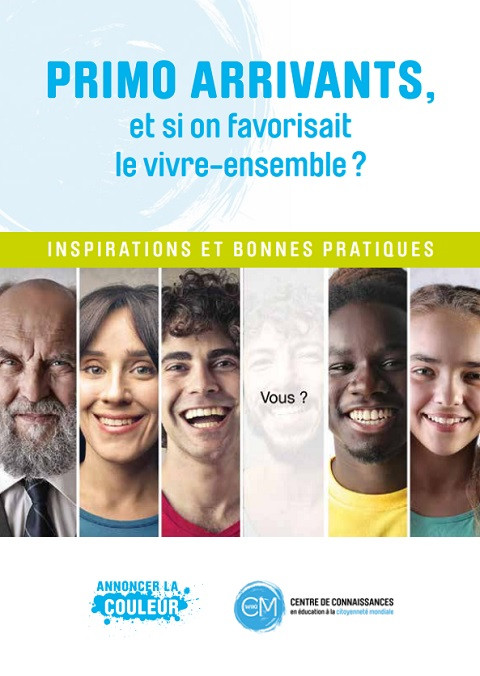 Primo arrivants, et si on favorisait le vivre-ensemble: Inspirations et bonnes pratiques Année de publication: 2018 Auteur institutionnel: Annoncer la Couleur (ALC) | Centre de Connaissances en Éducation à la Citoyenneté Mondiale (WikiCM) Depuis plusieurs années, Annoncer la Couleur soutient des projets qui ont pour objectif de favoriser le vivre-ensemble dans les écoles avec des primo-arrivants. Ces projets, créés dans des contextes multiples et variés, nous ont questionné sur le rôle que joue l’éducation à la citoyenneté mondiale dans l’intégration des élèves. À travers cette publication, nous souhaitons vous présenter le fruit de la réflexion menée lors de la journée d’échanges et d’inspiration qui s’est déroulée le vendredi 12 octobre 2018 à Namur autour de la thématique « Primo-arrivants à l’école : et si on favorisait le vivreensemble ? » Lors de celle-ci, nous avons rassemblé des spécialistes et des enseignant∙e∙s porteur∙euse∙s de projets pour réfléchir et questionner la place des projets d’éducation à la citoyenneté mondiale face à ce défi toujours plus grand d’ouverture et d’acceptation des différences. L’ensemble des interventions, témoignages et échanges sont venus éclairer et enrichir nos pratiques de projets dans ce contexte d’intégration des primo-arrivants. Cette journée nous a confirmé que l’éducation à la citoyenneté mondiale peut être un levier pour favoriser le vivre-ensemble dans les écoles avec des élèves primo-arrivants (en DASPA ou non). Au sein de cet ouvrage, vous trouverez les articles tirés des interventions de Martine AbdellahPretceille « Éducation interculturelle et éducation la citoyenneté » et de Danièle Crutzen et Ahmed Talbi « Discours directs et indirects ». Ensuite, vous découvrirez huit projets d’éducation à la citoyenneté mondiale qui visent à favoriser l’intégration des primo-arrivants à l’école. Pour conclure, nous vous proposons un article synthétisant les « bonnes pratiques » que nous avons relevées pour la mise en projet.