
Ressources
Explorez une large gamme de ressources sur le GCED afin d’approfondir votre compréhension et de renforcer vos activités de recherche, de plaidoyer, d’enseignement et d’apprentissage.
875 résultats trouvés
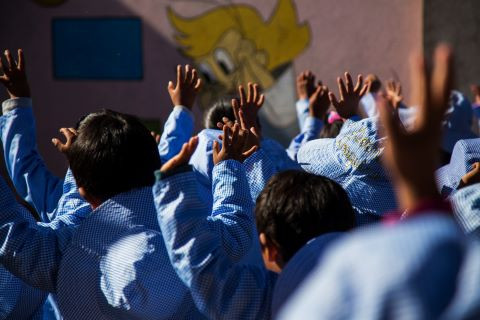 Tejiendo educación y equidad en Iberoamérica Année de publication: 2024 Auteur: Ricardo Cuenca Auteur institutionnel: Organización de Estados Iberoamericanos para la Educación, la Ciencia y la Cultura (OEI) Abordar la compleja relación entre educación y desigualdad en Iberoamérica es todo un desafío. Las disparidades económicas y sociales tejen un entramado complejo en la región. A pesar de los avances, el acceso sigue siendo un obstáculo para muchos. En esta travesía, la OEI ha venido trabajando durante sus 75 años de historia para derribar las barreras que obstaculizan una formación equitativa para todos. Ricardo Cuenca, miembro del Consejo Asesor de la OEI, nos explica hasta qué punto las políticas educativas pueden contribuir a mitigar esas desigualdades en Iberoamérica.
 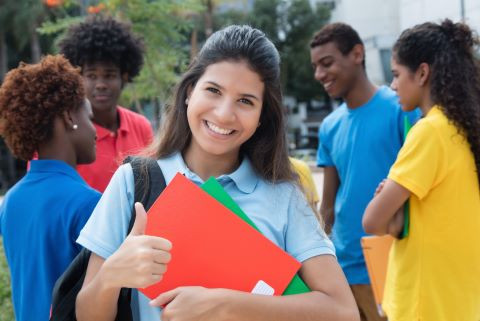 Young People: Protagonists of Democratic Transformation Année de publication: 2024 Auteur institutionnel: Organization of Ibero-American States for Education, Science and Culture (OEI) The involvement of young people in democracy is essential for the development and sustainability of our societies. Recognizing the value of their contribution as agents of change, the Citizen Academy project in Panama launched the course "The Role of Youth in Democracy." This educational tool is offered free of charge through the platform www.academiaciudadana.org. The initiative, promoted by the Organization of Ibero-American States (OEI), is the result of a collaboration with the Electoral Tribunal, Fundamorgan and the Panamanian Debate Association (Aspade), and aims to promote a more just and equitable society through civic education for the new generations. Daniela Hidalgo, institutional coordinator of Aspade, explains how they seek to transform youth participation in the democratic life of the Central American country. Los jóvenes: Protagonistas de la transformación democrática Année de publication: 2024 Auteur institutionnel: Organización de Estados Iberoamericanos para la Educación, la Ciencia y la Cultura (OEI) La implicación de los jóvenes en la democracia es esencial para el desarrollo y la sostenibilidad de nuestras sociedades. Reconociendo el valor de su contribución como agentes de cambio, el proyecto Academia Ciudadana en Panamá lanzó el curso "El Rol de la Juventud en la Democracia". Este instrumento educativo se ofrece de manera gratuita a través de la plataforma www.academiaciudadana.org. La iniciativa, impulsada por la Organización de Estados Iberoamericanos (OEI), es resultado de una colaboración con el Tribunal Electoral, Fundamorgan y la Asociación Panameña de Debate (Aspade), tiene como objetivo fomentar una sociedad más justa y equitativa mediante la educación cívica de las nuevas generaciones. Daniela Hidalgo, es coordinadora institucional de Aspade, y nos explica cómo se busca transformar la participación juvenil en la vida democrática del país centroamericano.
 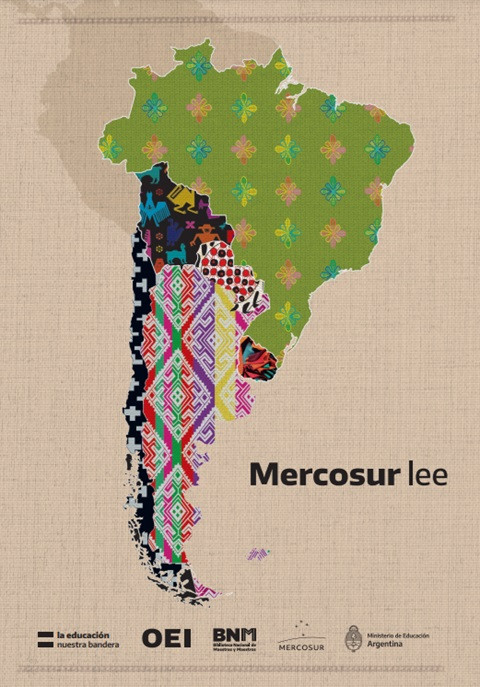 Mercosur Reads Année de publication: 2023 Auteur institutionnel: Argentina. Ministry of Education | National Library of Teachers | Organization of Ibero-American States for Education, Science and Culture (OEI) This relaunch brings together stories by prominent authors from Argentina, Brazil, Bolivia, Chile, Paraguay and Uruguay. Its purpose is to contribute to the process of regional integration, encourage knowledge of the official languages (Spanish, Portuguese and Guaraní) and the development of quality education for all. Mercosur lee Année de publication: 2023 Auteur institutionnel: Argentina. Ministry of Education | National Library of Teachers | Organización de Estados Iberoamericanos para la Educación, la Ciencia y la Cultura (OEI) Este relanzamiento reúne los relatos de destacadas y destacados autores de Argentina, Brasil, Bolivia, Chile, Paraguay y Uruguay. Su propósito es contribuir al proceso de integración regional, incentivar el conocimiento de las lenguas oficiales (español, portugués y guaraní) y el desarrollo de una educación de calidad para todas y todos.
 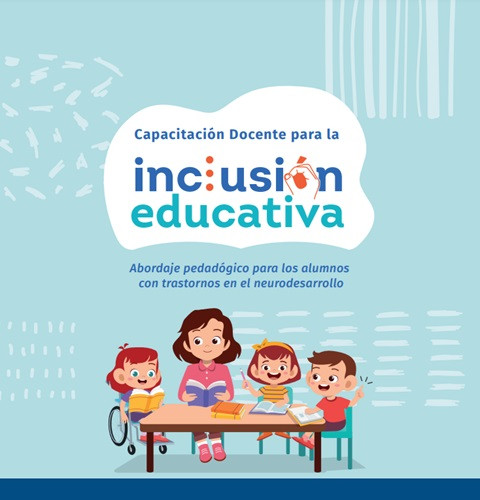 Teacher Training for Educational Inclusion: Pedagogical Approach for Students With Neurodevelopmental Disorders Année de publication: 2024 Auteur institutionnel: Paraguay. Ministry of Education and Science | Organization of Ibero-American States for Education, Science and Culture (OEI) The course aims to design teacher training for educational inclusion with a specific pedagogical approach for students with neurodevelopmental disorders. This course is divided into ten modules, addressing fundamental topics such as: basic notions and concepts of inclusive education, the main paradigms and approaches, the types of accessibility necessary to eliminate barriers to learning and student participation. It also deals with the application of the dimensions of inclusive education (policy, practice and culture) and the exploration of the principles of reasonable adjustments and Universal Design for Learning (UDL). Capacitación docente para la inclusión educativa: Abordaje pedadógico para los alumnos con trastornos en el neurodesarrollo Année de publication: 2024 Auteur institutionnel: Paraguay. Ministry of Education and Science | Organización de Estados Iberoamericanos para la Educación, la Ciencia y la Cultura (OEI) Con el objetivo de diseñar una capacitación docente para la inclusión educativa con un enfoque pedagógico específico para alumnos con trastornos en el neurodesarrollo. Este curso se divide en diez módulos, abordando temas fundamentales como: nociones y conceptos elementales de la educación inclusiva, los principales paradigmas y enfoques, los tipos de accesibilidad necesarios para eliminar barreras en el aprendizaje y la participación de los alumnos. Asimismo, trata de la aplicación de las dimensiones de la educación inclusiva (política, práctica y cultural) y de la exploración de los principios de los ajustes razonables y el Diseño Universal para el Aprendizaje (DUA).
  Educación para la ciudadanía y la convivencia: jóvenes por el empoderamiento y la transformación; ciclo cinco (décimo, undécimo, duodécimo) Année de publication: 2014 Auteur institutionnel: Secretaría de Educación del Distrito (SED) | Fe y Alegría These twelve modules make reference to a series of activities that focus on how children from all the educative grades understand and live citizenship, strengthening and facilitating the learning processes based on autonomy. This educative materials, which are aimed at being implemented inside the classrooms, attempt to serve as input resources for educators and other agents that work on or are interested in working with citizenship education and coexistence. The overall objective is to provide quality education.
 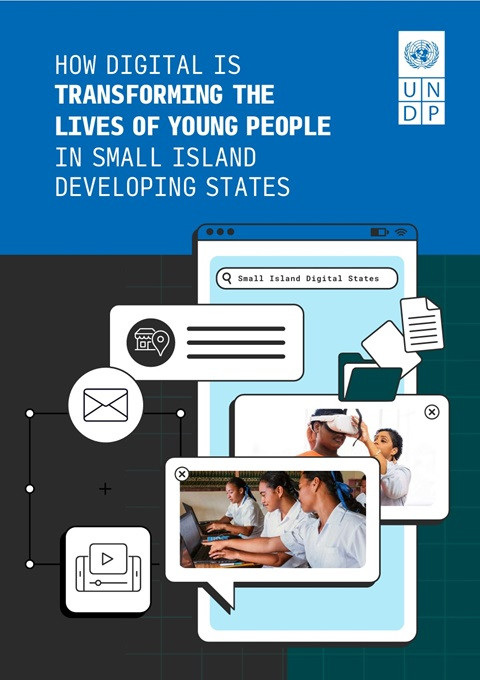 How Digital is Transforming the Lives of Young People in Small Island Developing States Année de publication: 2024 Auteur institutionnel: United Nations Development Programme (UNDP) Young people represent a sizeable and vital population in Small Island Developing States (SIDS). For them, digital technologies are more than just tools; they are gateways to new horizons. Digital is creating fresh opportunities, opening doors to unconventional careers, and redefining how knowledge is acquired and shared. Young people are using digital to start new businesses, explore new opportunities, learn new knowledge and skills, and to build global connections. However, young people are also cautious about digital – and they recognise risks and issues posed by digital channels, tools, and technologies. ‘How Digital is Transforming the Lives of Young People in SIDS’ explores these opportunities and challenges by hearing from young people – in their own words. Through a bespoke survey chatbot, running on messaging platforms most used by young people living in SIDS, more than 5,000 respondents from over 30 countries discuss how they’re using digital to transform their lives and livelihoods. And the barriers and challenges that they are facing on their digital journeys. Education for citizenship and democracy in a globalized world: a comparative perspective Année de publication: 2005 Auteur institutionnel: Inter-American Development Bank The present document, Education for Citizenship and Democracy in a Globalized World: A Comparative Perspective, was developed in response to a request from the members of the Regional Policy Dialogue/Education Network. The studies in this document were presented and discussed during the VII Regional Policy Dialogue meeting held in January 2005 at the Inter-American Development Bank ’s headquarters in Washington, D.C. Within the general context of recent economic and political developments in Latin America and the Caribbean, experts regard free market and democracy as the fundamental economic and political paradigm leading to modernization and development in the global market. There is a concern in a number of democratic nation-states about levels of political engagement, particularly among the youths. This is cited as a reason for strengthening citizenship education.The studies presented in this document discuss Education for Citizenship and Democracy and the role of schools as systematic providers of the civic knowledge and the participatory practices that are the foundation of democracy. Among all of the institutions that facilitate the acquisition and development of skills for democratic participation, the school is the one that provide students with the competencies to effectively participate as citizens in a democracy. There has been an increasing interest in citizenship education both in the national and international contexts. At the national level, the aim is to pursue commitment and political participation, particularly from youth. In the international sphere, the objective is to find answers to the challenges such as immigration, global communications and trade across international borders and to a new level of awareness and appreciation for human rights. By providing a comprehensive overview of progress made by industrialized countries in the field of citizenship education, this study intents to share lessons learnt and effective practices which may be applied in the context of Latin America and the Caribbean. In addition, this study includes three experiences from Latin American countries (Chile, Colombia and Mexico) that were presented during the VII Regional Policy Dialogue. The three experiences show a practical and positive approach to the feasibility of introducing citizenship education in the schools of the Region. The cases present examples of reforms that evolved from the traditional civic education into an engaging education for citizenship and democracy. The Inter American Development Banks trusts that this publication will contribute to the discussions among member countries and create alternatives for the strengthening of democracy in the Region through education and citizenship.