
Ressources
Explorez une large gamme de ressources sur le GCED afin d’approfondir votre compréhension et de renforcer vos activités de recherche, de plaidoyer, d’enseignement et d’apprentissage.
2,781 résultats trouvés
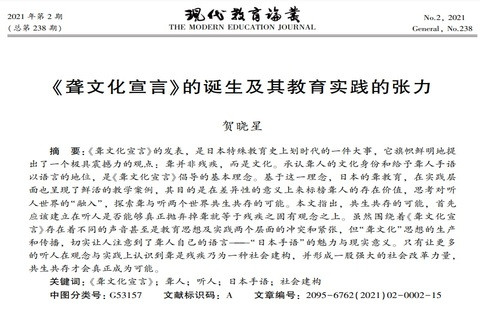 《聋文化宣言》的诞生及其教育实践的张力 (现代教育论丛; no. 2) Année de publication: 2021 Auteur: Xiaoxing He 该文介绍了日本的《聋文化宣言》的内容与发表情况,反思社会结构与文化,并探索该《宣言》的教育意义。
 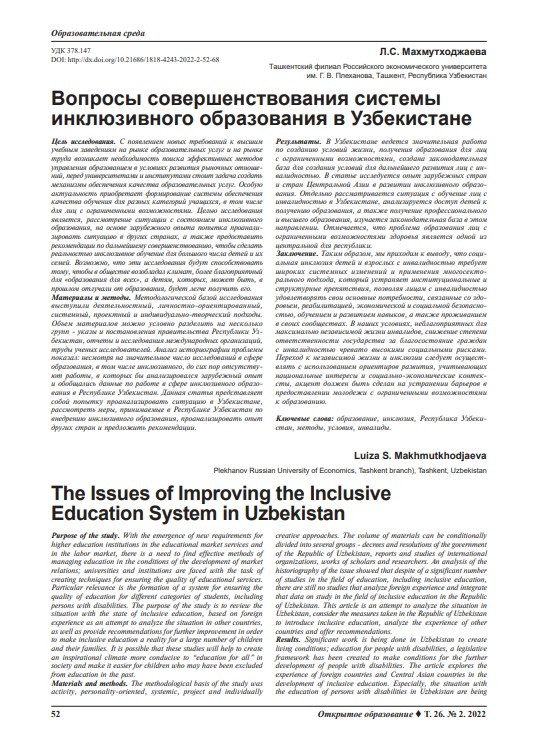 The Issues of Improving the Inclusive Education System in Uzbekistan (Open Education; vol. 26, no. 2) Année de publication: 2022 Auteur: Makhmutkhodjaeva L.S. The article explores the experience of foreign and Central Asian countries in developing inclusive education. Especially, the situation with the education of persons with disabilities in Uzbekistan is being reviewed, besides, the access of children to get an education, as well as receiving vocational and higher education is being studied in addition to the legislative framework in this specialty. It is noted that the problem of education for disabled people is one of the central issues for the republic. Вопросы совершенствования системы инклюзивного образования в Узбекистане (Открытое образование; vol. 26, no.2) Année de publication: 2022 Auteur: Makhmutkhodjaeva L.S. В статье исследуется опыт зарубежных стран и стран Центральной Азии в развитии инклюзивного образования. Отдельно рассматривается ситуация с обучение лиц с инвалидностью в Узбекистане, анализируется доступ детей к получению образования, а также получение профессионального и высшего образования, изучается законодательная база в этом направлении. Отмечается, что проблема образования лиц с ограниченными возможностями здоровья является одной из центральных вопросов для республики.
 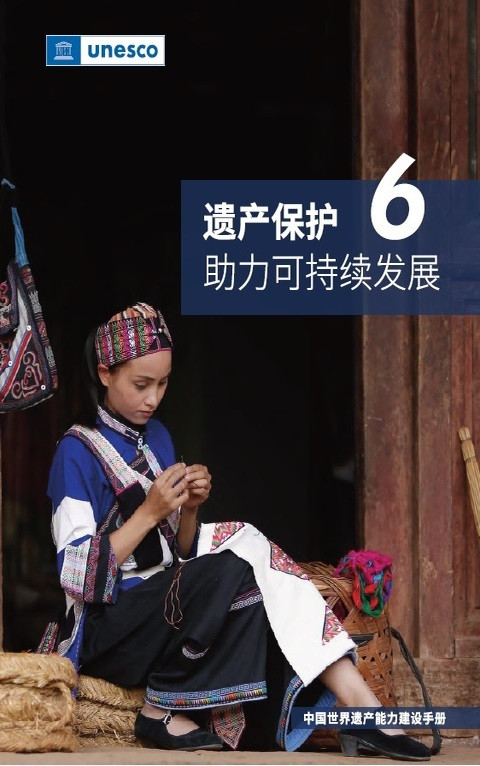 遗产保护助力可持续发展 Année de publication: 2021 Auteur: Yanxia LI | Gang Zhao | Ai Zhong | Ping Kong Auteur institutionnel: UNESCO Beijing 该文件介绍了国际与中国遗产保护和可持续发展的政策,以案例的形式总结了文化在消除贫困、促进性别平等、促进经济增长和就业、提升世界遗产地韧性、推动乡村振兴中的巨大潜力。
  Environment, Climate Change and Good Living in Latin America and the Caribbean Année de publication: 2022 Auteur: Tatiana Cuenca Castelblanco | Letícia Larín | Juan Manuel Delgado Estrada | Luz Carina Durán Solarte | Cindy Vanessa Quintero Ramírez | Manuel Alejandro Henao Restrepo | Sara Latorre | Andrea Bravo | Marisabel García Acelas | Robert Adrián Quintero Leguizamón | Marisela Pilquimán Vera | Stepfanie Ramírez | Clarena Rodríguez Jaramillo | Melisa Argento | Ariel Slipak | Florencia Puente | Sarah Patricia Cerna Villagra | Agustín Carrizosa | María Irene Rodríguez | Stefannia Parrado Morales Auteur institutionnel: Latin American Council of Social Sciences (CLACSO) This book is the result of the call launched by CLACSO in February 2020 for the development of research projects on "Environment, climate change and good living in Latin America and the Caribbean". The essays presented bring together more than twenty researchers from eight Latin American countries, who approached the proposed themes from different perspectives, considering the links between the concept of "good living" and the environmental and economic phenomena that are occurring throughout the world, as the undeniable climate change, and in particular in Latin American countries, as the extractivist model of exploitation of nature. Ambiente, cambio climático y buen vivir en America Latina y el Caribe Année de publication: 2022 Auteur: Tatiana Cuenca Castelblanco | Letícia Larín | Juan Manuel Delgado Estrada | Luz Carina Durán Solarte | Cindy Vanessa Quintero Ramírez | Manuel Alejandro Henao Restrepo | Sara Latorre | Andrea Bravo | Marisabel García Acelas | Robert Adrián Quintero Leguizamón | Marisela Pilquimán Vera | Stepfanie Ramírez | Clarena Rodríguez Jaramillo | Melisa Argento | Ariel Slipak | Florencia Puente | Sarah Patricia Cerna Villagra | Agustín Carrizosa | María Irene Rodríguez | Stefannia Parrado Morales Auteur institutionnel: Latin American Council of Social Sciences (CLACSO) Este libro es el resultado de la convocatoria lanzada por CLACSO en febrero de 2020 para el desarrollo de proyectos de investigación sobre «Ambiente, cambio climático y buen vivir en América Latina y el Caribe». Los ensayos presentados reúnen a más de veinte investigadoras e investigadores de ocho países latinoamericanos, que abordaron las temáticas propuestas desde diferentes perspectivas, considerando los vínculos entre el concepto de "buen vivir" y los fenómenos ambientales y económicos que están ocurriendo en todo el mundo, como el innegable cambio climático, y en particular en los países latinoamericanos, como el modelo extractivista de explotación de la naturaleza.
  The Role of Culture in the Construction of Democracy: A Reflection on Cultural Democracy From Haiti Année de publication: 2015 Auteur: Wooldy Edson Louidor Auteur institutionnel: Latin American Council of Social Sciences (CLACSO) This research studies the relationship between culture and democracy, from the analysis of the case study of the Sanba cultural movement in the late seventies in Haiti, from the biographical analysis of its initiator, the musician Sanba Zao, and from the analysis of the content of its songs. From the deconstruction of the univocal, unilateral and unilinear criterion of modernity used by the main theories of social movements, it proposes a paradigmatic transition towards the perspective of ambivalence increasingly used in the social sciences. From there, he revisits the theories of democracy and, based on a theoretical matrix of ambivalent democracy, explains the recent history of Haiti since the 20th century and the multiple faces of the ambivalence of democracy in the Caribbean country in the last four years. decades. Based on the analysis of the information collected, the research traces a new definition of culture from Sanba Zao's call to return to the roots and to the revaluation of Haitian tradition and identity. El papel de la cultura en la construcción de la democracia: Una reflexión sobre la democracia cultural desde Haití Année de publication: 2015 Auteur: Wooldy Edson Louidor Auteur institutionnel: Latin American Council of Social Sciences (CLACSO) Esta investigación estudia la relación entre cultura y democracia, desde el análisis del estudio de caso del movimiento cultural Sanba a finales del setenta en Haití, del análisis biográfico de su iniciador, el músico Sanba Zao, y del análisis de contenidos de sus canciones. Desde la deconstrucción del criterio unívoco, unilateral y unilineal de la modernidad utilizado por las principales teorías de los movimientos sociales, plantea una transición paradigmática hacia la perspectiva de la ambivalencia cada vez más usada en las ciencias sociales. Desde allí, revisita las teorías de la democracia y, a partir de una matriz teórica de la democracia ambivalente, explica la historia reciente de Haití desde el siglo XX y las múltiples caras de la ambivalencia de la democracia en el país caribeño en las últimas cuatro décadas. Con base en el análisis de las informaciones recogidas, la investigación rastrea una nueva definición de la cultura desde el llamado de Sanba Zao a volver a las raíces y a la revalorización de la tradición e identidad haitianas.
 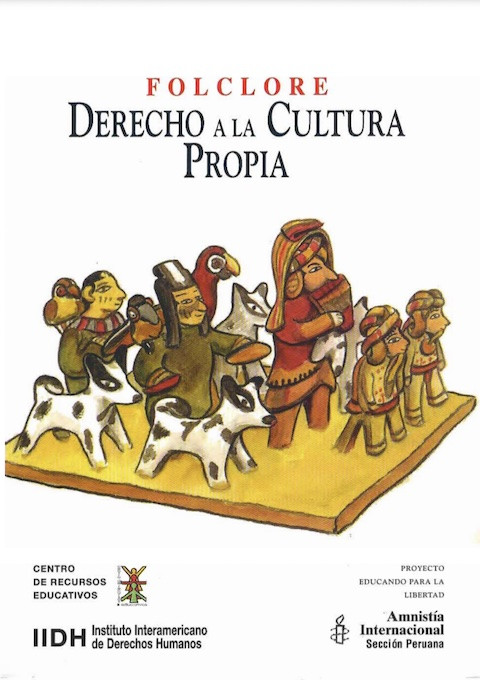 Folklore: Right to Own Culture; Teacher's Guide Année de publication: 1997 Auteur: William Tamayo Ángeles Auteur institutionnel: Instituto Interamericano de Derechos Humanos (IIDH) The traditional popular culture that we call folklore summarizes centuries of our history and the festive art that expresses it, through dance, music and words, is the bearer of a sensitivity that for a long time there has been an attempt to extinguish in the country, despite constitute one of those traits that best identifies us before the world and to be recognized as a nationalizing link of Peruvians. This document offers a guide for teachers and students to learn more about this expression of the continuous life of our people and identify in it their own daily effort of liberation and improvement. Folclore: Derecho a la cultura; Guía para el docente Année de publication: 1997 Auteur: William Tamayo Ángeles Auteur institutionnel: Instituto Interamericano de Derechos Humanos (IIDH) La cultura popular tradicional que llamamos folclore resume siglos de nuestra historia y el arte festivo que la expresa, a través de la danza, la música y la palabra, es portador de una sensibilidad que por mucho tiempo se intentó extinguir en el país, pese a constituir uno de aquellos rasgos que mejor nos identifica ante el mundo y a ser reconocido como vínculo nacionalizante de los peruanos. En este documento se ofrece una guía para que profesores y alumnos conozcan algo más de esta expresión de la vida continua de nuestro pueblo e identifiquen en ella su propio esfuerzo cotidiano de liberación y superación.