
Ressources
Explorez une large gamme de ressources sur le GCED afin d’approfondir votre compréhension et de renforcer vos activités de recherche, de plaidoyer, d’enseignement et d’apprentissage.
2,162 résultats trouvés
 الأضرار الصحية و النفسية والتربوية الناتجة عن إدمان الأطفال المتمدرسين للألعاب الالكترونية Année de publication: 2022 Auteur: Mazara Naima, Ahmed Al-Sayed Abdel-Qawi يهدف البحث إلى التعرف على الأضرار الصحية والنفسية والتربوية الناتجة عن استخدام الألعاب الالكترونية لدى الأطفال المتمدرسين ، واعتمد الباحثان من خلاله المنهج الوصفي ، ولتحقيق أهداف البحث تم إعداد استبيان للأضرار الصحية والنفسية والتربوية طبق على عينة متكونة من 60 فرد (معلمين وأولياء الأطفال) وبعد التحليل الإحصائي أسفرت النتائج عما يلي: - وجود العديد من الأضرار الصحية الناتجة عن إدمان الأطفال المتمدرسين للألعاب الالكترونية من وجهة نظر معلميهم وأولياءهم وهي: قصر النظر وضعف في الإبصار بنسبة (86,6%)،مشاكل صحية في الجهاز العصبي(75%)، مشاكل صحية في العمود الفقري (100%) ،سوء التغذية( 58,3%)، اضطرابات النوم( 83,3%)، أضرار على أصابع اليد(60%). - وجود العديد من الأضرار النفسية لدى الأطفال المتمدرسين الناتجة عن إدمان الأطفال المتمدرسين للألعاب الالكترونية من وجهة نظر معلميهم وأولياءهم وهي:الانطواء (78,33%)،ممارسة العنف(70%)،ضعف الذاكرة(53,33%)،الإدمان(100%)،الشعور بالاكتئاب(58,3%)،عدم الاتزان الانفعالي(76,67%). - وجود العديد من الأضرار التربوية المدرسية لدى الأطفال المتمدرسين الناتجة عن إدمان الأطفال المتمدرسين للألعاب الالكترونية من وجهة نظر معلميهم وأولياءهم وهي:التأخر عن المدرسة(100%)، عدم المواظبة على الواجبات المنزلية(96,7)%، تفضيل اللعب على المراجعة والاستذكار(50%)، السرحان في الفصل وعدم القدرة على الانتباه للدرس(80%)، التوجه للدروس الخصوصية 73,33%). The health, Psychological and Educational Damage resulting from School Children’s Addiction to Electronic Games Année de publication: 2022 Auteur: Mazara Naima, Ahmed Al-Sayed Abdel-Qawi Children’s, addiction to electronic games, and the researchers adopted the descriptive method, to achieve the objectives of the research, a questionnaire was prepared for health, psychological and educational damages, it was applied to a sample of 60 individuals (teachers and parents of children), and after statistical analysis, it showed The results found the following: - There are many health damages resulting from school children’s addiction to electronic games from the point of view of their teachers and parents, which are: short-sightedness and visual impairment by( 86%), health problems of the nervous system (75%),health problems in the spine(100%), malnutrition (58.3%) sleep disorders (83.3%), damage to the fingers of the hand (60%). - There are many psychological damages resulting from school children’s addiction to electronic games from the point of view of their teachers and parents, which are: introversion (78.33%), violence (70%), poor memory (53.33%), addiction (100%), feelings of depression (58.3%), emotional imbalance (76.67%). - There are many educational damages resulting from school children’s addiction to electronic games from the point of view of their teachers and parents, which are: School delay (100%), failure to attend homework (96.7%), preference for playing over review and study (50%), inability to pay attention to the lesson (80%), go to private lessons (73.33%).
  在融合的、学习友好的课堂进行积极管教 Année de publication: 2022 Auteur: UNESCO Bangkok 在许多国家,儿童在学校遭受体罚很常见,这是一种对儿童的虐待。体罚是针对儿童的蓄意暴力,也是一种广泛存在的现象。在大多数国家,殴打儿童的教师仍然可以获得法律辩护。但是长远地看,尚无证据表明体罚是有效的,而且体罚可能导致儿童羞愧、内疚、焦虑、好斗、缺乏独立性、不在乎他人,进而给老师、看护人和其他儿童带来更严重的问题。体罚持续存在的一个主要原因是教师不理解体罚有别于“管教”,体罚是为了阻止儿童的某些行为,而积极管教是让儿童学习新的、正确的行为,同时不必担心遭受暴力。另一个主要原因是,教师没有学习到儿童行为不当的原因,以及如何根据这些行为对他们进行积极管教。很多时候,当儿童感到需求没有得到满足时(例如想得到关注),他们就可能会行为不当。儿童的不当行为给教师带来挫败感,而教师又缺乏处理的技巧,进而导致一些教师诉诸暴力,对儿童进行体罚或在情感上施以侮辱性的惩罚。这份教师与师训工作者指南,充实完善了联合国教科文组织出版物《拥抱多元化:创建融合的、学习友好的的环境工具包》(ILFE 工具包)(Embracing Diversity: A Toolkit for Creating Inclusive, Learning-Friendly Environments,简称ILFE Toolkit)。这本专题手册旨在帮助教师、学校行政人员和教育官员采取积极、主动的非暴力方式应对学生的不当行为,在课堂上有效地管理学生。手册介绍了多种积极管教的具体工具,可用于代替鞭打、打屁股、掐捏、威胁、劝诱、收买、吼叫、指使、辱骂、强迫劳动等惩罚方式及其他更具侮辱性的做法。
  Manuel – Education aux Objectifs de développement durable Année de publication: 2022 Auteur institutionnel: Institut international des droits de l’Homme et de la paix (2IDHP) Ce manuel accompagne les enseignants et professionnels de jeunesse qui souhaitent sensibiliser leur public aux Objectifs de développement durable. Les activités proposées dans ce manuel ont été réalisées dans le cadre du programme pédagogique européen Walk the Global Walk mis en œuvre de 2017 à 2021 et du programme pédagogique normand ecHo mis en œuvre depuis 2021.Sous le prisme des trois piliers du développement durable et des droits de l’Homme, les ODD sont au cœur de ce manuel qui, grâce à des activités d’éducation aux droits de l’Homme et à la citoyenneté démocratique participatives et centrées sur l’apprenant, permet de comprendre l’importance d’atteindre les ODD afin de répondre aux enjeux du monde actuel. Migrations, égalité entre les genres, discriminations, discours de haine, participation à la vie citoyenne, inclusion, santé… Une pluralité de thématiques qui feront écho à vos objectifs pédagogiques avec votre groupe et qui s’inscriront parfaitement dans leur éducation citoyenne. This manual accompanies teachers and youth professionals who wish to raise awareness of the Sustainable Development Goals. Activities proposed in this manual were carried out as part of the European educational program Walk the Global Walk implemented from 2017 to 2021 and the Normandy educational program ecHo implemented since 2021.Under the prism of the three pillars of sustainable development and human rights, the SDGs are at the heart of this manual which, through participatory, learner-centered human rights and democratic citizenship education activities, helps to understand the importance of achieving the SDGs in order to meet the challenges of today's world. Migration, gender equality, discrimination, hate speech, civic participation, inclusion, health... A wide range of themes that will echo your pedagogical objectives with your group and fit perfectly into their civic education.
  Cartoonothèque Auteur institutionnel: Cartooning for Peace Grâce à la contribution quotidienne de ses 280 membres dessinateurs de presse, originaires de 74 pays à travers le monde, Cartooning for Peace dispose d’une remarquable collection de dessins de presse qui offre une pluralité de perspectives sur les événements internationaux au fil des années.Les 10 galeries thématiques présentent un petit échantillon de cette « cartoonothèque » qui permet à l’association de créer ses expositions, ses outils pédagogiques et de fournir ses partenaires médias, mettant ainsi le dessin de presse à la disposition d’une diversité de publics (grand public, institutions, élèves et étudiants, jeunes sous main de justice, prisonniers, professionnels de l’éducation, journalistes, dessinateurs, etc). Thanks to the daily contribution of its 280 member press cartoonists, from 74 countries around the world, Cartooning for Peace has a remarkable collection of press cartoons that offers a plurality of perspectives on international events over the years.The 10 thematic galleries below present a small sample of this “cartoon library” which allows the organisation to create its exhibitions, its educational tools and to provide its media partners, making press cartoons available for a diversity of audiences (general public, institutions, pupils and students, young people in custody, prisoners, education professionals, journalists, cartoonists etc).
  Parents dans un monde d'écrans. Petit guide à destination des parents pour accompagner leurs enfants sur les écrans Année de publication: 2022 Auteur: Guillaume Jegousse | Sylvain Bedouet-Lallour | Laurent Pommereuil Auteur institutionnel: Associations Douar Nevez et Défis Difficile de gérer les écrans à la maison !Surtout quand ils sont portables etque la chambre est le lieu privilégié de l’enfantou de l’adolescent !A travers ce petit guide, les associations Douar Nevez et DéfiS donnent quelques conseils qui permettrontà chaque parent d’accompagner ses enfantspour un usage responsable des nouvellestechnologies numériques. It's hard to manage screens at home!Especially when they're portable and the bedroom is the place where the child's or teenager's spends most of his/her time.With this little guide, the Douar Nevez and DéfiS ngo's give a few tips to help parents help their children for responsible use of new digital technologies.
 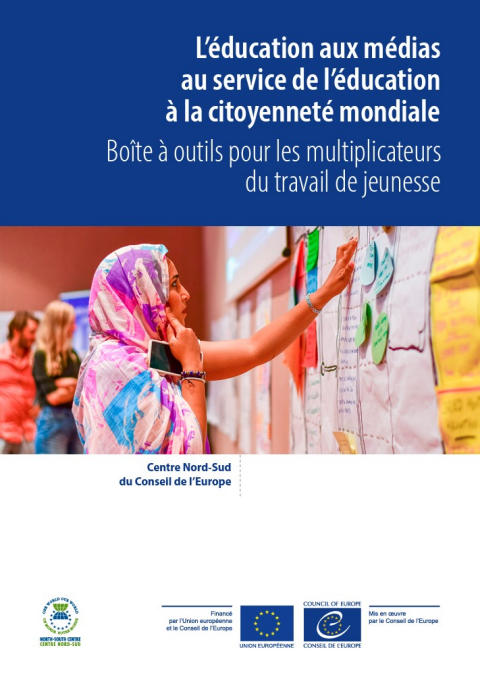 L’éducation aux médias au service de l’éducation à la citoyenneté mondiale Boîte à outils pour les multiplicateurs du travail de jeunesse Année de publication: 2022 Auteur institutionnel: Conseil de l’Europe Ce kit à outils propose une approche intégrée de l’éducation aux médias dans le contexte de l’éducation à la citoyenneté mondiale. Il explore un ensemble d’activités axées sur l’analyse critique et la production de messages médiatiques, l’analyse des algorithmes, la participation active dans les sociétés, le maintien de la vie privée, le maintien du bien-être et la gestion de l’e-identité. cette boîte à outils s’adresse aux éducateurs et aux multiplicateurs du travail de jeunesse. Les activités et fiches d’information proposées, conçues pour des contextes d’apprentissage non formel, peuvent également se prêter à une exploitation dans les environnements scolaires. En effet, la boîte à outils intègre les avancées les plus récentes en matière d’éducation à la citoyenneté mondiale, d’éducation aux médias et d’éducation à la citoyenneté numérique, qui sont susceptibles d’enrichir de façon fort utile les programmes scolaires officiels. Les activités pratiques ici réunies s’inscrivent dans le Cadre des compétences pour une culture de la démocratie et de l’approche des droits humains que défend le Conseil de l’Europe. En élargissant la portée de l’éducation à la citoyenneté mondiale avec des éléments d’éducation aux médias, l’éducation à la citoyenneté mondiale devient un outil plus efficace contribuant à la réalisation des objectifs de développement durable de l’Agenda 2030 des Nations Unies. This toolkit offers an integrated approach to media literacy in the context of global citizenship education. It explores a range of activities focusing on critical analysis and production of media messages, analysis of algorithms, active participation in societies, maintaining privacy, maintaining well-being and managing e-identity. This toolbox is aimed at educators and youth work multipliers. The proposed activities and information sheets, designed for non-formal learning contexts, can also be used in school environments. Indeed, the toolbox incorporates the most recent advances in global citizenship education, Media Literacy and digital citizenship education, which are likely to enrich official school curricula in very useful ways. The practical activities presented here are in line with the Council of Europe's framework of competencies for a culture of democracy and human rights. By broadening the scope of global citizenship education with elements of Media Literacy, global citizenship education becomes a more effective tool contributing to the achievement of the sustainable development goals of the United Nations Agenda 2030.
  Monde numérique: quels droits ? Année de publication: 2021 Auteur institutionnel: La défenseur des droits Cette fiche a pour objectif de faire comprendre de façon pédagogique les droits et les devoirs de chacun·e, adultes, parents, enseignant·e·s, éducateur·rice·s, animateur·rice·s, enfants et adolescent·e·s, dans un monde numérique, en particulier en matière de traitement des données personnelles et de diffusion de contenus. Elle donne également des clés pour mieux appréhender le phénomène du cyber-harcèlement, des signes annonciateurs jusqu’aux sanctions, en passant par les réflexes à adopter quand on y est confronté. The aim of this fact sheet is to provide an educational understanding of the rights and duties of everyone, adults, parents, teachers, educators, youth workers, children and teenagers - in a digital world, particularly as regards world, particularly as regards the handling of personal data and the distribution of content. It also provides the keys to a better understanding of the phenomenon of cyber bullying, from the warning signs to the sanctions, and how to deal with it. from the warning signs to the penalties, including the reflexes to adopt when confronted with it.
 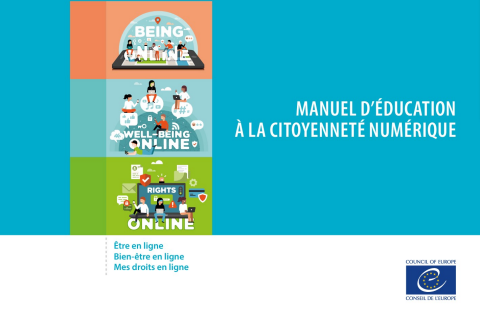 Manuel d'éducation à la citoyenneté Numérique Année de publication: 2020 Auteur: Janice Richardson | Elizabeth Milovidov Auteur institutionnel: Conseil de l'Europe Le manuel se divise en trois chapitres:Chapitre 1: Être en ligne – Quels sont nos modes d’action et d’existence en ligne? Ce chapitre propose une réponse en trois thèmes: accès et inclusion, apprentissage et créativité, éducation aux médias et à l’information.Chapitre 2: Bien-être en ligne – Comment nous sentons-nous en ligne? La réponse se décline là encore en trois thèmes: éthique et empathie, santé et bien-être, présence et communications en ligne.Chapitre 3: Mes droits en ligne – Qui rend compte de quoi sur internet ?Ce chapitre aborde quatre derniers thèmes: participation active, droits etresponsabilités, vie privée et sécurité, sensibilisation des consommateurs. The manual is divided into three chapters: Chapter 1: Being online - How do we act and exist online? This chapter proposes a response in three themes: access and inclusion, learning and creativity, media and information literacy. Chapter 2: Online well-being - How do we feel online? Again, the answer is divided into three themes: ethics and empathy, health and well-being, online presence and communications. Chapter 3: My rights online - Who is accountable for what online? This chapter covers four final themes: active participation, rights and responsibilities, privacy and security, and awareness.
  دور العوامل الأسرية في تصور التلميذ لمشروعه المهني Année de publication: 2023 Auteur: Abish Samir | Boukhalfa Rafiqa يمثل المشروع المهني أو مهنة المستقبل التحدي الأبرز الذي يشغل تصور الطالب الجامعي اليوم وذلك مند أن كان تلميذا، حيث نجد أن تخصصه الجامعي في الغالب ليس إلاّ نتاجا للتصور الذي قام بوضعه خلال السنوات التي سبقت الجامعة وخاصة أثناء مرحلة التوجيه المدرسي، ويتعزز هذا الهم المهني لدى الطالب الجامعي أكثر خلال السنوات الأخيرة التي بات الحصول فيها على فرصة مناسبة للعمل أمرا يتطلب تخطيطا كبيرا وتوجيها سليما، غير أن هذا التصور الذي يضعه التلميذ لمستقبله المهني يساهم في تشكيله العديد من العوامل لعل أبرزها العوامل الأسرية التي تلعب دورا مهما إن لم نقل حاسما في بعض الأحيان، أين نجد أن التصور المهني الذي يضعه التلميذ على مشروعه المهني المستقبلي ليس إلاّ انعكاسا صريحا لدور هذه العوامل ويتضح ذلك الدور في شكل تأثير مباشر أثناء عملية توجيه التلاميذ واختيارهم للشعب المدرسية التي سيواصلون دراستهم من خلالها والتي في الغالب هي من تحدد المسار العام للتوجه المهني الذي سيسلكه التلميذ ويتوقف عليه مشروعه المهني.