
Ressources
Explorez une large gamme de ressources sur le GCED afin d’approfondir votre compréhension et de renforcer vos activités de recherche, de plaidoyer, d’enseignement et d’apprentissage.
2,661 résultats trouvés
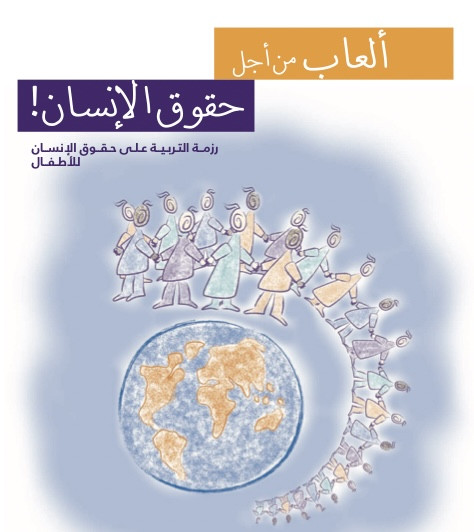 ألعاب من أجل حقوق الإنسان: رزمة التربية على حقوق الإنسان للأطفال Année de publication: 2008 Auteur institutionnel: International Center for Human Rights Education تساعد هذه الرزمة على تعزيز حقوق الإنسان وعدم التمييز وحل النزاعات بصورة سلمية في برامج التربية غير الرسمية للأطفال. تستهدف هذه الرزمة الأطفال في الفئة العمرية من6-12 سنة. وتعزز مجموعة من القيم لمساعدة المعلمين لإدماج حقوق الإنسان في مواقف وسلوكيات الأطفال. Games for Human Rights: A Human Rights Education Package for Children Année de publication: 2008 Auteur institutionnel: International Center for Human Rights Education This package helps to promote human rights, non-discrimination and peaceful conflict resolution in non-formal education programs for children. This package is aimed at children in the age group of 6-12 years. It promotes a set of values to help teachers integrate human rights into children's attitudes and behaviours.
  حقوق الانسان والتحدي الرقمي Année de publication: 2021 Auteur institutionnel: Islamic World Educational, Scientific and Cultural Organization (ICESCO) الملف عبارة عن تقرير عن النــدوة الدوليــة "حقـوق الإنسان والتحديـات الرقميـة". جاء تنظيم هذه الندوة انســجاما مــع التزامــات كل مــن منظمــة الإيسيكو والمملكة المغربية في مجــال تعزيــز مبــادئ حقــوق الإنسان في مفهومهــا الشـمولي. وأيضا لنشـر قيـم السلم ومبـادئ المواطنة والتعايـش الإيجابي. وتعتبر الندوة تمهيدا ومسارا لمواكبـة أهـم التحديـات التـي تواجـه حقـوق الإنسان، وتقويـة التعـاون وتبـادل الخبرات والتجــارب بــين الــدول الأعضاء في الإيسيكو. Human Rights and the Digital Challenge Année de publication: 2021 Auteur institutionnel: Islamic World Educational, Scientific and Cultural Organization (ICESCO) The file is a report on the international symposium "Human Rights and Digital Challenges". The organization of this symposium came in line with the commitments of both ISESCO and the Kingdom of Morocco in the field of promoting the principles of human rights in their holistic sense. And also to spread the values of peace, the principles of citizenship and positive coexistence. The symposium is considered a prelude and a path to keeping pace with the most important challenges facing human rights, strengthening cooperation and exchanging experiences and expertise among ISESCO member states.
  Gender Equality is the Key to a Successful Social and Economic Formation of the New Uzbekistan (Science and Education; vol. 3, no. 6) Année de publication: 2022 Auteur: Dilafruz Vafokhojaeva Auteur institutionnel: Tashkent State University of Economics Strengthening gender equality, especially in the labor market, is an important factor in the formation of the social state. For the development of the effective measures directed at gender equality it is necessary to analyze, first of all, horizontal (on branches of economy, professions) and vertical (on positions, level of income) differentiation between women and men, and also position of those social and demographic groups of women which have or have no opportunities for combination of career and a family. Гендерное равенство - залог благополучного социальногоэкономического формирования нового Узбекистана (Science and Education; vol. 3, no. 6) Année de publication: 2022 Auteur: Dilafruz Vafokhojaeva Auteur institutionnel: Tashkent State University of Economics Укрепление гендерного равноправия, особенно на рынке труда и в политической сфере, является важным фактором формирования социально-экономического государства. Для выработки эффективных мер, направленных на гендерное равноправие, надо анализировать прежде всего горизонтальную (по отраслям экономики, профессиям) и вертикальную (по должностям, уровню доходов) дифференциацию между женщинами и мужчинами, а также положение тех социально-демографических групп женщин, которые имеют или не имеют возможностей для совмещения карьеры и семьи.
 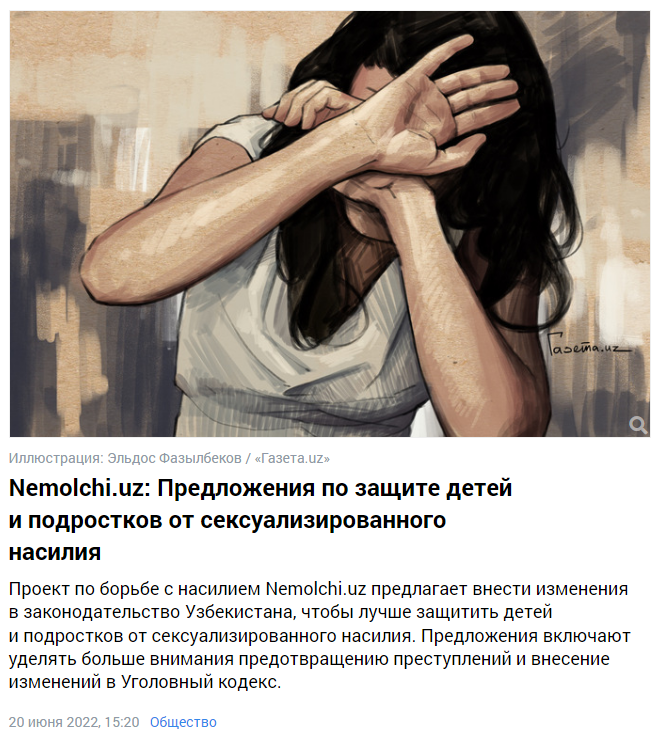 Nemolchi.uz: Suggestions for Protecting Children and Adolescents from Sexual Abuse Année de publication: 2022 Auteur: Nigina Khudoibergenova | Madina Ochilova The Nemolchi.uz anti-violence project proposes changes to Uzbekistan's legislation to better protect children and adolescents from sexualized violence. Suggestions include paying more attention to crime prevention and amending the Criminal Code. Nemolchi.uz: Предложения по защите детей и подростков от сексуализированного насилия Année de publication: 2022 Auteur: Nigina Khudoibergenova | Madina Ochilova Проект по борьбе с насилием Nemolchi.uz предлагает внести изменения в законодательство Узбекистана, чтобы лучше защитить детей и подростков от сексуализированного насилия. Предложения включают уделять больше внимания предотвращению преступлений и внесение изменений в Уголовный кодекс.
 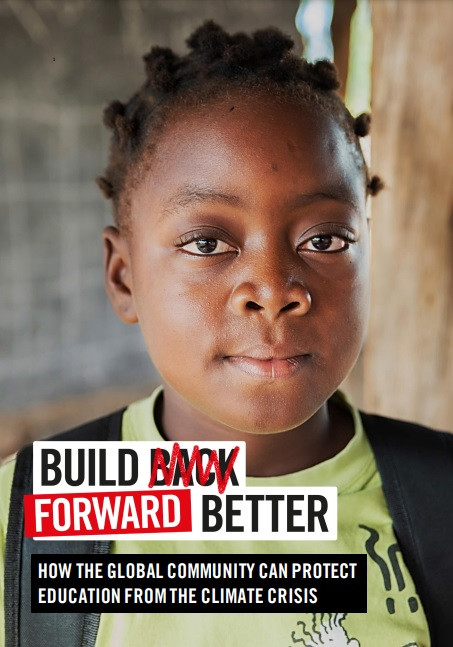 Build Forward Better: How the Global Community Can Protect Education from the Climate Crisis Année de publication: 2021 Auteur: Anya Cowley | Mathias Slettholm Auteur institutionnel: Save the Children Children’s increasing exposure to extreme weather events has serious implications for children’s access to quality education. 75 million children have their education disrupted each year – of which around half are due to environmental threats such as floods and drought. This briefing paper sets out how leaders can protect children’s learning from the impacts of the climate crisis, and the role that education can play in equipping the next generation with the tools they need to protect against its worst impacts.
 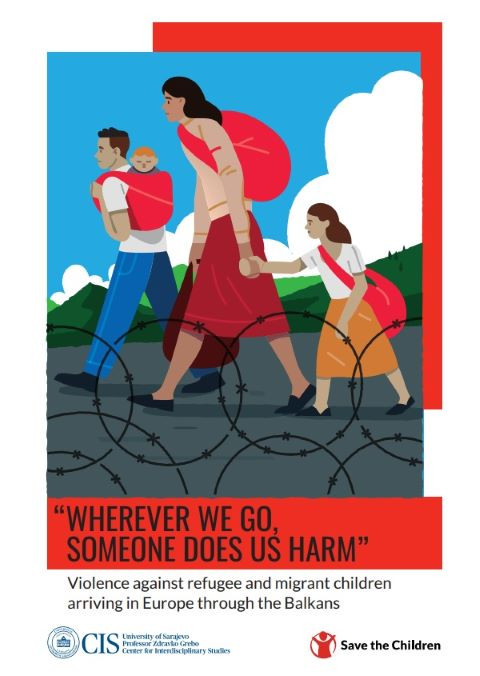 Wherever We Go, Someone Does Us Harm: Violence against Refugee and Migrant Children Arriving in Europe through the Balkans Année de publication: 2022 Auteur: Anita Burgund Isakov | Dženana Husremović | Bogdan Krasić | Violeta Marković | Nikolina Milic | Tatjana Ristić | Alina Trkulja | Nevenka Žegarac Auteur institutionnel: Save the Children Children, including thousands of unaccompanied and separated children, comprise about one-third of all refugees and migrants arriving in Europe. Many of these children come through the Balkans, travelling through countries including Greece, Bulgaria, Serbia, and Bosnia and Herzegovina. These are seen as transit countries by refugees and migrants as they try to continue their way toward Western Europe.In this report, Save the Children and the Center for Interdisciplinary Studies at the University of Sarajevo present in-depth research into the level and types of violence that children experience while attempting to reach Western Europe via the Balkans route, the circumstances of that violence, and the policies and practices that exist to support children. They also make recommendations for governments, NGOs and other stakeholders to strengthen the protection and support available to these children.The research was conducted in Bosnia and Herzegovina and Serbia, key transit countries on the threshold of the European Union and on the way to Western Europe. It is based on in-depth interviews with 48 children aged between 13 and 19 years old. This report also draws on focus group discussions with 27 professionals in Bosnia and Herzegovina and Serbia, mostly field workers who had extensive experience working with refugee and migrant children, and an extensive literature review. The findings of this research were analyzed thematically and interpreted within several keys: using ecological systems theory, an approach based on the rights of the child, and on trauma and resilience-based knowledge.