
Ressources
Explorez une large gamme de ressources sur le GCED afin d’approfondir votre compréhension et de renforcer vos activités de recherche, de plaidoyer, d’enseignement et d’apprentissage.
1,322 résultats trouvés
 Citizenship education and coexistence: guides for citizenship and coexistence from the colective construction of meaning and networks; care and self-care Année de publication: 2015 Auteur institutionnel: Centro de Investigación y Educación Popular (CINEP) | Secretaría de Educación del Distrito (SED) Care and self-care is one of the main topics related to education for citizenship and coexistence. Therefore, this manual identifies three areas of reflection: 1) self-care, 2) caring for others: people with whom I interact, 3)Care of the ones I don't know and things that surround me. Each one of these areas is accompanied by didactic tools that allow deepening into the contents that have been created, proposing theoretical and practical fundamental elements, which could be useful in the pedagogical process leaded by the participants of the project. . Educación para la ciudadanía y la convivencia: manual de ciudadanía y convivencia desde la construcción colectiva de sentidos y redes; cuidado y autocuidado Année de publication: 2015 Auteur institutionnel: Centro de Investigación y Educación Popular (CINEP) | Secretaría de Educación del Distrito (SED) Care and self-care is one of the main topics related to education for citizenship and coexistence. Therefore, this manual identifies three areas of reflection: 1) self-care, 2) caring for others: people with whom I interact, 3)Care of the ones I don't know and things that surround me. Each one of these areas is accompanied by didactic tools that allow deepening into the contents that have been created, proposing theoretical and practical fundamental elements, which could be useful in the pedagogical process leaded by the participants of the project. . Education à la citoyenneté et de la coexistence: citoyenneté manuelle et la coexistence de construction collective du sens et de réseaux; soins et auto-soins Année de publication: 2015 Auteur institutionnel: Centro de Investigación y Educación Popular (CINEP) | Secretaría de Educación del Distrito (SED) Les soins et l'autonomie sont l'un des principaux thèmes liés à l'éducation à la citoyenneté et à la coexistence. Par conséquent, ce manuel identifie trois domaines de réflexion: 1) le soin de soi, 2) le soin des autres: les personnes avec qui j'interagis, 3) le soin de ceux que je ne connais pas et les choses qui m'entourent. Chacun de ces domaines s'accompagne d'outils didactiques permettant d'approfondir les contenus qui ont été créés, proposant des éléments théoriques et pratiques fondamentaux qui pourraient être utiles dans le processus pédagogique mené par les participants du projet.
  Manual for Teachers and Educators: To Empower Young People on Sdgs and Migration Année de publication: 2018 Auteur institutionnel: Start the Change | European Union (EU) The Start the Change project aims to improve education provision linked to the Sustainable Development Goals (SDGs) in 12 European countries, with a special emphasis on the relationship between migration and global inequality, and contributing to the fulfilment of the 2030 Agenda for Sustainable Development.The first part of the guide (THINK) describes the educational model proposed by Start the Change. Service Learning gives an overview of a pedagogical approach that promotes a new perspective to acquiring global citizenship knowledge, skills and attitudes - not just in the classroom but also through direct experience of working on real issues in the community. MANUAL TO INSPIRE: START THE CHANGE 11 Participative methodologies are the basis of all good global citizenship education, and youth empowerment can be enhanced through peer to peer approaches. The second part of the guide (LEARN) is dedicated to enhancing teachers’ and educators’ knowledge of the contents of the project: the Sustainable Development Goals, inequality and migration issues. Storytelling can be used to develop short film storylines on Start the Change issues. Educational activities can be enriched by using ICT to promote global learning and include voices and experiences from the Global South. The third part of the guide (DO) is dedicated to activities and methodologies to help young people explore these issues and inspire them to take action in their communities.
  Global Citizenship Concepts in Curriculum Guidelines of 10 Countries: Comparative Analysis Année de publication: 2017 Auteur: Cristián Cox Auteur institutionnel: UNESCO International Bureau of Education (IBE) This paper reports on a study of concepts associated with the new construct of global citizenship education (GCED) in school curricula. We compared the national school curricula of ten countries with markedly different cultures and levels of development across different regions of the world (Africa, Asia, Europe, Latin America, and Southeast Asia) on the presence of concepts associated with GCED. The curricula of both primary and secondary education, in the areas of history and social sciences, and civics and moral education, were compared using a set of categories constructed for this study and derived from UNESCO’s definitions of GCED as well as from the International Association for the Evaluation of Educational Achievement’s (IEA) international assessment studies of civic and citizenship education. Patterns of presence/absence of GCED and related content were identified. The main finding is that only two of the ten countries’ curricula consistently included global citizenship concepts. At the same time, all ten countries, to the extent that the analysis distinguished, included content related to knowledge, values and attitudes that have the world or humanity as referent.
  Social Stigma Associated with COVID-19: A Guide to Preventing and Addressing Social Stigma Année de publication: 2020 Auteur institutionnel: International Federation of Red Cross and Red Crescent Societies (IFRC) | United Nations Children's Fund (UNICEF) | World Health Organization (WHO) This resource aims for Government, media and local organisations working on the new coronavirus disease to prevent and address social stigma associated with COVID-19. It offers concrete examples and communication tips on possible actions to counter stigmatizing attitudes.
  One Youth Can: Changing Gender Norms and Promoting Gender Equality Année de publication: 2017 Auteur: Tapiwa Manyati | Remmy Shawa Auteur institutionnel: Sonke Gender Justice This manual is intended to be a resource for those working with youth on issues of citizenship, human rights, gender, health, sexuality and violence. The content is informed by a commitment to social justice, gender equality and engaged citizen activism. The activities encourage all youth to reflect on their own experiences, attitudes and values regarding sexuality; gender; what it means to be a boy/man or girl/woman; domestic and sexual violence; HIV/AIDS, democracy and human rights. They encourage all youth to take action to help prevent domestic and sexual violence, reduce the spread and impact of HIV and AIDS, and promote gender equality.
  Rethinking Learning: A Review of Social and Emotional Learning for Education Systems Année de publication: 2020 Auteur: Nandini Chatterjee Singh | Anantha Duraiappah Auteur institutionnel: Mahatma Gandhi Institute of Education for Peace and Sustainable Development (MGIEP) This publication titled ‘Rethinking Learning: A Review of Social and Emotional Learning for Education Systems’, published by the UNESCO Mahatma Gandhi Institute of Education for Peace and Sustainable Development (MGIEP) reviews the latest research on Social and Emotional Learning (SEL), its impact on student health and school climate and its transformative role in building happier classrooms. It seeks to inform and impress upon Member States the urgent need to mainstream social and emotional learning in education systems.
 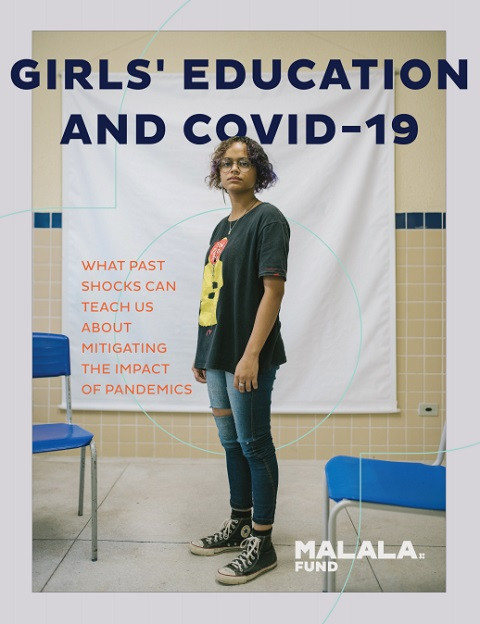 Girls' Education and COVID-19: What Past Shocks Can Teach Us About Mitigating the Impact of Pandemics Année de publication: 2020 Auteur: Lucia Fry | Philippa Lei Auteur institutionnel: Malala Fund Almost 90% of the world’s countries have shut their schools in efforts to slow the transmission of COVID-19. Alongside school closures, governments are also imposing social distancing measures and restricting the movement of people, goods, and services, leading to stalled economies. While this disruption to education and the expected reduction in global growth have far-reaching effects for all, their impact will be particularly detrimental to the most disadvantaged students and their families, especially in poorer countries. The educational consequences of COVID-19 will last beyond the period of school closures, disproportionately affecting marginalized girls.This paper uses insights from previous health and financial shocks to understand how the current global pandemic could affect girls’ education outcomes for years to come. It details how governments and international institutions can mitigate the immediate and longer-term effects of the pandemic on the most marginalized girls. The paper considers the 2014- 15 Ebola epidemic and the 2008 global financial crisis, which both have some parallels to the impact of COVID-19.
 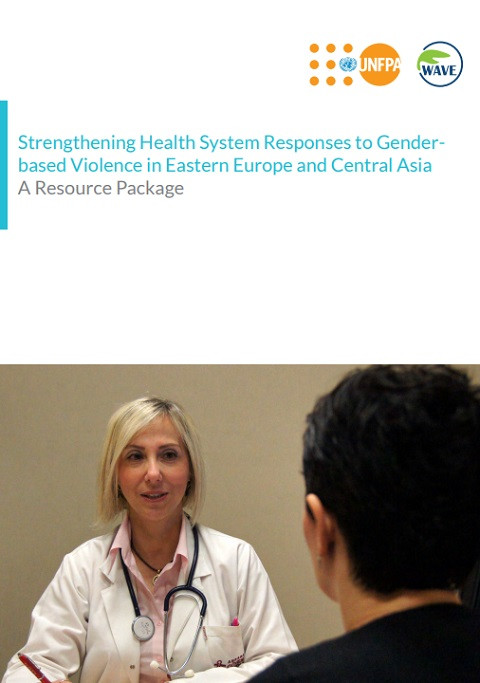 Strengthening Health System Responses to Gender-based Violence in Eastern Europe and Central Asia: A Resource Package Année de publication: 2014 Auteur institutionnel: United Nations Population Fund (UNFPA) | Women Against Violence Europe (WAVE) This collection of materials is the result of a collaboration between UNFPA (United Nations Population Fund), the UNFPA Regional Office for population for the countries of Eastern Europe and Central Asia and the WAVE Network (Women Against Violence in Europe) and is an updated edition of the compilation, revised in 2013-2014. It has been brought in line with new requirements in terms of enhancing the response of the health system to gender inequality; its content has been updated taking into account the latest international developments.