
Ressources
Explorez une large gamme de ressources sur le GCED afin d’approfondir votre compréhension et de renforcer vos activités de recherche, de plaidoyer, d’enseignement et d’apprentissage.
3,385 résultats trouvés
 Таджикистан: Анализ политики по поддержке людей с инвалидностью Année de publication: 2018 Auteur: Mikhail Petrushkov Auteur institutionnel: Central Asian Bureau for Analytical Reporting (CABAR) | Institute for War and Peace Reporting (IWPR) «На законодательном уровне в отношении соблюдения прав людей с инвалидностью и обеспечения равных условий делается многое. Правительство Таджикистана в 2016 году приняло «Национальную программу реабилитации инвалидов на 2017 – 2020 годы. Однако проведенный анализ финансовой составляющей Программы показал существенные недоработки», – отмечает в своей статье, написанной для аналитической платформы CABAR.asia Михаил Петрушков, аналитик (Душанбе).
  School Closures and Regional Policies to Mitigate Learning Loss due to COVID-19: A Focus on the Asia-Pacific Année de publication: 2021 Auteur institutionnel: UNESCO Institute for Statistics (UIS) Global school closures as a result of COVID-19 have caused learning losses for millions of children despite efforts to deploy remote learning options. Greater economic insecurity among families may also affect school enrolment as many struggle to pay school fees, or require children to work to supplement family income. Ultimately, this will lead to rising dropout rates, estimated to be as much as 4% in a region where 128 million children and young people were already out of school before COVID-19. The largest number of learners at risk reside in South and West Asia.Together, the education and economic fallout from the pandemic threaten progress toward the Sustainable Development Goal for education (SDG 4). Even prior to the COVID-19 disruptions, progress towards SDG 4 was lagging in many countries in the Asia-Pacific and without significant contributions to education finance, the pandemic threatens to push the region even further behind.This report breaks down the effects of school closures. It considers, for example, how many schools were closed, and when, across the Asia-Pacific, and the effects on different levels of education from early childhood education, through to primary and secondary school. The report analyses country efforts to implement remote learning, and strategies to mitigate learning losses as the proportion of students expected to fall below minimum proficiency levels is expected to rise.To achieve SDG 4, all children and young people, and especially those in marginalized groups, need support to get the education they need and deserve.
  Как улучшить доступность дошкольного и начального образования в Казахстане? Année de publication: 2019 Auteur: Meruert Seidumanova Auteur institutionnel: Central Asian Bureau for Analytical Reporting (CABAR) | Institute for War and Peace Reporting (IWPR) «Равный доступ для всех социальных групп к качественному дошкольному и начальному образованию является ключом к устойчивому развитию, как и отдельного индивидуума, так и общество в целом», – отмечает Меруерт Сейдуманова, казахстанский независимый исследователь, в своей специальной статье для CABAR.asia.
 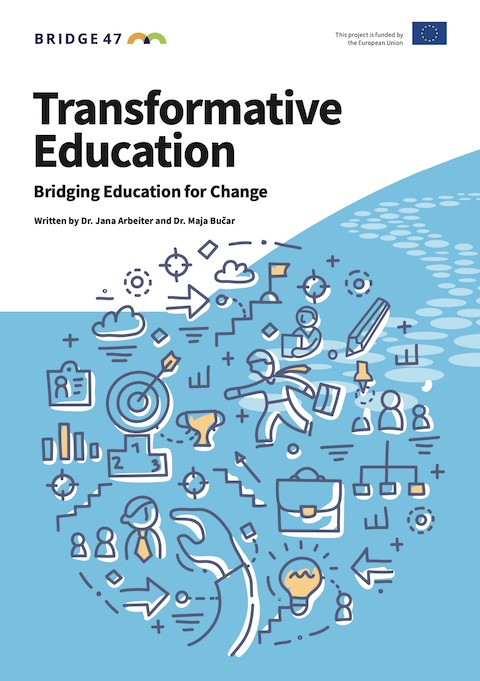 Transformative Education: Bridging Education for Change Année de publication: 2021 Auteur: Jana Arbeiter | Maja Bučar Auteur institutionnel: Bridge 47 This publication suggests that improvements in the areas of coordination, cooperation, awareness raising and capability development are needed, as outlined in the recommendations below. Policies and strategies at national, regional and global level should adopt overarching visions for transformative education in the form of overarching strategies for SDG Target 4.7. Mechanisms for coordination and collaboration between the different components of SDG Target 4.7 should be established at national, regional and global levels. Awareness of the role of transformative education and SDG Target 4.7 in contributing to more just and sustainable futures should be raised jointly between the different components of SDG Target 4.7. Opportunities for capacity building and upskilling of practitioners and learners linked to transformative education should be enabled and created at national, regional and global levels.
  Pathways Towards Quality Primary Education: Improving Completion and Learning Outcomes Année de publication: 2021 Auteur: Moizza Binat Sarwar | Susan Nicolai | Diego Benitez Moreno | Olha Homonchuk | Jose Manuel Roche Auteur institutionnel: ODI Global This paper explores pathways towards quality primary education by identifying and analysing strategies used in 38 countries that have made faster progress in primary completion rates (PCR) – and, where discernible, learning outcomes – between 2000 and 2017. It further considers which social and economic groups within these countries are being left behind or excluded from the rise in completion rates, why that may be happening and what governments are doing to address those gaps.
 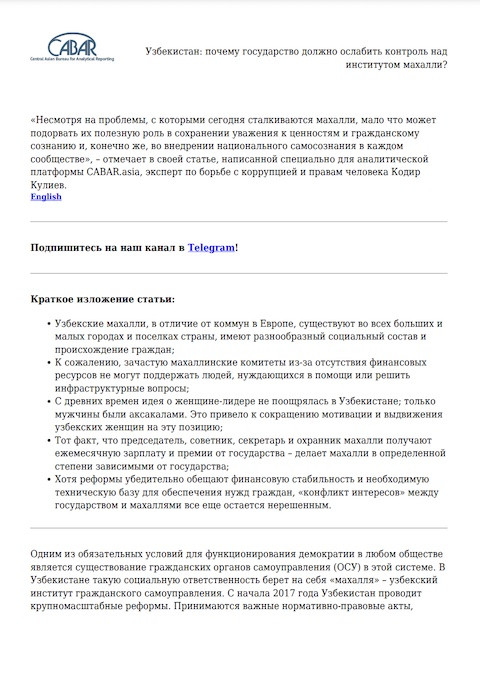 Uzbekistan: Why Should the State Weaken Control Over the Institute of Makhalla? Année de publication: 2019 Auteur: Kodir Kuliev Auteur institutionnel: Central Asian Bureau for Analytical Reporting (CABAR) | Institute for War and Peace Reporting (IWPR) One of the vital conditions for the functioning of democracy in any society is the existence of citizens’ self-governing bodies (CSB) within that system. In Uzbekistan, such social responsibility is assumed by “mahalla” – the Uzbek citizens’ self-governing institution. Since the beginning of 2017 Uzbekistan has been carrying out large-scale reforms. Important laws and regulations are being adopted, which should create favorable conditions for quality life and ensure freedom for the Uzbek people. With mahallas, however, such positive change in the long-run seems to be just a lip-service. The main challenges mahallas are facing today are, inter alia, obscured freedom they have in ruling themselves and controlling their own affairs and incapability to effectively tackle citizens’ problems, thus leaving people’s trust unjustified. Узбекистан: Почему государство должно ослабить контроль над институтом махалли? Année de publication: 2019 Auteur: Kodir Kuliev Auteur institutionnel: Central Asian Bureau for Analytical Reporting (CABAR) | Institute for War and Peace Reporting (IWPR) Одним из обязательных условий для функционирования демократии в любом обществе является существование гражданских органов самоуправления (ОСУ) в этой системе. В Узбекистане такую социальную ответственность берет на себя «махалля» – узбекский институт гражданского самоуправления. С начала 2017 года Узбекистан проводит крупномасштабные реформы. Принимаются важные нормативно-правовые акты, которые должны создать благоприятные условия для качественной жизни и обеспечить свободу узбекскому народу. Однако с махаллей такое положительное изменение в долгосрочной перспективе кажется неоднозначным. Основные проблемы, с которыми сегодня сталкиваются махалли – это ограниченная свобода и контроль собственных дел и неспособноть эффективно решать проблемы граждан, что не оправдывает доверия людей. Tajikistan: Policy Analysis to Support Persons with Disabilities Année de publication: 2018 Auteur: Mikhail Petrushkov Auteur institutionnel: Central Asian Bureau for Analytical Reporting (CABAR) | Institute for War and Peace Reporting (IWPR) “Much is being done at the legislative level with regard to the observance of the rights of people with disabilities and ensuring equal conditions. In 2016, the Government of Tajikistan adopted the National Program for the Rehabilitation of Persons with Disabilities for 2017-2020. However, the analysis of the financial component of the Program showed significant shortcomings, ”says Mikhail Petrushkov, an analyst (Dushanbe), in his article written for the analytical platform CABAR.asia.
  School-Related Gender-Based Violence Measurement Toolkit Année de publication: 2020 Auteur: Dexis Consulting Group Auteur institutionnel: United States Agency for International Development (USAID) This toolkit delivers practical guidance and resources for measuring the prevalence and extent of students’ experiences of school-related gender-based violence (SRGBV), and provides methods for assessing key risk factors and drivers of SRGBV. This toolkit contains a conceptual framework for measuring SRGBV, a school- based survey for measuring experiences of SRGBV, risk factors, and drivers, as well as practical guidance for implementing the survey.
 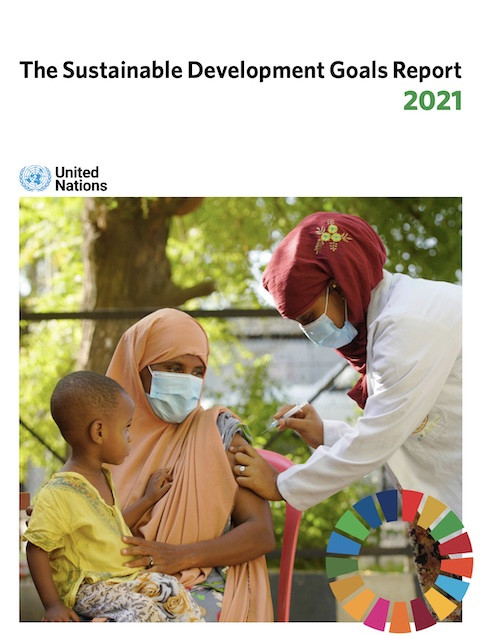 The Sustainable Development Goals Report 2021 Année de publication: 2021 Auteur institutionnel: United Nations (UN) As the pandemic continues to unfold, The Sustainable Development Goals Report 2021 outlines some significant impacts in many areas that are already apparent. The global extreme poverty rate rose for the first time in over 20 years, and 119 to 124 million people were pushed back into extreme poverty in 2020. There is a risk of a generational catastrophe regarding schooling, where an additional 101 million children have fallen below the minimum reading proficiency level, potentially wiping out two decades of education gains. Women have faced increased domestic violence, child marriage is projected to rise after a decline in recent years, and unpaid and underpaid care work is increasingly and disproportionately falling on the shoulders of women and girls, impacting educational and income opportunities and health. Notwithstanding the global economic slowdown, concentrations of major greenhouse gases continue to increase. With the global average temperature reaching about 1.2°C above pre-industrial levels, the climate crisis has well and truly arrived, and its impacts are being felt across the world. The pandemic has also brought immense financial challenges, especially for developing countries – with a significant rise in debt distress and dramatic decreases in foreign direct investment and trade. Yet, with a surge in global solidarity and leadership from the highest political level, countries can still deliver on the 2030 Agenda and the 2015 Paris Agreement on Climate Change. A global vaccination plan, designed and implemented by the countries that can produce vaccines today or will be able to do so if properly supported, is an urgent first step in that direction. A recommitment by Governments, cities, businesses, and industries to ensure that the recovery reduces carbon emissions, conserves natural resources, creates better jobs, advances gender equality and tackles growing poverty and inequalities is a further imperative.