
Ressources
Explorez une large gamme de ressources sur le GCED afin d’approfondir votre compréhension et de renforcer vos activités de recherche, de plaidoyer, d’enseignement et d’apprentissage.
1,725 résultats trouvés
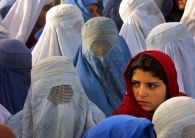 Women’s Education: Promoting Development, Countering Radicalism Année de publication: 2014 Auteur: Hedieh Mirahmadi Auteur institutionnel: World Organization for Resource Development and Education (WORDE) Améliorer l'accès à une éducation laïque de qualité peut contribuer à la création de meilleurs emplois pour les femmes et réduire certains facteurs économiques de la radicalisation. Les femmes éduquées peuvent à leur tour jouer un rôle essentiel en protégeant leurs enfants et les communautés contre les récits radicaux utilisés pour recruter des adeptes.
  Achieving Social Justice Through a Demographic-driven Initiative: Responding to the Unique Needs of Youth, Women and Refugees Année de publication: 2017 Auteur: Nader Said-Foqahaa | Nicholas Hyman Auteur institutionnel: International Labour Organization (ILO) The Arab world is currently going through a period of great socio-economic change, unprecedented since the revolutions and wars of independence more than half a century ago. The issue of social justice, which has been a challenge to Arab states over the past decades, is a matter of particular concern. The authors attempt to establish a conceptual background of social justice, and to discuss its linkage with youth, children, women, and refugees. The paper concludes with recommendations on social justice in the Arab world. تحقيق العدالة الاجتماهية من خلال مبادرة ديموغرافية: تلبية الاحتياجات الفريدة للشباب والنساء واللاجئين Année de publication: 2017 Auteur: Nader Said-Foqahaa | Nicholas Hyman Auteur institutionnel: International Labour Organization (ILO) يمرّ العالم العربي حالياً بفترة من التغيير الاجتماعي الاقتصادي الكبير، الذي لم يسبق له مثيل منذ الثورات وحروب الاستقلال منذ أكثر من نصف قرن. وتُعتبر مسألة العدالة الاجتماعية التي شكّلت تحدياً للدول العربية على مدى العقود الماضية، مسألة مثيرة للقلق بشكل خاص. يحاول المؤلفون لوضع خلفية مفاهيمية للعدالة الاجتماعية، ومناقشة ربطها بالشباب والأطفال والمرأة واللاجئين. تنتهي الورقة بوضع توصيات حول العدالة الاجتماعية في الوطن العربي.
  Justice in Matters Involving Children in Conflict with the Law: Model Law on Juvenile Justice and Related Commentary Année de publication: 2013 Auteur institutionnel: UN. Office on Drugs and Crime (UNODC) This Model Law and the related Commentary are designed to provide legal guidance to States in the process of juvenile justice reform and assist them in drafting juvenile justice legislation. It translates compelling international juvenile justice standards and norms into a national context and aims at harmonizing national legislation with international requirements. International standards and norms in the area of juvenile justice are detailed. Правосудие: Вопросы, Касающиеся Детей, Находящихся в Конфликте с Законом Année de publication: 2013 Auteur institutionnel: UN. Office on Drugs and Crime (UNODC) Данный Типовой Закон и соответствующие комментарии являются руководством для проведения реформы правосудия по делам несовершеннолетних в различных странах и призван помочь в создании законодательства по делам несовершеннолетних. Данный Типовой Закон объединяет международные нормы и стандарты законодательства по делам несовершеннолетних, которые необходимо привести в соответствие с национальным законодательством с тем, чтобы гармонизировать национальное и международное законодательства. Данная работа детально описывает международные стандарты и нормы законодательства по делам несовершеннолетних.
  Rethinking Schooling for the 21st Century: The State of Education for Peace, Sustainable Development and Global Citizenship in Asia Année de publication: 2017 Auteur institutionnel: Mahatma Gandhi Institute of Education for Peace and Sustainable Development (MGIEP) Calls to gear up schools for the 21st century are ubiquitous today. Dominant international educational discourse hails the potential of 'the youth dividend' and digital technology for enhancing growth. Some Asian education systems are held up as models for an innovation-led utopian future. But across much of Asia, neither the reality of schooling nor the patterns of development with which it is associated give cause for blithe optimism.This study is informed by UNESCO’s commitment to realising the Sustainable Development Goals (SDGs) through educational reform worldwide. Since its inception, UNESCO has championed a humanistic vision of education — a vision today encapsulated in SDG 4.7. These ideals need to be strongly restated and defended in an era when educational debate worldwide has come to be framed by a narrowly economistic and instrumentalist agenda.Deriving urgent significance from this broader context, the present report analyses how far the ideals of SDG 4.7 – of 'education for peace, sustainable development and global citizenship' - are embodied in policies and curricula across 22 Asian societies. At one level, it seeks to develop benchmarks against which future progress can be assessed. It also argues forcefully that conceptions of the fundamental purposes of schooling need to be reconfigured, if the ideals to which the global community has subscribed are actually to be realised.
  Recommendation on Education for Peace, Human Rights and Sustainable Development: An Implementation Guide Année de publication: 2025 Auteur institutionnel: UNESCO There is no peace without education. With conflicts rising on so many fronts, there has never been a more urgent need for a transformed education geared towards building and sustaining peace.The Recommendation on Education for Peace and Human Rights, International Understanding, Cooperation, Fundamental Freedoms, Global Citizenship and Sustainable Development, adopted by all 194 Member States of UNESCO in 2023, articulates a humanistic and transformative vision of education that can help address contemporary and future affronts to peace. These challenges range from the resurgence of conflicts driven by systemic inequalities and injustices, the rise and spread of hate speech, racism and discrimination particularly online, to the adverse effects of digital technologies and the existential threat of climate change.UNESCO has developed this Guide as the first of several tools to assist Member States in unpacking and fully implementing the 2023 Recommendation. The Guide elaborates its contents, integrating the 2023 Recommendation’s transdisciplinary lens to connect key concepts and issues. It also provides concrete ideas and curated resources for action at different levels and types of education, while calling for a multi-stakeholder and whole-of-society approach that includes everyone and builds on existing positive efforts.The Guide is a timely addition to the pool of available collective resources to fully implement the 2023 Recommendation and foster an education that is transformative for a just and peaceful world.
 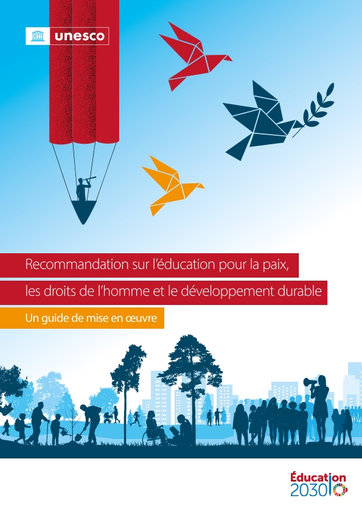 Recommandation sur l’éducation pour la paix, les droits de l’homme et le développement durable: un guide de mise en oeuvre Année de publication: 2025 Auteur institutionnel: UNESCO Il n’y a pas de paix sans éducation. Face à la multiplication des conflits sur de nombreux fronts, jamais la nécessité d’une éducation transformée, orientée vers la construction et le maintien de la paix, n’a été aussi pressante. La Recommandation sur l’éducation pour la paix et les droits de l’homme, la compréhension internationale, la coopération, les libertés fondamentales, la citoyenneté mondiale et le développement durable, adoptée en 2023 par l’ensemble des 194 États membres de l’UNESCO, exprime une vision humaniste et transformatrice de l’éducation, capable de répondre aux défis actuels et futurs à la paix. Ces défis vont de la résurgence de conflits alimentés par les inégalités et injustices systémiques, à la montée et la diffusion des discours de haine, du racisme et de la discrimination – notamment en ligne – en passant par les effets négatifs des technologies numériques et la menace existentielle que constitue le changement climatique. L’UNESCO a élaboré le présent Guide comme le premier d’une série d’outils destinés à aider les États membres à comprendre et à mettre pleinement en œuvre la Recommandation de 2023. Le Guide développe son contenu, en intégrant la perspective transdisciplinaire de la Recommandation afin de relier concepts et enjeux clés. Il propose également des pistes concrètes et des ressources sélectionnées pour 2 milliards de personnes – un quart de l’humanité – vivent dans des zones touchées par des conflits l’action à différents niveaux et dans divers types d’éducation, tout en appelant à une approche multi-acteurs et à l’échelle de la société, qui inclut toutes et tous et s’appuie sur les efforts positifs déjà entrepris. Le Guide constitue une ressource collective opportune pour mettre pleinement en œuvre la Recommandation de 2023 et promouvoir une éducation véritablement transformatrice au service d’un monde plus juste et pacifique. Recomendación sobre la educación para la paz, los derechos humanos y el desarrollo sostenible: guía de implementación Année de publication: 2026 Auteur institutionnel: UNESCO Sin educación no hay paz. Una educación transformadora, orientada a la construcción y el mantenimiento de la paz es más urgente que nunca, dado el aumento de los conflictos en diversos frentes.La Recomendación sobre la Educación para la Paz y los Derechos Humanos, la Comprensión Internacional, la Cooperación, las Libertades Fundamentales, la Ciudadanía Mundial y el Desarrollo Sostenible, que fue adoptada por los 194 Estados Miembros de la UNESCO en 2023, articula la visión humanista y transformadora de la educación que ayuda a abordar los actuales y futuros agravios a la paz. Estos desafíos abarcan desde el resurgimiento de conflictos impulsados por desigualdades e injusticias sistémicas, el auge y la propagación del discurso de odio, el racismo y la discriminación—especialmente en línea—, hasta los efectos adversos de las tecnologías digitales y la amenaza existencial del cambio climático.La UNESCO ha elaborado esta Guía como la primera de varias herramientas que ayudarán a los Estados miembro a comprender e implementar plenamente la Recomendación de 2023. Su contenido ha sido desarrollado integrando la perspectiva transdisciplinaria para conectar conceptos y cuestiones clave de la Recomendación de 2023. Además, proporciona ideas concretas y recursos seleccionados para la acción en distintos niveles y tipos de educación. Asimismo, promueve un enfoque multisectorial que parte de las iniciativas positivas ya en marcha y busca la inclusión de todas las personas.Esta Guía es una incorporación oportuna al conjunto de recursos colectivos disponibles para implementar plenamente la Recomendación de 2023 y promover así una educación transformadora para un mundo justo y pacífico.
 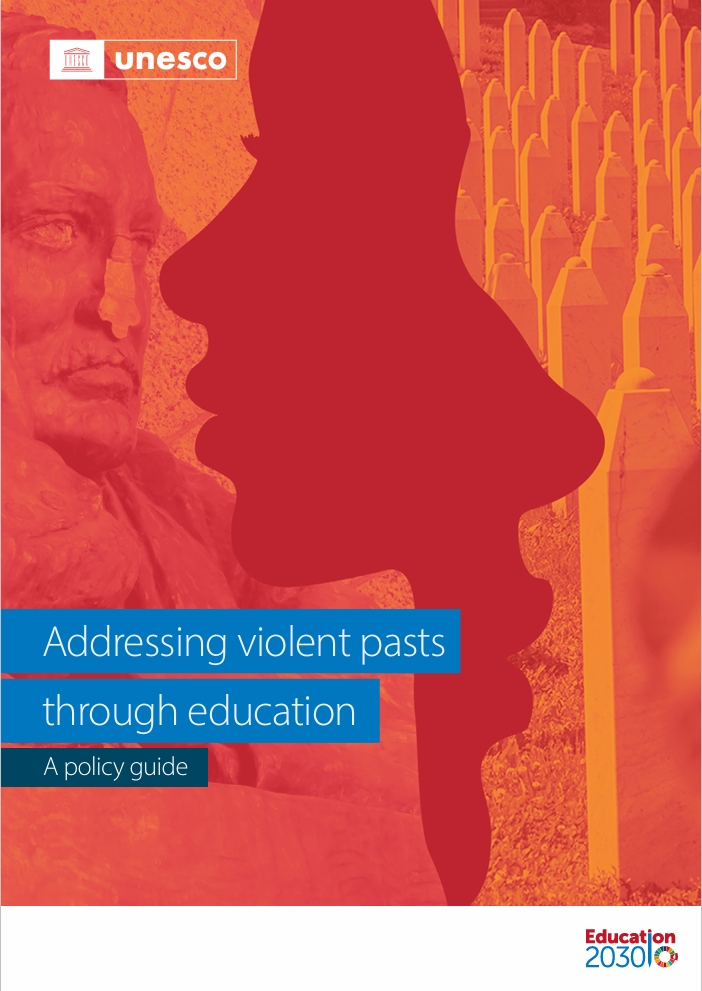 Addressing Violent Pasts through Education: A Policy Guide Année de publication: 2025 Auteur institutionnel: UNESCO Teaching about violent pasts and their legacies is a powerful way to foster sustainable peace.Education can build a nuanced understanding of complex histories, raise awareness of the roots and legacies of violence, nationally and internationally, and sensitize learners for their own agency as actors of change for reconciliation and conflict prevention.Educating about violent pasts is a challenging yet critical endeavour for policy-makers globally. It entails tailored approaches and an important support for educators to address traumatic pasts sensitively and to navigate related emotions and narratives successfully.Building on UNESCO’s programme on Global Citizenship Education, this guide offers education policy-makers a set of strategies, principles, and education practices to effectively integrate education about violent pasts into local education systems. It suggests a comprehensive approach that spans formal and informal education and aligns with the 2023 Recommendation on Education for Peace, Human Rights and Sustainable Development, opening new perspectives on history education, dialogue, and conflict transformation.