
Ressources
Explorez une large gamme de ressources sur le GCED afin d’approfondir votre compréhension et de renforcer vos activités de recherche, de plaidoyer, d’enseignement et d’apprentissage.
1,473 résultats trouvés
 Methodological Mosaic: Path 2; Investigating the Truths of the Territories Année de publication: 2019 Auteur institutionnel: EDUCAPAZ This publication reflects the work carried out by the National Program of Education for Peace EDUCAPAZ and the Truth Commission in Colombia, for education in schools that want to reflect on the value of truth in the reconstruction of memory, forgiveness and reconciliation. This module explores the relationship with territories and the construction of truth. Mosaico Metodológico: Camino 2; Investigando las verdades de los territorios Année de publication: 2019 Auteur institutionnel: EDUCAPAZ Esta publicación recoje el trabajo desarrollado por el Programa Nacional de Educación para la Paz EDUCAPAZ y a Comisión de la Verdad en Colombia, para el trabajo pedagógico en escuelas que quieran reflexionar sobre el valor de la verdad en la reconstrucción de la memoria, el perdón y la reconciliación. Este módulo explora la relación con los territorios y la construcción de la verdad.
  Methodological Mosaic: Path 3; Girls, Boys and Young Experts in the Truth Commission Année de publication: 2019 Auteur institutionnel: EDUCAPAZ This publication reflects the work carried out by the National Program of Education for Peace EDUCAPAZ and the Truth Commission in Colombia, for education in schools that want to reflect on the value of truth in the reconstruction of memory, forgiveness and reconciliation. This module presents strategies to educate children and young people about the truth commission.
  Report on the Social Monitoring of the Legislation and Law Enforcement Practices of the Local Police Service in the Area of Preventing Domestic Violence in the Republic of Kazakhstan Année de publication: 2017 Auteur: S.V. Korneytchuk | N.S. Gladyr Auteur institutionnel: OSCE. Programme Office in Astana This monitoring focuses on evaluating and forecasting the legislation by means of identifying contradictions in the legislation, obsolete, corruption-generating and ineffectively implemented statutes, as well as the drafting of proposals on improving the legislation and mechanisms of its implementation by units of the local police service. This edition was published with the financial support of the OSCE Programme Office in Nur-Sultan as part of the project entitled “Social Monitoring of the Legislation and Law Enforcement Practices of the Local Police Service in the Area of Preventing Domestic Violence in the Republic of Kazakhstan”.
 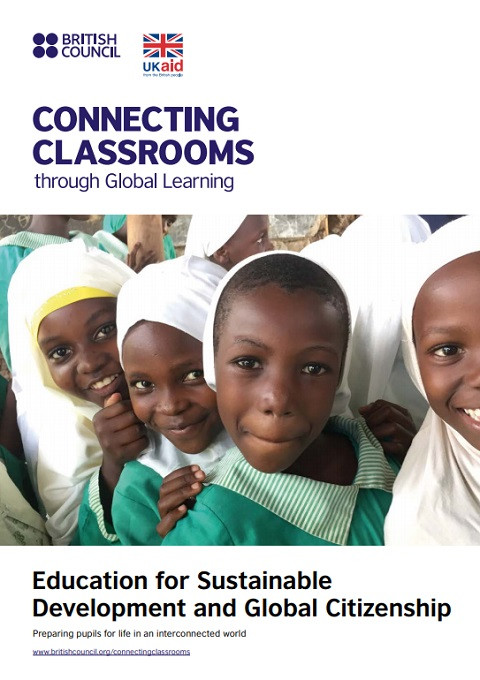 Connecting Classrooms through Global Learning: Education for Sustainable Development and Global Citizenship; Preparing Pupils for Life in an Interconnected World Année de publication: 2020 Auteur institutionnel: British Council | UK aid This resource contributes to the development of pupils’ core skills, enabling them to think critically, to consider how to resolve problems, to take informed and reflective action and to develop personal leadership skills. During the course, pupils will analyse global issues, and will plan, implement and evaluate action. This course can be linked to a variety of curriculum areas, including English, Social Studies, Geography, Modern Foreign Languages, Maths, History and Art and Design. It can be used with or without an overseas partner school.
  Global education in Lithuania: challenges and opportunities Année de publication: 2014 Auteur: Indrė Augutienė | Zina Baltrėnienė Auteur institutionnel: Lithuanian Development Education and Cooperation Network of Non-governmental Institutions (Association LITDEA) | Lithuanian National Non-Governmental Development Cooperation Organisations‘ Platform (NGDO Platform) The publication has been produced implementing the project ‘‘Quality Partnership for Development-EU Presidency project for the Lithuanian EU Presidency, 2013“ (no. DCINSA ED/2013/319-124). Today we live in a constantly changing world which is bound by the spirit of relations between people, countries and cultures and which presents various challenges and opportunities. Every day we have to solve numerous economic, social and environmental issues connecting us with other countries, their cultures and citizens and providing an opportunity for all of us to become part of a global society.In order to accept the opportunities provided by the globalisation processes and cope with the emerging challenges it is necessary to create the conditions for people to acquire the knowledge on global realities, emerging global development problems and to relate them with their own life. It is also important to provide the opportunities for people to acquire the skills and enhance own values facilitating active global citizenship and responsibility. Global problems increasingly impact on the lives of everybody throughout the world, therefore we must realise that we are part of the world with the still prevailing poverty, social inequality, climate change and global warming problems. In the current society it is especially important to ensure that different forms of education enhance people‘s understanding about the above challenges and their impact on personal, communal, national and global development.Global Education is directed toward formation and development of people‘s skills, knowledge and values facilitating understanding and response to the challenges of the 21st century. So far the concept of Global Education was not validated in any national documents. Today non-governmental organisations are actively discussing this issue with the academic society and with the Ministries of Foreign Affairs/and Education and Science representing the state in the above area. Besides, Lithuania has not developed a uniform Global Education strategy yet, but the dimension of Global Education is included in several specific national policy documents. In view of this, this article reviews the prerequisites for integration of global education set forth in the main legal acts defining Lithuania‘s sustainable development, development cooperation and education. This document provides a review of the Global Education concept, prerequisites for its implementation and description of the current situation in Lithuania. It also includes the proposals for a successful development of Global Education activities in our country. Éducation globalein Lithuania: challenges and opportunities Année de publication: 2014 Auteur: Indrė Augutienė | Zina Baltrėnienė Auteur institutionnel: Lithuanian Development Education and Cooperation Network of Non-governmental Institutions (Association LITDEA) | Lithuanian National Non-Governmental Development Cooperation Organisations‘ Platform (NGDO Platform) La publication a été réalisée la mise en œuvre du projet « Partenariat Qualité pour le projet de développement de l'UE Présidence de la présidence lituanienne de l'UE, 2013 »(no. DCINSA ED / 2013 / 319-124). Aujourd'hui, nous vivons dans un monde en constante évolution qui est lié par l'esprit des relations entre les peuples, les pays et les cultures, et qui présente divers défis et opportunités. Chaque jour, nous devons résoudre de nombreux problèmes économiques, sociaux et environnementaux qui nous relie avec d'autres pays, leurs cultures et leurs citoyens et de fournir une occasion pour nous tous de faire partie d'une société mondiale. Pour acept les possibilités offertes par les processus de mondialisation et faire face aux nouveaux défis, il est nécessaire de créer les conditions pour les gens à acquérir les connaissances sur les réalités mondiales, les problèmes de développement mondiaux émergents et à les relier à leur propre vie. Il est également important de fournir les possibilités pour les personnes à acquérir les compétences et de renforcer les valeurs propres à faciliter la citoyenneté mondiale active et la responsabilité. Les problèmes mondiaux de plus en plus d'impact sur la vie de tout le monde à travers le monde, nous devons donc réaliser que nous faisons partie du monde avec la pauvreté qui prévaut encore, les inégalités sociales, le changement climatique et les problèmes de réchauffement planétaire. Dans la société actuelle, il est particulièrement important de veiller à ce que les différentes formes d'éducation d'améliorer la compréhension des gens sur les défis ci-dessus et de leur impact sur le développement personnel, communautaire, national et mondial. Éducation globaleis dirigée vers la formation et le développement des compétences, les connaissances des personnes et des valeurs qui facilitent la compréhension et la réponse aux défis du 21e siècle. Jusqu'à présent, le concept de l'éducation globalewas pas validée dans les documents nationaux. Aujourd'hui, les organisations non-gouvernementales discutent activement de cette question avec la société académique et avec les Ministères des Affaires Étrangères / et de l'éducation et de la science représentant l'état dans la zone ci-dessus. Par ailleurs, la Lituanie n'a pas encore mis au point une formation globalestrategy uniforme, mais la dimension de l'éducation globaleis inclus dans plusieurs documents spécifiques de la politique nationale. Compte tenu de cela, cet article examine les conditions préalables à l'intégration de l'éducation globaleset énoncées dans les principaux actes juridiques définissant le développement durable, la coopération au développement et de l'éducation de la Lituanie. Ce document fournit un examen de la globaleconcept Éducation, conditions préalables à sa mise en œuvre et la description de la situation actuelle en Lituanie. Il comprend également les propositions pour un développement réussi d’activités mondiales de l'éducation dans notre pays. Отчет об общественном мониторинге законодательства и правоприменительной практики местной полицейской службы в сфере предупреждения и профилактики бытового насилия в РК Année de publication: 2017 Auteur: S.V. Korneytchuk | N.S. Gladyr Auteur institutionnel: OSCE. Programme Office in Astana Основной целью настоящего мониторинга является деятельность по оценке и прогнозированию законодательства путем выявления противоречий в законодательстве, устаревших, коррупциогенных и неэффективно реализуемых норм права, а также выработка предложений по совершенствованию законодательства и механизмов его реализации подразделениями местной полицейской службы. Это издание опубликовано при финансовой поддержке Офиса программ ОБСЕ в Астане в рамках проекта «Общественный мониторинг законодательства и правоприменительной практики местной полицейской службы в сфере предупреждения и профилактики бытового насилия в РК».
 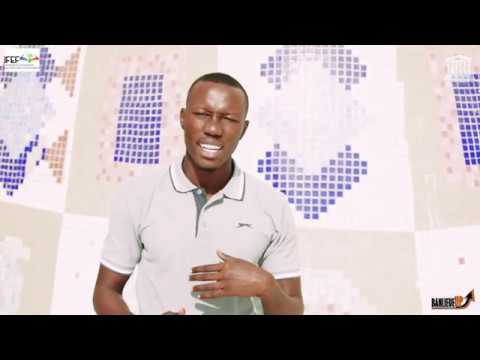 Formation pilote sur la paix et la citoyenneté mondiale Année de publication: 2020 Auteur institutionnel: UNESCO Dakar Du 6 au 8 décembre 2019, une formation sur l'éducation pour la paix et la citoyenneté mondiale des adolescents s’est tenue à Guédiawaye, dans la banlieue de Dakar, à destination des jeunes du Sénégal et de la sous-région.
  Education for Global Citizenship Année de publication: 2012 Auteur institutionnel: Education Above All (Qatar) This book shows that transformative education for local, national and global citizenship and peace can be implemented even under difficult conditions if there is a policy commitment to do so. Authors have provided examples and lessons learned from their own experiences as eminent practitioners in the field. The book is divided into three parts: Part One provides a brief overview of education for global citizenship; including in chapter 1, the subject matter and sub-themes; in chapter 2 the challenges of teaching for personal values and behavior development; and in chapter 3 the importance of having a clearly defined and holistic policy accepted by key stakeholders, and effective implementation.Part Two comprises chapters contributed by practitioners and specialists. Section A of Part Two presents some reflections on the challenges of teaching for values development and behavior change, and on the use of textbooks in this regard. Section B comprises four case studies that focus on or include education for citizenship and civics. Section C presents three cases focused on education for peace, together with a review of peace education in Muslim societies. Section D introduces human rights education and education designed to explore humanitarian law. Section E reviews problems of and possibilities for teaching about a conflictual past. Section F focuses on the development of national and international policy and planning for education to be supportive of peacebuilding and of respect for human rights.Finally, Part Three offers some recommendations for future action