
Ressources
Explorez une large gamme de ressources sur le GCED afin d’approfondir votre compréhension et de renforcer vos activités de recherche, de plaidoyer, d’enseignement et d’apprentissage.
884 résultats trouvés
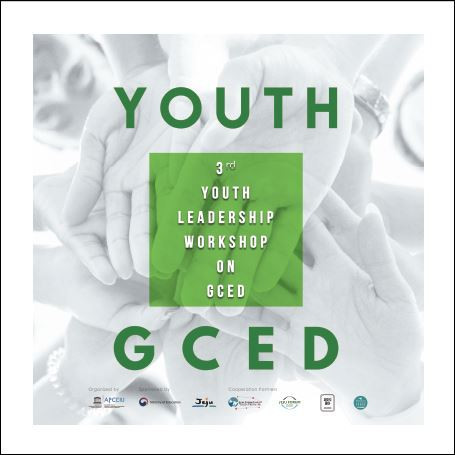 3rd Youth Leadership Workshop on GCED: Final Report Année de publication: 2017 Auteur institutionnel: APCEIU This report provides an overview of the activities carried out during the 3rd Youth Leadership Workshop on Global Citizenship Education (GCED) held in Jeju, Republic of Korea, from 28 May - 3 June 2017. This programme invited 50 youth activists from 43 countries around the world to exchange their ideas and identify GCED leadership strategies in order to mobilize young people for GCED in local and national contexts and advance the agenda globally. This report also aims to convey the voice of the youth represented by GCED Youth Network: their thoughts and reflections on GCED and its priority areas. The workshop was organized by APCEIU and in partnership with GCED Youth Network, Jeju Forum for Peace and Prosperity, Jaejudo Joa and Global Inner Peace; it was sponsored by Ministry of Education of the Republic of Korea and Jeju Special Self-Governing Province.For more information, please contact APCEIU's Office of Education and Training at ent@unescoapceiu.org. 제3차 세계시민교육 청년리더십 워크숍: 최종보고서 Année de publication: 2017 Auteur institutionnel: 유네스코 아시아태평양 국제이해교육원 본 보고서는 2017년 5월 28일부터 6월 3일까지 제주에서 열린 ‘제3차 세계시민교육 청년리더십 워크숍(3rd Youth Leadership Workshop on GCED)’에서 이루어진 활동 개요를 제공한다. 이 워크숍은 유네스코 아태교육원 주최, 세계시민교육 청년네트워크, 평화와 번영을 위한 제주포럼, 재주도좋아, 글로벌 이너피스가 파트너로 참여하였으며, 대한민국 교육부 및 제주특별자치도청이 후원하였다. 이 프로그램에는 전세계 43개국 50명의 청년활동가들이 참가하여 세계시민교육에 대한 아이디어를 교환하며, 세계시민교육을 전 세계적으로 확산하고 지역·국가적 차원의 청년활동을 증진하기 위한 리더십 전략을 논의하였다. 본 보고서는 7일간의 워크숍 활동들에 대한 기록과 더불어 세계시민교육의 주체인 청년들을 대표하여 세계시민교육 청년 네트워크가 생각하는 세계시민교육의 의미와 우선 과제들에 대한 목소리를 담고자 했다. 문의: 유네스코 아태교육원 교육연수실(ent@unescoapceiu.org)
  Peace Education in Northeast Asia: A Situational Analysis Année de publication: 2021 Auteur: Soonwon Kang | Cheng Liu | Ketei Matsui | Batbaatar Monkhooroi | Boyoung Park | Muyu Huang | Oyuntsetseg Dugarsuren Auteur institutionnel: APCEIU Being central to education for international understanding and global citizenship, peace education has always been an important theme in UNESCO. For effective delivery of peace education, it is critical to examine and understand the relevance of peace education and its key issues and approaches at a given juncture. With this in mind, in 2020, APCEIU conducted a study on peace education in South Korea to review its current state and suggest some policy recommendations. Following up on this study, APCEIU initiated in 2021 a research project on peace education in Northeast Asia in order to identify how peace education is interpreted and practised in the countries of the region and explore possibilities of cooperation among peace educators, researchers, and practitioners in the region. Building on this research, APCEIU hopes to develop and carry out joint projects for peace education in the region.
 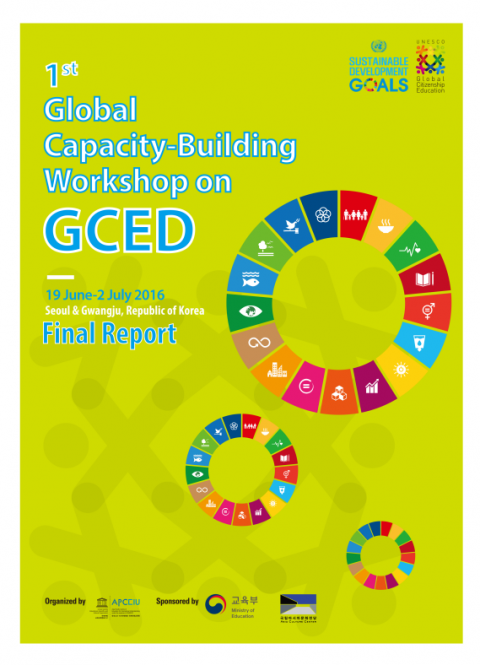 Final Report: 1st Global Capacity-Building Workshop on GCED Année de publication: 2016 Auteur institutionnel: APCEIU This report provides an overview of the activities carried out during the 1st Global Capacity-Building Workshop on GCED held in Seoul and Gwangju, Republic of Korea from 19 June - 2 July, 2016. APCEIU organized the 1st Global Capacity-Building Workshop on GCED in collaboration with UNESCO in order to contribute to achieving the Sustainable Development Goals(SDGs) target 4.7 by enhancing the capacity of teacher educators and trainers in implementing GCED. This intensive 2-week workshop provided the participating educators with the opportunities to better understand the concept and internalize the pedagogical principles of GCED while sharing their experiences and working on collaborative action plans. For more information, please contact APCEIU's Office of Education and Training at ent@unescoapceiu.org.
 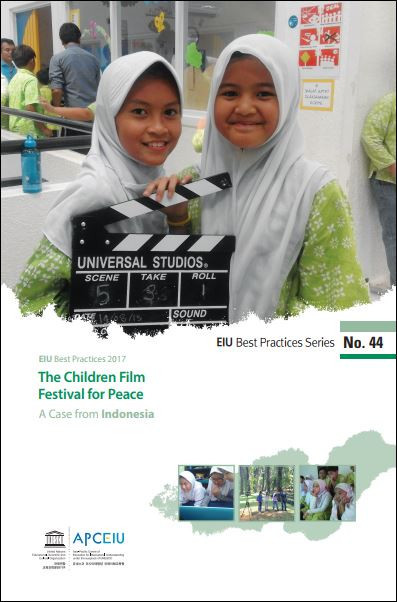 EIU Best Practices Series No.44: The Children’s Film Festival for Peace Année de publication: 2017 Auteur institutionnel: APCEIU This monograph is one of APCEIU's EIU Best Practices Series, which aims to encourage educators, scholars, and activists to implement and share local initiatives on EIU. The Series No. 44 introduces a project called “The Children’s Film Festival for Peace,” designed by a primary teacher in Indonesia to deliver EIU values to children in an easy and enjoyable way through an ICT class. The film themes which covered awareness on everyday social issues such as bullying, enabled students internalize the values of caring for others and sharing through acting, filming and creating. This exemplary project gives students a chance to bring their class learnings to life whilst spreading EIU values to their peers through their creations.
 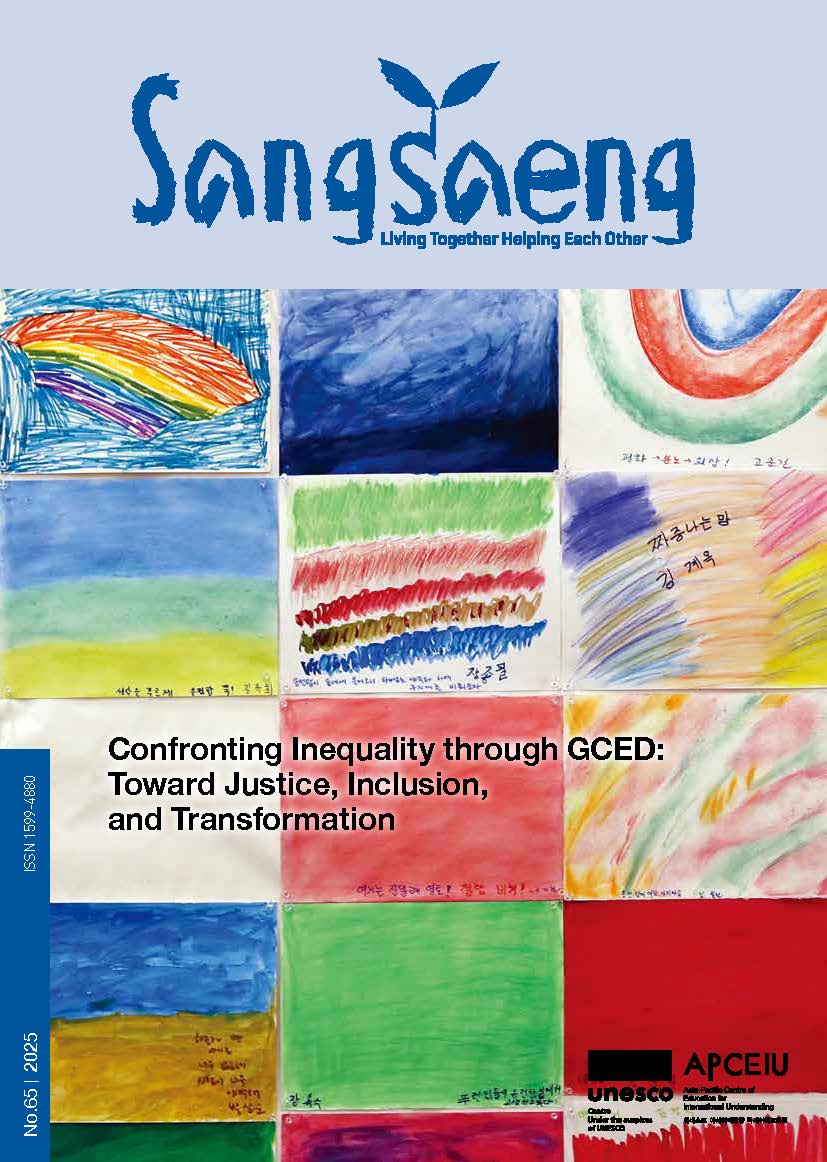 Confronting Inequality through GCED: Toward Justice, Inclusion, and Transformation (SangSaeng; No.65, 2025) Année de publication: 2025 Auteur institutionnel: APCEIU The 62nd issue of SangSaeng has been published with the theme of “Ethical AI and GCED: Exploring the Expanding Domain of Artificial Intelligence.”AI has never been as pervasive and influential as it is in today’s rapidly changing world. Despite the convenience and cutting-edge technology AI has offered us, it has the potential to pose a threat to humanity. This is where ethics for AI should come forward. In this regard, this issue will lead readers to the alarming side of AI as well as its future developments, focusing on the importance of GCED and AI ethics in tackling any potential problems.Contents03 Editor's Note 04 Special ColumnEmbracing Change to Cultivate Success — Integrating Global Citizenship Education into Tertiary Education / Dendev Badarch08 FOCUS Ethical AI and GCED: Exploring the Expanding Domain of Artificial IntelligenceRole of Ethics in the Era of AI — Protecting and Guiding AI Processes for Humanity to Flourish / Emma Ruttkamp-BloemPayingAttention to AI Ethics — An Avenue for a New Competitive Edge in Business / Myoungshin KimDriving Innovative Education — Balancing Future Possibilities and Ethical Concerns: How GCED Can be Used to Address AI Issues / Angelique Southern 20 Special ReportEmpowering a Climate Generation — From Classrooms to Climate Frontlines : The Transformative Role of Education highlighted at COP28 / Djian Sadadou 22 Best PracticesNavigating an AI Future — Ethical AI and the Importance of Critical Thought / Hannah GrantGLACE Brings the World to a City — Empowering Youth as Global Citizens: Lessons from Navotas City’s Project GLAC / Marco D. MedurandaLowering Eco-Anxiety — Teaching Climate Change Through Media and Information Literacy / Laetitia Legrand 33 GCED YOUTH NETWORKNew Wave of Youth Advocacy — Role of AI in Youth Advocacy and its Ethical Implications to Global Citizenship / Oshan M. Gunathilake and Diego Manrique36 Understanding the Asia Pacific RegionDiscovering Auroville — Where Boundaries Fade, Nature Thrives, and Global Minds Unite / Akanksha Arya 39 Peace in My MemoryHappiness without Violence — Mindanao Peace Forum Celebrates Building a Culture of Peace / Ludivina Borja-DekitPeace Scholar Passes Away Amidst Turbulent Times / Kwang-Hyun KIM 45 Story TimeThe Right Footing — My Life Has Purpose Thanks to Football / Hajar Abulfazl 48 LetterShared Challenges of Global Citizens / Natsuki Nagata 50 APCEIU in Action
 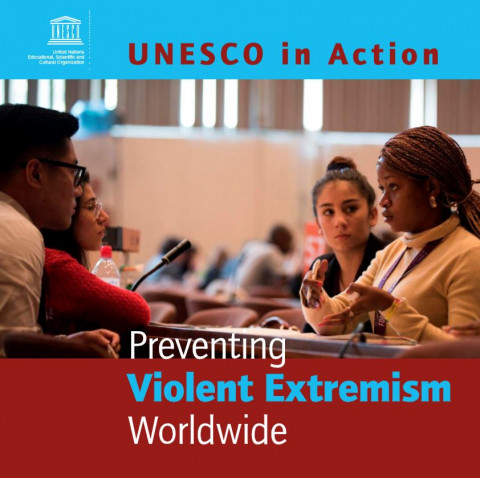 UNESCO in action: preventing violent extremism worldwide Année de publication: 2018 Auteur institutionnel: UNESCO UNESCO supports countries in crafting education programmes that build young people’s resilience to violent extremist messaging and foster a positive sense of identity and belonging. From this angle, the role of education is not to intercept violent extremists or identify individuals who may potentially become violent extremists, but to create conditions to build the defences of peace within learners through values, skills and behaviours that reject violent extremism, and by strengthening their commitment to non-violence and peace. This work is undertaken within the broader framework of Global Citizenship Education, where UNESCO leads implementation of Target 4.7 of the Sustainable Development Goal 4 on Education. The work undertaken in the field of Global Citizenship Education also embraces activities pertaining to human rights and peace education, Holocaust and genocide education, and activities to combat all forms of intolerance, racism and anti-Semitism.
  Bringing it out in the open: Monitoring school violence based on sexual orientation, gender identity or gender expression in national and international surveys Année de publication: 2019 Auteur institutionnel: UNESCO This technical brief has been developed by the United Nations Educational, Scientific and Cultural Organization (UNESCO) to strengthen the routine monitoring of school violence that is based on sexual orientation, gender identity or gender expression (SOGIE). It is informed by best practice from large institutional surveys that have been successfully conducted at the international or national level. The Brief provides recommendations on: • Questions to capture data on the sexual orientation or gender identity of students.• Questions to capture data on school violence that is specifically based on SOGIE. The Brief also gives guidance on: • The challenges in collecting data on school violence based on SOGIE• Identifying and fulfilling indicators on school violence based on SOGIE
 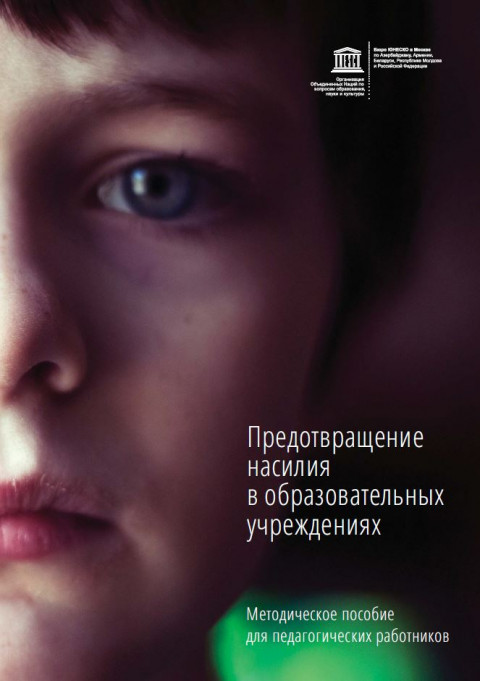 A Guide on Violence Prevention in Educational Settings in Eastern Europe and Central Asia Année de publication: 2015 Auteur institutionnel: UNESCO The emphasis is given to gender-based violence. This guide offers practical advice and proposes organizational and educational measures, as well as response schemes for the management and staff of education institutions in order to address acts of violence and provide assistance to the victims. The guide is advisory in nature: it can be used as a background material for developing a national recommendation on the prevention of violence in an education institution.Experts from the ministries of education, education institutions and public organizations of Eastern Europe and Central Asia, as well as the United Nations Educational, Scientific and Cultural Organization (UNESCO) and the United Nations Children's Fund (UNICEF) took part in discussions throughout the process of publication-writing. Предотвращение насилия в образовательных учреждениях: Методическое пособие для педагогических работников Année de publication: 2015 Auteur institutionnel: Организация Объединенных Наций по вопросам образования, науки и культуры (UNESCO) Методическое пособие предназначено для руководителей и сотрудников (учителей, психологов, социальных педагогов и др.), общеобразовательных школ и учреждений среднего профессионального образования. В нем представлена информация о природе и причинах насилия в образовательном учреждении, его видах и последствиях, вовлеченных сторонах.Особое внимание уделяется гендерному насилию. Пособие носит практический характер и предлагает организационные и воспитательные меры, а также алгоритмы действий руководства и персонала образовательного учреждения по реагированию на факты насилия и оказанию помощи пострадавшим. Пособие носит рекомендательный характер: на его основе могут быть разработаны национальные методические рекомендации по предотвращению насилия в образовательном учреждении.В обсуждении пособия в ходе его разработки приняли участие специалисты министерств образования, образовательных учреждений и общественных организаций стран Восточной Европы и Центральной Азии, а также Организации Объединенных Наций по вопросам образования, науки и культуры (ЮНЕСКО) и Детского фонда ООН (ЮНИСЕФ).