
Ressources
Explorez une large gamme de ressources sur le GCED afin d’approfondir votre compréhension et de renforcer vos activités de recherche, de plaidoyer, d’enseignement et d’apprentissage.
3,226 résultats trouvés
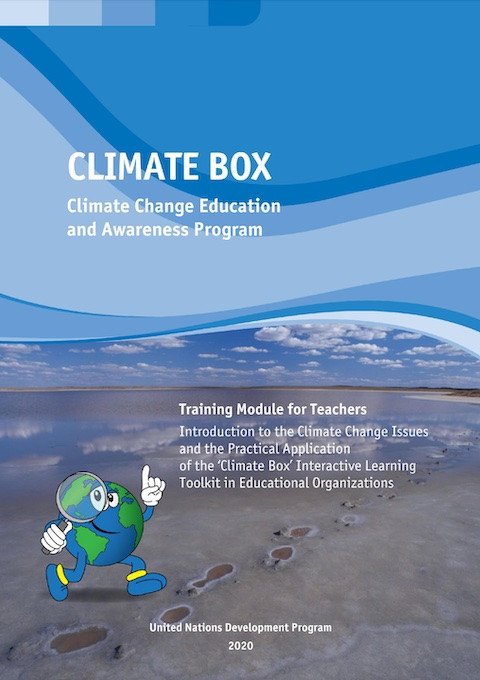 Climate Box: Climate Change Education and Awareness Program; Training Module for Teachers Année de publication: 2020 Auteur institutionnel: United Nations Development Programme (UNDP) The module contains materials for teachers, educators, tutors, educational program developers, and a wide range of people interested in climate change education. It is designed to build the capacity of teachers or education experts in climate education, as part of the formal qualification system.The objectives of the training module are:Raising climate awareness among school teachers to facilitate the introduction of climate education in primary, secondary, and high schools.Assisting teachers in the practical application of the Climate Box toolkit by facilitating the incorporation of the climate change topics into the school curriculum, extracurricular activities, and further education.Encouraging innovative pedagogical approaches to integrating climate change education into school education and raising awareness of climate change. The training module for teachers presents numerous examples on approaches to climate education, climate adaptation projects, and practices to reduce the individual carbon footprint from participating countries in the climate Box program. Its recommendations on the application of the training module consider the peculiarities of national education systems in different countries.
  [الإصدار المختصر] أزمة المناخ أزمة في حقوق الأطفال: تبنـي مؤشـر مخاطر المنـاخ علـى الأطفال Année de publication: 2021 Auteur: Nicholas Rees | Margaretha Barkhof | Jan Burdziej | Sophie Lee | Harriet Riley Auteur institutionnel: United Nations Children's Fund (UNICEF) تعتبر أزمة المناخ أزمة في حقوق الأطفال. فموجات الحر وحرائق الغابات والفيضانات التي سجلت مستويات قياسية في الفترة الأخيرة في العديد من البلدان تنذر بنشوء "واقع جديد" صعب. آثار تغير المناخ واضحة. وكذلك حلوله. ومن غير المعقول أن يواجه أطفال وشباب اليوم مستقب ًلا غامضًا.ًفي جميع أنحاء العالم، يرفع الأطفال والشباب صوتهم عالياوبوضوح، مطالبين بالتغيير من خلال الاحتجاجات ونشاط وسائل التواصل الاجتماعي والمشاركة المجتمعية والمدنية. والطرق القديمة لإنجاز الأشياء ليست جيدة بما فيه الكفاية. يقدم هذا التقرير أول نظرة شاملة عن تعرض الأطفال لتأثيرات تغير المناخ وضعفهم في مواجهتها، من خلال مؤشر مخاطر المناخ على الأطفال. [Summary] The Climate Crisis Is a Child Rights Crisis: Introducing the Children’s Climate Risk Index Année de publication: 2021 Auteur: Nicholas Rees | Margaretha Barkhof | Jan Burdziej | Sophie Lee | Harriet Riley Auteur institutionnel: United Nations Children's Fund (UNICEF) The climate crisis is a child rights crisis. Recent record heat waves, wildfires and flooding in many countries portend a challenging ‘new normal’. The impacts of climate change are clear. So are the solutions. It is unconscionable that today’s children and young people face an uncertain future.Around the world, through protests, social media activity and community and civic engagement, children and young people are loud and clearin demanding change. The old ways of doing things are not good enough.This report provides the first comprehensive view of children’s exposure and vulnerability to the impacts of climate change through the Children’s Climate Risk Index (CCRI). [Resumen] La crisis climática es una crisis de los derechos de la infancia: Presentación del Índice de Riesgo Climático de la Infancia Année de publication: 2021 Auteur: Nicholas Rees | Margaretha Barkhof | Jan Burdziej | Sophie Lee | Harriet Riley Auteur institutionnel: United Nations Children's Fund (UNICEF) La crisis climática es una crisis de los derechos de la infancia. El carácter extremo de las olas de calor, los incendios forestales y las inundaciones que hemos presenciado recientemente en muchos países son el presagio de una adversa “nueva normalidad”. Los efectos del cambio climático son evidentes. Pero también lo son las soluciones. Es inconcebible que los niños y jóvenes de hoy se enfrenten a un futuro incierto. En todo el mundo, con sus protestas, su actividad en las redes sociales y su compromiso comunitario y cívico, son numerosos los niños y los jóvenes que exigen un cambio en voz alta y con claridad. La forma tradicional de hacer las cosas no sirve de mucho. Este informe ofrece la primera panorámica integral de la exposición y vulnerabilidad de los niños a los efectos del cambio climático a través del Índice de Riesgo Climático de la Infancia (IRCI).
  Education for Sustainable Development and COVID-19 in Southern Africa: Intersecting Perspectives on Why Water, Food and Livelihoods Matter in Transforming Education for Sustainable Futures Année de publication: 2021 Auteur: Heila Lotz-Sisitka | Injairu Kulundu | Rachel Neville | Anna James | Ayanda Buhlebenkosi Moyo | Esthery Kunkwenzu | Domingos Carlos Mirione | Gibson Mphepo | Kgosietsile Velempini | Lwanda Maqwelane | Phila Dyantyi | Rutendo Mushishi | Selemani Abdul Makwita | Yeukai Musariri | Zenani Mhlanga Auteur institutionnel: JET Education Services | Rhodes University The main question of this book is ‘What can we learn from this intersecting crisis for transforming education for sustainable futures in southern African countries’.The research process will generate a few additional questions including, but not limited to:Can stronger school-community-government partnerships help to reduce risks and challenges such as those being faced now under the COVID-19 crisis?What can our governments do better?What can communities and parents do?What can educators and learners do?What systems need to be generated to ensure an alternative, transformed future and what is the role of education in this story?
  52 Steps: Towards a Greener City Année de publication: 2018 Auteur institutionnel: European Commission | European Union (EU) This booklet contains 52 suggestions about how to support urban biodiversity throughout the year. It includes:Practical things you can do every dayActivities to start or join in your communityHow you can help research by watching and recording wildlife, andUsing sustainable techniques in your garden 52 medidas: Para una ciudad más ecológica Année de publication: 2018 Auteur institutionnel: European Commission | European Union (EU) Este folleto contiene cincuenta y dos sugerencias sobre cómo contribuir a la biodiversidad urbana a lo largo del año. Incluye: acciones prácticas para todos los días; actividades que puedes iniciar o en las que participar en tucomunidad; cómo puedes ayudar a la investigación observando y grabando la vida silvestre; y uso de técnicas sostenibles en tu jardín o huerta. 52 étapes: Pour une ville plus verte Année de publication: 2018 Auteur institutionnel: European Commission | European Union (EU) Cette brochure contient cinquante-deux suggestions sur la façon dont vous pouvez protéger la biodiversité urbaine toute l’année. Elle inclut:des actions concrètes pour la vie quotidienne;des activités à lancer ou à rejoindre dans votre communauté;des conseils pour ceux qui veulent aider la recherche en observant et en enregistrant la vie sauvage; etdes conseils sur l’utilisation de techniques durables dans votre jardin.
  Strengthening the Quality of Early Childhood Education and Care Through Inclusion Année de publication: 2020 Auteur: Susie Lee | Barbara Janta Auteur institutionnel: European Union (EU) The quality in Early Childhood Education and Care (ECEC) has risen up the policy agenda globally, leading to a general consensus that quality ECEC can lead to positive and equitable outcomes for all children. Given these contexts, the European Commission considers inclusion as an integral part of quality ECEC. However, ensuring effective access to quality ECEC for all children remains a challenge, especially for those from disadvantaged backgrounds. This is in part because both inclusion and quality ECEC are multi-faceted concepts. This present policy memo helps policymakers better understand this challenge and suggests some possible solutions. To do so, this memo introduces what inclusion means in education generally and in ECEC particularly, and then discusses how inclusion in ECEC is understood in the current EU policy context. Lastly, the memo summarises findings from recent EU-level projects on how inclusion is integrated into different aspects of quality in ECEC.
  From Justice for the Past to Peace and Inclusion for the Future: A Development Approach to Transitional Justice Année de publication: 2020 Auteur: Lorena Mellado | Chelsea Shelton | Aparna Basnyat | Krishna Velupillai | Chris Mahoney | Djordje Djordjević Auteur institutionnel: United Nations Development Programme (UNDP) Comprehensive transitional justice processes supports the achievement of Agenda 2030, by promoting justice, peace, quality education and gender equality as a vehicle towards for more inclusive justice systems.Through more than 10 years, UNDP has been supporting transitional justice processes with an integrated approach to support sustaining peace. This strategic report covers a wide range of UNDP’s support to transitional justice processes providing good practices, country cases and key strategic alliances with UN partners, such as OHCHR, UN Women, and UN peace missions.The report looks to: Outline the main areas of UNDP’s work in transitional justice Share successful experiences and current challenges from countries around the world Offer recommendations for strategic transitional justice programmingThe key areas highlighted in the report are participatory processes, institutional transformation for proper accountability, reparations programmes and conflict prevention and sustaining peace to promote resilience and social cohesion for affected communities.Key lessons and recommendations are also outlined for practitioners to consider when designing and implementing transitional justice programmes and to draw out key findings and recommendations as well as identifies opportunities for more investment in transitional justice moving forward.