
Ressources
Explorez une large gamme de ressources sur le GCED afin d’approfondir votre compréhension et de renforcer vos activités de recherche, de plaidoyer, d’enseignement et d’apprentissage.
2,162 résultats trouvés
 درجة تطبيق المدرسة لقيمة العدل كما يراها طلاب المرحلة الثانوية بمكة المكرمة Année de publication: 2016 Auteur: حمد، حياة عبد العزيز محمد نياز Auteur institutionnel: International Group for Consulting and Training (IGCT) هدفت الدراسة إلى توضيح مكانة قيمة العدل في التربية الإسلامية والكشف عن درجة تطبيق كل من مدير المدرسة، والمعلم والمرشد الطالبي قيمة العدل من وجهة نظر طالب المدرسة الثانوية بمجتمع مدينة مكة المكرمة. استخدمت الدراسة المنهج الوصفي التحليلي، واستبانة اشتملت على 42 عبارة موزعة على ثلاثة محاور هي: مدير المدرسة، المعلم، المرشد الطالبي. وشملت عينة الدراسة 395 طالباً وطالبةً اختيروا بطريقة عشوائية طبقية. أظهرت نتائج الدراسة أن درجة تطبيق المعلم لقيمة العدل ككل جاءت في المرتبة الأولى تليها درجة تطبيق المدير ثم درجة تطبيق المرشد في المرتبة الثالثة. وقد أظهرت النتائج المتعمقة بفرضيات الدراسة وجود فروق ذات دلالة إحصائية تعزى إلى متغير الجنس (ذكور، إناث) حيث جاءت الفروق لصالح الذكور بالنسبة لمحوري عدل كل من مدير المدرسة والمعلم. أما فيما يتعلق بمحور عدل المرشد الطالبي فلا تظهرفروق ذات دلالة إحصائية تعزى لمتغير الجنس، كما وجدت فروق ذات دلالة إحصائية تعزى لمتغير التخصص الدراسي (أدبي، علمي)، لصالح طلبة التخصص الأدبي بالإضافة إلى عدم وجود فروق ذات دلالة إحصائية تعزى لمتغير المستوى التعليمي. Value of Justice Application Degree in School from the Perspective of High School Students in Mecca Année de publication: 2016 Auteur: حمد، حياة عبد العزيز محمد نياز Auteur institutionnel: International Group for Consulting and Training (IGCT) The study aimed to clarify the status of the Value of Justice in Islamic education and identify the degree to which this value is applied by the school headmaster, the teacher and the school advisor from the perspective of secondary school students, in the Mecca city community. The study used the descriptive analytical approach and a questionnaire containing 42 items distributed among 3 axes: the principal, the teacher, the advisor. The sample consisted of 395 males and females, selected randomly. The results showed that the degree of application by the teacher of the justice value as a whole came first, followed by the degree of application by the headmaster, while the degree of application by the school advisor came third. The assumptions of the study found that there are statistically significant differences attributed to the variables of gender (male, female) in favor of males regarding the degree of application of the justice value by the headmaster and the teacher, whereas there were no statistically significant difference regarding the application by the advisor attributed to the gender variable. The study found statistically significant differences due to the variable of specialization (literary/scientific) in favor of literary students while there were no differences due to the variable of education level.
  تطوير التعليم الفني : مدخل للقضاء على الطبقية وتحقيق العدالة الاجتماعية Année de publication: 2013 Auteur: سكران، محمد محمد Auteur institutionnel: Cairo University عرضت هذه الورقة لواقع التعليم الفني في مصر باعتباره يعاني وضعا مأساويا بسبب ظروف نشأته وموقعه بين نظم تعليمية لم تفسح للتعليم الفني مكانا فيها. من المشكلات التي تواجهه: 1) البطالة التي يعاني منها 80 % من خريجي هذه المدارس. 2) القصور الواضح في الإمكانيات المادية والبشرية، والنقص الواضح في المعدات والاعتماد في تدريب المجالات التطبيقية على الحفظ والاستظهار، وعدم الربط بين النظرية والتطبيق. 3) عدم وجود المشاركة والتنسيق بين التعليم الفني والمؤسسات الإنتاجية والخدمية، والعجز الشديد في العديد من التخصصات التي يحتاجها سوق العمل. 4) الغياب الواضح للقطاع الخاص في هذا النوع من التعليم. كما عرضت الورقة لبعض المقترحات التي يمكن أن تغير في الحد من الطبقية وتحقيق العدالة الاجتماعية للتعليم الفني في مصر، ومن هذه المقترحات: 1) ضرورة العمل على إعادة صياغة الأهداف الأساسية للتعليم الثانوي الفني في ضوء العوامل الاقتصادية والاجتماعية والسياسية المؤثرة في توجهات التنمية. 2) إعادة النظر في سياسة مؤسسات التعليم الثانوي الفني بحيث تتحول من مؤسسات تعليمية تقليدية إلى مؤسسات تعليمية إنتاجية وذلك من خلال تزويدها بالوسائل التعليمية الحديثة والاهتمام بالتأهيل والتدريب. 3) ضرورة الربط بين التخطيط للتعليم الفني والتخطيط للتنمية الاقتصادية والاجتماعية. 4) مواكبة سياسات وبرامج التعليم الفني للتقدم التكنولوجي المعاصر. Developing Vocational Education: An Introduction to Abolish Classism and Realize Social Justice Année de publication: 2013 Auteur: سكران، محمد محمد Auteur institutionnel: Cairo University The paper deals with technical education in Egypt that is going through a tragic situation due to its founding circumstances and its position among the education systems that do not allow technical education a space. The problems facing technical education include: 1) 80% unemployment among its graduates; 2) the obvious shortcomings in financial and human capacities, the obvious shortage in equipment, the relying on rote learning and the failure to connect theory to practice. 3) the lack of participation and coordination between technical education and institutions of production and services and the severe deficit in in the specializations that the labor market needs. 4) the clear absence of the role of the private sector in this type of education. The paper also presents some suggestions that could put a limit to class aspect in and create social justice for the technical education. The suggestions include: 1) the necessity to redefine the basic objectives of technical secondary education in light of the economic, social and political factors that influence the directions of development; 2) Reconsider the policies of the institutions of technical secondary education in order to transform them from traditional education institutions to productive technical ones by providing them with modern teaching means and attending to training and qualification; 3) the nescessity to connect technical education planning to the economic and social planning; 4) coping with the policies and programs of the of contemporary technological advancement.
  تصميم أنموذج لمحتوى كتب التربية الاجتماعية والوطنية للمرحلة الأساسية في الأردن في ضوء مفاهيم وقيم التربية العالمية والعلمية والتكنولوجية Année de publication: 2012 Auteur: الصبحيين، عيد Auteur institutionnel: Yarmouk University هدفت هذه الدراسة إلى تصميم أنموذج لمستوى كتب التربية الاجتماعية والوطنية للمرحلة الأساسية في الأردن في ضوء مفاهيم وقيم التربية العالمية والعلمية والتكنولوجية. طور الباحثان 26 معيارا تتضمن أبرز المفاهيم والقيم ضمن محور التربية العالمية والعلمية والتكنولوجية، هذه لتحليل كتب التربية الاجتماعية والوطنية بعد التأكد من صدقها وثباتها. توصل الباحثان إلى أن كتب التربية الاجتماعية والوطنية في المرحلة الأساسية في الأردن تتوافر فيها مفاهيم وقيم التربية العالمية والعلمية والتكنولوجية بشكل مناسب، فمعظم المعايير تراوحت تكراراتها ما بين صفر إلى تكرار واحد، وستة معايير تراوحت تكراراتها ما بين أثنين إلى ثلاثة تكرارات وأن المعايير التي زادت تكراراتها عن أربعة تكرارات هي خمسة معايير فقط. وفي ضوء هذه النتائج صمم الباحثان نموذجاﹰ على شكل مصفوفة مدى وتتابع وخريطة محاور لمفاهيم وقيم محور التربية العالمية والعلمية والتكنولوجية قي محتوى كتب التربية الاجتماعية والوطنية للمرحلة الأساسية في الأردن. وأوصى الباحثان بالاستفادة من المعايير المطورة للتربية العالمية والعلمية والتكنولوجية للمرحلة الأساسية من قبل الباحثين والمهتمين والقائمين على مناهج الدراسات الاجتماعية والاستفادة من النموذج المطور وإجراء المزيد من الدراسات حول هذا الموضوع في مراحل دراسية أخرى. Designing a Model of the Content of Social Education Books for Primary Stage in Jordan according to the Concepts and Values of the Global, Scientific and Technological Education Année de publication: 2012 Auteur: الصبحيين، عيد Auteur institutionnel: Yarmouk University The study aimed to design a model for the contents of the social studies educational books, for the primary stage in Jordan according to the concepts and values of the global, scientific and technological education. The researchers developed an instrument of 26 standards of the relevant main concepts and values. Validity and reliability were checked. Results indicated that the books did not take into account the concepts and values in question. The researchers developed a model that can be used to include the concepts and values of the global, scientific and technological education in the curriculla of social studies educational books. The study included details of the model and recommendations for its use.
  اشكالية المشاريع التربوية وتوحيد كتب التاريخ في لبنان : مشاريع للتوحيد أم للتفرقة؟ Année de publication: 2012 Auteur: حلاق، حسان Auteur institutionnel: Lebanese Association for Educational Studies (LAES) تمثل المشاريع التربوية وتوحيد كتب التاريخ في لبنان إشكالية كبرى منذ عقود عديدة. وما تزال حتى اليوم حائلاً دون توحيد اللبنانيين في الرؤى السياسية والثقافية والتاريخية والوطنية، مما يؤثر سلباً ليس على واقعهم، وإنما على مستقبلهم أيضاً. إن الجانب التربوي والثقافي، بما فيه تعدد كتب التاريخ وتنوعها واختلاف وتباين مضامينها، هي من جملة الأسباب الرئيسية في انقسام اللبنانيين سواء في عهود الانتداب الفرنسي، أو في عهود الاستقلال، وسواء قبل الحرب اللبنانية 1975 أو بعدها. وبالرغم من أن اتفاق الطائف لحظ أهمية توحيد كتاب التاريخ في لبنان، غير أن جميع المحاولات من جميع وزراء التربية بين أعوام 1990–2011 لم تستطع إصدار كتاب تاريخ موحد يرضي جميع الأطراف اللبنانية. يعرض المؤلف في هذه المحاضرة تجاربه في لجان "توحيد كتاب التاريخ" ويقدم عدة اقتراحات لحل إشكالية التربية والتعليم وكتاب التاريخ، منها: 1) إعادة تأهيل الطالب اللبناني تأهيلاً وطنياً باعتباره قيمة وطنية وتنموية، 2) تعديل البرامج والمناهج التربوية بعيداً عن الحزبية والطائفية والمذهبية، 3) إعداد المدرس إعداداً علمياً ووطنياً وتربوياً، 4) اختيار العناصر الوطنية لصياغة كتب التاريخ وتوحيدها، 5) إعادة دمج أفراد الهيئة التعليمية في المدارس والجامعات عوضاً من الفرز القائم طائفياً ومذهبياً ومناطقياً وسياسياً وحزبياً مما يسيء إلى التربية والتعليم، 6) مراقبة وسائل الإعلام التي تؤثر برامجها سلباً في انقسام اللبنانيين، لأن توحيد كتاب التاريخ بدون ضوابط إعلامية لن يؤدي إلى توحيد اللبنانيين. Educational Programs and the Unification of History Textbooks in the Lebanon: Programs to Unite or Divide? Année de publication: 2012 Auteur: حلاق، حسان Auteur institutionnel: Lebanese Association for Educational Studies (LAES) Educational programs and the question of the unification of history textbooks constitute a major problem which has been ongoing for several decades. It remains till today a hindrance on the way to unifying the Lebanese in terms of their political, cultural, historical and national perspectives.This has a negative impact not only on their present, but also on their future. Educational and cultural considerations, including the multiplicity and variety of history books and the differences and discrepancies in their content, are among the major causes for the division of the Lebanese, whether under the French mandate or since the independence years preceding the breakout of the Lebanese war in 1975 as well as in post-war years. In spite of the fact that the Taef Acord noted the importance of establishing a unified history textbook in the Lebanon, all attempts by all the ministers of national education between 1990 and 2011 failed in producing a unified history textbook satisfying all the Lebanese factions.The author presents in this paper his experience on the committees for the “unification of the history textbook”, and offers several suggestions for addressing the problems of education, including that of the history textbook. These include: 1) Reeducating Lebanese students to make them attuned to national concerns, as they constitute a valuable national and developmental resource. 2) Revising educational programs and curricula away from partisanship, sectarianism and confessionalism. 3) Preparing teachers professionally, nationally and educationally. 4) Appointing nationally minded personnel to write the history books and unify them. 5) Reintegrating the teaching staff in schools and universities to replace the current sorting by sect, confession, region, politics and partisanship, all of which works to the detriment of education and teaching. 6) Supervising the media whose programs have a negative impact by contributing to the division of the Lebanese as unifying the history textbook without putting constraints on the media will not lead to the unification of the Lebanese.
 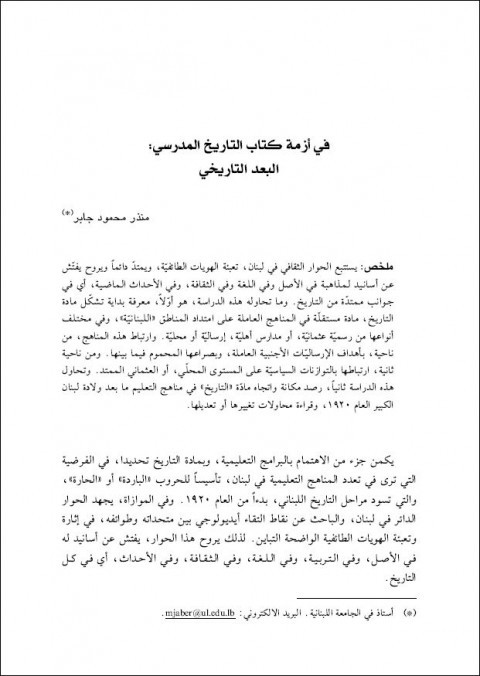 في أزمة كتاب التاريخ المدرسي: البعد التاريخي Année de publication: 2012 Auteur: جابر، منذر محمود Auteur institutionnel: Lebanese Association for Educational Studies (LAES) يستتبع الحوار الثقافي في لبنان، تعبئة الهويات الطائفيّة، ويمتدّ دائماً ويروح يفتّش عن أسانيد لمذاهبة في الأصل وفي اللغة وفي الثقافة، وفي الأحداث الماضية، أي في جوانب ممتدّة من التاريخ. وما تحاوله هذه الدراسة، هو أوّلاً، معرفة بداية تشكّل مادة التاريخ، مادة مستقلّة في المناهج العاملة على امتداد المناطق "اللبنانيّة"، وفي مختلف أنواعها من رسميّة عثمانيّة، أو مدارس أهليّة، إرساليّة أو محليّة. وارتباط هذه المناهج، من ناحية، بأهداف الإرساليّات الأجنبية العاملة، وبصراعها المحموم فيما بينها. ومن ناحية ثانية، ارتباطها بالتوازنات السياسيّة على المستوى المحلّي، أو العثماني الممتد. وتحاول هذه الدراسة ثانياً، رصد مكانة واتجاه مادّة "التاريخ" في مناهج التعليم ما بعد ولادة لبنان الكبير العام 1920، وقراءة محاولات تغييرها أو تعديلها. The History Textbook Crisis: A Historical Background Année de publication: 2012 Auteur: جابر، منذر محمود Auteur institutionnel: Lebanese Association for Educational Studies (LAES) The cultural dialogue in Lebanon brings into play attempts to build up sectarian identities, by seeking arguments in support of the claims of each sect whether in terms of origin, language, culture or past events that stretch back in history. This study tries to: 1) Explore the beginnings of the development of history as an independent subject in the curricula of schools throughout the regions of “Lebanon”, whether Ottoman state schools or private schools, missionary or local. It also looks into the connections between these curricula and the aims of the foreign missions working in the field, and the fierce inter-fighting among them on one hand, and the connections with the local political power balance at both the local and the extended Ottoman level, on the other. 2) Take stock of the importance and development of the history subject in the school curricula after the creation of Greater Lebanon in 1920, and analyze the attempts made to change or revise it.