
Ressources
Explorez une large gamme de ressources sur le GCED afin d’approfondir votre compréhension et de renforcer vos activités de recherche, de plaidoyer, d’enseignement et d’apprentissage.
1,407 résultats trouvés
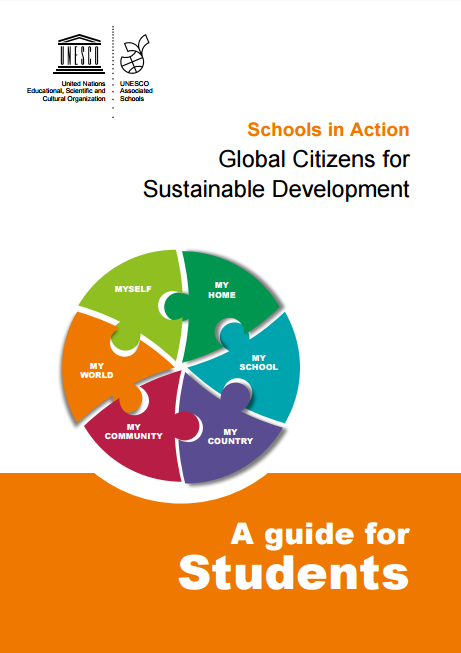 Le réSEAU en action: Citoyens du monde connectés pour le développement durable: guide à l'intention des enseignants Année de publication: 2016 Auteur institutionnel: Organisation des Nations Unies pour l'éducation, la science et la culture (UNESCO) The UNESCO Associated Schools Project Network (ASPnet) in Action: Global Citizens for Sustainable Development student guide aims to introduce secondary school students to Global Citizenship Education (GCED) and Education for Sustainable Development (ESD) and provide them with ideas and activities to contribute proactively to a more peaceful and sustainable world. The guide draws on the discussions and activities of almost 1,100 participants from 104 countries, including ASPnet National Coordinators, school principals, teachers, students and experts who contributed to the ASPnet Online Collaborative Platform: Global Citizens Connected for Sustainable Development in 2014 and 2015 [http://en.unesco.org/aspnet/globalcitizens]. You will find in this student guide: An overview of what it means to be a global citizen and of how you can contribute to sustainable development. Ideas for getting active yourself, as part of your home, school, community, country and globally. Selected activities on GCED and ESD from ASPnet schools around the world. Escuelas en acción Ciudadanos del mundo para el desarrollo sostenible: guía para el alumnado Année de publication: 2016 Auteur institutionnel: Organización de las Naciones Unidas para la Educación, la Ciencia y la Cultura (UNESCO) The UNESCO Associated Schools Project Network (ASPnet) in Action: Global Citizens for Sustainable Development student guide aims to introduce secondary school students to Global Citizenship Education (GCED) and Education for Sustainable Development (ESD) and provide them with ideas and activities to contribute proactively to a more peaceful and sustainable world. The guide draws on the discussions and activities of almost 1,100 participants from 104 countries, including ASPnet National Coordinators, school principals, teachers, students and experts who contributed to the ASPnet Online Collaborative Platform: Global Citizens Connected for Sustainable Development in 2014 and 2015 [http://en.unesco.org/aspnet/globalcitizens]. You will find in this student guide: An overview of what it means to be a global citizen and of how you can contribute to sustainable development. Ideas for getting active yourself, as part of your home, school, community, country and globally. Selected activities on GCED and ESD from ASPnet schools around the world.
  Dixième Réunion du Groupe de Haut Niveau sur l’Éducation pour Tous (EPT): Déclaration de Jomtien Année de publication: 2011 Auteur institutionnel: Organisation des Nations Unies pour l'éducation, la science et la culture (UNESCO) This statement is the outcome of 10th meeting of the High-level Group on Education for All. The meeting was held from 22 to 24 March 2011 in Jomtien, Thailand to urge to progress towards the EFA goals. 우리가 원하는 미래를 조성하자: 유엔 지속가능 발전교육 10년 최종 보고서 Année de publication: 2014 Auteur: Carolee Buckler | Heather Creech Auteur institutionnel: 유네스코 유엔 지속가능 발전교육10년은(2005-2014, 이하DESD) 교육과 학습의 모든 측면에서 지속가능한 발전의 원칙과 관행의 통합, 모두를 위한 정의로운 사회, 보다 지속가능한 비전을 가지고 지식과 가치와 태도의 변화를 독려하는 것을 그 목적으로 한다. 지속가능 발전교육의 권한은 지속가능한 교육 시스템에 새로운 방향을 제시함으로 파트너십을 발휘하는 다수의 이해 당사자당들- UN 회원국, UN 기관, 교육분과, 민간 부문 및 시민 사회-에 동력을 공급한다. 이 최종 지속가능 발전교육 글로벌 모니터링 및 평가 보고서(이하GME)는 지속가능한 발전 노력과 교육 시스템으로 지속가능 발전교육(이하 ESD)을 포함한 진행 평가를 제공한다.지난 DESD, GME, 이 두 개의 보고서는 회원국과 ESD현상황에 대한 평가를 하는 이해 당사자들에 의존하여 세계, 국가 및 모든 지역과 교육 수준에서의 ESD 성과와 10년의 진행 경과에 대해서 그 지도를 그리고 있다. Réponses du secteur de l'éducation au harcèlement homophobe Année de publication: 2012 Auteur institutionnel: Organisation des Nations Unies pour l'éducation, la science et la culture (UNESCO) Cette publication fait partie d'une bonne politique et une série de pratiques portant sur des thèmes clés du travail de l'UNESCO avec le secteur de l'éducation, y compris le VIH et le SIDA et les milieux éducatifs, sains et sécuritaires pour tous les apprenants. Ce volume, sur le thème de l'intimidation homophobe dans les établissements d'enseignement, se fonde sur le travail de l'UNESCO sur l'égalité, la discrimination et la violence dans les écoles.
  글로벌시민교육: 21세기 새로운 인재 기르기 Année de publication: 2014 Auteur institutionnel: 유네스코 이 보고서는 글로벌시민교육을 주제로 열렸던 두 차례의 국제회의 - 글로벌시민교육 전문가회의(2013년 9월 9-10일, 대한민국 서울)와 제1차 유네스코 글로벌시민교육 포럼(2013년 12월 2-4일, 태국 방콕) - 결과를 토대로 교육정책 입안자, 교육 실천가, 시민사회단체 및 청소년 리더들을 위해 만들어졌다. 글로벌시민교육을 처음 접하거나 이미 실천하고 있는 모든 독자들에게 유용한 지침서가 될 것이다.
  The United Nations world water development report 2016: water and jobs Année de publication: 2016 Auteur institutionnel: UNESCO Three out of four jobs worldwide rely on water. As such, water shortages and lack of access may limit economic growth in the years to come, according to the World Water Development Report 2016. From its collection, through various uses, to its ultimate return to the natural environment, water is a key factor in the development of job opportunities either directly related to its management (supply, infrastructure, wastewater treatment, etc.) or in economic sectors that are heavily water-dependent such as agriculture, fishing, power, industry and health. In its analysis of the economic impact of access to water, the report cites numerous studies that show a positive correlation between investments in the water sector and economic growth. It also highlights the key role of water in the transition to a green economy. Rapport mondial des Nations Unies sur la mise en valeur des ressources en eau 2016: l'eau et l'emploi Année de publication: 2016 Auteur institutionnel: Organisation des Nations Unies pour l'éducation, la science et la culture (UNESCO) Three out of four jobs worldwide rely on water. As such, water shortages and lack of access may limit economic growth in the years to come, according to the World Water Development Report 2016. From its collection, through various uses, to its ultimate return to the natural environment, water is a key factor in the development of job opportunities either directly related to its management (supply, infrastructure, wastewater treatment, etc.) or in economic sectors that are heavily water-dependent such as agriculture, fishing, power, industry and health. In its analysis of the economic impact of access to water, the report cites numerous studies that show a positive correlation between investments in the water sector and economic growth. It also highlights the key role of water in the transition to a green economy. Réponses du secteur de l'éducation au harcèlement homophobe Année de publication: 2013 Auteur institutionnel: Organisation des Nations Unies pour l'éducation, la science et la culture (UNESCO) This publication is part of a Good Policy and Practice series that addresses key themes of UNESCO’s work with the education sector including HIV and AIDS and safe, healthy educational environments for all learners. This volume, on the theme of homophobic bullying in educational institutions, builds on UNESCO’s work on gender, discrimination and violence in schools. 第十次全民教育(EFA)高级工作组会议: 宗滴恩宣言 Année de publication: 2011 Auteur institutionnel: 联合国教科文组织 (UNESCO) This statement is the outcome of 10th meeting of the High-level Group on Education for All. The meeting was held from 22 to 24 March 2011 in Jomtien, Thailand to urge to progress towards the EFA goals.