
Ressources
Explorez une large gamme de ressources sur le GCED afin d’approfondir votre compréhension et de renforcer vos activités de recherche, de plaidoyer, d’enseignement et d’apprentissage.
1,473 résultats trouvés
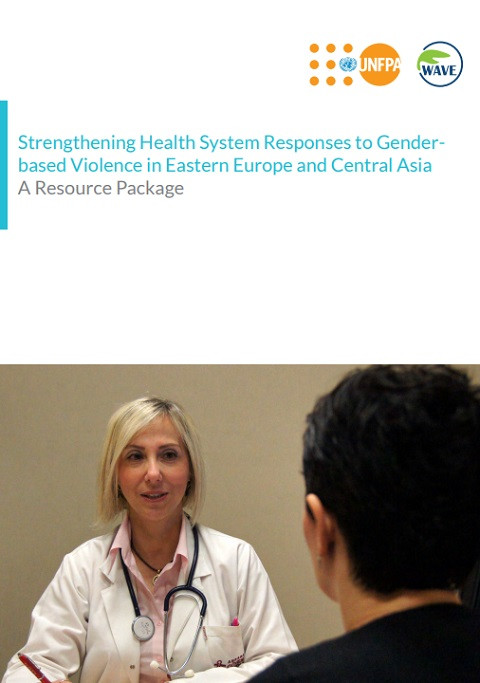 Strengthening Health System Responses to Gender-based Violence in Eastern Europe and Central Asia: A Resource Package Année de publication: 2014 Auteur institutionnel: United Nations Population Fund (UNFPA) | Women Against Violence Europe (WAVE) This collection of materials is the result of a collaboration between UNFPA (United Nations Population Fund), the UNFPA Regional Office for population for the countries of Eastern Europe and Central Asia and the WAVE Network (Women Against Violence in Europe) and is an updated edition of the compilation, revised in 2013-2014. It has been brought in line with new requirements in terms of enhancing the response of the health system to gender inequality; its content has been updated taking into account the latest international developments. Усиление роли системы здравоохранения в реагировании на гендерное насилие в Восточной Европе и Центральной Азии: Сборник материалов. Année de publication: 2014 Auteur institutionnel: United Nations Population Fund (UNFPA) | Women Against Violence Europe (WAVE) Данный сборник материалов является результатом сотрудничества ЮНФПА (Фонд ООН в области народонаселения), Регионального офиса Фонда ООН в области народонаселения для стран Восточной Европы и Центральной Азии и Сети WAVE («Женщины против насилия в Европе») и является обновленной редакцией сборник, переработанной в 2013-2014 гг. Теперь он в большей степени отвечает современным требованиям с точки зрения усиления реагирования системы здравоохранения на ГН, а его содержание обновлено с учетом новейших международных наработок.
  تخطيط وإنتاج البرامج الاذاعية ودورها في نشر ثقافة السلام Année de publication: 2014 Auteur: Ibrahim, Salma Ibrahim Auteur institutionnel: Sudan University of Science and Technology البحث هو رسالة ماجستير بعنوان : تخطيط وإنتاج البرامج الاذاعية ودورها في نشر ثقافة السلام . دراسة حالة اذاعة امدرمان . حيث يعمل الاعلام الرسمي ممثلاً في الاذاعة القومية السودانية على دعم مسيرة السلام بالصورة المطلوبة بحيث يمكن الاستفادة من مضامين التخطيط البرامجي والاعلام الشعبي لما لها من خصائص كبيرة في دعم ثقافة السلام . المنهج المستخدم في هذه الدراسة هو الوصفي والتاريخي . أهم اهداف الدراسة : 1. دفع ثقافة السلام وتعميقها وتأصيلها عبر اجهزة الاعلام المختلفة والمتمثلة في الاذاعة المسموعة . 2. معرفة الكيفية التي يتم بها التخطيط لبرامج الاذاعة التي تدعم ثقافة السلام . أهم النتائج التي توصل لها الباحث : 1. لم تنجح الاذاعة ومن خلال برامجها المختلفة وتخطيطها للبرامج في ترسيخ ثقافة السلام. 2. لا يوجد تخطيط للبرامج الآن في البرنامج العام وذلك لتوقف البحوث والتي من خلالها يمكن معرفة مردود رسائل السلام . ومن أهم التوصيات التي خرج بها البحث : 1. العمل بصورة جادة لترسيخ ثقافة السلام مع افراد مساحات مقدرة لهذا الغرض لأن السلام هو اساس التنمية والاستقرار . 2. التخطيط البرامجي له اهمية كبيرة ، لذلك يجب افراد الميزانيات لاجراء البحوث بصورة دورية ، لما لها من اهمية في معرفة ما يريده المستمع ، ومن خلال التخطيط يمكن معرفة المساحات الزمنية الكافية لبث رسائل السلام حتى ترسخ في ذهن المتلقي. Planning and Producing Radio Programs and Their Role in Spreading a Culture of Peace Année de publication: 2014 Auteur: Ibrahim, Salma Ibrahim Auteur institutionnel: Sudan University of Science and Technology The research is a master thesis entitled: Planning and producing radio programs and its role in spreading a culture of peace. Omdurman radio case study. Where the official media, represented by the Sudanese National Radio, works to support the peace process in the required manner so that the contents of program planning and popular media can be taken advantage of because of its great characteristics in supporting the culture of peace. The method used in this study is descriptive and historical.The most important objectives of the study: Promote, deepen and deepen the culture of peace through the various media outlets represented in the audio station. Know how to plan radio programs that support a culture of peace.The most important results that the researcher reached: The radio, through its various programs and its planning of programs, did not succeed in consolidating the culture of peace. There is no program planning now in the general program in order to stop researches, through which the outcome of peace messages can be known.Among the most important recommendations that came out of the research: Work in earnest to establish a culture of peace with individuals with appreciable spaces for this purpose, because peace is the foundation for development and stability. Program planning is of great importance. Therefore, budgets must be set up to conduct research periodically, because of its importance in knowing what the listener wants, and through planning it is possible to know enough time spaces to broadcast peace messages in order for the recipient to be entrenched in the mind of the recipient.
  Promoting Global Citizenship in the Chilean Classrooms Année de publication: 2016 Auteur: Cinzia Bizama Borotto | Nicolás Lobo Carrasco This article focuses on the analysis and clarification of the term "global citizenship". For this, different ways in which this concept is applied in canadian classrooms is analysed while suggesting ways of integrating it in chilean classrooms bearing in mind the educational history of the country and the benefits this would bring not only for teachers and students, but also for families, educational institutions and the country itself. La enseñanza de una ciudadanía global en el aula chilena Année de publication: 2016 Auteur: Cinzia Bizama Borotto | Nicolás Lobo Carrasco En este artículo se busca analizar y aclarar el termino “ciudadanía global”. Para esto se sugieren maneras en que este concepto aplicado en aulas canadienses puede ser integrado a la sala de clases chilena, tomando en cuenta los antecedentes educacionales del país y los posteriores beneficios que su uso traería no solo para docentes y los alumnos, sino que también para los padres, las instituciones educacionales y el país como tal.
  Education for Global Citizenship in Colombia: Opportunities and Challenges Année de publication: 2018 Auteur: Nicolás AguilAr Forero | Ana María Velásquez This article seeks to contribute to the critical analysis of education for global citizenship in Colombia, as a concept and strategy still under construction. First, the article reflects on four focuses that describe the debates on the strategy. Then it analyzes the opportunities for implementation, especially those associated with the peace agreement between Colombia’s government and revolutionary armed forces, and with the characteristics of a decentralized educational system. To conclude, the study presents the challenges linked to the nation’s political polarization and the need to strengthen education for environmental protection, sexual diversity and gender studies, and the construction of democracy. Educación para la ciudadanía mundial en Colombia. Oportunidades y desafíos Année de publication: 2018 Auteur: Nicolás AguilAr Forero | Ana María Velásquez El presente artículo busca contribuir al análisis crítico sobre la educación para la ciudadanía mundial en Colombia, como concepto y estrategia aún en construcción. En primer lugar, expone una reflexión sobre cuatro enfoques que dan cuenta de los debates sobre dicha estrategia. Posteriormente, analiza las oportunidades de su implementación, asociadas especialmente al acuerdo de paz entre el gobierno y las Fuerzas Armadas Revolucionarias de Colombia, así como a las característi- cas de un sistema educativo descentralizado. Finalmente, el trabajo presenta los desafíos ligados, entre otros, a la polarización política del país y a la necesidad de fortalecer la educación para la protección ambiental, la diversidad sexual y de género, y la construcción de democracia.
  NISSEM Global Briefs: Educating for the Social, the Emotional and the Sustainable Année de publication: 2019 Auteur: Andy Smart | Margaret Sinclair | Aaron Benavot | Jean Bernard | Colette Chabbott | S. Garnett Russell | James Williams Auteur institutionnel: Networking to Integrate SDG Target 4.7 and SEL skills into Educational Materials (NISSEM) The NISSEM global briefs are a collection of peer-reviewed essays from over 60 contributors with standing within the field of education. At the junction of SDG Target 4.7, SEL, and education in post conflict and low-resource settings, the NISSEM global briefs are a key resource for current research and practice.NISSEM is a Networking to Integrate SDG Target 4.7 and SEL(Social and emotional learning) into Educational Materials launched in March, 2018.
  Active citizens: globally connected, locally engaged; facilitator's toolkit Année de publication: 2014 Auteur institutionnel: British Council This toolkit has been created to help facilitators to design and deliver the Active Citizens programme all over the world. Active Citizens is a social leadership programme which promotes intercultural dialogue and social responsibility as key leadership competencies in the 21st century. Active Citizens is run by the British Council working with civil society organisations all over the world. It began in 2009 and has been delivered in Europe, the Middle East, Africa and South Asia. It has reached more than 100,000 people to date through its training, conferences, social research and International Study Visits. The toolkit is in five sections - the introduction to the programme, preparing a workshop, delivering a workshop and post-workshop. There is also a large resource of workshop activity plans to support facilitators throughout the training cycle. The Active Citizens programme promotes community-led social development. It motivates members of communities to take responsibility for their social needs and gives them the knowledge, skills and experience to address them. The main audiences for the programme are community leaders working in, and with marginalised communities. They are people and institutions established, trusted and valued in the community - CSOs, NGOs, religious leaders, politicians, youth workers etc. They are influential and working to improve the lives of people living in their community. The programme develops skills and knowledge to identify and engage networks to help achieve goals as well as skills to plan and implement a project. The networks are between individuals at community level; institutions engaged in social action at community level; and institutions engaged in social policy dialogue at a national level. It includes cross-sectoral networking e.g. with the business community, media, etc. The building of these networks increases social inclusion, community resilience to conflict and increases social development in communities. See Diagram 1 on page 9. The programme is flexible and adaptable. It has been delivered to diverse groups, from rural communities in North-West Frontier Province Pakistan to urban communities in East London UK, to communities vulnerable to post-election violence in Kenya and internally displaced persons (IDPs) in Sri Lanka.