
Ressources
Explorez une large gamme de ressources sur le GCED afin d’approfondir votre compréhension et de renforcer vos activités de recherche, de plaidoyer, d’enseignement et d’apprentissage.
2,661 résultats trouvés
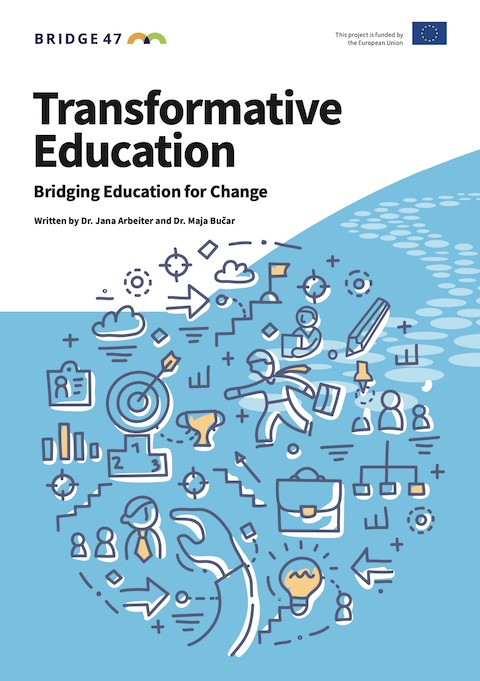 Transformative Education: Bridging Education for Change Année de publication: 2021 Auteur: Jana Arbeiter | Maja Bučar Auteur institutionnel: Bridge 47 This publication suggests that improvements in the areas of coordination, cooperation, awareness raising and capability development are needed, as outlined in the recommendations below. Policies and strategies at national, regional and global level should adopt overarching visions for transformative education in the form of overarching strategies for SDG Target 4.7. Mechanisms for coordination and collaboration between the different components of SDG Target 4.7 should be established at national, regional and global levels. Awareness of the role of transformative education and SDG Target 4.7 in contributing to more just and sustainable futures should be raised jointly between the different components of SDG Target 4.7. Opportunities for capacity building and upskilling of practitioners and learners linked to transformative education should be enabled and created at national, regional and global levels.
 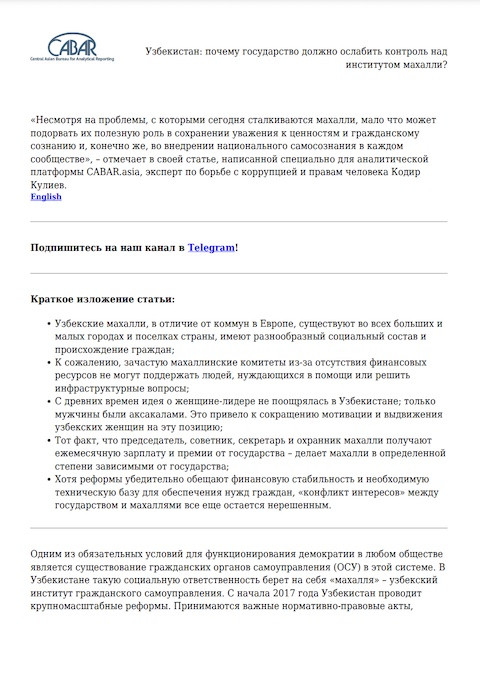 Uzbekistan: Why Should the State Weaken Control Over the Institute of Makhalla? Année de publication: 2019 Auteur: Kodir Kuliev Auteur institutionnel: Central Asian Bureau for Analytical Reporting (CABAR) | Institute for War and Peace Reporting (IWPR) One of the vital conditions for the functioning of democracy in any society is the existence of citizens’ self-governing bodies (CSB) within that system. In Uzbekistan, such social responsibility is assumed by “mahalla” – the Uzbek citizens’ self-governing institution. Since the beginning of 2017 Uzbekistan has been carrying out large-scale reforms. Important laws and regulations are being adopted, which should create favorable conditions for quality life and ensure freedom for the Uzbek people. With mahallas, however, such positive change in the long-run seems to be just a lip-service. The main challenges mahallas are facing today are, inter alia, obscured freedom they have in ruling themselves and controlling their own affairs and incapability to effectively tackle citizens’ problems, thus leaving people’s trust unjustified. Узбекистан: Почему государство должно ослабить контроль над институтом махалли? Année de publication: 2019 Auteur: Kodir Kuliev Auteur institutionnel: Central Asian Bureau for Analytical Reporting (CABAR) | Institute for War and Peace Reporting (IWPR) Одним из обязательных условий для функционирования демократии в любом обществе является существование гражданских органов самоуправления (ОСУ) в этой системе. В Узбекистане такую социальную ответственность берет на себя «махалля» – узбекский институт гражданского самоуправления. С начала 2017 года Узбекистан проводит крупномасштабные реформы. Принимаются важные нормативно-правовые акты, которые должны создать благоприятные условия для качественной жизни и обеспечить свободу узбекскому народу. Однако с махаллей такое положительное изменение в долгосрочной перспективе кажется неоднозначным. Основные проблемы, с которыми сегодня сталкиваются махалли – это ограниченная свобода и контроль собственных дел и неспособноть эффективно решать проблемы граждан, что не оправдывает доверия людей.
 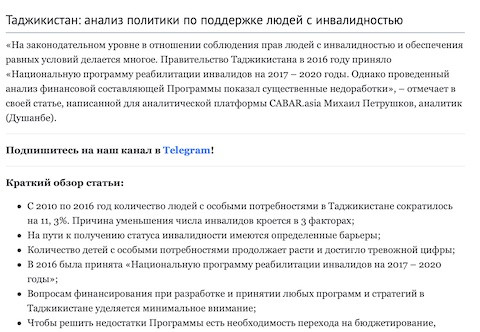 Tajikistan: Policy Analysis to Support Persons with Disabilities Année de publication: 2018 Auteur: Mikhail Petrushkov Auteur institutionnel: Central Asian Bureau for Analytical Reporting (CABAR) | Institute for War and Peace Reporting (IWPR) “Much is being done at the legislative level with regard to the observance of the rights of people with disabilities and ensuring equal conditions. In 2016, the Government of Tajikistan adopted the National Program for the Rehabilitation of Persons with Disabilities for 2017-2020. However, the analysis of the financial component of the Program showed significant shortcomings, ”says Mikhail Petrushkov, an analyst (Dushanbe), in his article written for the analytical platform CABAR.asia.
 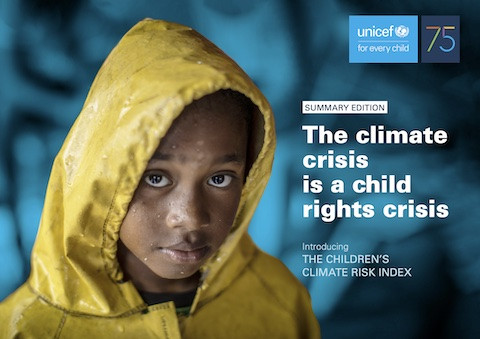 [Résumé] La crise climatique est une crise des droits de l’enfant: Présentation de l’indice des risques climatiques pour les enfants Année de publication: 2021 Auteur: Nicholas Rees | Margaretha Barkhof | Jan Burdziej | Sophie Lee | Harriet Riley Auteur institutionnel: United Nations Children's Fund (UNICEF) La crise climatique est une crise des droits de l’enfant. Les canicules, les incendies et les inondations sans précédent qui viennent de frapper plusieurs pays sont annonciateurs d’une nouvelle normalité climatique particulièrement hostile. L’impact des changements climatiques est connu de tous. Les solutions le sont également. Il est inadmissible que les enfants et les jeunes d’aujourd’hui soient confrontés à un avenir aussi incertain. Partout dans le monde, à travers des manifestations, des interventions sur les réseaux sociaux et un engagement communautaire et citoyen, les enfants et les jeunes revendiquent haut et fort le changement. Les modi operandi classiques ont fait long feu. Le présent rapport s’appuie sur l’Indice des risques climatiques pour les enfants (IRCE) pour fournir un premier aperçu de l’exposition et de la vulnérabilité des enfants aux effets des changements climatiques.
  Review and Reflection on Special Education Act in Scotland (Creative Education Studies; vol. 7, no. 1) Année de publication: 2019 Auteur: Qiuhan Feng Scotland is famous for its high quality education and the development of inclusive education around the world. Education equality is a core concept to improve social justice in Scotland. The government has published many educational acts to enlarge the additional support system, protect parents’ involvement and establish teacher education system to improve the education of children in disadvantaged situations. However, problems come along with the expansion of additional support needs, such as categories and labels, stigmatization, effectiveness of education resource delivery. Education equality still remains as a big problem. 苏格兰特殊教育法案的评述及思考(创新教育研究; vol. 7, no. 1) Année de publication: 2019 Auteur: Qiuhan Feng 苏格兰以高水平的教育质量和融合教育发展程度闻名于世,其以教育公平促进社会公平的理念是当地教 育的特色之一。迄今为止,苏格兰已经颁布多种教育法案来扩大额外支持需要的服务范围,并保障家长 的参与权,建立完善的教师教育体系来提升各种弱势儿童群体的教育质量。然而额外支持需要带来的分 类与标签问题、污名化问题、教育资源传递有效性问题依然存在,引发学者对教育公平的思考。
  Action Protocol in Bullying Situations Année de publication: 2016 Auteur institutionnel: Costa Rica. Ministry of Public Education | Directorate of Student Life | United Nations Children's Fund (UNICEF) Bullying is a reality suffered by children, adolescents and young people all over the world. It affects their well-being, their development and the exercise of their rights as well as their responsibilities. Addressing these situations in the educational environment requires a coordinated and articulated effort to assign time, resources, tasks, and responsibilities of each and every actor in the educational community and institutions responsible for the care of the child and adolescent population. Protocolo de actuación en situaciones de bullying Année de publication: 2016 Auteur institutionnel: Ministry of Public Education, Directorate of Student Life (MEP) | United Nations Children's Fund (UNICEF) El bullying es una realidad que sufren niños, niñas, adolescentes y jóvenes en todo el mundo. Afecta su bienestar, su desarrollo y el ejercicio de sus derechos así como de sus responsabilidades. Atender estas situaciones en el ambiente educativo, exige un esfuerzo coordinado y articulado de asignación de tiempo, recursos, tareas y responsabilidades de todas y todos los actores de la comunidad educativa e instituciones responsables de la atención de la población infanto-juvenil.
  Dialogue on Quebec Food Autonomy Année de publication: 2020 Auteur institutionnel: Institut du Nouveau Monde (INM) Food autonomy is more than ever a crucial subject for Quebec society. The COVID-19 pandemic has revealed the fragility of our food system and has created a new opportunity to talk about this strategic issue. Several players are saying it: it It is time to bring agricultural producers closer to citizens, and to create new forms of solidarity between them.To do this, the Union des producteurs agricoles (UPA) wishes to set up a real opportunity for dialogue between the two ends of the production chain food, that is to say producers and citizens.The Dialogue on food autonomy is an opportunity for citizens to participate in the development of a social contract on issues related to food autonomy and to facilitate a dialogue between them and producers, who are an essential link. of this strategic issue. It provides opportunities for open and constructive exchanges between agricultural producers and citizens, first separately and then in a common group. It will then be offered to all of Quebec.