
Ressources
Explorez une large gamme de ressources sur le GCED afin d’approfondir votre compréhension et de renforcer vos activités de recherche, de plaidoyer, d’enseignement et d’apprentissage.
1,477 résultats trouvés
 Des Citoyens Actifs: connecté globalement recrutés sur place; la boîte à outils de l'animateur Année de publication: 2014 Auteur institutionnel: British Council Cette boîte à outils a été créé pour aider les animateurs à concevoir et à exécuter le programme des citoyens actifs partout dans le monde. Citoyens actifs est un programme de leadership social qui favorise le dialogue interculturel et la responsabilité sociale comme compétences clés en leadership au 21e siècle. Citoyens actifs est géré par le British Council travaille avec des organisations de la société civile partout dans le monde. Il a commencé en 2009 et a été livré en Europe, au Moyen-Orient, en Afrique et en Asie du Sud. Il a atteint plus de 100.000 personnes à ce jour par le biais de sa formation, les conférences, la recherche sociale et visites d'étude internationaux. La boîte à outils est en cinq sections - l'introduction au programme, la préparation d'un atelier, offrant un atelier et post-atelier. Il y a aussi une ressource importante de l'activité de l'atelier prévoit de soutenir les animateurs tout au long du cycle de formation. Le programme des citoyens actifs favorise le développement social dirigé par la communauté. Il motive les membres des communautés à prendre en charge leurs besoins sociaux et leur donne les connaissances, les compétences et l'expérience nécessaires pour y remédier. Les principaux publics pour le programme sont des leaders communautaires qui travaillent dans et avec les communautés marginalisées. Ce sont des gens et des institutions établies, fiables et appréciés dans la communauté - OSC, les ONG, les chefs religieux, les politiciens, les travailleurs de la jeunesse, etc. Ils sont influents et travaille à améliorer la vie des personnes vivant dans leur communauté. Le programme développe les compétences et les connaissances pour identifier et engager des réseaux pour aider à atteindre les objectifs ainsi que les compétences nécessaires pour planifier et mettre en œuvre un projet. Les réseaux sont entre les individus au niveau de la communauté; les institutions engagées dans l'action sociale au niveau communautaire; et les institutions engagées dans un dialogue de politique sociale au niveau national. Il comprend la mise en réseau intersectoriel par exemple avec la communauté des affaires, des médias, etc. La construction de ces réseaux augmente l'inclusion sociale, la résilience des communautés aux conflits et augmente le développement social dans les communautés. Voir diagramme 1 à la page 9. Le programme est flexible et adaptable. Il a été remis à divers groupes, des communautés rurales en North-West Frontier Province du Pakistan aux communautés urbaines à East London au Royaume-Uni, aux communautés des personnes vulnérables à la violence post-électorale au Kenya et déplacées à l'intérieur (PDI) au Sri Lanka.
 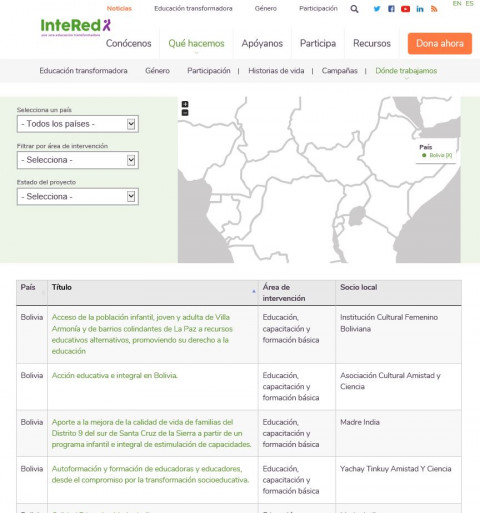 InteRed. Educational Projects in Bolivia Année de publication: 2019 Auteur institutionnel: InteRed InteRed carries out educational projects to solve specific social problems around the planet. The projects tackle things such as poverty, health, access to education, Human Rights, access to food, among other things. InteRed. Proyectos educativos en Bolivia Année de publication: 2019 Auteur institutionnel: InteRed InteRed lleva a cabo projectos educacionales intentando resolver problemas específicos en el planeta. Los proyectos abordan cuestiones como pobreza, salud, acceso a la educación, Derechos Humanos, acceso a alimentos, entre otras cosas.
  Step by Step: Social and Emotional Learning Program; Teacher’s Guide (Grade 1 - 11) Année de publication: 2016 Auteur: José Fernando Mejía | Gloria Inés Rodríguez | Nancy Guerra | Andrea Bustamante | María Paula Chaparro | Melisa Castellanos Auteur institutionnel: World Bank This Program offers a series of practical lessons designed to be implemented in the classroom by the teacher. These lessons are based on a carefully chosen developmental perspective of middle childhood and adolescence, to fit the characteristics and needs of each age group or grade, from ages 6 through 17. The lessons are organized into three modules, six general skills and 18 specific skills. Step by Step focuses on six core life skills: self-awareness, self-regulation, social awareness, positive communication, determination, and responsible decision-making. Paso a Paso: Programa de Educación Socioemocional; Guía del docente (Grados 1 - 11) Année de publication: 2016 Auteur: José Fernando Mejía | Gloria Inés Rodríguez | Nancy Guerra | Andrea Bustamante | María Paula Chaparro | Melisa Castellanos Auteur institutionnel: World Bank Este programa ofrece una serie de sesiones prácticas diseñadas para ser implementadas por un decente en el aula. Estas sesiones tienen como base una perspectiva del desarrollo de la niñez y la adolescencia cuidadosamente elegida, para responder a las características y necesidades de cada grado o grupo de edad, desde los 6 hasta los 17 años. Las sesiones están organizadas en tres módulos, seis habilidades generales y 18 habilidades específicas. Paso a Paso se enfoca en seis habilidades centrales para la vida: autoconciencia, autoregulación, conciencia social, comunicación positiva, determinación y toma responsable de decisiones.
  Step by Step: Social and Emotional Learning Program; Student Workbook (Grade 1 - 11) Année de publication: 2016 Auteur: José Fernando Mejía | Gloria Inés Rodríguez | Nancy Guerra | Andrea Bustamante | María Paula Chaparro | Melisa Castellanos Auteur institutionnel: World Bank This Program offers a series of practical lessons designed to be implemented in the classroom by the teacher. These lessons are based on a carefully chosen developmental perspective of middle childhood and adolescence, to fit the characteristics and needs of each age group or grade, from ages 6 through 17. The lessons are organized into three modules, six general skills and 18 specific skills. Step by Step focuses on six core life skills: self-awareness, self-regulation, social awareness, positive communication, determination, and responsible decision-making. Paso a Paso: Programa de Educación Socioemocional; Cuaderno para estudiante (Grados 1 - 11) Année de publication: 2016 Auteur: José Fernando Mejía | Gloria Inés Rodríguez | Nancy Guerra | Andrea Bustamante | María Paula Chaparro | Melisa Castellanos Auteur institutionnel: World Bank Cuaderno de trabajo para el estudiante del Programa Paso a Paso para el grado undécimo. Este programa ofrece una serie de sesiones prácticas diseñadas para ser implementadas por un decente en el aula. Estas sesiones tienen como base una perspectiva del desarrollo de la niñez y la adolescencia cuidadosamente elegida, para responder a las características y necesidades de cada grado o grupo de edad, desde los 6 hasta los 17 años. Las sesiones están organizadas en tres módulos, seis habilidades generales y 18 habilidades específicas. Paso a Paso se enfoca en seis habilidades centrales para la vida: autoconciencia, autoregulación, conciencia social, comunicación positiva, determinación y toma responsable de decisiones.
 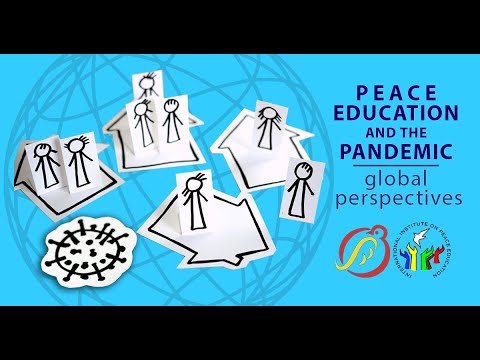 Peace Education and the Pandemic: Global Perspectives Année de publication: 2020 Auteur institutionnel: International Institute on Peace Education (IIPE) This April 13 webinar, co-organized by the International Institute on Peace Education and Global Campaign for Peace Education, is an opportunity to learn, hear, and share with and from peace educators from around the world about how they are responding, adapting, and rethinking urgent agendas for peace education revealed by the global coronavirus pandemic.
  한반도의 평화를 말하다: 여섯 가지 주제로 살펴본 한반도 평화의 의미와 이해 Année de publication: 2019 Auteur: 김병곤 | 서보혁 | 이동선 | 정재관 | 정성윤 | 정욱식 Auteur institutionnel: 통일교육원 평화'라는 주제로 통일교육원에서 발간하는 첫 번째 평화 교재이다. 6명의 학자 및 평화활동가가 평화의 이해에서부터 시민사회의 평화운동에 이르기까지 살펴본 한반도의 평화 이야기이다.
  Claudio Keeps Calm Année de publication: 2020 Auteur institutionnel: Aulas en Paz This animation presents the story of Claudio and how he managed to stay calm in the face of a conflict situation. It is part of the tools of the Aulas en Paz program for the socio-emotional development of boys and girls.