
Ressources
Explorez une large gamme de ressources sur le GCED afin d’approfondir votre compréhension et de renforcer vos activités de recherche, de plaidoyer, d’enseignement et d’apprentissage.
875 résultats trouvés
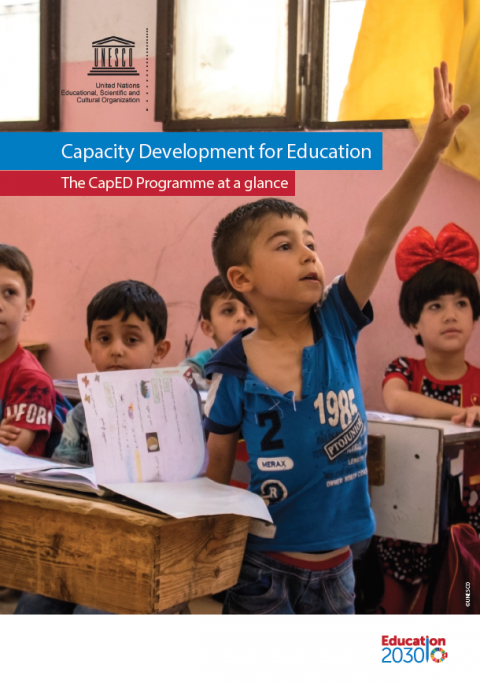 Capacity Develoment for Education: the CapED Programme at a glance Année de publication: 2019 Auteur institutionnel: UNESCO Education has the power to transform lives and is at the heart of UNESCO’s mission to build peace, eradicate poverty and drive sustainable development. Right now, 750 million adults – two-thirds women – still lack basic literacy skills. Around 264 million children and youth are out of school and the international community must have almost 69 million new teachers to reach the 2030 education goals. These challenges can be tackled effectively through education reforms. However, these can only take place when countries have the capacities to put this change into action. As well as trained staff, countries need efficient organizational processes, functioning institutions and the tools and resources to design, implement and manage tailored education policies and plans. This is where the CapED Programme steps in. By mobilizing UNESCO’s global network, the Programme provides selected countries with a cohesive package of support. It works alongside stakeholders to reinforce national capacities to undertake evidence-based education reforms that fit into their national priorities and respond to SDG4 commitments, in order to offer quality education opportunities to all.
  School, Identity and Discrimination Année de publication: 2011 Auteur: Néstor López Auteur institutionnel: UNESCO IIEP Office for Latin America and the Caribbean Education, identity and school is just one more link, within the many wills that work for full equality of opportunities. As in other publications of the Institute, the wealth of perspectives is added, which give shape to sometimes pressing realities with a demand for urgent action. The publication is a new opportunity for the voices of different interlocutors to give an account, in their countries and contexts, both of the construction of identity processes, and of their recognition and respect. This also implies raising the obstacles, the contributions and the advances, to face the challenges still pending. In each work presented here, the authors-whose participation and effort we deeply appreciate-offer sharp insights on various tasks and contexts. We wish, to conclude, that this text also contributes to the reflection on the possible courses that have been adopted or that require a deepening of the educational policies, specifically in the agendas related to the themes of this publication. Escuela, identidad y discriminación Année de publication: 2011 Auteur: Néstor López Auteur institutionnel: UNESCO IIEP Oficina para América Latina y el Caribe Educación, identidad y escuela es solo un eslabón más, dentro de las muchas voluntades que trabajan por la plena igualdad de oportunidades. Como en otras publicaciones del Instituto, se suma la riqueza de perspectivas, que dan forma a realidades en ocasiones acuciantes con demanda de urgente acción. La publicación supone una nueva oportunidad para que las voces de distintos interlocutores den cuenta, en sus países y contextos, tanto de la construcción de procesos identitarios, como de su reconocimiento y respeto. Ello implica también plantear los obstáculos, los aportes y los avances, para afrontar los desafíos aún pendientes. En cada trabajo que aquí se presenta, los autores –cuya participación y esfuerzo agradecemos profundamente– ofrecen agudas miradas sobre diversos quehaceres y contextos. Deseamos, para concluir, que este texto también contribuya a la reflexión sobre los posibles rumbos que se han adoptado o que requieren profundización en las políticas educativas, específicamente en las agendas vinculadas con las temáticas de esta publicación.
 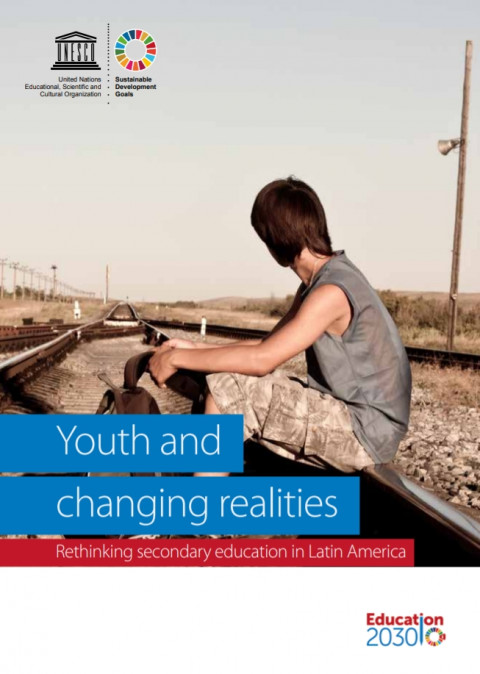 Youth and changing realities: rethinking secondary education in Latin America Année de publication: 2017 Auteur: López.Néstor, Opertti.Renato, Vargas Tamez.Carlos Auteur institutionnel: UNESCO International Bureau of Education (IBE) | UNESCO IIEP Office for Latin America and the Caribbean Youth are central to UNESCO’s mandate. The more than one billion youth and adolescents in the world today hold the key to our shared future and to global sustainable development. With a focus on Latin America, this publication addresses the need to regain young learners’ trust in education and to arrive at more positive social constructions of youth among educators, parents and education authorities. In so doing, this study looks at educational experiences as meaning makers that shape youth cultures and identities as well as their attitudes toward education and its potential to improve individual and collective well-being. Adolescentes y jóvenes en realidades cambiantes: notas para repensar la educación secundaria en América Latina Année de publication: 2017 Auteur: López.Néstor, Opertti.Renato, Vargas Tamez.Carlos Auteur institutionnel: UNESCO International Bureau of Education (IBE) | UNESCO IIEP Oficina para América Latina y el Caribe La juventud es un tema central dentro del mandato de la UNESCO. Más de mil millones de jóvenes y adolescentes en el mundo actual tienen la llave de nuestro futuro en común y del desarrollo sostenible, justo e inclusivo a nivel mundial. Con el foco puesto en América Latina, la publicación aborda la necesidad de recuperar la confianza de las y los jóvenes y adolescentes en la educación y de llegar a construcciones sociales de la juventud más completas y positivas entre las y los educadores, los padres y madres, las comunidades y las autoridades educativas. De este modo, el estudio analiza las experiencias educativas en cuanto productoras de significado que configuran las culturas e identidades de la juventud, al igual que sus actitudes hacia la educación y su potencial para mejorar y sostener el bienestar individual y colectivo.
  A Transformative Agenda: Outcomes of the CONFINTEA VII Regional Preparatory Conferences Année de publication: 2022 Auteur institutionnel: UNESCO Institute for Lifelong Learning (UIL) In preparation for the Seventh International Conference on Adult Education (CONFINTEA VII), in Marrakech, Morocco, in June 2022, a series of regional conferences took place between February and September 2021, in some cases preceded by sub-regional consultations. Each of the regional preparatory conferences produced an outcome document summarizing the discussion, including key achievements in adult learning and education, crucial challenges and key recommendations. This document provides a synthesis of the outcomes of these regional and subregional consultations and will contribute to the Marrakech Framework for Action, the main outcome document from CONFINTEA VII, as well as providing a guide for all relevant stakeholders and UNESCO Member States to the key current issues in adult learning and education.
  Citizenship Education for Democratic and Sustainable Communities Année de publication: 2021 Auteur: Dimitris Deligiannis | Kleoniki Tsiougou | Vicky Goutha | Antonis Moutselos | Ted Fleming Auteur institutionnel: UNESCO Institute for Lifelong Learning (UIL) | City of Larissa (Greece) | City of Yeonsu-Gu (Republic of Korea) This publication aims to make readers aware of the importance of citizenship education (CE) in local communities within the framework of lifelong learning. It supports cities and citizens in advancing their work on this critical aspect of formal and non-formal education, and in striving for progress in the provision of CE for youth and adult learners. It is mainly based on information from the 2020 survey of cluster members, as well as on case studies and inputs from the conference, ‘Strengthening citizenship education at local level’, which was held virtually on 12 and 13 November 2020. 민주적이고 지속가능한 지역사회를 위한 시민성 교육 Année de publication: 2021 Auteur: Dimitris Deligiannis | Kleoniki Tsiougou | Vicky Goutha | Antonis Moutselos | Ted Fleming Auteur institutionnel: UNESCO Institute for Lifelong Learning (UIL) | City of Larissa (Greece) | City of Yeonsu-Gu (Republic of Korea) 본 책자는 독자들이 평생학습체계 안에서 지역사회에서 이루어지는 시민성교육의 중요성을 인식하도록 돕기 위해 발간되었다. 또한, 본 책자는 도시와 시민들이 정규 및 비형식교육의 중요한 영역에서 자신들의 활동을 발전시키고, 청소년과 성인 대상의 시민성교육을 더욱 효과적으로 제공하기 위해 노력하는 것을 지원한다. 책자의 내용은 2020년에 세계시민성교육 클러스터 회원도시를 대상으로 진행된 설문조사의 결과와 ‘지역사회에서의 시민성교육 강화’라는 주제로 지난 2020년 11월 12일부터 13일, 양일에 걸쳐 온라인으로 개최된 세계시민성교육 클러스터 국제회의에서 다룬 도시별 사례 연구와 참여 전문가들의 기조연설 및 의견을 바탕으로 작성되었다.
  Integrated Approaches to Literacy and Skills Development: Examples of Best Practice in Adult Learning Programmes Année de publication: 2021 Auteur institutionnel: UNESCO Institute for Lifelong Learning (UIL) Since the first coronavirus case was reported to the World Health Organization in December 2019, millions of youth and adults around the globe – especially those with low literacy skills – have faced increased challenges to securing meaningful work and safeguarding their livelihoods. A more integrated approach to youth and adult learning and education, combining basic literacy, vocational and life skills, is needed now more than ever.This publication showcases selected examples of integrated youth and adult learning and education programmes featured in the UNESCO Effective Literacy and Numeracy Practices Database, also known as LitBase. Implemented in various social, cultural and economic contexts around the world, the programmes featured herein reveal not only the transformative potential that enhancing the quality of youth and adult learning and education can have, but also lay bare the hurdles and potential pathways to consider when planning effective integrated programmes.Integrated approaches to literacy and skills development: Examples of Best Practice in Adult Learning Programmes is useful not only for policy-makers, providers and educators who plan to implement integrated adult education programmes but also for those trying to help the most vulnerable groups reach their highest potential.
  ESD Implementation in Learning Cities Année de publication: 2021 Auteur institutionnel: UNESCO Institute for Lifelong Learning (UIL) This publication aims to share the best practice cases from nine cities on ESD implementation (policy and practice) following a lifelong learning approach. These cases showcase innovative local initiatives that have embedded ESD into lifelong learning systems through policy/ strategy development or project implementation, focusing on the following priority areas of action and local activities laid down in the ESD for 2030 roadmap: Local policy/strategy development on ESD: The development of an action plan that determines how the community as a whole can become a learning laboratory for sustainable development. Capacity-building for educators and local authorities: Lifelong learning initiatives for systematic and comprehensive ESD capacity development for educators in the formal and non-formal education sectors, and for local government officials. Efforts to foster engagement with local communities, including: • formal education institutions’ engagement with local communities for the promotion of ESD; • non-formal education institutions (e.g. community learning centres) serving as a hub for lifelong learning on ESD in their communities. Empowerment and mobilization of youth: Lifelong learning initiatives for ESD that focus on young people. Innovative use of local spaces for ESD: Designated areas or spaces that inspire learning and host projects that promote sustainability. In addition to the five priority areas listed above, the case studies share one cross-cutting theme: • Multi-stakeholder approach: How people from different walks of life or professional sectors come together to contribute to local ESD initiatives at either the policy or the project level.