
Ressources
Explorez une large gamme de ressources sur le GCED afin d’approfondir votre compréhension et de renforcer vos activités de recherche, de plaidoyer, d’enseignement et d’apprentissage.
1,322 résultats trouvés
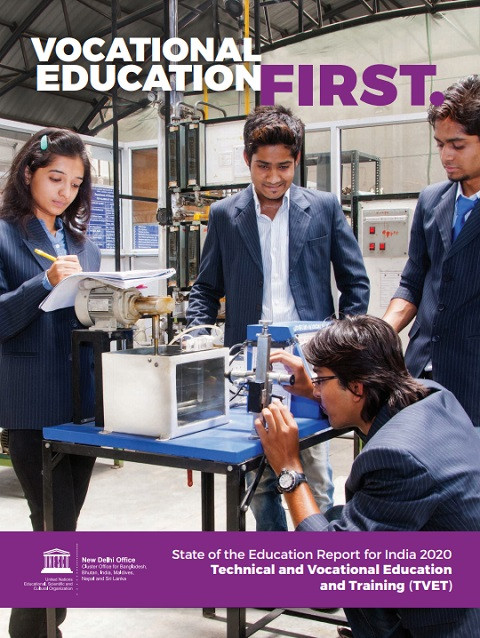 Vocational Education First: State of the Education Report for India 2020; Technical and Vocational Education Training (TVET) Année de publication: 2020 Auteur: Leena Chandran Wadia | Neela Dabir Auteur institutionnel: UNESCO New Delhi This report aims to capture the intense activity of the vocational education and training sector and highlights achievements and promising practices in India. The report makes important recommendations for reforms and for the use of TVET to empower youth to adapt to the post-COVID world.
 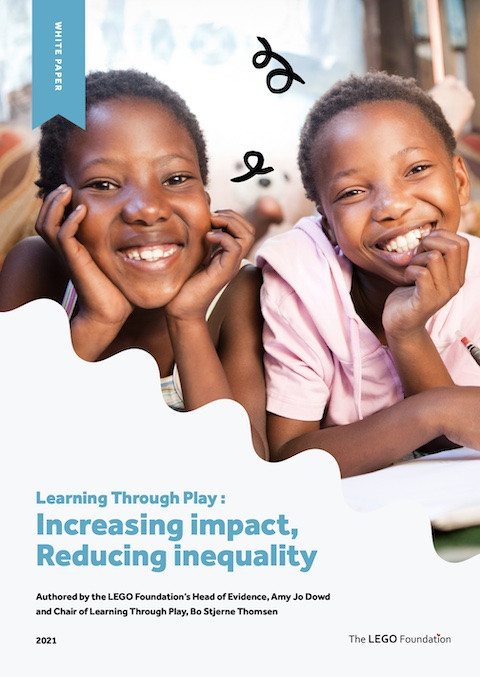 Learning Through Play: Increasing Impact, Reducing Inequality Année de publication: 2021 Auteur: Amy Jo Dowd | Bo Stjerne Thomsen Auteur institutionnel: LEGO Foundation This study explores the role of play in contributing to the effort to promote learning and reduce inequality. Reviews of play’s importance for learning present mostly correlational evidence from small samples in high-income, developed contexts, most often the United States, and often under laboratory conditions. This review expands both the geographic breadth and the scale of this evidence and explores the use of play in early childhood classroom and home-based educational interventions that have demonstrated causal impact on learning and the closing of achievement gaps. By doing so, it aims to understand whether and how the evidence about play and learning relates to tackling the learning crisis, especially in terms of inequality in learning outcomes around the globe.
 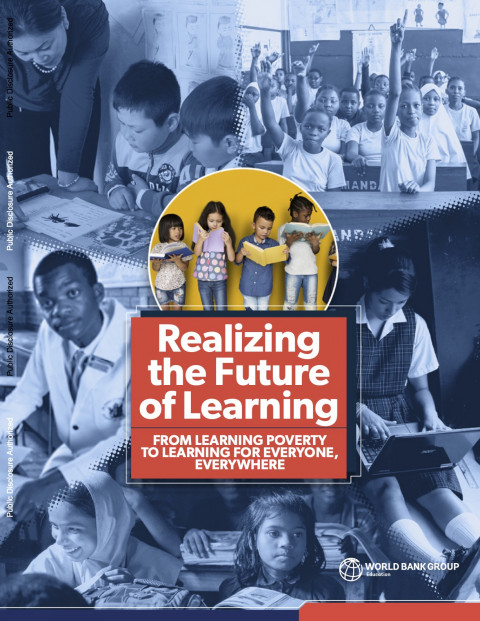 Realizing the Future of Learning: From Learning Poverty to Learning for Everyone, Everywhere Année de publication: 2020 Auteur: Jaime Saavedra | Cristian Aedo | Omar Arias | Adelle Pushparatnam | Halsey Rogers | Marcela Gutierrez Bernal | Sanna Ellinore Ahlgren | Maria Qureshi Auteur institutionnel: World Bank This report describes the World Bank’s vision for the future of learning and a strategic approach that lays out the lines of actions needed for education systems to move forward in accelerating learning improvement. To guide its policy advisory and operational support to countries, the report discusses policy actions that are needed to accelerate learning and that characterize the way many successful systems operate. These are presented within five interrelated pillars of a well-functioning education system that underpin the World Bank’s strategic education policy approach: learners, teachers, learning resources, schools, and system management.This report also reviews the current learning crisis, including the extent to which COVID-19 has exacerbated it, and then lays out a vision, policy priorities and some principles for education policy reform.
  Internationalization of Tertiary Education in the Middle East and North Africa Année de publication: 2020 Auteur: Giulia Marchesini | Lise Barbotte | Paul Cahu | Aurelia Hoffmann | Holly Johnstone | Mirna Mehrez | Marco Pasqualini | Francisco Marmolejo Auteur institutionnel: World Bank This report draws on available data to respond to both a real need for regional analysis and a direct demand from stakeholders, including tertiary education institutions in MENA. Encouraging internationalization to be mainstreamed throughout MENA is the objective that this report seeks to achieve by way of stimulating regional policy dialogue on the subject. The report presents some global trends in internationalization and details its main benefits, before providing an overview of the current status of internationalization in the MENA region, including an in-depth analysis of student mobility. In its reflections on the way forward for the region, the report situates its recommendations in the context of COVID-19, within which, despite serious challenges due to a lack of attractiveness of the region, MENA may find a key opportunity. It suggests that adapting to the “new normal” through the deeper implementation of internationalization “at home” – a dimension that does not require physical mobility and, being implemented within domestic environments, has a much wider reach – may help enable the region to make strides towards catching up on the internationalization agenda. Internationalisation de l’enseignement supérieur dans la région Moyen-Orient Afrique du Nord Année de publication: 2020 Auteur: Giulia Marchesini | Lise Barbotte | Paul Cahu | Aurelia Hoffmann | Holly Johnstone | Mirna Mehrez | Marco Pasqualini | Francisco Marmolejo Auteur institutionnel: World Bank Ce rapport s'appuie sur les données disponibles pour répondre à la fois à un réel besoin d'analyse régionale et à une demande directe des parties prenantes, y compris des établissements d'enseignement supérieur de la région MENA. Encourager le développement de l’internationalisation à travers la région MENA est l'objectif que ce rapport cherche à atteindre, en stimulant un dialogue régional sur les politiques publiques autour de ce sujet. Le rapport présente quelques tendances mondiales de l'internationalisation et détaille ses principaux avantages, avant de donner un aperçu de l'état actuel de l'internationalisation dans la région MENA, y compris une analyse approfondie de la mobilité étudiante. Parmi les recommandations proposées pour le développement de l’internationalisation, le contexte de la COVID-19 est vu, pour la région MENA, comme une fenêtre d’opportunité pour pallier au manque d'attractivité de la région dans ce domaine. Mettre l’accent sur l'internationalisation « à domicile » - une dimension qui ne nécessite pas de mobilité physique et qui se développe dans le cadre domestique, et a donc une portée plus large - pour s’adapter à la « nouvelle normalité » peut aider la région à rattraper son retard sur le plan de l’internationalisation.
 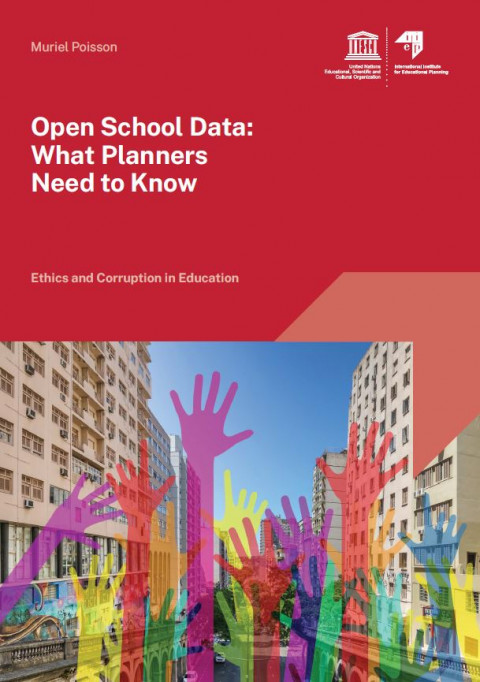 Open School Data: What Planners Need to Know; Ethics and Corruption in Education Année de publication: 2021 Auteur: Muriel Poisson Auteur institutionnel: UNESCO International Institute for Educational Planning (IIEP) Open school data refers to the action of sharing school-level information with the general public, either in paper or electronic format. Generated by government authorities or civil society organizations, the data – often in the form of a school report card – can help monitor the services provided by a school. To be useful, data should be comprehensive, relevant, accurate, accessible, and timely. Topics covered can include funding, teacher attendance, student achievement, availability of facilities, equipment, and materials.
 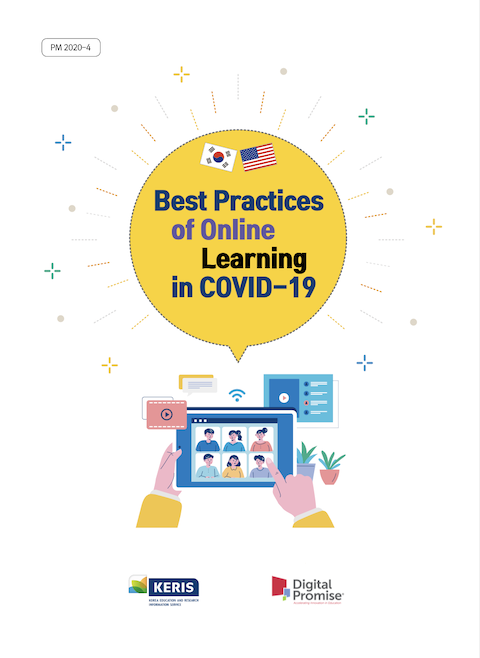 Best Practices of Online Learning in COVID-19 Année de publication: 2020 Auteur: Odelia Younge | Kristen Franklin | Dan Foreman | John Seylar | Angela Hardy | Windy Lopez-Aflitto | Missy Bellin | Cricket Fuller | My Nguyen | Vicky Masson | Wrendi McDavid | Jordana McCudden | Karin Bradley | Rachael Wilcox | K. D. Meucci | Jessica Bibbs-Fox | Kristy Carter | Grace Angel | Jiyeon Hong | Sanghyeon Choi | Kwonyoung Lee | Seokhyeon Seo | Seungyeon Kim | Gahyeon Jeon | Yooncheol Shin | Myungwoo Cho | Jiwon Lim | Junyoung Kim Auteur institutionnel: Digital Promise | Korea Education and Research Information Service (KERIS) This book introduces teaching strategies that developed as a response to the pandemic and provides some example cases from classes in both U.S. and Korea. 한ㆍ미 혁신 선도교사 코로나19 대응 사례집 Année de publication: 2020 Auteur: 홍지연 | 최상현 | 이권영 | 서석현 | 김승연 | 전가현 | 신윤철 | 조명우 | 임지원 | 김준영 | Odelia Younge | Kristen Franklin | Dan Foreman | John Seylar | Angela Hardy | Windy Lopez-Aflitto | Missy Bellin | Cricket Fuller | My Nguyen | Vicky Masson | Wrendi McDavid | Jordana McCudden | Karin Bradley | Rachael Wilcox | K. D. Meucci | Jessica Bibbs-Fox | Kristy Carter | Grace Angel Auteur institutionnel: Digital Promise | 한국교육학술정보원 본 자료는 미국과 대한민국의 팬데믹 상황에 대응하는 수업 방법과 실제 사례를 소개하고 있다.
 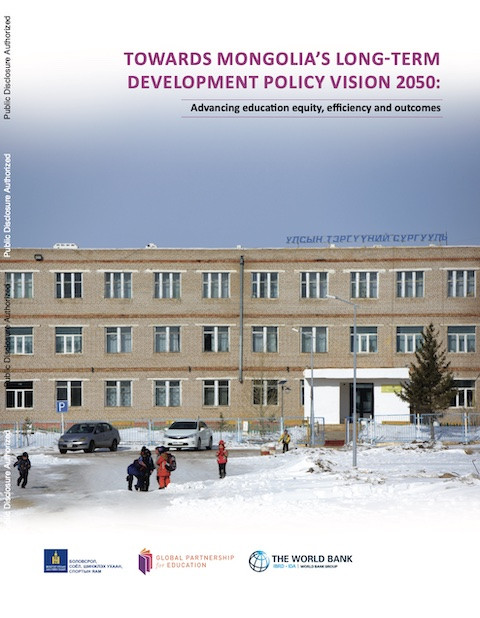 Towards Mongolia’s Long-Term Development Policy Vision 2050: Advancing Education Equity, Efficiency and Outcomes Année de publication: 2020 Auteur institutionnel: Mongolia Ministry of Education, Culture, Science and Sports | World Bank This report seeks to synthesize and analyze education outcomes with a view of identifying the main priorities for strengthening the education sector in support of Mongolia’s Sustainable Development Vision 2050. The report highlights data and findings generated from a series of source reports (see bibliography) related to the goals and targets set out in the Vision 2050. The report is composed of six thematic chapters: Access; Equity; Internal Efficiency, Education Cost and Finance; External Efficiency; Management. Each chapter will include an overview of the current situation and recent development with a focus on, key achievements and persistent challenges. As a synthesis report, the information on each topic is not exhaustive but rather seeks to present key findings. Specific activities highlighted in the Vision 2050 have been included at the beginning of each chapter and a complete mapping by activity is annexed (Annex 1. Vision 2050 Chapter mapping). This synthesis report draws on conclusions, finding, data and surveys produced in collaboration with MECSS by the Asian Development Bank, the Global Partnership for Education and the World Bank. The synthesis also draws from key UNESCO reports. The scope, research, and focus of the source reports differ, and precise findings are, on occasions, incongruent however the overall conclusions are fundamentally compatible. Whereas most of the source reports focus on one or two key stages, the synthesis report seeks to extract cross-cutting and/or recurring challenges that have an impact, positive or negative, on equity, efficiency and outcomes which ultimately may contribute to the implementation of Vision 2050. Mongolia’s State Education Policy (2014-2024) states: ‘Education is the main key factor of each citizen’s lifelong support and guarantee of life quality, and of the State’s societal and economical, science and technological development, and guarantee of national independence and security. Mongolian State shall develop education as a leading sector in society’.
 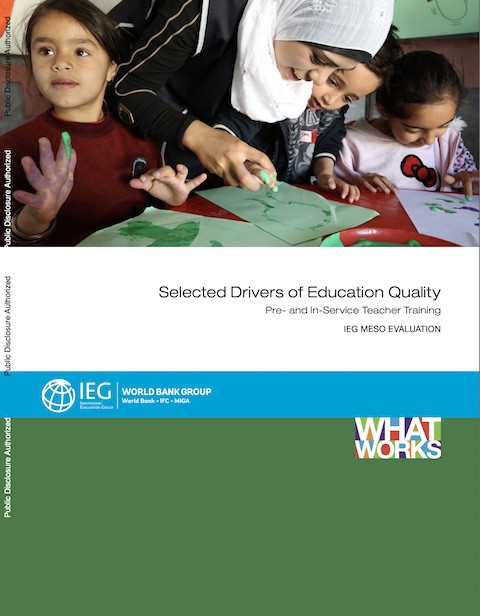 Selected Drivers of Education Quality: Pre- and In-Service Teacher Training Année de publication: 2019 Auteur institutionnel: World Bank This evaluation examines how the World Bank has supported two types of professional development to improve teacher capacity—preservice and in-service training—and identifies how these drivers of education quality can be better designed, implemented, and scaled up.