
Ressources
Explorez une large gamme de ressources sur le GCED afin d’approfondir votre compréhension et de renforcer vos activités de recherche, de plaidoyer, d’enseignement et d’apprentissage.
1,322 résultats trouvés
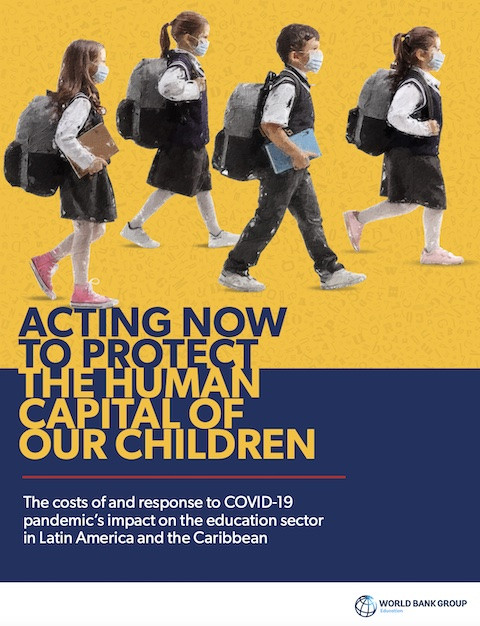 Acting Now to Protect the Human Capital of Our Children: The Costs of and Response to COVID-19 Pandemic’s Impact on the Education Sector in Latin America and the Caribbean Année de publication: 2021 Auteur institutionnel: World Bank The sanitary and economic shocks caused by the COVID-19 pandemic brought about the most significant disruption in the history of the education sector in Latin America and the Caribbean region, leading to school closures at all levels and affecting over 170 million students throughout the region. Despite the tremendous efforts made by countries to mitigate the lack of in-person education through remote learning, education is taking a serious hit and outcomes are plummeting in the region. Learning poverty by the end of primary education could increase by more than 20 percent. Over 2 in 3 lower secondary education students could fall below minimum proficiency levels, and learning losses will be substantially larger for the most disadvantaged students. There is no time to lose. All countries must act now to make sure schools are ready to reopen safely and effectively country-wide so as to speed up the recovery process from the dramatic effects of the pandemic. They can leverage many emerging lessons and evidence, and must protect public funding for education, to enable this reopening process. While education systems face a challenge like no other, this exceptionally difficult situation also opens a window of opportunity to build back better their education systems to become more effective, equitable and resilient. Actuemos ya para proteger el capital human de nuestros ninos: Los costos y la respuesta ante el impacto de la pandemia de COVID-19 en el sector educativo de América Latina y el Caribe Année de publication: 2021 Auteur institutionnel: World Bank El doble shock, sanitario y económico, generado por la pandemia COVID-19 provocó, sin duda alguna, la mayor disrupción en la historia del sector educativo en la región de América Latina y el Caribe, llevando al cierre masivo de escuelas en todos los niveles educativos y afectando a más de 170 millones de estudiantes en toda la región. A pesar de los enormes esfuerzos realizados por los países para tratar de mitigar la falta de educación presencial a través de sistemas de educación a distancia, el impacto sobre la educación está siendo demasiado alto y los aprendizajes se están desplomando en la región. La “pobreza de aprendizaje” al final de la educación primaria podría aumentar en más del 20 por ciento. Más de 2 de cada 3 estudiantes de educación secundaria podrían caer por debajo de los niveles mínimos de rendimiento esperados, y las pérdidas de aprendizaje serán sustancialmente mayores para los estudiantes más desfavorecidos. Realmente no hay tiempo que perder. Todos los países deberían actuar ya mismo para asegurarse que las escuelas estén listas para reabrir de manera segura y eficaz en todo el país a fin de acelerar el proceso de recuperación de los dramáticos efectos de la pandemia. Hay muchas lecciones y evidencias de experiencias positivas que van emergiendo y que pueden ser aprovechadas por los países, los cuales también deben asegurarse de proteger el financiamiento público de la educación, para facilitar este proceso de reapertura. Aun cuando los sistemas educativos de toda la región enfrentan un desafío jamás experimentado, esta situación excepcionalmente difícil también abre una ventana de oportunidad para poder ayudar a reconstruir los sistemas educativos para lograr que sean más efectivos, más equitativos y más resilientes.
  SDG4 관점에서 한국의 COVID-19 대응 진단 및 Post COVID-19를 위한 제언 Année de publication: 2020 Auteur: 장상현 | 계보경 | 김민 | 박기웅 | 백송이 | 김명량 | 김동진 | 장경숙 | 김정희 | 황정원 | 김철희 | 최현식 | 박민선 | 엄정민 Auteur institutionnel: 한국교육학술정보원 본 연구는 UN의 지속가능개발목표(SDGs)의 네 번째인 SDG4의 관점에서 한국의 COVID-19에 대한 교육정책 분야의 대응 방안과 사례를 진단하고, COVID-19 이후에 맞이하게 될 시대의 SDG4 세부목표를 제안하기 위해 수행되었다. 모든 이를 위한 포용적이고 공평한 양질의 교육 보장과 평생학습의 증진을 위한 ‘교육2030 인천 선언(Education 2030: Incheon Declaration and Framework for Action)’이 채택된 이후, SDG4 교육목표를 달성하기 위한 범 정부와 민간 차원의 지원이 계속되었으나, COVID-19 팬데믹으로 인해 학생들 간의 학습 격차가 발생하고, 학습 기회가 약화되는 등 적극적인 대응책이 필요해지고 있는 상황이다. 이에 본 연구에서는 COVID-19 상황 하에서 한국의 교육 현황을 점검하고 포용성, 형평성, 양질의 교육을 실현할 수 있는 대응 방안을 탐색하며, 이를 바탕으로 글로벌 의제와 한국적 대응 방안을 융합한 포스트 COVID-19를 위한 SDG4 세부목표별 제언을 도출하고자 하였다. 본 저작물은 한국교육학술정보원에서 2020년 작성하여 공공누리 제 4유형으로 개방한 ‘SDG4 관점에서 한국의 COVID-19 대응 진단 및 Post COVID-19를 위한 제언(장상현 외)’을 이용하였으며 해당 저작물은 한국교육학술정보원(www.keris.or.kr)에서 무료로 다운받으실 수 있습니다.
  Escuchando tu Naturaleza Année de publication: 2021 Auteur: Tatiana Núñez Suárez Auteur institutionnel: Fondo Acción En el marco del proyecto "somos tesoro" que busca reducir el trabajo infantil en zonas mineras de Colombia nace "escuchando tu naturaleza" que busca fortalecer los entornos comunitarios a partir del uso creativo del tiempo libre de niños, niñas y adolescentes (NNA). Buscando que sus espacios sean protectores,que promuevan los derechos de la infancia y contribuyan con la prevención del trabajo infantil minero. Se capacitó un grupo de veinte representantes de cinco organizciones no gubernamentales locales, funcionarios públicos y profesores que trabajaban con NNA en herramientas de desarrollo personal como yoga, meditación y atención plena para estimular la creatividad, la conciencia y la toma de decisiones. Se beneficiaron 275 NNA entre los 6 y los 17 años.
 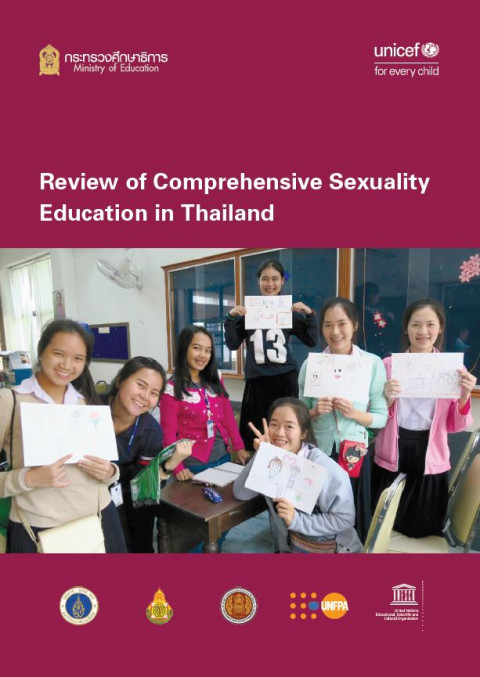 Review of Comprehensive Sexuality Education in Thailand Année de publication: 2017 Auteur institutionnel: United Nations Children's Fund (UNICEF) | Thailand. Ministry of Education This review of comprehensive sexuality education (CSE) in Thai educational institutions collected data from students, teachers, guardians, school directors and national policy advocacy stakeholders. Standard international data collection tools were used, with the hope that important information could be gathered to guide the development of school-based CSE implementation in Thailand. The review aims to increase understanding about how CSE is being implemented in Thai general secondary schools and vocational colleges and to examine the values and attitudes of teachers, school directors, students, and parents on sexuality and sexuality education. It also analyses policies relevant to current national strategies of CSE implementation and documents successes and gaps in the current provision of CSE in the country. The report, prepared by the Ministry of Education, Thailand, and UNICEF, with inputs from UNESCO Bangkok, is available in English and in Thai.
  어린이집 · 유치원 교사가 알아야 할 디지털 시민성과 교육 Année de publication: 2019 Auteur: 김양은 | 최숙 | 박상호 | 장준영 | 박정원 Auteur institutionnel: 방송통신위원회 | 한국정보화진흥원 본 자료는 어린이집, 유치원 교사가 아이들과 함께 디지털시민역량을 키워나가도록 개념, 해외사례, 교육자료 등을 소개하는 가이드북이다.
  Dossier pédagogique 2021: S’informer pour comprendre le monde Année de publication: 2020 Auteur institutionnel: Centre pour l’éducation aux médias et à l’information (CLEMI) | Réseau Canopé Le dossier pédagogique 2021 a pour thème : «S'informer pour comprendre le monde». Pour comprendre le monde qui les entoure, les élèves doivent plus que jamais apprendre à s’informer en exerçant leur esprit critique. Ce nouveau thème de la SPME permet ainsi de revenir aux fondamentaux de l’éducation aux médias et à l’information.
  Boosting Gender Equality in Science and Technology: A Challenge for TVET Programmes and Careers Année de publication: 2020 Auteur institutionnel: UNESCO International Centre for Technical and Vocational Education and Training (UNEVOC) While technical and vocational education and training (TVET) has the potential to bolster the participation of women in the labour market, this potential is not always well understood and capitalized on. In general, female students are lowly represented in TVET compared to general programmes, and in particular girls and women tend to be under-represented in the fields that require science, technology, engineering and mathematics (STEM) skills and knowledge. In addition to being required for ‘traditional’ and ‘emerging’ occupations, STEM skills and knowledge are often needed for the so-called ‘jobs of the future’, driving innovation, inclusive growth and sustainable development. This report examines the key issues concerning girls and women’s participation and achievement in STEM-related TVET programmes and their transition STEM related careers.
  Doing Development Education: Digital Media Literacy; Junior Cycle Année de publication: 2017 Auteur institutionnel: WorldWise Global Schools (WWGS) | Irish Aid In Ireland, Development Education themes, such as ethics, respect, rights and responsibilities, consumerism, citizenship, democracy and the role of the media form part of the learning in the junior cycle Digital Media Literacy Short Course.This resource aims to support Digital Media teachers to teach through a global justice lens, a lens with great educational benefits, which meets the requirements as laid out in the junior cycle Digital Media Literacy specification, and in the (2015) Framework for Junior Cycle.
  Global Gender Gap Report 2021: Insight Report, March 2021 Année de publication: 2021 Auteur institutionnel: World Economic Forum The report is a measure of gender gap on four parameters: economic participation and opportunity, educational attainment, health and survival, and political empowerment. The index has benchmarked 156 nations across the globe in 2021. The data show that it will take 135.6 years to bridge the gender gap worldwide and the pandemic has impacted women more severely than men. The gap is the widest on the political empowerment dimension with economic participation and opportunity being next in line. However, the gap on educational attainment and health and survival has been practically bridged.