
Ressources
Explorez une large gamme de ressources sur le GCED afin d’approfondir votre compréhension et de renforcer vos activités de recherche, de plaidoyer, d’enseignement et d’apprentissage.
1,477 résultats trouvés
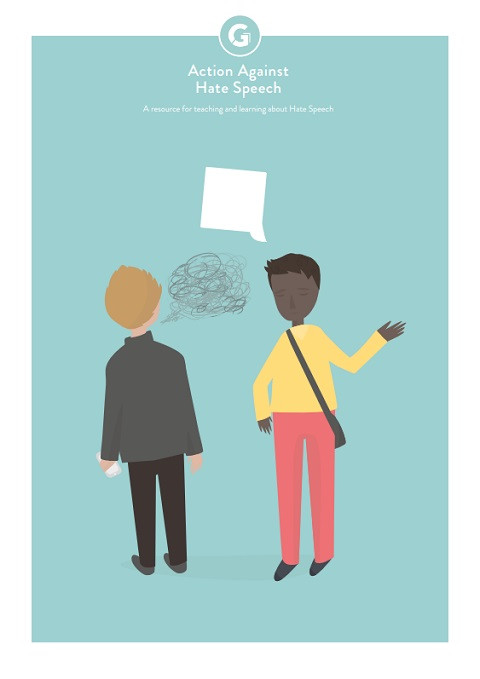 Action Against Hate Speech: A Resource for Teaching and Learning About Hate Speech Année de publication: 2017 Auteur institutionnel: Tony Blair Institute for Global Change | Generation Global This module is designed to prepare students for dialogue around the issue of hate speech. It builds upon other work on human rights, and explores the balancing act between freedom of expression and freedom from insult. Additionally, it prepares students for dialogue on these issues in our facilitated videoconferences and on our safe, secure, online community. This material helps you and your students to get involved in educating, advocating, and acting against hate speech in your communities.
  Action: Guidelines for Prevention of Violent Extremism Année de publication: 2018 Auteur: Carolyn Nash | Yulia Nesterova | Kenneth Primrose | Wing Yu Alice Chan | Raul A. Rios | María José Velásquez Flores | Aniqah Zowmi Auteur institutionnel: Mahatma Gandhi Institute of Education for Peace and Sustainable Development (MGIEP) The UNESCO MGIEP #YouthWagingPeace guidebook was launched by Director General of UNESCO at its 39th General Conference, 2017. The guidebook was a culmination of reaching out to 2000+ youth, and integrating 130+ submissions from 57 countries.After analysing these voices and experiences, and supplemented by the literature, the guide put forth a set of tangible action guidelines for education stakeholders.In this abridged version, stakeholders will find a curated set of critical ideas and lessons gleaned from the full guide, designed to be as accessible as possible. The hope is that teachers, parents, mentors, school administrators, policymakers, and anyone else committed to realizing positive change will find these Action Guidelines an effective resource for guiding immediate and effective actions in their communities.The Action Guidelines for Prevention of Violent Extremism is designed to identify engagement opportunities for all stakeholders. Some require time, preparation, and resources. Others are small steps that will help create safer societies and stronger communities. No action is too small to contribute to building a more resilient and just world.
  Towards an urban culture of non-discrimination and non-violence: The ICCAR experience Année de publication: 2017 Auteur institutionnel: International Coalition of Inclusive and Sustainable Cities This is a conference report for the World Forum on Urban Violence and Education for Coexistence and Peace.
 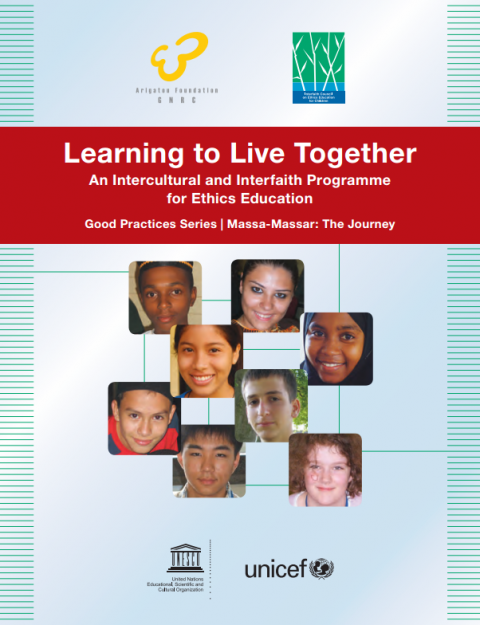 Learning to live together: an intercultural and interfaith programme for ethics education: Good Practices Series; Massa-Massar: The Journey Année de publication: 2012 Auteur institutionnel: United Nations Children's Fund (UNICEF) | Interfaith Council on Ethics Education for Children | Arigatou Foundation The Massa-Massar programme creates opportunities for Jews and Palestinians to meet, learn from one another, challenge their prejudices and stereotypes, listen to new narratives and reflect on their relations with others and their role in their societies. Aprender a vivir juntos: Un programa intercultural e interreligioso para la educación ética: Serie de buenas prácticas; Massa-Massar: el viaje Année de publication: 2012 Auteur institutionnel: United Nations Children's Fund (UNICEF) | Interfaith Council on Ethics Education for Children | Arigatou Foundation The Massa-Massar programme creates opportunities for Jews and Palestinians to meet, learn from one another, challenge their prejudices and stereotypes, listen to new narratives and reflect on their relations with others and their role in their societies.
  서울 세계시민교육 이행현황 및 향후 추진 과제 연구 Année de publication: 2021 Auteur: 김동택 | 서용덕 | 고선규 | 김지영 | 임재민 | 장경원 | 홍윤빈 Auteur institutionnel: 서울특별시교육청 교육연구정보원 이 연구는 서울시 교육청이 추진하고 있는 세계시민교육 이행 현황을 객관지표와 주관지표를 통해 분석하고 이를 바탕으로 향후 추진되어야 할 정책 과제들(협업체계, 교육 내실화, 내용·동력·변인, 데이터 축적 및 활동 플랫폼 구축 등)을 연구하는 데 목적이 있다. 이를 위하여 2015년부 터 시작되어 현재까지 진행된 세계시민교육의 성과를 확인하기 위해 객관 지표와 주관지표를 점검하였으며, 여기서 나타난 결과들을 바탕으로 앞으 로의 정책 방향을 설정하기 위해 정책 제안을 시도하였다. 서울특별시교육청교육연구정보원이(가) 창작한 서교연 2020-33 위탁연구(서울 세계시민교육 이행현황 및 향후 추진 과제 연구) 최종보고서 저작물은 "공공누리 제4유형(출처표시-상업적 이용금지-변경금지)" 조건에 따라 이용 할 수 있습니다.
 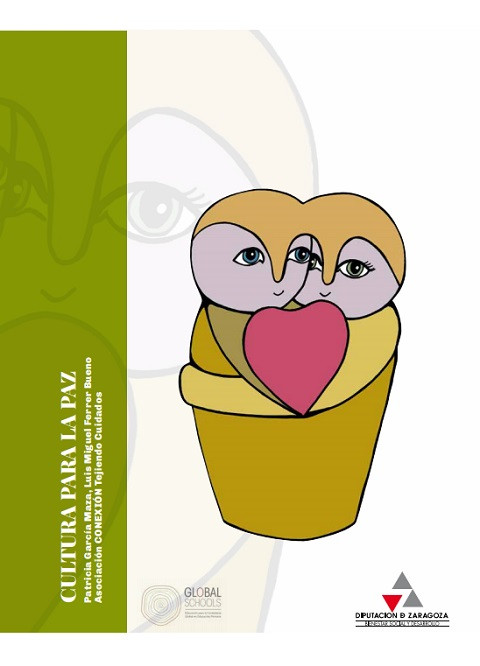 Cultura de paz y resolución de conflictos Année de publication: 2018 Auteur: Patricia García Maza | Luis Miguel Ferrer Bueno Auteur institutionnel: Asociación Conexión Tejiendo Cuidados | Global Schools | Comisión Europea La primera tarea está enfocada hacia el trabajo con uno mismo, fundamental a la hora de resolver conflictos. Saber cómo reacciono, cuáles son mis potencialidades y debilidades, aprender a manejar mis emociones, facilitará la interacción con el otro. La segunda tarea se centra en esa interacción, somos personas diferentes, reaccionamos de distintas maneras, por lo que ver al otro, descubrir qué siente y piensa, exige la suficiente flexibilidad para tolerar la diferencia. 4 La tercera tarea está más enfocada a la cultura de paz para una ciudadanía global, pues esta también debe ser abordada desde una visión de bien común. Su línea estratégica es relacional hacia el bien común; solamente así se pueden enfrentar conflictos más globales.
  Address by Audrey Azoulay, Director-General of UNESCO, on the occasion of Peace and Prosperity Forum, Jeju Korea Année de publication: 2018 Auteur institutionnel: UNESCO. Director-General, 2017-2025 (Azoulay, A.) This address was delivered by Audrey Azoulay, Director-General of UNESCO, on the occasion of Peace and Prosperity Forum Jeju Korea; 28 June 2018.
 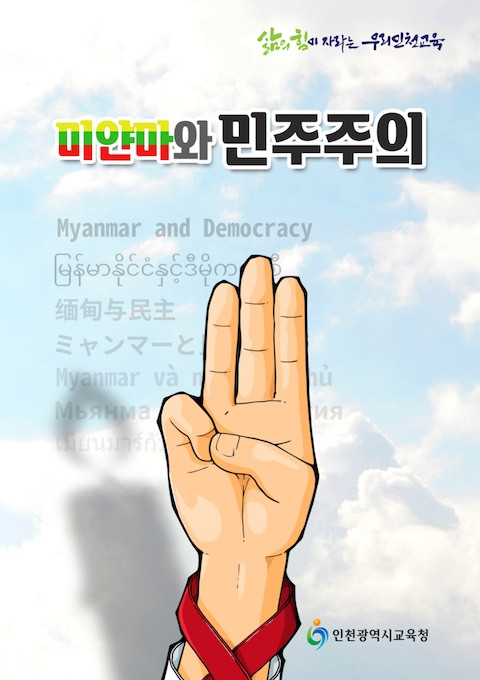 미얀마와 민주주의 Année de publication: 2021 Auteur institutionnel: 인천광역시교육청 본 교수·학습 자료는 학생용 자료로 공감, 이해, 행동 총 3차시로 나누어, 현재 미얀마에서 벌어진 군부 쿠테타와 이에 저항하는 시민불복종 운동을 민주주의와 평화의 가치를 통해 이해하고 동아시아시민으로서 연대하고 실천하도록 구성하였다.
  ‘공존과 상생’의 2021 평화·세계시민교육 기본계획 Année de publication: 2021 Auteur institutionnel: 서울특별시교육청 본 자료는 서울특별시교육청의 2021 평화·세계시민교육 기본계획안으로, 서울 관내 초·중·고등학교를 대상으로 세계시민교육 현황을 조사 및 분석하고 2021학년도 세계시민교육의 향후 과제 및 세부추진계획을 제시하였다.