
Ressources
Explorez une large gamme de ressources sur le GCED afin d’approfondir votre compréhension et de renforcer vos activités de recherche, de plaidoyer, d’enseignement et d’apprentissage.
875 résultats trouvés
 Dialogue for Prevention Année de publication: 2025 Auteur institutionnel: UNESCO In an era where geopolitical power struggles disrupt traditional peacebuilding, where identity and misinformation fuel divisions, and where trust in institutions is eroding, UNESCO’s Intercultural Dialogue for Conflict Transformation briefs series presents an adaptable, culturally grounded, and people-centred approach to peacebuilding. With 1.5 billion people living in contexts with low intercultural dialogue where global challenges such as absolute poverty, terrorism and forced displacement are more prevalent, this four-part series draws on firsthand experience, country case studies, and expert analysis to demonstrate the transformative potential of dialogue in fragile and conflict-sensitive settings. The Dialogue for Prevention brief, developed with the Auschwitz Institute for the Prevention of Genocide and Mass Atrocities, explores the powerful role intercultural dialogue can play in preventing large-scale identity-based violence, particularly in the upstream and downstream phases of conflict. Grounded in the idea that dialogue can bridge divides and foster mutual understanding, the brief argues that enabling environments for intercultural dialogue—marked by stability, inclusive governance, freedom of expression, horizontal equality, and social cohesion—also mitigate key risk factors for atrocity violence. Drawing on diverse examples from Cambodia, Colombia, Italy, and Kenya, it showcases creative, context specific applications of dialogue. Through practical guidance, the brief equips policymakers, practitioners and civil society seeking to embed dialogue into prevention strategies.
  Hydro Resilience: Citizen and Open Science for Climate Adaptation Année de publication: 2024 Auteur institutionnel: UNESCO Human-induced climate change is affecting weather and climate extremes worldwide and causing changes in the atmosphere, ocean, cryosphere and biosphere leading to widespread adverse impacts on people and nature. These conditions have exposed people to reduced water security and negatively affected food security and ecosystem services. Despite advances in climate and water sciences, there is still a significant gap between information availability and its uptake by stakeholders. Although there is abundant data and information available on the potential impacts of climate change, there is a lack of expert knowledge on the user side, which limits the development and implementation of effective adaptation strategies at the local level. There is also an opportunity to bring communities more on board to manage their climate risk through citizen engagement and to ensure that vulnerable communities can benefit from climate science foresight. To address these challenges, a new project was developed called ‘Hydro Resilience: Citizen and Open Science for Climate Adaptation’ to pilot citizen and open science applications for climate risk management and to support water management under climate change uncertainty.
  Assessment for Advocacy to Transform Communities, Programmes and Policies in the Global South Année de publication: 2024 Auteur institutionnel: UNESCO | Global Education Monitoring Report Team | PAL Network This paper was commissioned by the Global Education Monitoring Report as background information to assist in drafting the 2024 Spotlight Report on basic education completion and foundational learning in Africa. It has not been edited by the team. The views and opinions expressed in this paper are those of the author(s) and should not be attributed to the Global Education Monitoring Report or to UNESCO. The papers can be cited with the following reference: “Paper commissioned for the 2024 Spotlight Report on basic education completion and foundational learning in Africa”.
 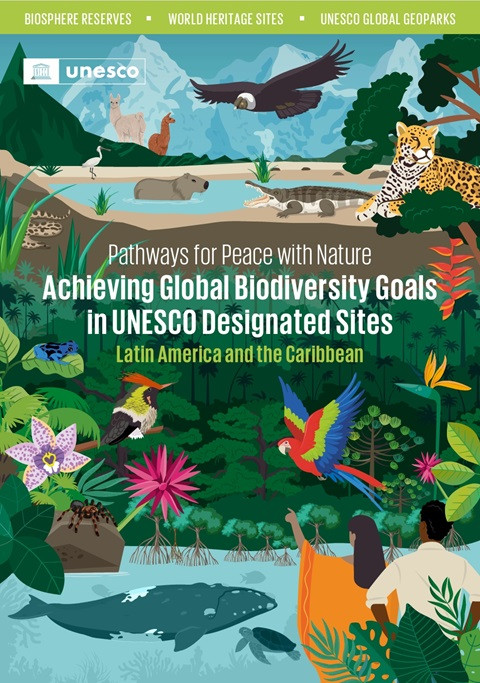 Pathways for Peace with Nature: Achieving Global Biodiversity Goals in UNESCO Designated Sites; Latin America and the Caribbean Année de publication: 2024 Auteur institutionnel: UNESCO UNESCO designated sites in Latin America and the Caribbean harbour over 60% of the region’s mapped species richness, i.e. over 14,000 species of mammals, reptiles, amphibians, birds, and fishes. They are also important for strengthening culture and nature linkages. However, biodiversity in these sites is threatened by human pressures and climate change and countries should take urgent action to halt and reverse biodiversity loss.This publication provides a regional overview of the status and trends of species in UNESCO designated sites, as well as key information to facilitate dialogue among all stakeholders. Additionally, it promotes the development of effective actions aimed at achieving global biodiversity goals.
 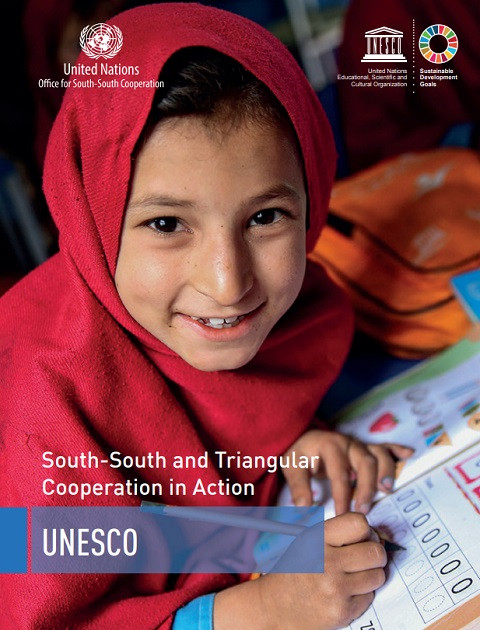 South-South and Triangular Cooperation in Action Année de publication: 2018 Auteur institutionnel: UNESCO | UN. Office for South-South Cooperation (UNOSSC) This publication is UNESCO’s first dedicated report on South-South cooperation and triangular cooperation. It presents an overall picture of the progress achieved to support technical cooperation, capacity building and knowledge sharing through South-South and triangular cooperation in UNESCO’s areas of competence with highlights of specific examples. It paves the way for deepening future cooperation in this area.
 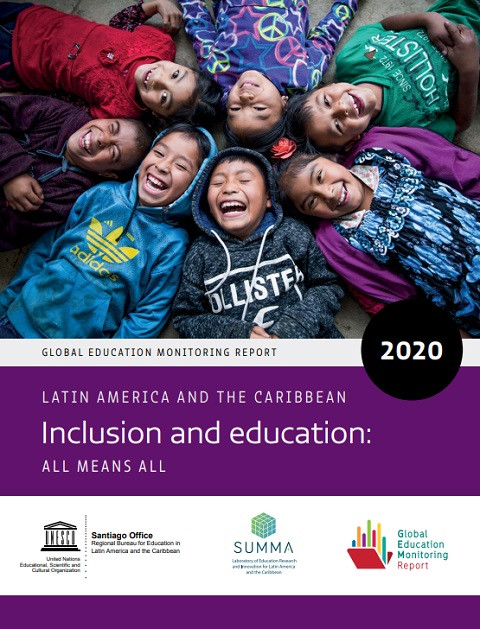 Latin America and the Caribbean 2020: Inclusion and Education; All Means All (Global Education Monitoring Report) Année de publication: 2020 Auteur institutionnel: Global Education Monitoring Report Team | UNESCO | Laboratory of Education Research and Innovation for Latin America and the Caribbean (SUMMA) Latin America and the Caribbean has the largest and most challenging socio-economic inequalities in the world, which have shaped its education systems over the decades. This report looks at everyone both in and excluded from education in the region, pinpointing barriers facing learners, especially when multiple disadvantages intersect. The report also explores challenges in education posed by COVID-19 and the need for urgent action to prevent an exacerbation of inequalities. Produced by the Global Education Monitoring (GEM) Report team, in partnership with the UNESCO Regional Bureau for Education in Latin America and the Caribbean (OREALC) and the Laboratory of Education Research and Innovation for Latin America and the Caribbean (SUMMA), the report assesses key solutions for greater inclusion through several case studies from the region. It provides in-depth analysis on challenges to inclusion in education arising from migration and displacement in Colombia and Costa Rica; remoteness in Brazil and Suriname; disability in Cuba and Nicaragua; gender in Peru and Jamaica; sexual orientation, gender identity and expression in Chile and Mexico; poverty in the Dominican Republic and Honduras; ethnicity in Bolivia and Ecuador; and incarceration in El Salvador and Uruguay. Building on the 2020 Global Education Monitoring Report, this regional edition concludes that strong laws and policies in Latin America and the Caribbean demonstrate a commitment to inclusion, but that the daily realities faced by learners suggest implementation is lagging. Recommendations are aimed at promoting more inclusive education systems to benefit all children and youth, no matter their background, identity or ability. The recommendations provide a systematic framework for identifying and dismantling barriers for vulnerable populations, according to the principle that ‘every learner matters and matters equally’. América Latina y el Caribe 2020: Inclusión y educación; Todos y todas sin excepción (Informe de seguimiento de la educación en el mundo) Année de publication: 2020 Auteur institutionnel: Global Education Monitoring Report Team | UNESCO | Laboratory of Education Research and Innovation for Latin America and the Caribbean (SUMMA) América Latina y el Caribe es la región con las mayores y más tenaces desigualdades socioeconómicas del mundo. Durante decenios estas desigualdades se han reflejado en sus sistemas educativos. El presente informe examina a quiénes incluyen y a quiénes excluyen estos sistemas y llama la atención sobre las barreras que enfrentan los educandos, especialmente cuando están expuestos a múltiples desventajas. El informe también explora los nuevos retos educativos que plantea la pandemia de la Covid-19 y la necesidad de actuar sin dilación para evitar que se agraven las desigualdades. El informe, elaborado por el equipo del Informe de Seguimiento de la Educación en el Mundo (Informe GEM), en colaboración con la Oficina Regional de Educación para América Latina y el Caribe (OREALC/ UNESCO Santiago) y el Laboratorio de Investigación e Innovación en Educación para América Latina y el Caribe -SUMMA, evalúa algunas de las principales iniciativas emprendidas para mejorar la inclusión, basándose en varios estudios de casos de la región. Analiza en profundidad algunos ejemplos de los grandes desafíos que amenazan la inclusión en la educación: migración y desplazamiento en Colombia y Costa Rica; aislamiento rural en el Brasil y Suriname; discapacidad en Cuba y Nicaragua; discriminación de género en el Perú y Jamaica; orientación sexual e identidad y expresión de género en Chile y México; pobreza en la República Dominicana y Honduras; etnicidad en Bolivia y el Ecuador; y jóvenes en situación de privación de libertad en El Salvador y el Uruguay. Esta edición regional del Informe de Seguimiento de la Educación en el Mundo 2020 concluye que, si bien las leyes y políticas de América Latina y el Caribe demuestran la firme determinación de promover la inclusión, la realidad cotidiana de los alumnos y las alumnas sugiere que la aplicación práctica lleva retraso. Se formulan recomendaciones con el objeto de promover sistemas de educación más inclusivos en beneficio de todos los niños, niñas y jóvenes, sin distinción de origen, identidad o capacidad. Las recomendaciones brindan un marco sistemático que permite identificar y eliminar barreras para las poblaciones marginadas, conforme al principio de que “cada alumno es importante y todos los alumnos importan por igual”. La cooperación Sur-Sur y la cooperación triangular en acción Année de publication: 2018 Auteur institutionnel: UNESCO | UN. Office for South-South Cooperation (UNOSSC) Esta publicación es el primer informe específico de la UNESCO sobre la cooperación Sur-Sur y la cooperación triangular. Se presenta un panorama general de los avances en la cooperación técnica, la creación de capacidades y el intercambio de conocimientos mediante la cooperación SurSur y la cooperación triangular en las esferas de competencia de la UNESCO y se mencionan ejemplos concretos. Se allana el camino para profundizar la cooperación en este ámbito en el futuro. La coopération Sud-Sud et triangulaire en action Année de publication: 2018 Auteur institutionnel: UNESCO | UN. Office for South-South Cooperation (UNOSSC) La présente publication est le premier rapport de l’UNESCO qui traite de la coopération SudSud et de la coopération triangulaire. Elle brosse un tableau d’ensemble, illustré par des exemples particuliers, des progrès que ces modalités de coopération ont permis d’accomplir pour faciliter la coopération technique, le renforcement des capacités et le partage des connaissances dans les domaines de compétence de l’UNESCO, et ouvre la voie à de plus amples efforts en la matière.
  Non-Formal Education, Sustainable Development and the Education 2030 Agenda: Study of Civil Society Practices in Latin America and the Caribbean Année de publication: 2020 Auteur institutionnel: UNESCO Santiago | UNESCO Mexico This publication shows 27 civil society initiatives from various countries in Latin America and the Caribbean that work to promote actions and programs to comply with Target 4.7 within non-formal education. The study seeks that these organizations show their work, the challenges they face as regards the implementation of their programs and their greatest achievements.