
Ressources
Explorez une large gamme de ressources sur le GCED afin d’approfondir votre compréhension et de renforcer vos activités de recherche, de plaidoyer, d’enseignement et d’apprentissage.
1,473 résultats trouvés
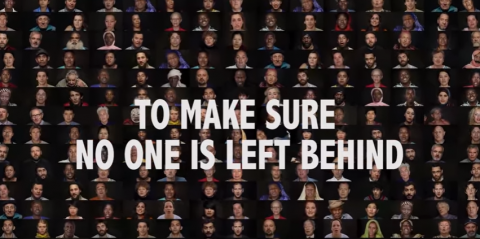 Leave No One Behind Année de publication: 2016 Auteur institutionnel: Global Goals At the heart of the Sustainable Development Goals is a commitment to leave no one behind. That’s because, although we have made huge progress towards a better world, too many people have been left behind because of who they are or where they live.
  Global citizenship education: citizenship education for globalizing societies Année de publication: 2015 Auteur: Werner Wintersteiner | Heidi Grobbauer | Gertraud Diendorfer | Susanne Reitmair-Juárez Auteur institutionnel: Austrian Commission for UNESCO This text reflects the work we have been doing for many years in the area of Global Citizenship Education (GCED) in Austria. Two endeavors particularly stand out: first, the continuing Masters programme GCED at the Alps-Adriatic University (Alpen-Adria Universität) in Klagenfurt, which is a specialized course of study for educationalists, teacher trainers, NGO associates and teachers (participants may either graduate with a certificate after two years or an MA degree after three years respectively), and second, our cooperation with the Austrian UNESCO Associated Schools Project Network. This was the originally intended audience for the German version of this brochure, which constitutes the programmatic basis for our training programs. We understand GCED as a concept that is located at the interface between civic education, global education and peace education, as well as education for sustainable development and intercultural learning. Our approach is characterized by these four features:* theoretical grounding and a particular focus on terminology in order to foster competence of judgment regarding political concepts* investigating the historical dimension of GCED in depth in order to account for colonialism and neocolonialism* socio-critical orientation in order to set us apart from strands of GCED that ultimately perpetuate concepts of Western hegemony* didactic implementation that is systematic and based on appropriate theoretical work in order to avoid pragmatismWith this English edition (the section specific to the Austrian context was omitted) we wish to initiate a dialog with colleagues in the whole world and hope to engage in lively exchange. Education à la citoyenneté mondiale: éducation à la citoyenneté pour les sociétés de mondialisation Année de publication: 2015 Auteur: Werner Wintersteiner | Heidi Grobbauer | Gertraud Diendorfer | Susanne Reitmair-Juárez Auteur institutionnel: Austrian Commission for UNESCO Ce texte reflète le travail que nous faisons depuis de nombreuses années dans le domaine de l'éducation à la citoyenneté mondiale (ECM) en Autriche. Deux projets se démarquent particulièrement: d'abord, le programme de maîtrise ECM à l'Université alpine-adriatique de Klagenfurt, qui est un cours spécialisé pour les pédagogues, les formateurs d'enseignants, les associés des ONG et les enseignants (les participants peuvent soit être diplômés Avec un certificat après deux ans ou un MA après trois ans respectivement), et deuxièmement, notre coopération avec le Réseau autrichien du projet des écoles associées de l'UNESCO. Il s'agissait du public initialement destiné à la version allemande de cette brochure, qui constitue la base programmatique de nos programmes de formation. Nous considérons l'ECM comme un concept situé à l'interface entre éducation civique, éducation globale et éducation à la paix, ainsi que l'éducation pour le développement durable et l'apprentissage interculturel. Notre approche se caractérise par ces quatre caractéristiques: fondement théorique et un accent particulier sur la terminologie afin de favoriser la compétence de jugement sur les concepts politiques étudier la dimension historique de l'ECM en profondeur afin de rendre compte du colonialisme et néocolonialisme orientation socio-critique afin Nous distinguent des filières de l'ECM qui, en fin de compte, perpétuent les concepts d'une mise en œuvre didactique de l'hégémonie occidentale systématique et basée sur un travail théorique approprié pour éviter le pragmatisme. Avec cette édition en anglais (la section spécifique au contexte autrichien a été omis), nous souhaitons initier un dialogue avec des collègues dans le monde entier et espérer engager des échanges animés.
  A Comparative Study on Global Citizenship Education between Korea and ASEAN Année de publication: 2015 Auteur institutionnel: Korea Institute for Curriculum and Evaluation (KICE) This research is the second-year study for a three-year project (2013-2015) focused on the global citizenship education of ASEAN (Association of Southeast Asian Nations). In the first-year study (2013), the current global citizenship education presented in the social studies curriculum of each country was analyzed based on literature research, and the global citizenship of students from each country was examined through surveys. Based on the analysis of the current global citizenship education of Korea and ASEAN overall and the characteristics of global citizenship of students from each country, this study is designed to make an in-depth analysis of global citizenship education and to seek direction for the joint global citizenship education programs between Korea and ASEAN to be employed in the third-year research.The students from the two countries, Indonesia and Thailand, among the 10 ASEAN countries are selected as participants because these two countries also participated in the previous international comparison study. The purposes of this study are as follows; (1) comparing the current global citizenship education of the national-level curriculum of Korea, Indonesia, and Thailand, (2) finding the similarities and differences by analysing the characteristics of global citizenship education of Korean, Indonesian, and Thai students, and (3) proposing the direction and themes of global citizenship education which will be mutually applied in Korea and ASEAN countries based on the research results.To conduct this study, various methods including literature study, interviews through visits to local schools, conferences for specialists, and international seminars were used. First, the meaning and goals of global citizenship education were established by reviewing literature and the concepts of ‘Humanity’, ‘Global Identity’, and ‘Global Participation’, which are the three sub-indices for global citizenship extracted from the first-year study, were used. Based on this framework, interview protocols for students, teachers, and policy makers were composed.The research team visited Indonesia and Thailand, carried out semi-structured interviews with students, teachers, and policy makers of national-level curriculum and classroom observations, and collected data related to global citizenship education. In addition, by conducting an international seminar with policy makers of curriculum of each country’s Ministry of Education and UNESCO specialists, we aimed to seek direction for joint global citizenship education in Korea and ASEAN and to reinforce educational cooperation.The major findings of this research can be suggested according to the research purposes in the following way.First, in the analysis of the national-level curriculum made for the comparison of current global citizenship education of Korea, Indonesia, and Thailand, the curriculum of each country is found to include elements of global citizenship education. However, countries show discrepancies in their actualization of curriculum, and citizenship education is still centered on national citizenship rather than global citizenship. Therefore, a more systematic attempt is needed for the advancement of citizenship education from nation-centered to globally oriented.Second, the findings from the interviews with students of each country carried out to define the characteristics of global citizenship of Korean, Indonesian, and Thai students indicate that while students’ responses showed a number of similarities in general, differences were found in specific answers as well. High school students provided more logical answers with greater depth compared to middle school students, and their responses differed based on their cultural contexts and experiences rather than their gender or religion. Therefore, while taking an approach which considers the level of students’ cognitive development as well as the cultural distinctiveness of each country, a way to expand opportunities for specific activities and experiences rather than an abstract way of teaching should be considered.Third, based on the analysis results, the directions and themes for global citizenship education to be jointly applied in Korea and ASEAN countries are proposed as follows: (1) The curriculum for global citizenship education should be focused on reinforcing the competency of citizens to participate in communities rather than that of individuals to ensure international competitiveness. (2) It is necessary to educate students to confront various conflicts and solve them by themselves rather than teaching them the abstract answers to the conflicts. (3) Global citizenship education should move beyond knowledge-based education and aim to lead bring changes in students’ behavior thereby empowering them to settle global issues. (4) For the actual implementation of curriculum, the cultural distinctiveness of each country and the differences by groups should be considered. (5) It is important to help students spread their interest to diverse countries beyond Western countries or ‘developed countries’.With these points in consideration, the objective of global citizenship education to be jointly promoted in Korea and ASEAN is suggested as the following: “Citizens are cultivated to form their identity as Asians based on their interest and knowledge of Asia and to participate in settling global issues. Through this, their qualities to participate in issues concerning all humanity are eventually cultivated.” The specific themes may include understanding Asia and ASEAN, social justice and equality, diversity, globalization and interdependence, conflict and peace, as well as sustainable development and environment. To improve effectiveness of joint global citizenship education of Korea and ASEAN and to reinforce educational cooperation, we made the following three suggestions.First, the standardization of global citizenship education across the nation is required. Having defined global citizenship education as the cultivation of the qualities of citizens based on the perception of human rights (Humanity) and with the identity as a global citizen (Global Identity) who can participate in settling the issues of global society (Participation), global citizenship education will yield the greatest efficiency when carried out together by all beyond national boundaries. Therefore, it is suggested that research for developing and expanding the joint curriculum by regions be supported and close cooperation be formed between policy makers of national curriculum and officials of International Training and Cooperation.Second, the reinforcement of global citizenship education through teacher training is required. For the effective implementation of joint global citizenship education in each country through the standardization of global citizenship education, the cultural diversity and distinctiveness of each country should be reflected. For these reasons, various practical bottom-up strategies are needed. Teacher training is a mandatory prerequisite for global citizenship education that is appropriate for the situations and contexts of each country. Therefore, it is suggested that researchers find out how to reinforce global citizenship education in teacher training based on solid research.Third, global citizenship education should be expanded by the exchange of human resources. As confirmed in this study, the exchange itself can bring a positive influence on the cultivation of global citizenship, and the sharing of the strategies for global citizenship education in each country can contribute to the development of a model for better global citizenship education. Therefore, it is suggested that the research for the joint promotion of project-based global citizenship education and the opportunities for mutual exchange of students and teachers between Korea and ASEAN countries should be expanded. Une Étude Comparative sur L'éducation à la Citoyenneté Mondiale (ECM) entre le Coréen et l'ASEAN Année de publication: 2015 Auteur institutionnel: Korea Institute for Curriculum and Evaluation (KICE) Pour réaliser cette étude, diverses méthodes, y compris l'étude de la littérature, des entrevues par des visites dans les écoles locales, des conférences pour les spécialistes et séminaires internationaux ont été utilisés. Premièrement, le sens et les objectifs de L'éducation à la citoyenneté Mondiale (ECM) ont été établies en examinant la littérature et les concepts de «l'humanité», «Global Identity» et «Participation globale», qui sont les trois sous-indices pour mondiale la citoyenneté extraite de l'étude de première année, ont été utilisés. Sur la base de ce cadre, les protocoles d'entrevue pour les étudiants, les enseignants et les responsables politiques ont été composées.L'équipe de recherche a visité l'Indonésie et de la Thaïlande, a mené des entretiens semi-structurés avec les étudiants, les enseignants et les décideurs des observations du curriculum et de la classe au niveau national, et a recueilli des données relatives à l'éducation à la citoyenneté mondiale. En outre, en procédant à un séminaire international avec les décideurs du curriculum du ministère de l'Éducation et de l'UNESCO spécialistes de chaque pays, nous avons cherché à obtenir des directives pour joint L'éducation à la citoyenneté Mondiale (ECM) en Corée et l'ASEAN et de renforcer la coopération éducative.Les principaux résultats de cette recherche peuvent être proposées en fonction des fins de recherche de la manière suivante.Tout d'abord, dans l'analyse du programme au niveau national fait pour la comparaison du courant L'éducation à la citoyenneté Mondiale (ECM) de la Corée, l'Indonésie et la Thaïlande, le programme d'études de chaque pays se trouve à inclure des éléments d'éducation à la citoyenneté mondiale. Toutefois, les pays montrent des divergences dans leur actualisation du programme, et de l'éducation à la citoyenneté est toujours centrée sur la citoyenneté nationale plutôt que la citoyenneté mondiale. Par conséquent, une tentative plus systématique est nécessaire pour l'avancement de l'éducation à la citoyenneté d'un pays centré à vocation mondiale.Deuxièmement, les résultats des entrevues avec les étudiants de chaque pays menées pour définir les caractéristiques de la citoyenneté mondiale de la Corée, l'Indonésie, et les étudiants thaïlandais indiquent que, bien que les réponses des élèves ont montré un certain nombre de similitudes en général, des différences ont été trouvées dans des réponses précises que bien. Les élèves du secondaire ont fourni des réponses plus logiques avec une plus grande profondeur par rapport aux élèves des écoles moyennes, et leurs réponses différaient en fonction de leurs contextes et des expériences culturelles plutôt que de leur sexe ou de religion. Par conséquent, tout en adoptant une approche qui tient compte du niveau de développement cognitif des élèves, ainsi que les particularités culturelles de chaque pays, un moyen d'accroître les possibilités pour les activités et les expériences spécifiques plutôt que d'une manière abstraite de l'enseignement devrait être considéré.Troisièmement, sur la base des résultats d'analyse, les orientations et les thèmes de L'éducation à la citoyenneté Mondiale(ECM) à appliquer conjointement en Corée et les pays de l'ASEAN sont proposées comme suit: (1) Le programme de L'éducation à la citoyenneté Mondiale (ECM) devrait se concentrer sur le renforcement de la compétence des citoyens à participer à des communautés plutôt que celle des individus pour assurer la compétitivité internationale. (2) Il est nécessaire d'éduquer les étudiants pour faire face à divers conflits et de les résoudre par eux-mêmes plutôt que de leur enseigner les réponses abstraites aux conflits. (3) L'éducation à la citoyenneté Mondiale (ECM) devrait aller au-delà de la connaissancel'éducation et visent à entraîner apporter des changements dans le comportement des élèves autonomisation qui leur permet de régler les problèmes mondiaux. (4) Pour la mise en œuvre effective du programme, la spécificité culturelle de chaque pays et les différences par groupes devraient être considérés. (5) Il est important d'aider les élèves propagent leur intérêt de divers pays au-delà de l'Ouestpays ou «pays développés».Avec ces points en considération, l'objectif de L'éducation à la citoyenneté Mondiale (ECM) pour être promu conjointement en Corée et l'ASEAN est proposé comme suit: «Les citoyens sont cultivées pour former leur identité en tant Asiatiques en fonction de leur intérêt et de connaissance de Asie et de participer dans le règlement des problèmes mondiaux. Grâce à cela, leurs qualités de participer à des questions concernant toute l'humanité sont finalement cultivées. "Les thèmes spécifiques peuvent inclure la compréhension de l'Asie et de l'ASEAN, la justice sociale et l'égalité, la diversité, la mondialisation et l'interdépendance, les conflits et la paix, ainsi que le développement durable et l'environnement. Pour améliorer l'efficacité de l'articulation L'éducation à la citoyenneté Mondiale (ECM) de Corée et l'ASEAN etde renforcer la coopération éducative, nous avons fait les trois suggestions suivantes. Premièrement, la normalisation de L'éducation à la citoyenneté Mondiale (ECM) à travers le pays est nécessaire. Après avoir défini L'éducation à la citoyenneté Mondiale (ECM) comme la culture des qualités de citoyens fondées sur la perception des droits de l'homme (l'humanité) et de l'identité en tant que citoyen du monde (GlobalIdentity) qui peut participer au règlement des problèmes de la société globale (Participation), L'éducation à la citoyenneté Mondiale (ECM) donnera la plus grande efficacité lorsqu'elle est effectuée conjointement par tous au-delà des frontières nationales. Par conséquent, il est suggéré que la recherche pour le développement et l'expansion du programme commun par les régions être soutenu et une coopération étroite se former entre les décideurs du curriculum national et les responsables de la formation et la coopération internationale.Deuxièmement, le renforcement de L'éducation à la citoyenneté Mondiale (ECM) à travers la formation des enseignants est nécessaire. Pour la mise en œuvre effective de l'articulation L'éducation à la citoyenneté Mondiale (ECM) dans chaque pays grâce à la normalisation de l'éducation à la citoyenneté mondiale, la diversité culturelle et la spécificité de chaque pays doivent être pris en compte. Pour ces raisons, diverses stratégies ascendantes pratiques sont nécessaires. La formation des enseignants est une condition préalable obligatoire pour L'éducation à la citoyenneté Mondiale (ECM) qui est approprié pour les situations et les contextes de chaque pays. Par conséquent, il est suggéré que les chercheurs découvrent comment renforcer L'éducation à la citoyenneté Mondiale (ECM) dans la formation des enseignants sur la base de recherche solide.Troisièmement, L'éducation à la citoyenneté Mondiale (ECM) devrait être élargi par l'échange des ressources humaines. Comme l'a confirmé dans cette étude, l'échange lui-même peut apporter une influence positive sur la culture de la citoyenneté mondiale, et le partage des stratégies pour L'éducation à la citoyenneté Mondiale (ECM) dans chaque pays peut contribuer au développement d'un modèle pour une meilleure éducation à la citoyenneté mondiale. Par conséquent, il est suggéré que la recherche pour la promotion conjointe de par projet L'éducation à la citoyenneté Mondiale (ECM) et les possibilités d'échange mutuel d'étudiants et d'enseignants entre les pays de l'ASEAN et la Corée devrait être élargi.
  UNESCO - UCLA Chair in Global Learning and Global Citizenship Education Année de publication: 2016 Auteur institutionnel: HFP | global media Documentary Presentation of Dr. Carlos A. Torres as UNESCO-UCLA Chair in Global Learning and Global Citizenship Education. Chaise UNESCO - UCLA dans l'apprentissage global et l'éducation à la citoyenneté mondiale Année de publication: 2016 Auteur institutionnel: HFP | global media Documentaire Présentation du Dr. Carlos A. Torres comme Chaise UNESCO-UCLA dans l'apprentissage global et l'éducation à la citoyenneté mondiale.
  The National Youth White Paper on Global Citizenship Année de publication: 2015 Auteur institutionnel: Centre for Global Citizenship Education and Research (CGCER) On March 20, 2015, over 400 students from five high schools across Canada, in partnership with the Centre for Global Citizenship Education, The Centre for Global Education and TakingITGlobal, came together to collaborate, through the use of technology, in a Virtual Town Hall to discuss the youth’s vision for Global Citizenship Education. From Alberta to Ontario, downtown Toronto to Yellowknife, the youth of Canada exchanged ideas, debated alternatives, and ultimately created a document that represents their voice on the relationship Canadians should have with the rest of the world. The Virtual Town Hall, an “archetype of grassroots democracy,” (Senator Grant Mitchell) was the culmination of over a month of online teamwork, 2000 hours of student collaboration, over 100 hours of teacher facilitation, and the passion of over 1000 youth to engage in a national conversation and have their voices heard.In the month prior to the Virtual Town Hall, student leaders, systematically chosen from each school to represent Canada’s diverse geographic and demographic population, met on a weekly basis to exchange ideas, work with and listen to experts, and create a common framework. Concurrently, the students were trained to use an arsenal of Web 2.0 tools (YouTube, Twitter, cell phone voting, Google Docs, H.323 Video Conference, discussion boards, blogs, etc.) to collaborate, build consensus, and create community regardless of time or location.Equipped with this knowledge and empowered through online technology, the student leaders facilitated a full-day virtual town hall. In the morning, 400 youth peers engaged in a dialogue with local and international experts. Following this session, the youth participated in breakout groups to address three critical questions: What are our obligations as global citizens? What are the rights and responsibilities that we have? To what extent can well-intentioned global citizenship initiatives reinforce or resist power inequities? What types of policies/practices will enable/facilitate global citizenship? The National Youth White Paper on Global Citizenship, written collaboratively by Canadian students, is the direct result of this full-day, interactive event. The evolution of the document involved equipping leaders with knowledge and technology, having those leaders facilitate a larger conversation among their peers, taking the data generated to their community at large for feedback and direction, and then synthesizing the results in the student white paper. It represents the voices of over one thousand youth, introduced to the complexities of global citizenship education, unified through the power of 21st century technology, and sharing a passion to contribute to the dialogue taking place on the future of Canada and its relationship to the rest of the world. Le Livre blanc de la jeunesse nationale sur la citoyenneté mondiale Année de publication: 2015 Auteur institutionnel: Centre for Global Citizenship Education and Research (CGCER) Le 20 Mars, 2015, plus de 400 élèves de cinq écoles secondaires à travers le Canada, en partenariat avec le Centre d'éducation à la citoyenneté mondiale, le Centre for Éducation globaleet TakingITGlobal, se sont réunis pour collaborer, par l'utilisation de la technologie, dans une salle virtuelle ville pour discuter de la vision de la jeunesse pour l'éducation sur la citoyenneté mondiale. De l'Alberta à l'Ontario, le centre-ville de Toronto à Yellowknife, la jeunesse du Canada a échangé des idées, débattre des solutions de rechange, et, finalement, a créé un document qui représente leur voix sur les relations Canadiens devraient avoir avec le reste du monde. Le Virtual Town Hall, un «archétype de la démocratie de base» (le sénateur Grant Mitchell) est l'aboutissement de plus d'un mois de travail d'équipe en ligne, 2000 heures de la collaboration des élèves, plus de 100 heures de facilitation des enseignants, et la passion de plus de 1000 jeunes engager dans une conversation nationale et faire entendre leurs voix dans le mois précédant l'Hôtel virtuel Ville, les leaders étudiants, systématiquement choisis parmi chaque école pour représenter la diversité population géographique et démographique du Canada, se sont réunis sur une base hebdomadaire pour échanger des idées, travailler avec et écouter les experts, et de créer un cadre commun. En même temps, les étudiants ont été formés à l'utilisation d'un arsenal d'outils Web 2.0 (YouTube, Twitter, téléphone cellulaire vote, Google Docs, H.323 Vidéo Conférence, forums de discussion, les journaux, etc.) pour collaborer, établir un consensus et créer une communauté quelle que soit de temps ou de lieu. Equipé de cette connaissance et le pouvoir grâce à la technologie en ligne, les leaders étudiants ont facilité une mairie virtuelle d'une journée complète. Dans la matinée, 400 pairs de jeunes engagés dans un dialogue avec des experts locaux et internationaux. Suite à cette session, les jeunes ont participé à des groupes de petits groupes pour répondre à trois questions essentielles: 1. Quelles sont nos obligations en tant que citoyens du monde? Quels sont les droits et les responsabilités que nous avons? 2. Pour les initiatives de citoyenneté mondiale dans quelle mesure peut bien intentionnés renforcer ou résister à des inégalités de pouvoir? 3. Quels types de politiques / pratiques permettront / faciliter la citoyenneté mondiale. Le Livre blanc de la jeunesse nationale sur la citoyenneté mondiale, écrite en collaboration par les étudiants canadiens, est le résultat direct de cette journée complète, événement interactif. L'évolution du document impliqué équipant les dirigeants ayant des connaissances et de la technologie, ayant ces dirigeants facilitent une plus grande conversation entre leurs pairs, en prenant les données générées à leur communauté dans son ensemble pour la rétroaction et la direction, et ensuite la synthèse des résultats dans le livre blanc de l'étudiant. Elle représente les voix de plus de mille jeunes, présenter à la complexité de l'éducation à la citoyenneté mondiale, unifiée par la puissance de la technologie du 21e siècle, et le partage de la passion de contribuer au dialogue qui se déroule sur l'avenir du Canada et de sa relation avec le reste du monde. Global Citizenship Education in Hong Kong and Shanghai Secondary Schools: Ideals, Realities and Expectations (Citizenship Teaching and Learning vol 2, no. 2) Année de publication: 2006 Auteur: Wing On Lee | Sai Wing Leung Auteur institutionnel: Intellect The world has become increasingly interdependent with the ongoing trend of globalization. Preparation for citizenship obviously needs to extend beyond students’ national boundary, such as understanding the impact of citizenship behaviors in one region upon the other parts of the world, and the promotion of peace and justice across nations. This paper reports a study on global citizenship education (GCE) in secondary schools in Hong Kong and Shanghai conducted from December 2002 to June 2003, organized by the Centre for Citizenship Education of the Hong Kong Institute of Education, the Department of Education of the Shanghai Teachers' University, and the Love Outreach Education Academy and Oxfam Hong Kong, with funding provided by the latter. The study aimed at understanding (1) teachers’ knowledge, skills and values toward GCE, (2) GCE curriculum available in schools and its implementation; (3) difficulties in implementing GCE in schools; and (4) the kind of change and support that teachers expected for enhancing the development of GCE. The study also provided data for comparing the similarities and differences in the two major international cities in China. The study finds that that teachers in Hong Kong and Shanghai both support global citizenship education in their schools, but they have encountered problems and difficulties such as pressure from the exam-oriented curriculum, lack of training, lack of support from the school and government, and also a lack in self-efficacy, not feeling that personal efforts can bring about changes in the world. There are interesting contrasts between Hong Kong and Shanghai teachers. Shanghai teachers are comparatively more interested in global affairs, whereas Hong Kong teachers are relatively more interested in local affairs. Shanghai teachers tend to focus on knowledge and skills in global citizenship education, whereas Hong Kong teachers tend to focus on values.