
Ressources
Explorez une large gamme de ressources sur le GCED afin d’approfondir votre compréhension et de renforcer vos activités de recherche, de plaidoyer, d’enseignement et d’apprentissage.
3,229 résultats trouvés
 Cartoonothèque Auteur institutionnel: Cartooning for Peace Grâce à la contribution quotidienne de ses 280 membres dessinateurs de presse, originaires de 74 pays à travers le monde, Cartooning for Peace dispose d’une remarquable collection de dessins de presse qui offre une pluralité de perspectives sur les événements internationaux au fil des années.Les 10 galeries thématiques présentent un petit échantillon de cette « cartoonothèque » qui permet à l’association de créer ses expositions, ses outils pédagogiques et de fournir ses partenaires médias, mettant ainsi le dessin de presse à la disposition d’une diversité de publics (grand public, institutions, élèves et étudiants, jeunes sous main de justice, prisonniers, professionnels de l’éducation, journalistes, dessinateurs, etc). Thanks to the daily contribution of its 280 member press cartoonists, from 74 countries around the world, Cartooning for Peace has a remarkable collection of press cartoons that offers a plurality of perspectives on international events over the years.The 10 thematic galleries below present a small sample of this “cartoon library” which allows the organisation to create its exhibitions, its educational tools and to provide its media partners, making press cartoons available for a diversity of audiences (general public, institutions, pupils and students, young people in custody, prisoners, education professionals, journalists, cartoonists etc).
 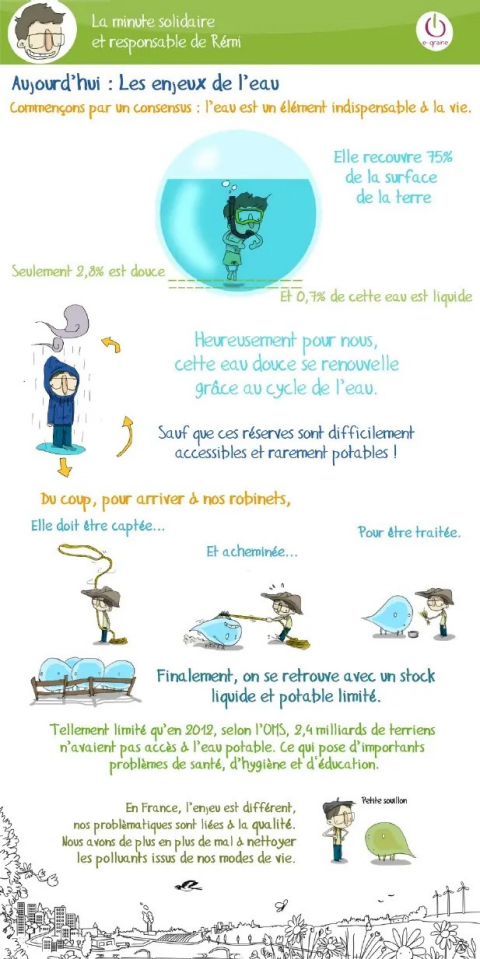 La minute solidaire et responsable de Remi Année de publication: 2019 Auteur institutionnel: E-graine 3 bandes dessinées en ligne pour sensibiliser sur les questions environnementales : une sur l'eau, une sur l'empreinte écologique et une sur les déchets. 3 online comic strips to raise awareness of environmental issues: one on water, one on the ecological footprint and one on waste.
  دور العوامل الأسرية في تصور التلميذ لمشروعه المهني Année de publication: 2023 Auteur: Abish Samir | Boukhalfa Rafiqa يمثل المشروع المهني أو مهنة المستقبل التحدي الأبرز الذي يشغل تصور الطالب الجامعي اليوم وذلك مند أن كان تلميذا، حيث نجد أن تخصصه الجامعي في الغالب ليس إلاّ نتاجا للتصور الذي قام بوضعه خلال السنوات التي سبقت الجامعة وخاصة أثناء مرحلة التوجيه المدرسي، ويتعزز هذا الهم المهني لدى الطالب الجامعي أكثر خلال السنوات الأخيرة التي بات الحصول فيها على فرصة مناسبة للعمل أمرا يتطلب تخطيطا كبيرا وتوجيها سليما، غير أن هذا التصور الذي يضعه التلميذ لمستقبله المهني يساهم في تشكيله العديد من العوامل لعل أبرزها العوامل الأسرية التي تلعب دورا مهما إن لم نقل حاسما في بعض الأحيان، أين نجد أن التصور المهني الذي يضعه التلميذ على مشروعه المهني المستقبلي ليس إلاّ انعكاسا صريحا لدور هذه العوامل ويتضح ذلك الدور في شكل تأثير مباشر أثناء عملية توجيه التلاميذ واختيارهم للشعب المدرسية التي سيواصلون دراستهم من خلالها والتي في الغالب هي من تحدد المسار العام للتوجه المهني الذي سيسلكه التلميذ ويتوقف عليه مشروعه المهني. The Role of Family Factors in the Student's Perception of His Professional Project Année de publication: 2023 Auteur: Abish Samir | Boukhalfa Rafiqa The professional project or career of the future represents the main challenge that occupies the perception of the university student today, since he was a student, since his university specialization is mostly a product of the perception that he developed during the years preceding the university, especially during the school guidance stage. The student is more educated in recent years in which a suitable opportunity for work is required, which requires great planning and direction. However, this perception of the student's future for his career contributes to the formation of many factors, perhaps the most important family factors that play an important role if not critical Sometimes, in some cases, where the professional perception that the student puts on his or her future career project is only an explicit reflection of the role of these factors. This role is evident in the form of direct influence during the process of directing the students and their selection to the school people they will continue their studies through. Which determines the general course of the student's professional orientation and depends on his professional project.
  SDG Good Practices: A Compilation of Success Stories and Lessons Learned in SDG Implementation (2nd Edition) Année de publication: 2022 Auteur institutionnel: UN. Department of Economic and Social Affairs (UN. DESA) In 2021, building on the success of the first open call in 2018-2019, the United Nations Department of Economic and Social Affairs (UNDESA) launched a second open call for SDG Good Practices, Success Stories and Lessons Learned by governments, the UN system entities and other stakeholders. More than 700 submissions were received and reviewed by an inter-agency team of UN experts and over 460 have been made publicly available in a dedicated online platform.This publication has been curated to highlight a sample of selected initiatives during the second open call. The 21 SDG Good Practices contained in the publication shared their lessons learned and identify how the practices can be scaled and replicated worldwide. Bringing this global expertise to scale will be critical to support recovery efforts from the COVID-19 pandemic and to accelerate progress towards the Decade of Action to deliver the SDGs. Through this publications, global readers from all sectors could find out how different stakeholders are building partnerships to find innovative solutions to achieve a better and more sustainable future for all. 지속가능발전목표(SDG) 우수 사례: SDG 구현의 성공 사례 및 교훈 모음(개정판) Année de publication: 2022 Auteur institutionnel: UN. Department of Economic and Social Affairs (UN. DESA) 2021년 2018-19년 1차 공개 요청의 성공에 힘입어 유엔 경제사회부(United Nations Department of Economic and Social Affairs, UNDESA)는 지속가능발전목표(Sustainable Development Goal, SDG) 우수 사례 및 성공 사례, 정부, UN 기관 및 기타 이해 관계자가 배운 교훈에 대한 2차 공개 요청에 착수했다. 출판물에 포함된 이 문서는 이들이 배운 교훈을 공유하고 이 관행을 전 세계로 확장하고 모방할 수 있는 방법을 제공한다. 이러한 세계 전문 지식을 널리 보급하는 일은 코로나바이러스감염증-19(COVID-19) 대유행으로부터의 회복 노력을 지원하고 SDG를 실현하기 위한 10년간의 행동 진전을 가속화하는 데 무엇보다 중요하다. 이를 통해 세계 독자들은 모두를 위한 지속 가능한 미래를 구축하기 위해 혁신적인 해결책을 찾는 데 다양한 이해 관계자가 어떻게 협력하는지를 확인할 수 있다.
 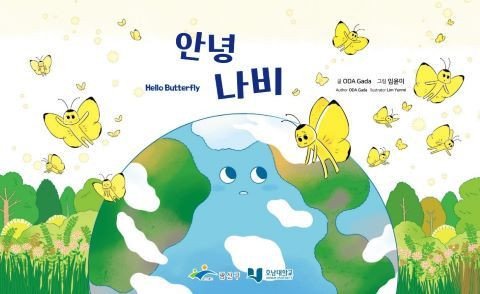 Hello Butterfly Année de publication: 2022 Auteur: ODA Gada Auteur institutionnel: ODA Gada | 광진구 | 호남대학교 <Hello Butterfly> is the fifth illustrated book in the ‘Youth Global Citizenship Education Project’ jointly published by Gwangsan-gu Office of Gwangju and Honam University. The theme is to respond to climate change. The book helps with climate change and environmental policies such as the harmful effects of 'fast fashion' (clothes manufactured and distributed by reflecting the latest trends), desirable clothing consumption methods, zero waste (removal of garbage), and green washing (disguised environmentalism). It contains specific information. The book takes the form of an accordion book that depicts the story through the butterfly's eyes, with the southern yellow butterfly, one of the climate change biomarker species, as the main character. 안녕 나비 Année de publication: 2022 Auteur: ODA Gada Auteur institutionnel: ODA Gada | 광진구 | 호남대학교 <안녕 나비>는 광주광역시 광산구와 호남대가 공동 진행하는 ‘청소년 세계 시민 교육 프로젝트’ 의 다섯번째 그림책이다. 기후변화 대응을 주제로 하고 있다. 책에는 ‘패스트 패션(최신 유행을 바로 반영해 제작‧유통하는 의류)’의 폐해와 바람직한 의류 소비법, 제로웨이스트(쓰레기 없애기), 그린워싱(위장환경주의) 등 기후변화와 환경정책에 도움이 되는 구체적인 정보들이 담겨있다. 책은 기후변화 생물지표종 중 하나인 남방노랑나비를 주인공으로 하여, 나비의 시선을 통해 이야기를 묘사하는 아코디언북 형태를 띠고 있다. 본 저작물은 광주 광산구와 호남대학교에서 2022년 작성된 공공누리 제1유형으로 광산구청 누리집(www.gwangsan.go.kr/)에서 다운로드 하실 수 있습니다. Здравствуй Бабочка Année de publication: 2022 Auteur: ODA Gada Auteur institutionnel: ODA Gada | 광진구 | 호남대학교 «Hello Butterfly» — пятая иллюстрированная книга в рамках «Молодежного образовательного проекта глобальной гражданственности», совместно изданного офисом Квансан-гу Кванджу и Университетом Хонам. Тема — реакция на изменение климата. Книга помогает с изменением климата и экологической политикой, такими как вредные последствия «быстрой моды» (одежда, производимая и распространяемая с учетом последних тенденций), желаемые методы потребления одежды, ноль отходов (удаление мусора) и стирка зелени (замаскированный энвайронментализм). ). Он содержит конкретную информацию. Книга имеет форму аккордеонной книги, которая изображает историю глазами бабочки, с южной желтой бабочкой, одним из видов биомаркеров изменения климата, в качестве главного героя.
  التنمية المستدامة في دولة قطر: الإنجازات والتحديات Année de publication: 2008 Auteur: Nuzad Alhiti | Mohammed Almahindi Auteur institutionnel: Standing Committee for Housing يتناول هذا الكتاب الأطر النظرية للتنمية المستدامة وتطبيقاتها في دولة قطر، وقد قسم إلى أربعة فصول، يتناول الفصل الأول بيان مفهوم التنمية المستدامة وأبعادها والتطور الذي شهدته، فضلاً عن توضيح مؤشرات التنمية المستدامة الاجتماعية والاقتصادية والبيئية والمؤسسية. ويستعرض الفصل الثاني التطورات المؤسسية والتشريعية للتنمية المستدامة في دولة قطر، وأهم المبادرات التي قامت بها الدولة لتحقيق التنمية المستدامة، علاوة على بيان أهم الاستراتيجيات والسياسات التي وضعتها الدولة في المجالات الاجتماعية والاقتصادية والبيئية والمؤسسية للتنمية المستدامة. أما الفصل الثالث، فإنه يتناول تحليل أهم مؤشرات التنمية المستدامة الاجتماعية والاقتصادية والبيئية والمؤسسية، وبيان جوانب القوة والضعف فيها، في حين يستعرض الفصل الرابع والأخير أهم التحديات التي تواجه التنمية المستدامة في دولة قطر.