
Ressources
Explorez une large gamme de ressources sur le GCED afin d’approfondir votre compréhension et de renforcer vos activités de recherche, de plaidoyer, d’enseignement et d’apprentissage.
2,199 résultats trouvés
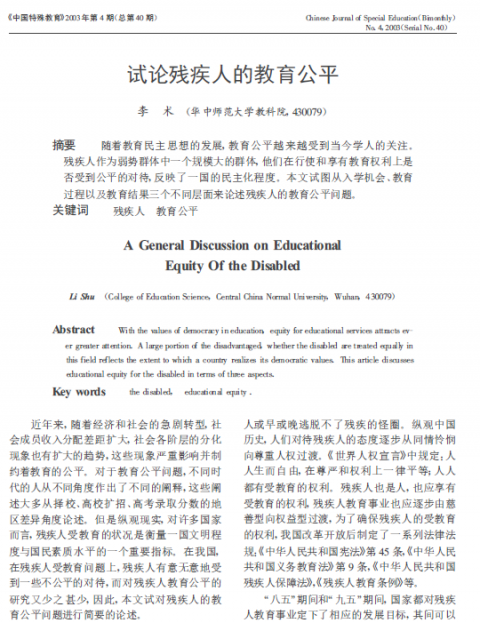 A General Discussion on Educational Equity Of the Disabled Année de publication: 2003 Auteur: Li Shu With the values of democracy in education, equity for educational services attracts ever greater attention. A large portion of the disadvantaged, whether the disabled are treated equally inthis field reflects the extent to which a country realizes its democratic values. This article discusses educational equity for the disabled in terms of three aspects. 试论残疾人的教育公平 Année de publication: 2003 Auteur: Li Shu 随着教育民主思想的发展,教育公平越来越受到当今学人的关注。残疾人作为弱势群体中一个规模大的群体,他们在行使和享有教育权利上是否受到公平的对待,反映了一国的民主化程度。本文试图从入学机会、教育过程以及教育结果三个不同层面来论述残疾人的教育公平问题。
 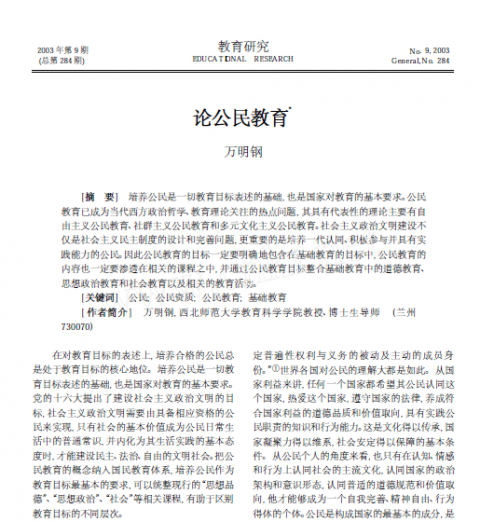 On Citizenship Education Année de publication: 2003 Auteur: Wan Minggang Cultivation of citizens is the basis of all educational objectives and the State's basic requirement for eductaion. Citizenship education has become a hot issue at tracting the solicitude of modern Western political philosophy and educational theories. The citizenship education is characterized by its representative theories of liberalist citizenship education, corporatist citizenship education and muticulturalist citizenship eduction. The construction of socialist politics and civilization not only involves the designing and optimization of socialist democratic system, but also concerns the cultivation of citizens with strong sense of participation and practical ability. Therefore, the aim of citizenship eduction must be clearly included in the objectives of basic education and the content of citizenship education must be reflected in relevant courses. The objectives of citizenship education should be used to integrate moral education, ideological and political education, social education and relevant educational activities in basic education. 论公民教育 Année de publication: 2003 Auteur: Wan Minggang 培养公民是一切教育目标表述的基础,也是国家对教育的基本要求。公民教育已成为当代西方政治哲学、教育理论关注的热点问题,其具有代表性的理论主要有自由主义公民教育、社群主义公民教育和多元文化主义公民教育。社会主义政治文明建设不仅是社会主义民主制度的设计和完善问题,更重要的是培养一代认同、积极参与并具有实践能力的公民。因此公民教育的目标一定要明确地包含在基础教育的目标中,公民教育的内容也一定要渗透在相关的课程之中,并通过公民教育目标整合基础教育中的道德教育、思想政治教育和社会教育以及相关的教育活动。
 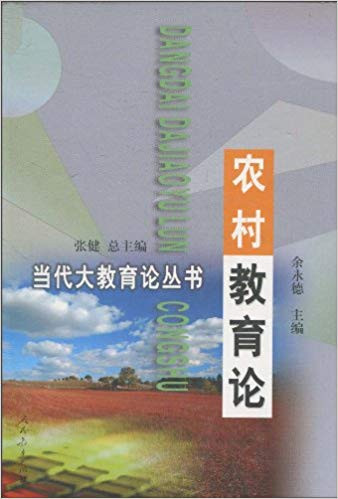 Education theory on rural areas Année de publication: 2000 Auteur: Yu Yongde Solving the problems of rural areas, agriculture, and peasants is a basic issue during economic and social development. We must reform the traditional education in the countryside and change the traditional mind of the peasants, so as to solve the development direction of the rural areas and the adjustment of the industry structure, and at the same time solve the problems of the transfer of rural surplus labor, the rational use of rural resources, the balance between rural ecology and the environment. This volume answers the question of how to reform and develop education in rural areas. 农村教育论 Année de publication: 2000 Auteur: Yu Yongde 重视和解决好农村、农业、农民问题,历来是我国经济社会发展中的一个基本问题。我们必须改革农村的传统教育,改变农民的传统观念和思想,解决好农村的发展方向和产业结构的调整问题;同时解决好农村剩余劳动力的转移,农村资源的合理利用,农村生态与环境的平衡问题。本卷回答了如何改革和发展农村教育的问题。
  [DIALOG #16] Information and methodological bulletin on multilingual and multicultural education in Central Asia Année de publication: 2018 Auteur institutionnel: United Nations Children's Fund (UNICEF) | Organization for Security and Co-operation in Europe (OSCE) The website and the informational and methodological bulletin "Dialogue" was created in order to assist educational organizations of the countries of Central Asia in the implementation of multilingual education programs. The website is supported by the Central Asian Education Program of the OSCE HCNM, the UN Children's Fund UNICEF and the Center for Social Integration.The bulletin is addressed to teachers and school leaders, representatives of education authorities, researchers and experts in the field of education. The bulletin is intended to quarterly inform about initiatives and significant events in the field of multilingual and multicultural education in Central Asia and around the world. In each issue of the bulletin you can find a variety of materials: interviews with experts, a review of the experience of multilingual schools, methodological articles and lesson development, announcements of events and publications, links to Internet resources. [ Диалог #16 ] Информационно-методический вестник по многоязычному и поликультурному образованию в странах Центральной Азии Année de publication: 2018 Auteur institutionnel: Организация по безопасности и сотрудничеству в Европе (ОБСЕ) | United Nations Children's Fund (UNICEF) Сайт и информационно-методический вестник "Диалог" создан в целях оказания содействия образовательным организациям стран Центральной Азии в реализации программ многоязычного образования. Работу сайта поддерживают Центральноазиатская образовательная программа ВКНМ ОБСЕ, Детский фонд ООН ЮНИСЕФ и Центр социальной интеграции.Вестник адресован преподавателям и руководителям школ, представителям органов управления образованием, исследователям и экспертам в сфере образования. Вестник призван ежеквартально информировать об инициативах и значимых событиях в сфере многоязычного и поликультурного образования в Центральной Азии и по всему миру. В каждом выпуске вестника можно найти разнообразные материалы: интервью с экспертами, обзор опыта многоязычных школ, методические статьи и разработки уроков, анонсы мероприятий и публикаций, ссылки на интернет-ресурсы.
  World Development Report 2018 and Its Policy Implications for Education Development in China Année de publication: 2018 Auteur: Liu Ji 2018 comprehensively describes a crisis that is looming worldwide: Schooling does not equalize learning. Drawing on key insights from the report, this study provides a high—level summary and relates the findings to common and critical issues that China is today. Specifically, this study highlights five important policy implications for education development in China: Education quality monitoring, adaptive policies, evidence-based decision, expanding human capital investments, and building stronger ties with international organizations. 如何应对全球学习危机——世界银行((2018世界发展报告》述评 Année de publication: 2018 Auteur: Liu Ji 作为世界银行最重要的旗舰报告,《世界发展报告》四十年来首次以教育为题,深入探讨如何应对全球学习危机、提高教育质量、优化人力资本结构、应对人类发展重要难题。从政策理念上看,世行教育策略的革新代表着世行在人力资本政策上较大的方向性改变:由关注教育投入转向教育产出和学习结果。同时,《2018世界发展报告》总结了适用于各教育阶段的大量实证研究和国际成功政策经验,对全球教育政策具有风向标的重要意义、对我国发展新时期的教育与人才策略有积极启示。本文通过对报告结论详细梳理,结合我国国情提出五点政策建议。