
Ressources
Explorez une large gamme de ressources sur le GCED afin d’approfondir votre compréhension et de renforcer vos activités de recherche, de plaidoyer, d’enseignement et d’apprentissage.
3,229 résultats trouvés
 The effectiveness of field training in qualifying students of media faculties for the labor market: Yarmouk and Middle East universities as a model Année de publication: 2023 Auteur: Saddam Al-Masshaqbah | Ramez Abuhasirah The study aimed to identify the effectiveness of the field training course in raising the capabilities of students of media faculties in public and private Jordanian universities and qualifying them for the labor market. The results showed that the degree of students' commitment to attendance during the field training period in media institutions came to a "huge" degree, at a rate of (39.8%), while the degree of their benefit from field training came to a "medium" degree, at a rate of (29.2%). In: "Journalism Editing," Preparation of Radio and Television Programs," and "The Art of Speaking and Presentation." training" with an arithmetic mean of (4.27) and a high degree. In contrast, the effectiveness of the field training was represented in qualifying students for the labor market by: "recognizing the mechanism of work of the media institution," "acquiring new relationships in the labor market." and "Identifying the problems of workers in media institutions.
  أثر المدرسة المالكيّة العراقيّة على المدرسة المغربيّة Année de publication: 2022 Auteur: Bougaltia Mounir تكمن أهمّية دراسة أثر المدرسة المالكيّة العراقيّة على المدرسة المالكيّة المغربيّة، لما تتميز به المدرستان من سمات، ودورهما في الحفاظ على المذهب والفقهي المالكي، لوجود علاقة بينهما، ومن خلال هذه العلاقة فما هو مدى تأثير المدرسة المالكيّة العراقيّة على المدرسة المغربيّة؟ والدراسة تهدف لبيان أثر المدرسة العراقيّة على المدرسة المغربية، بعدّة مظاهر، وللوصول إلى هذه الأهداف اخترت المنهج الوصفي التّحليلي في الجملة وفي بعض المواضع أعملت المنهج الاستقرائي، ومن أهم النتائج التي وصلت إليها: أن المدرسة المالكيّة العراقيّة لها أثر على المدرسة المغربيّة في عدّة مظاهر: سواء ما يتعلّق برواية كتبهم وشرحها والاعتناء بها. The Impact Of The Iraqi Maliki School On The Islamic Maghreb Countries School Année de publication: 2022 Auteur: Bougaltia Mounir The importance of studying, due to the characteristics of the two schools and their role in preserving the Maliki doctrine and jurisprudence, as there is a relationship between them, Through this relationship, what is the extent of the influence of the Iraqi Maliki school on the Islamic Maghreb countries school? The study aims to show the impact of the Iraqi school on the Islamic Maghreb countries school in several aspects, To reach these goals, I choosed the descriptive-analytical approach in the global, and in some places I used the inductive approach, among the most important results that it reached: that the Iraqi Maliki school had an impact on the Islamic Maghreb countries school in several aspects: whether it was related to narrating their books, explaining them and taking care of them.
  دور النيابة العامة في مكافحة عمالة الأطفال Année de publication: 2022 Auteur: Qasim Ahmed | Ohaibia Abdullah تشير ظاهرة تشغيل الأطفال إلى استغلال الأطفال في أي شكل من أشكال العمل بما يحرم الأطفال من طفولتهم،ويعيق قدرتهم على الذهاب إلى المدرسة، ويؤثر تأثير ضار عقليا أو جسديا أو اجتماعيا أو معنويا، ونظرا لخطورة العمل على صحة الأطفال، وتماشيا مع الاتفاقيات التي ابرمتها دولة الجزائرية في هذا الشأن، حيث وضع المشرع الجزائري أليات لمحاربة هذه الظاهرة منها تحريك الدعوى العمومية من طرف وكيل الجمهورية ضد كل مستخدم يقوم بتشغيل الأطفال دون السن القانونية. The role of the Public Prosecution in combating child labor Année de publication: 2022 Auteur: Qasim Ahmed | Ohaibia Abdullah The phenomenon of child labor refers to the exploitation of children in any form of work that deprives children of their childhood, impedes their ability to go to school, and has a harmful effect mentally, physically, socially or morally, and given the seriousness of work on the health of children, and in line with the agreements concluded by the state In this regard, the Algerian legislator has put in place mechanisms to combat this phenomenon, including the public prosecution by the Republic Prosecutor against every employee who employs children under the legal age.
 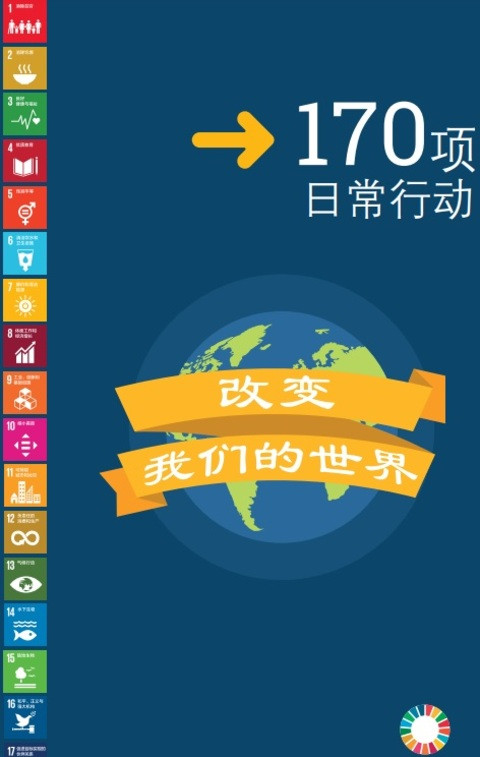 170项日常行动改变我们的世界 Année de publication: 2018 Auteur institutionnel: 联合国日内瓦办公室 | 日内瓦国际 这份学习资源是联合国围绕17个可持续发展目标所给予普通人如何践行可持续生活方式的建议。
  Youth Declarations on Transforming Education Année de publication: 2022 Auteur institutionnel: United Nations (UN) تم إطلاق إعلان الشباب حول تغيير التعليم. وهي وثيقة أعدها شباب من جميع أنحاء العالم وقدمت إلى الأمين العام للأمم المتحدة يوم الجمعة.هذا الإعلان هو مساهمة الشباب في قمة تحويل التعليم 2022. وهو يسلط الضوء على التزام الشباب الجماعي بتحويل التعليم.
 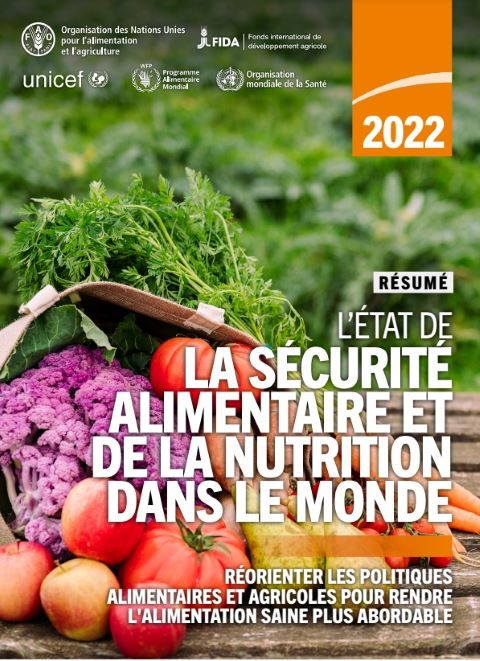 La Securite Alimentaire Et De La Nutrition Dans Le Monde Année de publication: 2022 Auteur institutionnel: Food and Agriculture Organization of the United Nations (FAO) Le présent rapport met en lumière de manière récurrente l’intensification des principaux facteurs d’insécurité alimentaire et de malnutrition: les conflits, les phénomènes climatiques extrêmes et les chocs économiques, dont les effets se conjuguent à ceux de l’accroissementdes inégalités. L’enjeu n’est pas de savoir si d’autres épreuves sont à venir ou non; il s'agit plutôt de prendre les choses en main avec plus de courage et de renforcer la résilience face aux chocs futurs.
  Campaign "Social Protections, an Essential Human Right!" Année de publication: 2021 Auteur institutionnel: International Labour Solidarity Centre Around the world, the COVID-19 pandemic has highlighted the inequalities in the individual and collective protection measures that societies had access to face the crisis. Unsurprisingly, we found that not everyone was equal in the face of the pandemic, quite the contrary. Countries with higher rates of social coverage and labor formalization have seen their populations much better prepared and equipped to deal with the aftermath. In contrast, places, where a large number of workers worked in precarious situations, suffered from an increase in the unemployment rate and a much higher rate of contagion.It is therefore with the current pandemic context in mind that the CISO has decided to set up the annual campaign under the theme of social protection for all, to raise awareness among the Quebec public about the precariousness of work. in the South and the North and the importance of social protection floors to protect the most vulnerable workers. Through this campaign, we want to present social protections not as a privilege but as an essential human right for all. Campagne « Les protections sociales, un droit humain essentiel! » Année de publication: 2021 Auteur institutionnel: International Labour Solidarity Centre Partout dans le monde, la pandémie de COVID-19 a mis en lumière les inégalités dans les mesures de protections individuelles et collectives auxquelles les sociétés avaient accès pour faire face à la crise. Sans surprise, nous avons constaté que toutes et tous n’étaient pas égales et égaux face à la pandémie, bien au contraire. Les pays avec de plus hauts taux de couverture sociale et de formalisation du travail ont vu leur population beaucoup mieux préparée et outillée à faire face aux contrecoups. Par opposition, les endroits où un grand nombre de travailleuses et travailleurs oeuvraient dans des situations de précarité ont souffert d’une augmentation du taux de chômage et d’un taux de contagion beaucoup plus élevé.C’est donc en gardant en tête le contexte pandémique actuel que le CISO a décidé de mettre en place la campagne annuelle sous le thème des protections sociales pour toutes et tous, et ce dans le but de sensibiliser le public québécois à la précarisation du travail au Sud et au Nord et à l’importance des socles de protection sociale pour protéger les travailleuses et travailleurs les plus vulnérables. Par cette campagne, nous souhaitons présenter les protections sociales non comme un privilège mais bien comme un droit humain essentiel pour toutes et tous.