
Ressources
Explorez une large gamme de ressources sur le GCED afin d’approfondir votre compréhension et de renforcer vos activités de recherche, de plaidoyer, d’enseignement et d’apprentissage.
1,448 résultats trouvés
 The Teaching of Regional and Minority Languages in Schools in Europe: Eurydice Report Année de publication: 2019 Auteur institutionnel: European Commission This Eurydice report provides a short overview of policy efforts made across Europe in support of the teaching of regional or minority languages in schools. It firstly presents the reference made to regional or minority languages by top-level education authorities in official documents. It then illustrates some of the policies and measures related to the teaching of regional or minority languages that are in place in the different European education systems. This is followed by an overview of some of the EU-funded projects and initiatives aiming to support the teaching of regional or minority languages in schools in Europe.
  Human Rights Stories: Tales of Human Rights Defenders for Primary Schools Année de publication: 2012 Auteur: Claire Glavey | Fiona O’Shea | Valeria Navarro Auteur institutionnel: Amnesty International Ireland | Irish Aid This resource pack has been developed by Amnesty International Ireland in consultation with an advisory and piloting group of primary school teachers. The concept for the resource pack originated with primary school teachers who identified storytelling as a powerful medium through which a range of concepts and topics can be introduced in the classroom. Human rights issues can appear daunting, distant and theoretical. Through the familiar medium of storytelling, human rights situations can be explored on a level at which children can encounter the real life impact of human rights in practice. Engaging with stories through discussion, creative thinking and character exploration develops the skill of empathy. This brings about the realisation that human rights belong to everyone and that we all have a role to play in ensuring that human rights are protected locally and globally.
  From Rhetoric to Reality: Identifying Teacher Opportunities and Barriers in Educating for Human Rights (Journal of Global Citizenship & Equity Education; Vol. 7, No. 1) Année de publication: 2020 Auteur: Wanda Cassidy | Özlem Sensoy | Kumari Beck Auteur institutionnel: Centennial College In this paper we report findings from a four-year study into legal literacy that examined educational opportunities and barriers when teaching about legal literacy, citizenship education, and human rights education. Detailed findings are drawn from interviews with eleven teachers who self-identify as valuing and embedding legal literacy and related themes (human rights, identity, citizenship, and ecological sustainability) in their classrooms. Results show that despite deep rhetorical commitments to human rights education, teachers are stymied by perceived barriers to implementing HRE, particularly the action dimension. We name these perceived barriers and examine the case of one of the teachers who seemingly has overcome them, in order to identify potential constructive interventions in teacher education.
  Mapping Digital Literacy Policy and Practice in the Canadian Education Landscape Année de publication: 2015 Auteur: Michael Hoechsmann | Helen DeWaard Auteur institutionnel: MediaSmarts This paper Mapping Digital Literacy Policy and Practice in the Canadian Landscape draws on policy and curriculum documents from across Canada to synthesize key concepts and best practices in current digital literacy education. L’enseignement des à l’école en Europe langues régionales ou minoritaires: Rapport Eurydice Année de publication: 2019 Auteur institutionnel: European Commission Ce rapport d’Eurydice offre un bref aperçu des efforts politiques déployés dans toute l’Europe pour soutenir l’enseignement des langues régionales ou minoritaires à l’école. Il présente tout d’abord les références aux langues régionales ou minoritaires figurant dans les documents officiels émanant des plus hautes autorités responsables de l’éducation. Sont ensuite illustrées certaines des stratégies et mesures liées à l’enseignement de langues régionales ou minoritaires qui sont déployées dans les différents systèmes éducatifs européens. Enfin, le rapport donne un aperçu de certains projets et initiatives financés par l’Union européenne afin de soutenir l’enseignement des langues régionales ou minoritaires à l’école en Europe.
 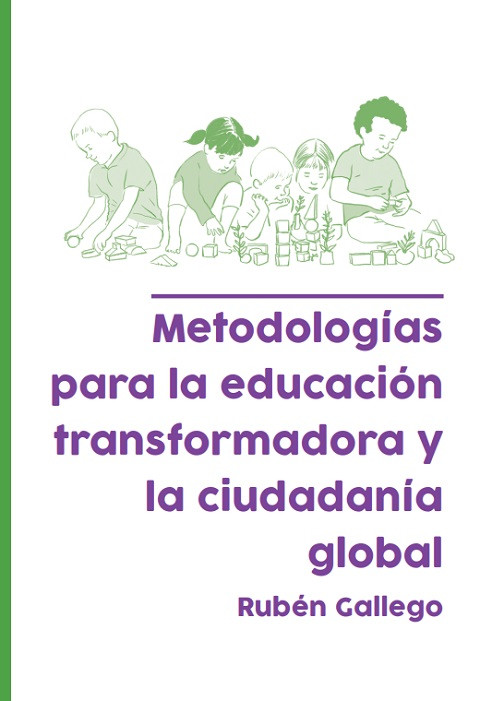 Metodologías para la educación transformadora y la ciudadanía global Année de publication: 2018 Auteur: Rubén Gallego Auteur institutionnel: InteRed | Agencia Vasca de Cooperación al Desarrollo | Diputación Foral de Bizkaia La Pedagogía de los cuidados hace necesaria buscar metodologías que sean coherentes con lo que busca, y por ello, diferentes de la tradicional forma enseñanza – aprendizaje. Necesitamos una metodología que haga primero vivenciar las cosas, sentirlas, para teorizarlas después; una metodología que rescate el valor pedagógico del juego, del encuentro, que apueste por el impacto terapéutico del afecto. Es necesario estar convencidos de que una sola vivencia, una experiencia, puede más que miles de palabras. Por ello, en este módulo, presentamos tres grupos de metodologías, con dos propuestas metodológicas cada una: Las metodologías lúdicas: juego cooperativo y Ludopedagogía Las metodologías artísticas: técnicas ludicoteatrales y Arteterapia. Las metodologías experienciales: Aprendizaje-Servicio con enfoque de derechos y Aprendizaje Basado en Proyectos transformadores con mirada global.
 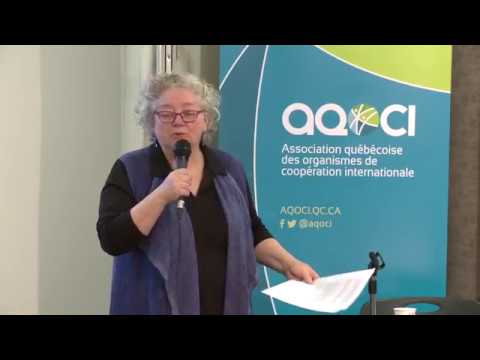 1er rendez-vous de l'éducation à la citoyenneté mondiale: Mot d'ouverture Année de publication: 2017 Auteur institutionnel: Association québécoise des organismes de coopération internationale (AQOCI) La Directrice générale de l’AQOCI, Michèle Asselin, souhaite la bienvenue aux personnes participantes du 1er rendez-vous de l’AQOCI sur l’éducation à la citoyenneté mondiale. Elle a expliqué sur la valeur de l’éducation à la citoyenneté mondial et souligné comme ci-dessous :« L’ÉCM promeut des valeurs et des comportements qui encouragent le changement social et la solidarité internationale »
 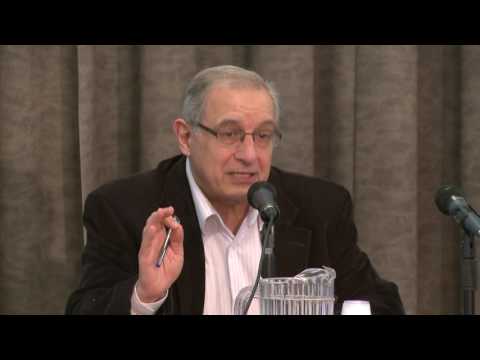 1er rendez-vous de l'éducation à la citoyenneté mondiale de l'AQOCI: Panel d'experts Année de publication: 2017 Auteur institutionnel: Association québécoise des organismes de coopération internationale (AQOCI) Panel d'experts: l'ÉCM en contextes social et scolaire.Rachad Antonius, professeur de sociologie à l’UQÀM, chercheur, consultant et personne-ressource dans les milieux de la solidarité internationale, propose des éléments de réflexion sur l’éducation, sur le rôle de différents intervenants – militants, OCI, chercheurs et intellectuels - en ÉCM, sur le sens et les dimensions du concept de citoyenneté dans le contexte et face aux enjeux actuels et sur les réponses que le travail en ÉCM est appelé à apporter face à la mondialisation.La présentation de Marie-Hélène Chastenay, responsable de l’éducation interculturelle à la Direction des services d’accueil et d’éducation interculturelle du ministère de l’Éducation et de l’Enseignement supérieur (MÉES), examine l’apport de l’ÉCM à l’éducation des jeunes du Québec; l’intégration actuelle de l’ÉCM aux curriculums et à la vie scolaires; les enjeux et les défis de l’ÉCM en milieux scolaires et académiques et le rôle des organismes de coopération internationale et de la société civile dans la promotion de l’ÉCM en contextes scolaires et académiques.
  Eduquer à la citoyenneté mondiale et solidaire pendant le confinement Année de publication: 2020 Auteur institutionnel: Fédération Francophone et Germanophone des Associations de Coopération au Developpement (ACODEV) | Annoncer la Couleur (ALC) | Îles de Paix Dans le cadre de la période de confinement inédite que nous vivons actuellement toutes et tous, l’ensemble des ONG actives en éducation à la citoyenneté mondiale, regroupées dans la fédération ACODEV et Annoncer la Couleur, avec la collaboration de Iles de Paix, poursuivent leur mission de soutien aux enseignant·e·s de tous niveaux, tous réseaux et toutes disciplines confondues. Ensemble, nous vous proposons ici une liste – non exhaustive – d’outils pédagogiques digitaux clé sur porte que vous pouvez partager à vos élèves, pour leur demander de réagir, pour leur proposer une ouverture virtuelle sur le monde, sa diversité, ses richesses et ses interdépendances, ou tout simplement pour garder le contact d’une manière à la fois ludique et éducative. Voici déjà quelques jeux, capsules vidéo et autres webdocumentaires qui permettent, en très peu de temps, de se familiariser avec une thématique ou d’interpeller sur un enjeu de société à échelle mondiale.
  Management of Transboundary Water Resources in the Danube and the Sava River Basins Année de publication: 2019 Auteur: Aksulu Kushanova Auteur institutionnel: Regional Environmental Centre for Central Asia (CAREC) This analytical work “Management of transboundary water resources in the Danube and Sava River Basins” conveys knowledge and information on the management of the transboundary water resources by acknowledging the importance of the WEF Nexus in the Danube and Sava River Basins. Firsthand information was received during face-to-face meetings with the ICPDR and the ISRBC and the summarized work at hand shares the European experience with a wider audience.The analytical work narrates the institutional and legislative frameworks within the sectoral characteristics on the management of two River Basins: the Danube River Basin, which is the largest and the most international one in Europe, and the Sava River Basin, which serves as the greatest tributary to the Danube River. The study reviews the operations of the ICPDR and the ISRBC and technical tools applied at the basin level, which include accident emergency warning systems, monitoring networks, flood forecasting and more.