
Ressources
Explorez une large gamme de ressources sur le GCED afin d’approfondir votre compréhension et de renforcer vos activités de recherche, de plaidoyer, d’enseignement et d’apprentissage.
3,229 résultats trouvés
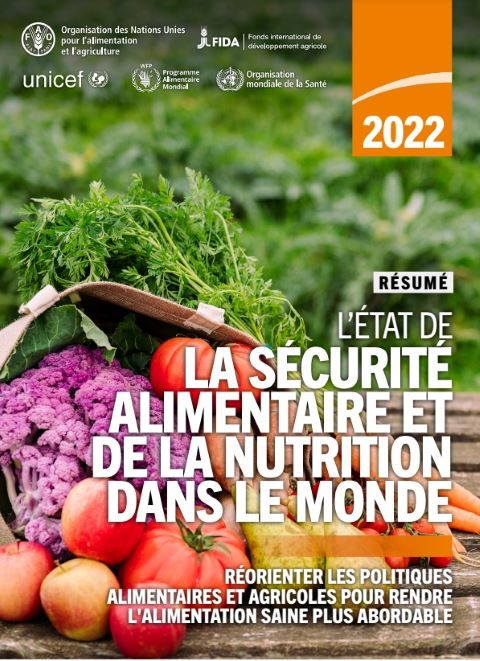 Security, Food and Nutrition in the World Année de publication: 2022 Auteur institutionnel: Food and Agriculture Organization of the United Nations (FAO) This report repeatedly highlights the intensification of the main factors of food insecurity and malnutrition: conflicts, climatic phenomena extremes, and economic shocks, the effects of which combine with those of the increase in some inequalities. The issue is not whether more trials are to come or not; it's about rather taking matters into their own hands with more courage and building resilience in the face of future shocks.
  Strengthening Social and Emotional Learning in Hybrid Modes of Education: Building Support for Students, Teachers, Schools and Families Année de publication: 2024 Auteur institutionnel: UNESCO International Bureau of Education (IBE) This Discussion Paper focuses on the essential role of social and emotional learning (SEL) in the global movement to transform education and amplify its social, economic, environmental and personal impacts in a rapidly changing world. It explores how the mainstreaming of SEL into educational policies and practices can contribute to realizing future visions of education that are flexible, reflective, innovative, and impactful. Specifically, the Paper focuses on six topics that, as a whole, reflect global experiences in integrating and implementing SEL in its various forms both during and in the wake of the COVID-19 pandemic. Its main objective is to animate discussion on how to integrate a SEL dimension in hybrid modes of teaching and learning. This introductory overview presents the overall purpose and scope of the Paper, defines its underlying concepts and introduces the topics brought to this forum through the lenses of a diverse group of educators from Africa, the Arab States, Asia, Europe, and Latin America.
 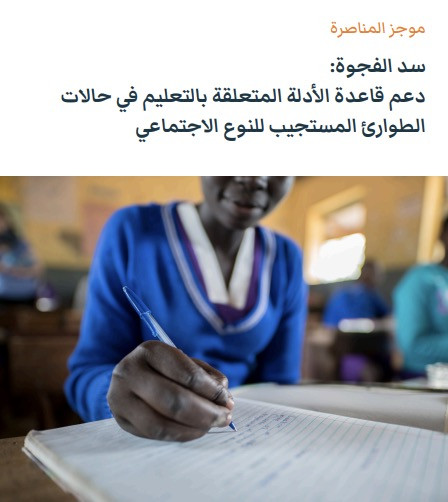 سد الفجوة: دعم قاعدة الأدلة المتعلقة بالتعليم في حالات الطوارئ المستجيب للنوع الاجتماعي Année de publication: 2022 Auteur: Lauren Gerken | Sumbal Bashir Auteur institutionnel: The Inter-agency Network for Education in Emergencies (INEE) يسلّط هذا الملخص الضوء على الثغرات الرئيسية في قاعدة الأدلة حول النوع الاجتماعي والتعليم في حالات الطوارئ، ويقدم التوجيه الاستراتيجي والمحتوى المواضيعي لمبادرات الأبحاث الجديدة. يتضمن توصيات لإجراء أبحاث تعليمية مستجيبة للنوع الاجتماعي والمناصرة للعمل التعاوني وتبادل المعرفة بين النوع الاجتماعي والجهات الفاعلة الرئيسية في مجال التعليم في حالات الطوارئ. يمكن استخدام الملخص لتحديد المجالات ذات الأولوية للبحث وأسئلة البحث للمضي قدمًا، وفرص التعاون، ومجالات البحث ذات الأولوية للتمويل. Bridging the Gap: Strengthening the Evidence Base for Gender Responsive Education in Emergencies Année de publication: 2022 Auteur: Lauren Gerken | Sumbal Bashir Auteur institutionnel: The Inter-agency Network for Education in Emergencies (INEE) This brief was developed by the INEE Gender Task Team in response to global calls for more and better data and evidence on gender-responsive EiE. The brief draws from findings of the 2021 and 2022 editions of the INEE Mind the Gap report on the state of girls’ education in emergencies, and from consultations with gender and education experts.
  Supporting Schools’ and Teachers’ Use of Assessment to Inform Learning of All Students (Using Assessment Data in Education Policy and Practice: Examples from the Asia-Pacific issue 5, December 2023) Année de publication: 2023 Auteur: Ursula Schwantner | Soumaya Maghnouj Auteur institutionnel: UNESCO Bangkok | Australian Council for Educational Research (ACER) In more than half of Asia-Pacific countries, a majority of learners in primary and secondary education do not have the required foundational skills. The fifth issue of the topical case studies series 'Using Assessment Data in Education Policy And Practice: Examples From The Asia-Pacific' under the Network for Education Quality Monitoring in Asia-Pacific (NEQMAP), documents four promising practices from countries in the Asia-Pacific region on how education systems can better support teachers and schools in effectively integrating assessment practices in the teaching and learning process. The goal of this support is to identify and meaningfully address every learner’s needs, so that every learner can learn successfully. The case studies look at a variety of levers that promote a better use of assessment for learning such as how to develop teachers’ assessment literacy and capacity to design, implement and use assessment to inform their classroom teaching and learning; how to improve the use of standardized assessment data to inform teaching and learning and how to rethink the organization of instruction to address the needs of all learners.
 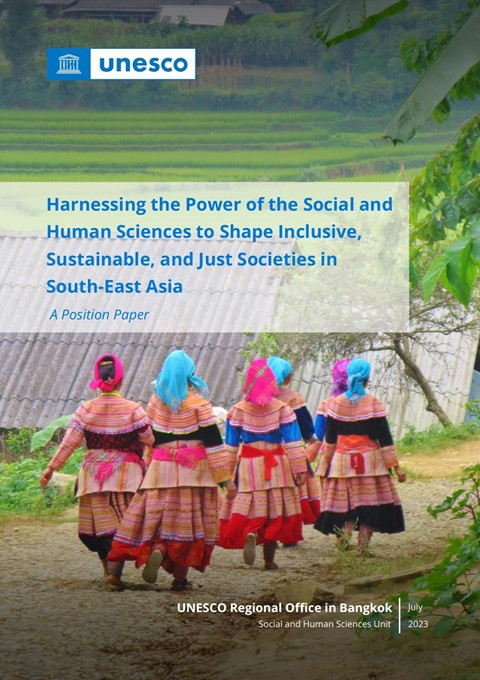 Harnessing the Power of the Social and Human Sciences to Shape Inclusive, Sustainable, and Just Societies in South-East Asia: A Position Paper Année de publication: 2023 Auteur: Phinith Chanthalangsy Auteur institutionnel: UNESCO Bangkok This paper provides an overview of the Social and HumanSciences (SHS) Unit, UNESCO Regional Office in Bangkok holisticapproach to building a more just and fair society for all in theSouth-East Asian region toward 2030 and beyond. The paperprovides two sections focused on thechallengesidentified in theregion and some potentialpathways for the future, from thepoint of view of UNESCO’s Social and Human Sciences Sector. The content of this paper has been discussed with aregionalexpert consultative group that gathered in Bangkok during aMOST regional Conference on 22–23 June 2023. The paper offersgrounds forstrategic orientations and partnershipsin keydomains where UNESCO's expertise in the social and humansciences can make a difference in South-East Asia
  2022 대한민국 SDG4 이행현황 보고서 Année de publication: 2023 Auteur institutionnel: SDG4-교육2030협의체 | 유네스코한국위원회 SDG4-교육20230 협의체가 공동집필한 보고서로서, 2022년도 SDG4(교육분야 지속가능발전목표) 관련 국내외 동향을 소개하고 SDG4 세부목표별 국내 이행현황 및 과제를 분석하고 있다.
 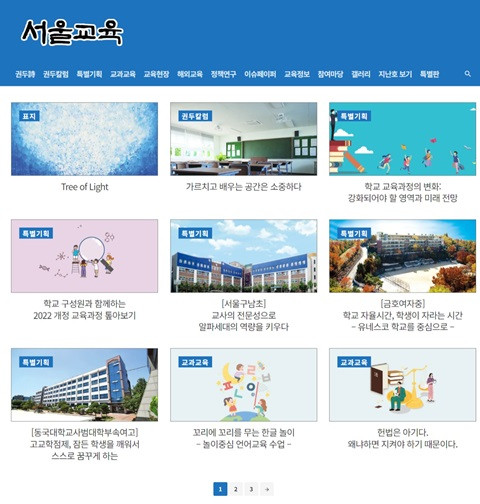 서울교육 2023년 겨울호 (제65권 통권 253호) Année de publication: 2023 Auteur institutionnel: 서울특별시교육청 교육연구정보원 권두칼럼: 가르치고 배우는 공간은 소중하다 특별기획:- 학교 교육과정의 변화: 강화되어야 할 영역과 미래 전망- 학교 구성원과 함께하는 2022 개정 교육과정 톺아보기- [서울구남초] 교사의 전문성으로 알파세대의 역량을 키우다- [금호여자중] 학교 자율시간, 학생이 자라는 시간 -유네스코 학교를 중심으로-- [동국대사범대부속여고] 고교학점제, 잠든 학생을 깨워서 스스로 꿈꾸게 하는 교과교육:- 꼬리에 꼬리를 무는 한글 놀이 -놀이중심 언어교육 수업-- 헌법은 아기다. 왜냐면 지켜야 하기 때문이다.- 개념기반 교육과정으로 디자인한 국어과 수업- [국어.체육.사회 융합 수업] 우리들, 북촌을 달리는 사이- [국제교류 생태전환 수업] 새로운 생각이 필요해: 시간을 달려서- [테마별 신학년 집중 준비기간 I] 신학년 3월, 설레는 만남! 함께 준비해요! 과정이 살아있는 신학년 집중 준비기간: 계획 & 실행- [테마별 신학년 집중 준비기간Ⅱ] 행복한 만남, 준비하는 선생님: 교원연수 운영- [테마별 신학년 집중 준비기간 Ⅲ] 미래학교의 색깔을 만들어나가는 신학년 준비기간 - [테마별 신학년 집중 준비기간 Ⅳ] 신학년 집중 준비기간, 나는 이제 ‘P’에서 ‘J’가 된다 이슈페이퍼: 청소년 자치배움터 다가치학교의 성과분석 및 개선방안 교육정보:- 복잡한 「교원의 학생생활지도에 관한 고시」톺아보기- 학생의 문제 행동을 바로 보고, 함께 풀어가는「다중지원회의」- 교육과정 업무담당 교사를 위한 2024 학교 교육과정 편성하기
  Technology and Values-Driven Transformation in Education (Journal of Southeast Asian Education: The Official Journal Of SEAMEO; Vol. 1, Special issue) Année de publication: 2023 Auteur institutionnel: Southeast Asian Ministers of Education Organization (SEAMEO) The 11th SEAMEO-University of Tsukuba Symposium under the theme Technology and Values Driven Transformation in Education held on 20-22 February 2023 successfully engaged over 19,860 participants from 45 countries. With 30 speakers from 10 countries, the symposium provided the platform to share and exchange best practices carried out by schools and universities apart from identifying the challenges encountered by teachers, students and academicians. SEAMEO and UT have selected quality articles emerging from the symposium and put them together in the Journal of Southeast Asian Education. For example: - Lifelong Learning in the Digital Age- A Breakthrough of Values-Driven Strategies in Using Multimedia-Based Instruction (MMBI): A Course Towards Sustainable Transformative Education- Leave No One Behind: The Solution to an Inclusive Future- Unplugged Computational Thinking with Colouring Books
  유네스코 미래담론 연구 Année de publication: 2023 Auteur: 전상인 | 김두환 | 박범순 | 한준 | 박남기 | 백영연 Auteur institutionnel: 유네스코한국위원회 이 보고서는 미래문해력 증진을 위한 기초연구이다. 한국의 미래가 주요 관심이나, 이는 인류 전체의 미래에 대한 통찰과도 무관하지 않을 것이다. 이 보고서에서는 미래를 ‘한 세대’에 해당하는 향후 30년 정도로 상정했다. 먼저 유관 전문가들이 교육과 문화, 과학 및 커뮤니케이션 영역에서 각각 어떤 변화를 예상하는지를 검토했다. 이를 바탕으로 보통의 한국인이 해당 영역의 미래를 어떻게 인식하고 있는지를 살펴보기 위해 전국적 설문조사가 필요하다고 판단하여, 이를 위한 설문조사 문항 초안을 제안했다. 만약 후속 연구로서 이와 같은 설문조사가 이루어진다면 미래문해에 대한 전문가와 일반인들의 공통점 및 차이점을 드러낼 수 있을 것이며, 경우에 따라 외국의 미래문해 현황과의 비교도 가능할 것이다. 궁극적으로는 한국사회의 미래문해력 증진을 위한 정책적 노력에도 일조하게 될 것이다.