
Ressources
Explorez une large gamme de ressources sur le GCED afin d’approfondir votre compréhension et de renforcer vos activités de recherche, de plaidoyer, d’enseignement et d’apprentissage.
1,322 résultats trouvés
 Bonnes pratiques en matière d'éducation pour le développement durable: utilisation de la Charte de la Terre Année de publication: 2007 Auteur institutionnel: UNESCO | Earth Charter International Secretariat Cette publication a été conçue pour offrir des histoires - études de cas de partout dans le monde - qui mettent en évidence comment les groupes et les individus utilisent la Charte de la Terre comme outil d'éducation pour le développement durable. Ces histoires viennent de contextes éducatifs non formels et formels et décrivent une variété d'expériences, y compris l'élaboration de guides pour les enseignants du primaire, l'inclusion des valeurs de durabilité dans les départements des universités de l'éducation, du droit, du génie et des études générales; le remaniement des programmes d'études locaux, régionaux et nationaux; et la création de programmes et d'ateliers vitaux et attrayants pour les enfants et les jeunes. Oбзор содержания и структур Образования в интересах устойчивого развития 2009 г. Основные выводы и направления будущей работы Année de publication: 2009 Auteur institutionnel: UNESCO This document suggests key findings and ways forward in review of the contexts and strctures of education for sustainable development. Batir l'éducation de demain: rapport 2012 sur la décennie des Nations Unies pour l'éducation au service du développement durable, version abrégée Année de publication: 2013 Auteur institutionnel: Organisation des Nations Unies pour l'éducation, la science et la culture (UNESCO) As the lead agency for the UN Decade of Education for Sustainable Development (DESD, 2005 – 2014), UNESCO is responsible for monitoring and evaluating progress during the DESD. UNESCO is publishing three reports during the DESD – in 2009, 2012 and 2014. This second report focuses specifically on processes and learning in the context of Education for Sustainable Development (ESD). What kinds of learning processes have emerged in the course of the DESD? What is the role of ESD in supporting them? What changes in ESD have occurred since the early years of the Decade? The report is informed by a broad consultation process that includes input from hundreds of policy makers, scholars and practitioners engaged in ESD around the world.
 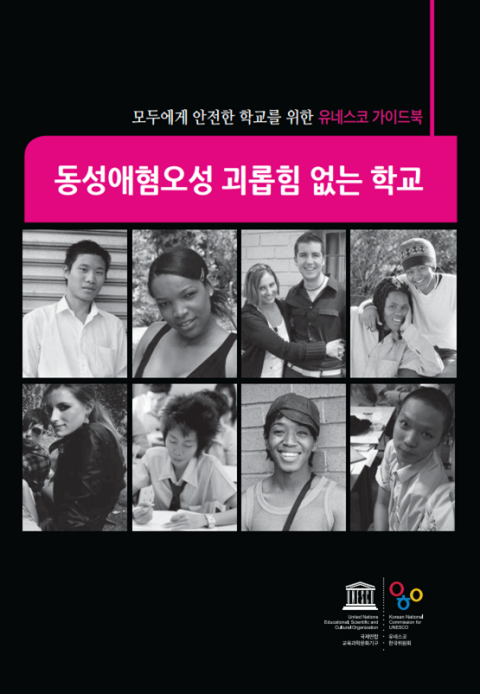 동성애혐오성 괴롭힘 없는 학교 Année de publication: 2013 Auteur institutionnel: 유네스코 이 책은 2012년 유네스코가 발간한 ‘HIV 및 보건 교육 우수 정책과 사례’ 시리즈(전8권) 중 제8권 『Education Sector Responses to Homophobic Bullying』을 번역한 것입니다. 이 책은 동성애혐오성 괴롭힘을 '모두를 위한 교육'을 실현하기 위해 해소해야 하는 걸림돌 중 하나로 지적하면서 그 해결방법을 제시하고 있습니다. Le Risposte del settore educativo al bullismo omofobico Année de publication: 2014 Auteur institutionnel: UNESCO This publication is part of a Good Policy and Practice series that addresses key themes of UNESCO’s work with the education sector including HIV and AIDS and safe, healthy educational environments for all learners. This volume, on the theme of homophobic bullying in educational institutions, builds on UNESCO’s work on gender, discrimination and violence in schools. Respostas do Setor de Educação ao bullying homofóbico Année de publication: 2013 Auteur institutionnel: UNESCO This publication is part of a Good Policy and Practice series that addresses key themes of UNESCO’s work with the education sector including HIV and AIDS and safe, healthy educational environments for all learners. This volume, on the theme of homophobic bullying in educational institutions, builds on UNESCO’s work on gender, discrimination and violence in schools. 教育部门应对恐同欺凌 Année de publication: 2013 Auteur institutionnel: UNESCO This publication is part of a Good Policy and Practice series that addresses key themes of UNESCO’s work with the education sector including HIV and AIDS and safe, healthy educational environments for all learners. This volume, on the theme of homophobic bullying in educational institutions, builds on UNESCO’s work on gender, discrimination and violence in schools. Odpowiedzi sektora edukacji na homofobiczna przemoc rówiesnicza Année de publication: 2014 Auteur institutionnel: UNESCO This publication is part of a Good Policy and Practice series that addresses key themes of UNESCO’s work with the education sector including HIV and AIDS and safe, healthy educational environments for all learners. This volume, on the theme of homophobic bullying in educational institutions, builds on UNESCO’s work on gender, discrimination and violence in schools.
  UNESCO GCED eNewsletter Issue 4 Année de publication: 2016 Auteur institutionnel: UNESCO Feature: Mobilizing support for global citizenship and sustainable development through Education Target 4.7 UNESCO 1974 Recommendation used to measure progress towards education target 4.7 Measuring progress towards 4.7 Gyeongju Action Plan: NGOs join UNESCO Global capacity-building workshop on GCED organized by APCEIU Southern Africa Regional Meeting on GCED convened in Johannesburg, South Africa UNESCO launches Teacher's Guide on the Prevention of Violent Extremism Expert meeting on the Prevention of Violent Extremism through Education European ministers back education for democracy to counter extremism and racaism UN discusses innovative solutions to prevent violent extremism through education UNESCO's YESPeace Network taps the power of youth worldwide to change the future GCED Topics and Learning Objectives available in seven languages. Ensinando sobre o Holocausto na Escola : Informações e Propostas para Professores dos Ensinos Fundamental e Médio Année de publication: 2014 Auteur: Nilton Mullet Pereira | Ilton Gitz Auteur institutionnel: UNESCO This textbook aims at helping teachers of primary and secondary education to address the Holocaust theme in their classes. This book contains suggested activities, lists of books and films references to help pupils to make connections between the Holocaust and others genocides but also to develop critical thinking and respect for human rights.