
Ressources
Explorez une large gamme de ressources sur le GCED afin d’approfondir votre compréhension et de renforcer vos activités de recherche, de plaidoyer, d’enseignement et d’apprentissage.
26 résultats trouvés
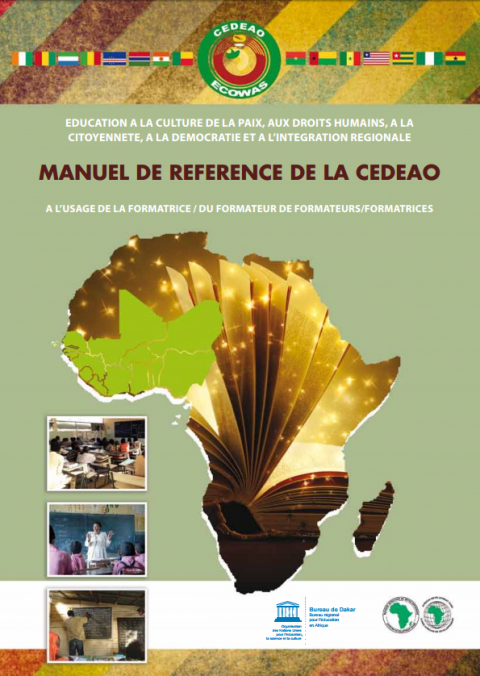 EDUCATION A LA CULTURE DE LA PAIX, AUX DROITS HUMAINS, A LA CITOYENNETE, A LA DEMOCRATIE ET A L’INTEGRATION REGIONALE MANUEL DE REFERENCE DE LA CEDEAO A L’USAGE DE LA FORMATRICE / DU FORMATEUR DE FORMATEURS/FORMATRICES Année de publication: 2013 Auteur institutionnel: UNESCO Dakar | Economic Community of West African States (ECOWAS) The manual comprises seven modules dealing with the Culture of Peace and Conflict Management; Human Rights; Civism and Citizenship; Democracy and Good Governance; Gender and Development; Public Health, Environment and Sustainable Development; and Regional Integration. Each module has sub-themes with introductions, reference materials, general objectives to guide the trainer and generic pedagogical tables that are flexible enough to be adapted to available teaching resources in the different ECOWAS countries. It is also suitable and adaptable to the training of teachers involved in both formal and non-formal education delivery at different levels of teaching and learning. The ultimate goal of the Manual is to build a critical mass of ECOWAS citizens equipped with competent skills, not only for cognitive and psycho-motor domains of education, but also affective skills for positive values, attitudes and behaviors that promote peace, tolerance and peaceful co-existence of community citizens.
  Education for a culture of peace, human rights, citizenship, democracy and regional integration: ECOWAS reference manual, for use by trainer of trainers Année de publication: 2013 Auteur institutionnel: UNESCO Dakar | Economic Community of West African States (ECOWAS) The manual comprises seven modules dealing with the Culture of Peace and Conflict Management; Human Rights; Civism and Citizenship; Democracy and Good Governance; Gender and Development; Public Health, Environment and Sustainable Development; and Regional Integration. Each module has sub-themes with introductions, reference materials, general objectives to guide the trainer and generic pedagogical tables that are flexible enough to be adapted to available teaching resources in the different ECOWAS countries. It is also suitable and adaptable to the training of teachers involved in both formal and non-formal education delivery at different levels of teaching and learning. The ultimate goal of the Manual is to build a critical mass of ECOWAS citizens equipped with competent skills, not only for cognitive and psycho-motor domains of education, but also affective skills for positive values, attitudes and behaviors that promote peace, tolerance and peaceful co-existence of community citizens. L'éducation pour une culture de la paix, les droits de l'homme, la citoyenneté, la démocratie et l'intégration régionale: manuel de référence de la CEDEAO, pour une utilisation par le formateur de formateurs Année de publication: 2013 Auteur institutionnel: UNESCO Dakar | Economic Community of West African States (ECOWAS) Le manuel comprend sept modules traitant de la culture de la paix et gestion des conflits; Droits de l'homme; Civisme et citoyenneté; Démocratie et bonne gouvernance; Genre et développement; La santé publique, l'environnement et le développement durable; et l'intégration régionale. Chaque module comporte des sous-thèmes avec des introductions, des documents de référence, des objectifs généraux pour guider le formateur et tables pédagogiques génériques qui sont suffisamment souples pour être adaptés aux ressources pédagogiques disponibles dans les différents pays de la CEDEAO. Il est également adapté et adaptable à la formation des enseignants impliqués à la fois dans la prestation de l'éducation formelle et non formelle à différents niveaux d'enseignement et d'apprentissage. Le but ultime du Manuel est de construire une masse critique de citoyens de la CEDEAO dotés de compétences compétentes, non seulement pour les domaines cognitif et psycho-moteur de l'éducation, mais aussi des habiletés affectives pour les valeurs positives, les attitudes et les comportements qui favorisent la paix, la tolérance et pacifique co-existence des citoyens communautaires. Educação para a cultura da paz, os direitos humanos, a cidadania, a democracia e a integração regional: manual de referência da CEDEAO, à intenção do(a) formador/formador(a) de formadores/formadoras Année de publication: 2013 Auteur institutionnel: UNESCO Dakar | Economic Community of West African States (ECOWAS) The manual comprises seven modules dealing with the Culture of Peace and Conflict Management; Human Rights; Civism and Citizenship; Democracy and Good Governance; Gender and Development; Public Health, Environment and Sustainable Development; and Regional Integration. Each module has sub-themes with introductions, reference materials, general objectives to guide the trainer and generic pedagogical tables that are flexible enough to be adapted to available teaching resources in the different ECOWAS countries. It is also suitable and adaptable to the training of teachers involved in both formal and non-formal education delivery at different levels of teaching and learning. The ultimate goal of the Manual is to build a critical mass of ECOWAS citizens equipped with competent skills, not only for cognitive and psycho-motor domains of education, but also affective skills for positive values, attitudes and behaviors that promote peace, tolerance and peaceful co-existence of community citizens. Education à la culture de la paix, aux droits humains, à la citoyenneté, à la démocratie et à l'intégration régionale: manuel de référence de la CEDEAO, à l'usage de la formatrice/du formateur de formateurs/formatrices Année de publication: 2013 Auteur institutionnel: UNESCO Dakar | Economic Community of West African States (ECOWAS) The manual comprises seven modules dealing with the Culture of Peace and Conflict Management; Human Rights; Civism and Citizenship; Democracy and Good Governance; Gender and Development; Public Health, Environment and Sustainable Development; and Regional Integration. Each module has sub-themes with introductions, reference materials, general objectives to guide the trainer and generic pedagogical tables that are flexible enough to be adapted to available teaching resources in the different ECOWAS countries. It is also suitable and adaptable to the training of teachers involved in both formal and non-formal education delivery at different levels of teaching and learning. The ultimate goal of the Manual is to build a critical mass of ECOWAS citizens equipped with competent skills, not only for cognitive and psycho-motor domains of education, but also affective skills for positive values, attitudes and behaviors that promote peace, tolerance and peaceful co-existence of community citizens.
  Education Sector Analysis: Methodological Guidelines (Vol. 3) Année de publication: 2021 Auteur institutionnel: UNESCO International Institute for Educational Planning (IIEP) | United Nations Children's Fund (UNICEF) | Global Partnership for Education (GPE) | Foreign, Commonwealth & Development Office (UK) This present volume is the third in a series of education sector analysis (ESA) guidelines following two volumes published in 2014. The series provides methodologies and applied examples for diagnosing education systems and informing national education policies and plans. This volume proposes guidelines to strengthen national capacities in analyzing education systems in four areas: inclusive education system for children with disabilities, risk analysis for resilient education systems, functioning and effectiveness of the educational administration, and stakeholder mapping and problem-driven analysis (governance and political economy).
 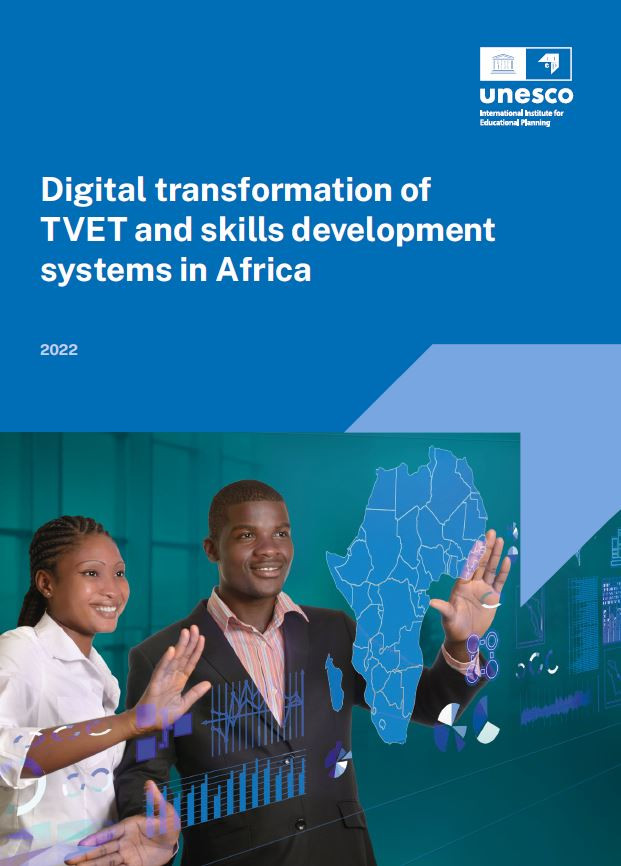 Transformation digitale de l'EFTP et des systèmes de développement des compétences en Afrique : état des lieux et perspectives Année de publication: 2022 Auteur institutionnel: UNESCO IIEP Regional Office for Africa Cette publication, réalisée par SOFRECO à la demande de l’IIPE-UNESCO, fait le point sur la digitalisation de l’enseignement et de la formation techniques et professionnels (EFTP) en Afrique sur la base d’un échantillon de cinq pays (Madagascar, Nigeria, Rwanda, Tunisie et Tchad). Cet état des lieux décrit les dispositifs de ces cinq pays au service de la population pour accéder non seulement aux outils numériques mais surtout aux compétences qui vont permettre à toute personne de se servir du numérique.
  Citizenship and Civics: Learn From These Young Senegalese Leaders Année de publication: 2020 Auteur institutionnel: Vibe Radio Senegal This is a video of young Senegalese leaders presenting on Citizenship and civics. La citoyenneté et le civisme: Apprenez de ces jeunes leaders sénégalais Année de publication: 2020 Auteur institutionnel: Vibe Radio Senegal C'est une vidéo de jeunes leaders sénégalais présentant sur Citoyenneté et civisme. Digital Transformation of TVET and Skills Development Systems in Africa: State of Play and Prospects Année de publication: 2022 Auteur institutionnel: UNESCO IIEP Regional Office for Africa This publication, produced by SOFRECO at the request of IIEP-UNESCO, takes stock of the digitalization of technical and vocational education and training (TVET) in Africa based on a sample of five countries (Madagascar, Nigeria, Rwanda, Tunisia and Chad). This report describes the systems in these five countries that provide the population with access not only to digital tools but also to the skills that will enable everyone to use digital technology.