
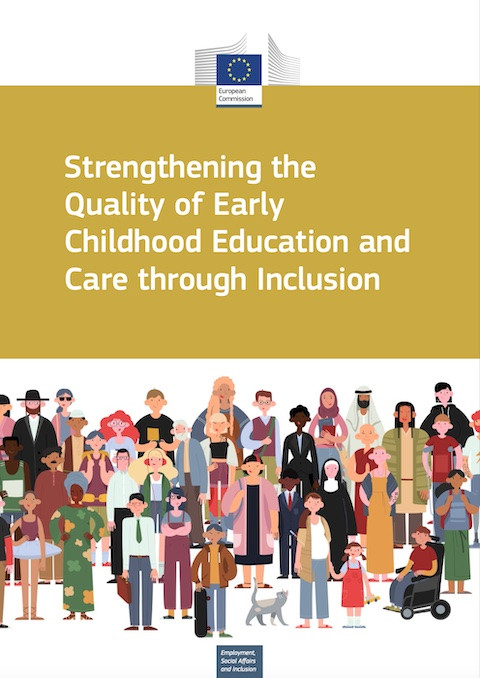
Strengthening the Quality of Early Childhood Education and Care Through Inclusion
- 단체 저자
- European Union (EU)
- ISBN
- ISBN 978-92-76-18706-6
- 형태사항
- 11 p.
- 원래 언어
- 영어
- 발행 연도
- 2020
The quality in Early Childhood Education and Care (ECEC) has risen up the policy agenda globally, leading to a general consensus that quality ECEC can lead to positive and equitable outcomes for all children. Given these contexts, the European Commission considers inclusion as an integral part of quality ECEC. However, ensuring effective access to quality ECEC for all children remains a challenge, especially for those from disadvantaged backgrounds. This is in part because both inclusion and quality ECEC are multi-faceted concepts. This present policy memo helps policymakers better understand this challenge and suggests some possible solutions. To do so, this memo introduces what inclusion means in education generally and in ECEC particularly, and then discusses how inclusion in ECEC is understood in the current EU policy context. Lastly, the memo summarises findings from recent EU-level projects on how inclusion is integrated into different aspects of quality in ECEC.
관련 자료
-
 IIEP-UNESCO 12th Medium-Term Strategy: 2026–2029
 -
 Youth Lens on the Silk Roads: Best Photos from the International Silk Roads Photo Contest; 6th Edition
 -
 Advancing Intergenerational Learning: Identifying Challenges and Opportunities for Older Adults; Integrated Case Study Report
 -
 Digital Empowerment for Lifelong Learning and Transformative Andragogy (DELTA) for Adult Educators: Introduction to the DELTA Framework and Resources